 Vietnamese Images are for illustrative purposes only, may be inaccurate, and do not guarantee the presence or absence of specific ingredients.
  Serving Images are for illustrative purposes only, may be inaccurate, and do not guarantee the presence or absence of specific ingredients.
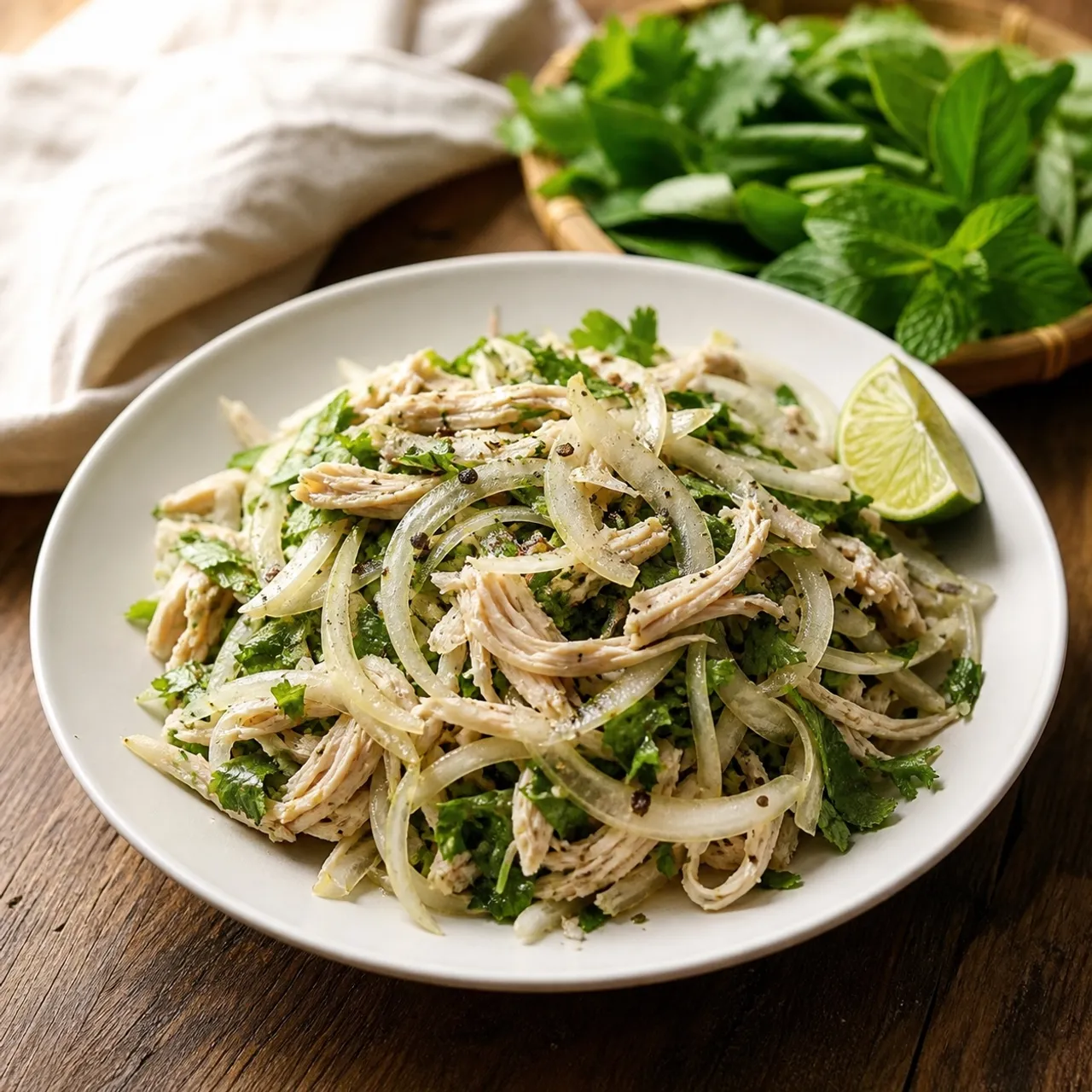
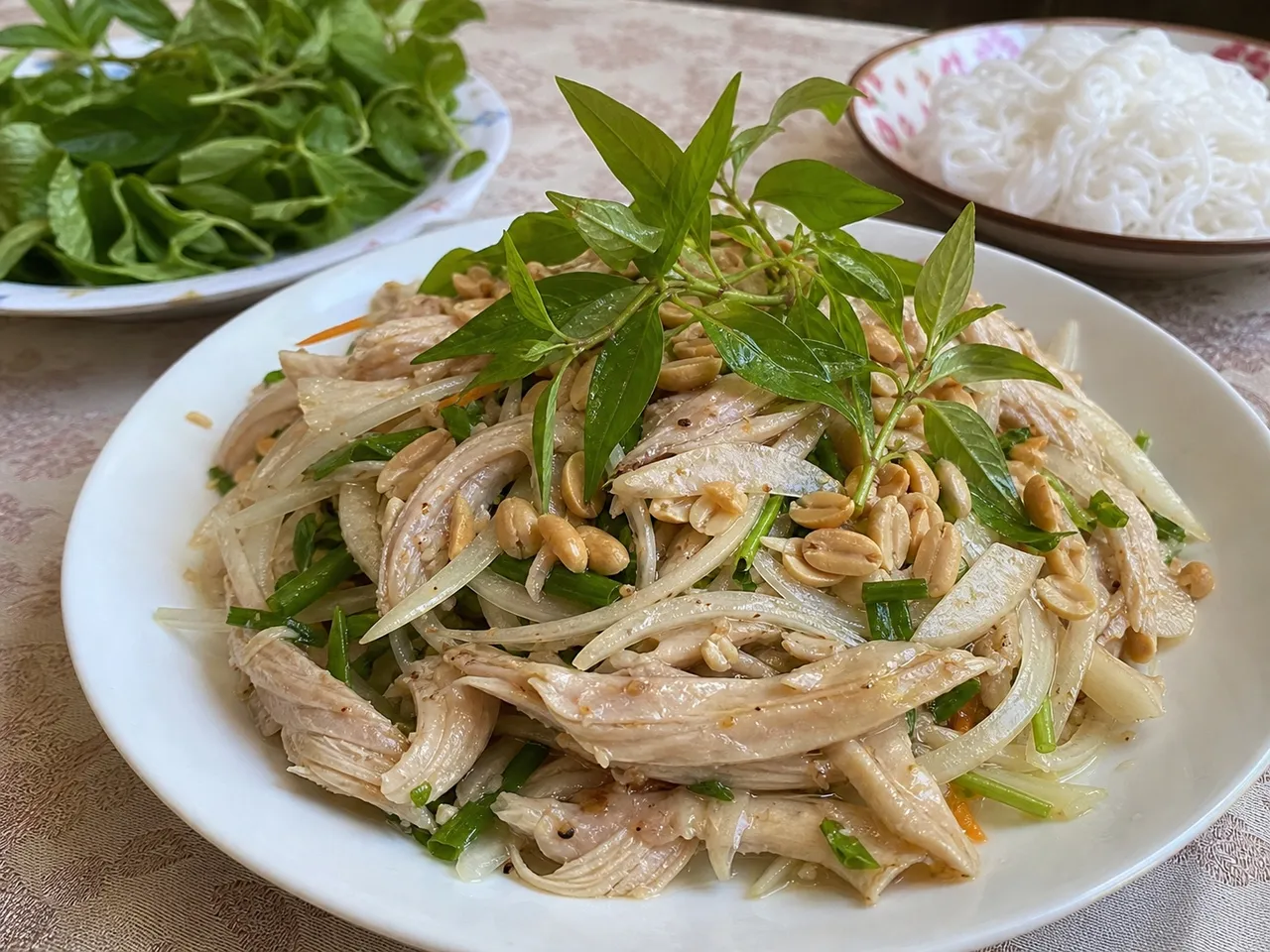
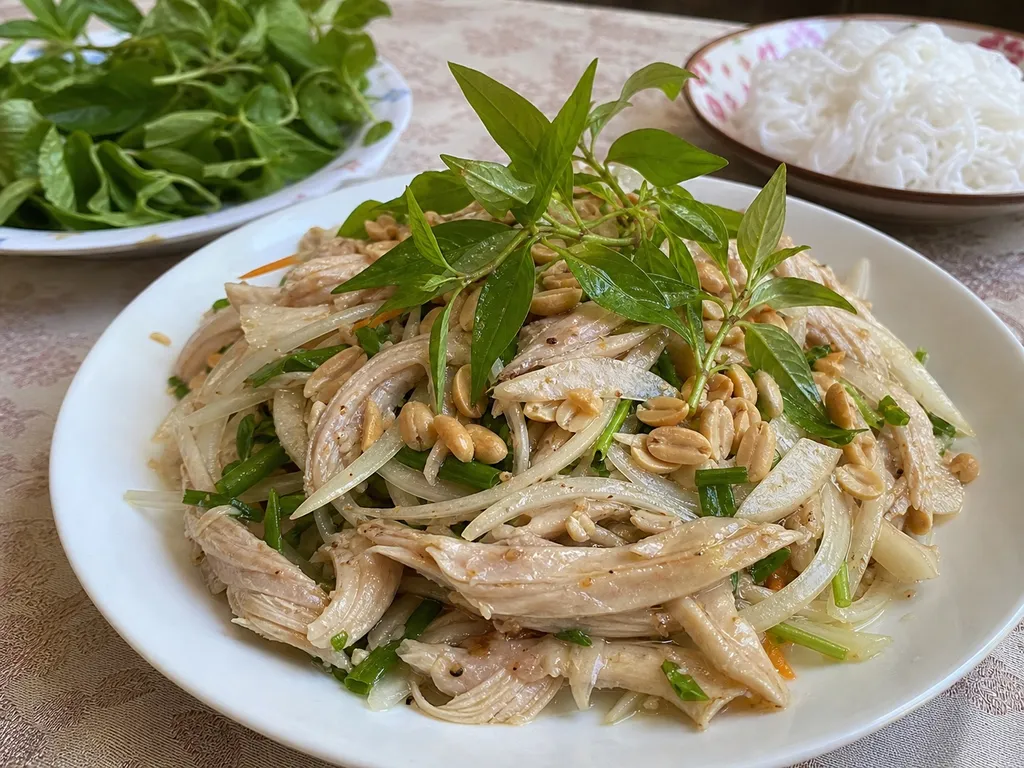
 Gỏi Gà Trộn Hành Tây (Chicken and Onion Salad)
Shredded boiled chicken mixed with thinly sliced onions and Vietnamese coriander.
Contains common allergens
In the app, Listahan checks these against your household automatically.
Instructions
6 steps- 1
Poach Chicken: Boil the chicken in water with salt until fully cooked (15-20 minutes). Remove, let cool completely, then use your hands to tear the meat into coarse shreds.
- 2
Prepare Onion: Cut the onion in half, then slice it as thinly as possible into half-moons.
- 3
Mellow the Onion: Soak the sliced onion in a bowl of ice water with a splash of vinegar or lime juice for 10 minutes. This removes the harsh raw bite while keeping them incredibly crunchy. Drain and squeeze dry.
- 4
Make Dressing: Whisk lime juice, sugar, fish sauce, black pepper, and chili together until sugar dissolves. The dressing should be quite tart.
- 5
Toss: In a large bowl, combine the shredded chicken, drained onions, and roughly chopped Vietnamese coriander. Pour the dressing over the top and toss with your hands, massaging the flavors into the meat.
- 6
Serve: Transfer to a plate, top with crushed peanuts, and serve with crispy shrimp crackers (bánh phồng tôm).
 Images are for illustrative purposes only, may be inaccurate, and do not guarantee the presence or absence of specific ingredients.
 Listahan Family Score™
59/100
Works for many families
Score reflects how well this recipe fits a typical busy household. In the app, your Family Score is personalized to your household's allergens, kids, and pantry.
Nutrition
per serving335
Calories
50 g
Protein
5 g
Carbs
11 g
Fat
Estimated per serving. Actual values depend on the brands and portions you use.
Listahan cooking guide
Chef notes & practical guide
Technique notes, ingredient swaps, serve-alongside ideas, storage guidance, and equipment for this recipe.
Cultural context
Goi ga tron hanh tay is a simple, deeply satisfying Vietnamese poached-chicken salad found at home tables and casual restaurants across the country. Unlike the richer peanut-heavy salads, this version lets the flavor of well-poached chicken and raw onion carry the dish, with rau ram (Vietnamese coriander) as the defining aromatic. The technique of soaking raw onion in cold water before dressing is a standard Vietnamese kitchen practice that removes harsh sulfur bite while preserving crunch.
Listahan note
This version poaches bone-in chicken for maximum flavor in the broth, then shreds the meat while still warm so it absorbs the dressing immediately — the warmth of the chicken against the cold, soaked onion is part of the dish's texture appeal.
Technique cues
- Poach bone-in chicken in barely simmering water — not boiling — with aromatics; rapid boiling tightens the protein and produces dry, stringy shreds, while a gentle simmer produces silky, pull-apart meat.
- Shred the chicken while it is still warm and toss with half the dressing immediately; the hot meat absorbs flavor more readily than cold, and the dressing acts as both seasoning and a brief marinade.
- Slice the onion paper-thin, then soak in ice water for 10 minutes; this step removes the harshest sulfur compounds while keeping the crunch that provides structural contrast to the soft chicken.
Kitchen flow
- Parallel prep
- Start poaching the chicken first, then slice and soak the onion during the poach time; mix the dressing and prep the herbs while the chicken rests, so assembly takes only 5 minutes.
- Make-ahead
- Poach and shred the chicken up to 24 hours ahead and refrigerate; bring to room temperature before dressing so the chicken is not cold when it meets the dressing.
- Leftover move
- Leftover salad can be stuffed into a banh mi roll with mayonnaise and pickled vegetables for a next-day sandwich, or tossed with rice vermicelli and extra dressing for a quick noodle salad.
- Cleanup rhythm
- The poaching pot and mixing bowl are the primary items; pour the poaching broth into a container to freeze as chicken stock and wash the pot while warm.
Ingredient brief
Role, handling, and swap guidance for each key ingredient.
1 lb chicken breast or thighs, bone-in
main protein
Purpose: Bone-in chicken produces better flavor and stays moister during poaching; thighs are particularly forgiving and shred into larger, more substantial pieces than breast.
Handling: Poach in seasoned water with a smashed ginger knob and scallion stalk for 18-22 minutes (breast) or 25 minutes (thighs) until cooked through; rest 5 minutes before shredding.
Adaptation: A rotisserie chicken, skin removed and hand-shredded, works as a weeknight shortcut that cuts 30 minutes from the process.
1 large white or yellow onion, peeled
crunch and sharp contrast
Purpose: Raw onion provides the structural counterpoint to tender chicken and its sharpness is critical to the salad's flavor balance — the dish would be flat without it.
Handling: Slice paper-thin on a mandoline or with a very sharp knife, then soak in ice water for 10 minutes and drain thoroughly before dressing.
Adaptation: Shallots sliced thin have a milder, sweeter bite and require only 5 minutes of soaking; use 4-5 large shallots as a substitute.
1 large bunch Vietnamese coriander (rau ram)
defining aromatic herb
Purpose: Rau ram has a distinctive peppery-citrus flavor that is unlike regular cilantro — it is the herb that makes goi ga taste specifically Vietnamese and cannot be accurately replicated.
Handling: Pick leaves from stems and leave whole or rough-tear; add two-thirds to the salad and hold one-third to scatter over the top as fresh garnish.
Adaptation: A 50/50 mix of fresh cilantro and spearmint approximates the flavor profile if rau ram is not available.
3 tbsp lime juice
acid in dressing
Purpose: Lime juice provides the bright sourness that balances the fish sauce and lifts the whole salad, particularly against the richness of the chicken and peanuts.
Handling: Juice fresh limes just before mixing the dressing; bottled lime juice is noticeably flatter and makes the dressing taste dull.
Adaptation: White vinegar can stand in at 2 tbsp in a pinch, though it lacks the fruitiness of fresh lime.
2 tbsp fish sauce
dressing salt and umami
Purpose: Fish sauce provides the salty depth that table salt cannot replicate, layering a fermented savory note through the dressing that is characteristic of Vietnamese goi.
Handling: Combine with lime juice and sugar before adding garlic and chili; taste and adjust the ratio before dressing the salad.
Adaptation: Soy sauce provides saltiness but lacks the fermented depth; add a drop of tamarind paste to compensate.
1/4 cup crushed roasted peanuts
textural contrast and richness
Purpose: Peanuts add a necessary fat component and crunch that contrasts the soft chicken, and they absorb a small amount of dressing which integrates them into the salad rather than sitting on top as a garnish.
Handling: Crush to roughly half-peanut size pieces; whole peanuts are too large and fine powder disappears.
Adaptation: Toasted cashew pieces work for peanut allergy situations; lightly salt them before using.
Technique notes
- The poaching liquid becomes a flavorful light stock — save it for rice cooking or soup the next day; adding ginger and scallion to the poach is not just aromatics for the chicken, it builds a functional byproduct.
- Add peanuts and rau ram only after the chicken and onion are dressed and transferred to the serving platter — stirring them into the bowl compresses the herbs and makes the peanuts absorb too much dressing too quickly.
- If the onion is particularly sharp even after soaking, a second brief rinse with cold water and a gentle squeeze removes more sulfur compounds without further softening the crunch.
Ingredient swaps
- Peanut-free direction
- Replace crushed peanuts with toasted sesame seeds or pumpkin seeds for a similar crunch and fat contribution without allergen risk.
- Fish-sauce-free direction
- Use soy sauce at 1.5 tbsp plus a small pinch of salt; the flavor profile changes slightly but remains very good.
- Rotisserie shortcut
- Use a store-bought rotisserie chicken, skin removed, hand-pulled into shreds — it cuts the active prep to 15 minutes while keeping the quality of the final salad very close to the traditional method.
Serve alongside
- steamed jasmine rice or com tam (broken rice)
- canh chua (Vietnamese sour soup) for a full meal
- pickled mustard greens (dua cai) for fermented contrast
- simple sliced cucumber with salt
- Vietnamese iced tea (tra da) — the classic neutral pairing
- light lager or a wheat beer
- fresh coconut water with ice
Serving suggestions only — check pairings for your household's allergens.
Storage & reheating
- Undressed components keep separately for up to 2 days refrigerated; onion should be stored drained and dry in a sealed container.
- Once dressed, eat within 1 hour — the onion and herbs break down quickly in the acidic dressing.
- Shredded poached chicken freezes well for up to 1 month; thaw in the refrigerator and use in the salad fresh.
Equipment
- medium saucepan for poaching the chicken
- large mixing bowl
- mandoline or very sharp knife for slicing onion thin
- colander for draining and squeezing onion after soaking
Make this household-aware
Listahan Pro checks this recipe against your household's allergens, finds pantry-aware swaps, builds the shopping list, and helps you plan the week around it.
Plan it in Listahan
Add Gỏi Gà Trộn Hành Tây (Chicken and Onion Salad) to your week, check it against your household's allergens, and build the shopping list automatically.
More Vietnamese recipes
 Vietnamese Lens Verified Images are for illustrative purposes only, may be inaccurate, and do not guarantee the presence or absence of specific ingredients.
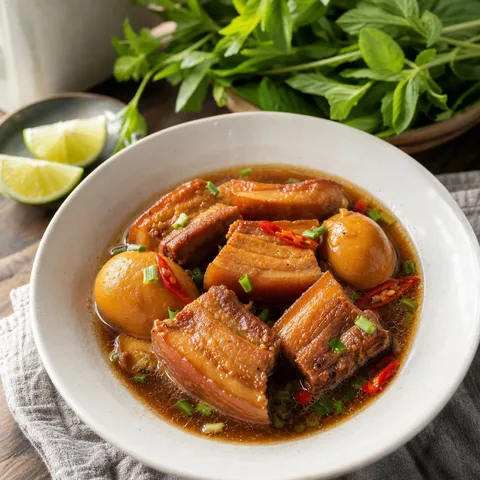
 Thịt Kho Tàu (Caramelized Pork and Eggs)
Meltingly tender pork belly and hard-boiled eggs braised in a rich, sweet, and savory coconut juice caramel, perfect over steamed rice.
 Vietnamese Lens Verified Images are for illustrative purposes only, may be inaccurate, and do not guarantee the presence or absence of specific ingredients.
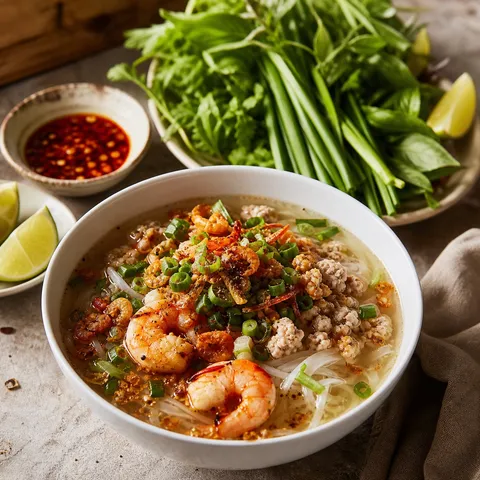
 Hủ Tiếu (Pork and Seafood Noodle Soup)
A Vietnamese pork-bone broth noodle soup loaded with ground pork, shrimp, and dried shrimp over chewy tapioca noodles, finished with garlic chives and fried garlic.
 Vietnamese Lens Verified Images are for illustrative purposes only, may be inaccurate, and do not guarantee the presence or absence of specific ingredients.
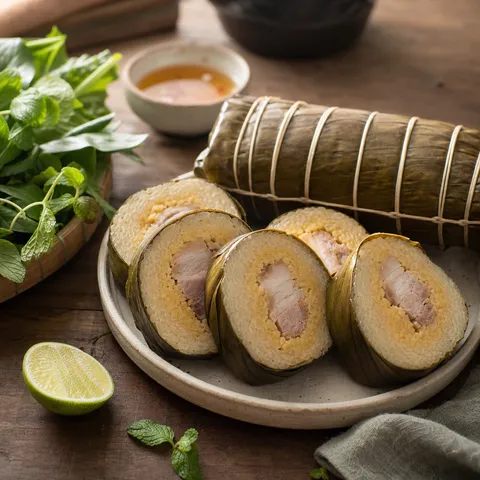
 Bánh Tét (Cylindrical Sticky Rice Cake)
The Southern equivalent of Bánh Chưng, rolled into a cylinder.