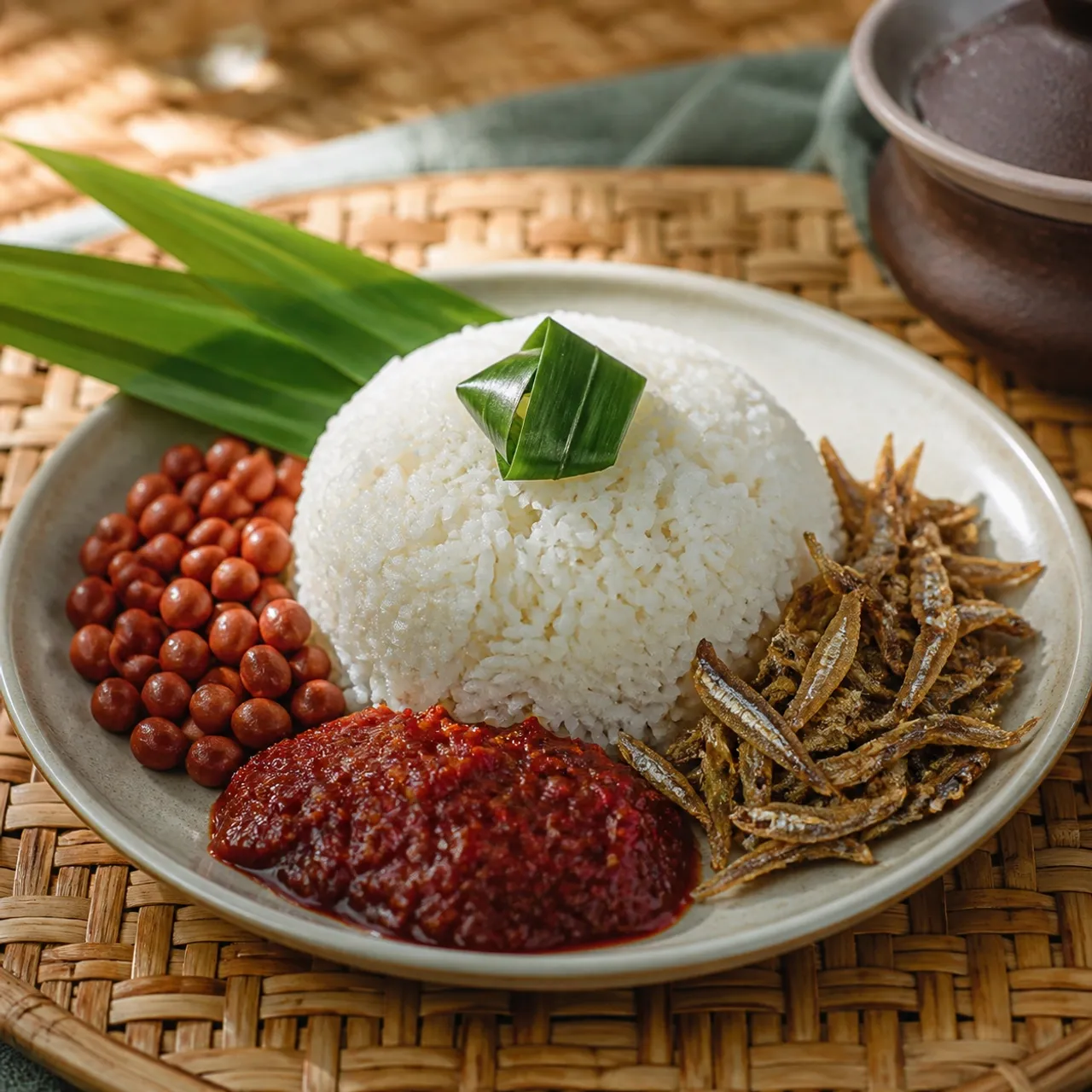
 Indonesian & Malaysian Images are for illustrative purposes only, may be inaccurate, and do not guarantee the presence or absence of specific ingredients.
 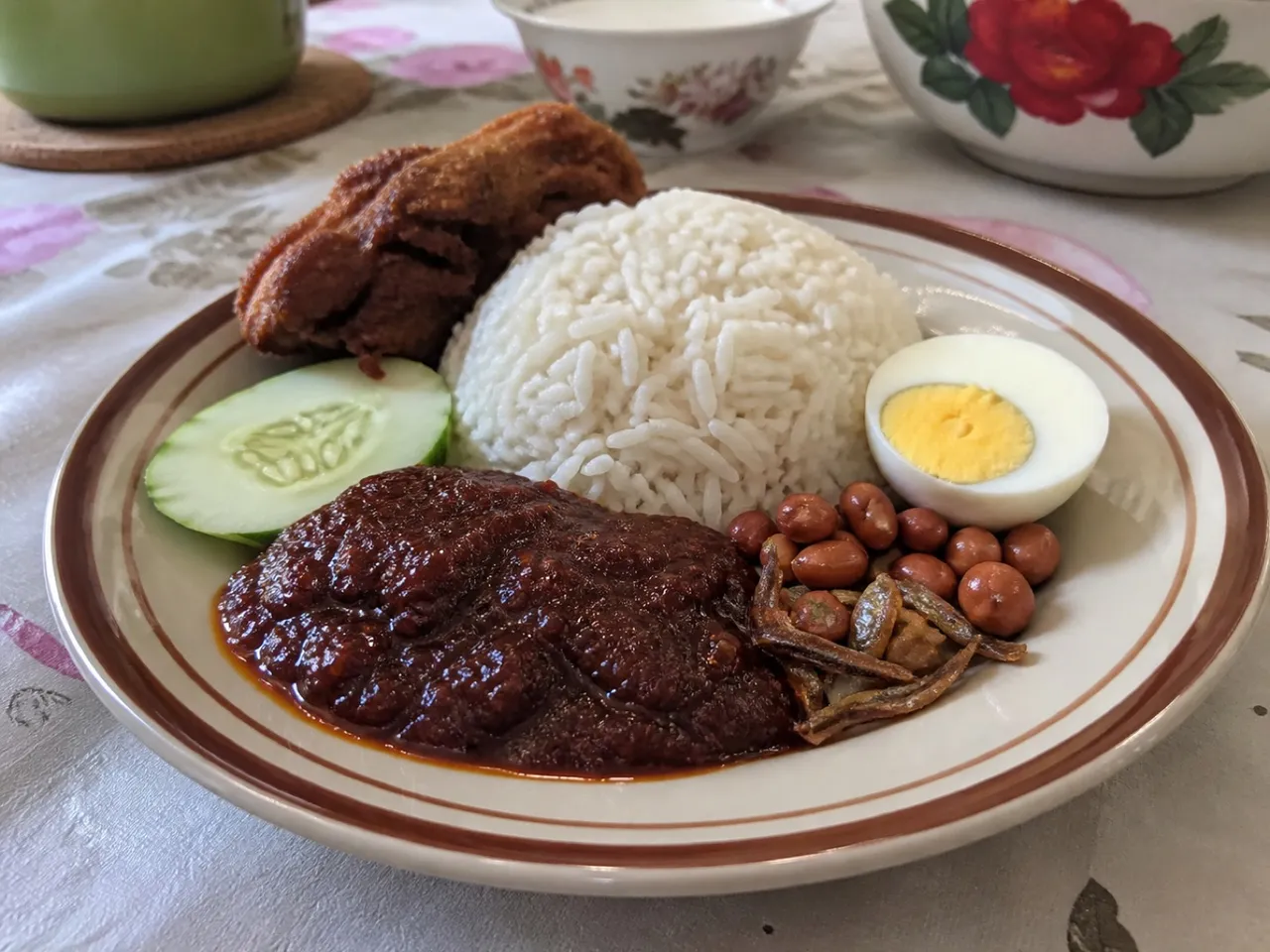 Serving Images are for illustrative purposes only, may be inaccurate, and do not guarantee the presence or absence of specific ingredients.
 Nasi Lemak
Malaysia's national comfort dish — fragrant coconut rice paired with sambal, crispy anchovies, roasted peanuts, and a soft-boiled egg.
Contains common allergens
In the app, Listahan checks these against your household automatically.
Good to know
- Crispy
Matched from this dish's own ingredients and timing. Browse more: crispy recipes
Instructions
6 steps- 1
Rinse the jasmine rice until the water runs clear, then drain well.
- 2
Place the rice in a rice cooker along with the coconut milk, a pinch of salt, knotted pandan leaves, and enough water to reach the standard fill line.
- 3
Start the rice cooker and let it cook until fluffy and fragrant.
- 4
In a small pan, shallow-fry the dried anchovies and raw peanuts until golden and crisp; set aside on paper towels.
- 5
Slice a cucumber and prepare hard-boiled eggs for serving.
- 6
Serve the warm coconut rice surrounded by the crispy anchovies, peanuts, cucumber, egg, and a generous dollop of sambal.
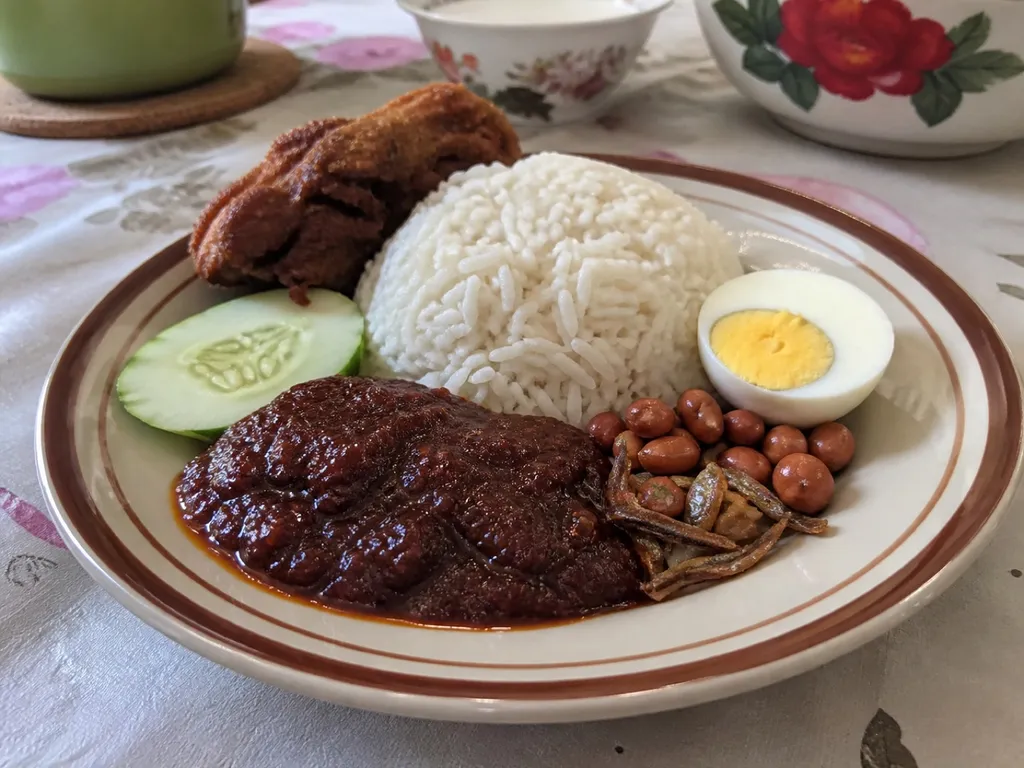 Images are for illustrative purposes only, may be inaccurate, and do not guarantee the presence or absence of specific ingredients.
 Listahan Family Score™
62/100
Works for many families
Score reflects how well this recipe fits a typical busy household. In the app, your Family Score is personalized to your household's allergens, kids, and pantry.
Nutrition
per serving620
Calories
17 g
Protein
82 g
Carbs
26 g
Fat
Estimated per serving. Actual values depend on the brands and portions you use.
Listahan cooking guide
Chef notes & practical guide
Technique notes, ingredient swaps, serve-alongside ideas, storage guidance, and equipment for this recipe.
Cultural context
Nasi lemak — 'rich rice' in Malay — is the national dish of Malaysia, traditionally wrapped in banana leaves and sold by roadside vendors as an early breakfast. The dish grew from Malay kampung (village) food culture where coconut milk was the primary cooking fat and the combination of fragrant rice, dried anchovies, hard-boiled eggs, peanuts, and sambal provided a nutritionally complete and portable morning meal. Today nasi lemak is eaten at any hour and the quality of the sambal is considered the defining measure of any restaurant or home cook's version.
Listahan note
This version treats the sambal as the centerpiece — cooking it long and slowly until deeply red and caramelized — while keeping the coconut rice as aromatic and fluffy as possible.
Technique cues
- Rinse the rice until the water runs nearly clear before cooking with coconut milk — residual surface starch causes the coconut milk to curdle and stick to the pot rather than absorbing cleanly into the grains.
- The sambal ikan bilis (anchovy sambal) needs at least 15 to 20 minutes of slow frying after all the liquid has reduced; stopping too early leaves it paste-like rather than achieving the jammy, almost candy-like consistency of a proper nasi lemak sambal.
- Toast the peanuts in a dry pan just before serving rather than ahead of time — the fresh roasted aroma and crunch are a contrast to the rich coconut rice and should be perceptibly different from the softness of everything else.
Kitchen flow
- Parallel prep
- Start the sambal first since it needs the longest cooking time, then cook the rice while the sambal simmers.
- Make-ahead
- The sambal keeps for up to 2 weeks refrigerated in an airtight jar and actually improves after the first day; make a double batch to simplify future meals.
- Leftover move
- Leftover coconut rice reheats beautifully in a steamer or with a splash of water in the microwave; pair it with a fresh fried egg for a quick breakfast.
- Cleanup rhythm
- Make the sambal in a wide, deep skillet rather than a saucepan to reduce splatter during the long frying stage; soak it immediately after service.
Ingredient brief
Role, handling, and swap guidance for each key ingredient.
jasmine rice
coconut-scented base
Purpose: Jasmine rice has the right starch balance to absorb coconut milk while remaining fluffy rather than gummy.
Handling: Rinse 3 to 4 times and soak for 20 minutes before cooking to reduce cooking time and improve texture.
Adaptation: Long-grain white rice works but produces a slightly less fragrant result; do not use short-grain or sushi rice.
coconut milk
cooking liquid for rice
Purpose: Full-fat coconut milk is the defining flavor of nasi lemak, infusing the rice with creamy richness as it steams.
Handling: Combine with water in a roughly 1:1 ratio so the rice does not come out overly rich or heavy.
Adaptation: Light coconut milk produces a subtler result; coconut cream diluted with water is an acceptable substitute.
pandan leaves
floral fragrance
Purpose: Pandan leaves are essential to the signature aroma of nasi lemak — a vanilla-like, grassy fragrance that you notice the moment the rice lid is lifted.
Handling: Tie the leaves into a loose knot and lay them on top of the rice before cooking; remove before serving.
Adaptation: A drop of pandan extract or vanilla extract can approximate the aroma but will not produce quite the same floral quality.
dried anchovies (ikan bilis)
sambal base and protein
Purpose: Ikan bilis provide intense umami and salt to the sambal while the frying step crisps them to a crunch that is essential to the dish.
Handling: Rinse briefly in cold water, pat dry, and deep-fry or pan-fry until golden and crisp before adding to the sambal.
Adaptation: Small dried shrimp can substitute with a similar flavor, though they do not crisp as dramatically.
dried chilies
sambal heat and color
Purpose: Rehydrated dried chilies give the sambal its deep brick-red color and a mellower, more complex heat than fresh chilies alone.
Handling: Soak in boiling water for 15 minutes until soft, then drain and blend into the spice paste.
Adaptation: A combination of red chili paste and smoked paprika can substitute for color and moderate heat if dried chilies are unavailable.
Technique notes
- Use a rice cooker for the coconut rice if you have one — the sealed environment produces more evenly steamed grains and prevents the coconut milk from scorching on the bottom.
- The sambal is done when you can drag a spatula through it and the channel holds for 3 to 4 seconds before filling back in — any earlier and it will separate when cooled.
- Fry the ikan bilis in batches in enough oil to submerge them, not just coat them — shallow frying produces uneven results and some anchovies will be soggy.
Ingredient swaps
- Gluten-free direction
- Nasi lemak is naturally gluten-free; just verify that any prepared sambal paste you use does not contain wheat-based thickeners.
- Lower-heat direction
- Reduce the dried chilies by half and substitute some with roasted red bell pepper for color without the heat — family-friendly without losing the sambal's jammy texture.
- Weeknight shortcut
- Use a quality store-bought sambal oelek as the base and stir in fried ikan bilis, a touch of sugar, and tamarind to build it up quickly in 10 minutes rather than the full 30.
Serve alongside
- Halved hard-boiled or fried eggs
- Sliced cucumber
- Pan-fried chicken wings or rendang
- Teh tarik (Malaysian pulled milk tea)
- Iced Milo
Serving suggestions only — check pairings for your household's allergens.
Storage & reheating
- Cooked coconut rice keeps refrigerated for up to 2 days but firms noticeably; reheat with a splash of water in a covered pan or steamer.
- Sambal stores for up to 2 weeks in a sealed jar in the refrigerator; the flavor deepens as it sits.
Equipment
- Rice cooker or heavy-lidded saucepan for the coconut rice
- Wide deep skillet or wok for the sambal
- Blender or food processor for the sambal spice paste
Make this household-aware
Listahan Pro checks this recipe against your household's allergens, finds pantry-aware swaps, builds the shopping list, and helps you plan the week around it.
Plan it in Listahan
Add Nasi Lemak to your week, check it against your household's allergens, and build the shopping list automatically.
More Indonesian & Malaysian recipes
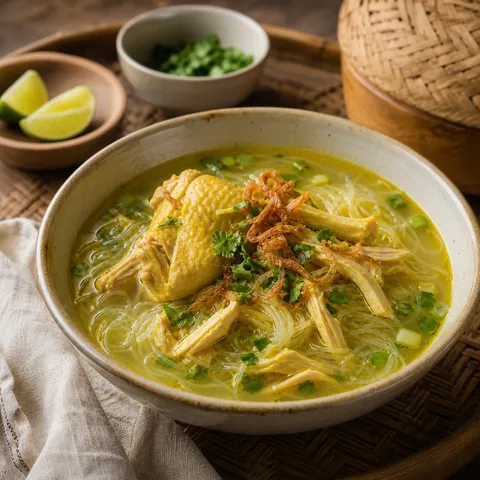 Indonesian & Malaysian Lens Verified Images are for illustrative purposes only, may be inaccurate, and do not guarantee the presence or absence of specific ingredients.
 Soto Ayam
A golden, turmeric-spiced Indonesian chicken soup with glass noodles, crispy shallots, and lime — light, herbal, and deeply comforting.
 Indonesian & Malaysian Lens Verified Images are for illustrative purposes only, may be inaccurate, and do not guarantee the presence or absence of specific ingredients.
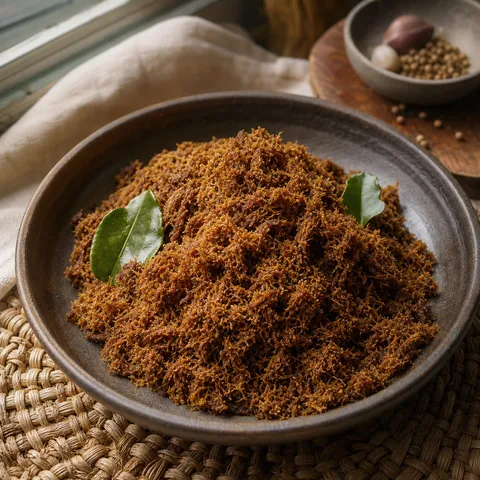
 Beef Serunding
Dry-fried spiced beef floss toasted with coconut and lemongrass until golden and fragrant — a rich, crumbly condiment that transforms plain rice.
 Indonesian & Malaysian Lens Verified Images are for illustrative purposes only, may be inaccurate, and do not guarantee the presence or absence of specific ingredients.
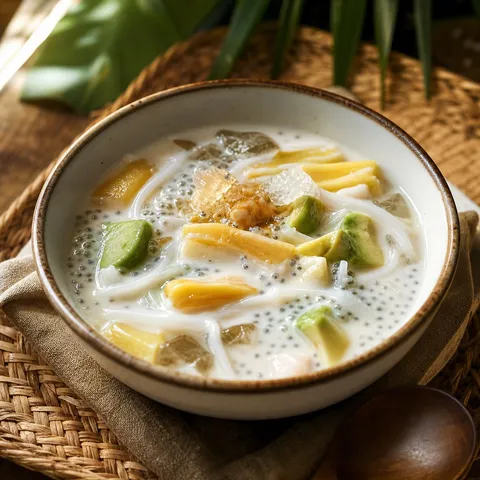
 Es Teler
A refreshing Indonesian iced dessert drink loaded with avocado, jackfruit, and young coconut in sweetened coconut milk.