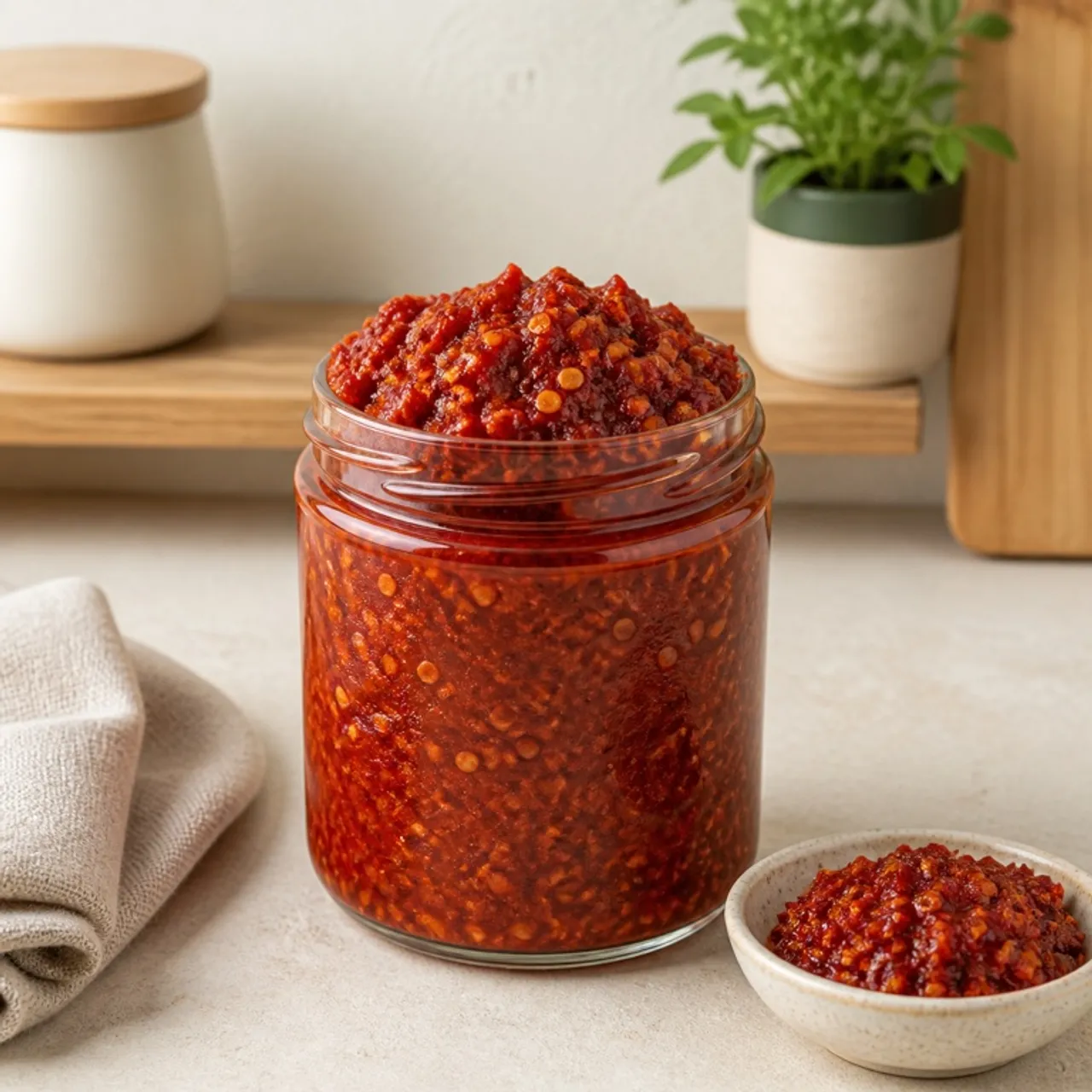
 Food Lens Images are for illustrative purposes only, may be inaccurate, and do not guarantee the presence or absence of specific ingredients.
 Food Lens · Recipe ingredients
Sambal
Heat is the constant, but the character behind it varies dramatically by type. Sambal oelek is raw, sharp, and sour-bright. Sambal terasi is deeply savory and funky from fermented shrimp paste with rounded heat. Sambal bajak is sweet, caramelized, and complex. Sambal matah is fresh and herbal with lemongrass and shallot lifting the chili heat.
Lens VerifiedSambal is a family of chili-based condiments and pastes originating in the cuisines of Southeast Asia—particularly Indonesia, Malaysia, Singapore, and Brunei—where it serves as table condiment, cooking base, and finishing sauce simultaneously. Ranging from raw and fresh to slow-cooked and deeply caramelized, sambals share a chili foundation but diverge widely in heat level, secondary ingredients, and texture. A well-made sambal is not merely hot—it is complex, layered, and essential.
Where it comes from
Sambal originated in the Indonesian archipelago, with deep roots in Javanese and Sundanese cooking traditions, evolving across thousands of islands into hundreds of regional varieties that collectively define Southeast Asian chili culture.
Varieties — The family includes: sambal oelek (raw ground chilies with salt and vinegar—the simplest and most pungent); sambal terasi (with fermented shrimp paste); sambal matah (Balinese raw shallot-lemongrass sambal); sambal bajak (slow-cooked, sweeter); sambal belacan (Malaysian style with belacan paste); and many regional variations across the archipelago and Malaysian peninsula.
In Indonesian food culture, no meal is complete without sambal—it is as fundamental as salt and pepper in Western kitchens. Each family may maintain its own sambal recipe, and regional identity is closely tied to local sambal style. In Singapore and Malaysia, sambal belacan is a fierce point of culinary pride.
In a modern kitchen — Jarred sambal oelek has become a mainstream pantry staple in Western kitchens, prized by chefs and home cooks as a versatile heat-with-flavor condiment that goes beyond plain hot sauce. Fresh sambal traditions—particularly sambal matah—have found audiences in contemporary restaurants serving Southeast Asian-influenced menus.
Buying it
For jarred sambal oelek, look for a deep brick-red color and a simple ingredient list: chilies, salt, and vinegar. Avoid versions with excessive preservatives or artificial color. For sambal terasi, quality depends heavily on the belacan (fermented shrimp paste) used—artisanal versions from Malaysian or Indonesian producers are far superior to mass-market alternatives.
Storing it
Keep sambal sealed in the pantry until opened; refrigerate afterward and use a clean spoon each time to keep it from spoiling. A darkened surface or off smell means it's past its best.
Keeps about 1 year in the pantry.
Out of sambal? Good swaps
General cooking guidance — always check the labels on the products you use. Listahan’s allergen checks run automatically when you plan a recipe in the app. Not medical advice.
Recipes that use sambal
Common questions about sambal
Is sambal vegan?
Sambal is generally plant-based and suitable for a vegan diet, but brands differ — confirm on the label.
What can I use instead of sambal?
Good swaps include , , . Each behaves a little differently — see the swaps above for notes, and always check labels for allergens.
How do I store sambal?
Keep sambal sealed in the pantry until opened; refrigerate afterward and use a clean spoon each time to keep it from spoiling. A darkened surface or off smell means it's past its best. It keeps about 1 year in the pantry.
More recipe ingredients
See all


Make sambal about your kitchen — with Listahan Pro
Everything above is free, forever. Pro adds the Household Lens — the same food, seen for your family:
-
Checked for each member
Flags sambal per person against your household's allergies and school rules — not just a generic "contains" tag.
-
Pantry-aware
Knows whether you already have it, what is running low, and the best swap from what is in your kitchen tonight.
-
What it costs near you
A real price from the Presyo community index, so you can plan the budget — not guess.
-
Your household memory
Who likes it, plus your own private notes — brand, where you keep it, who skips it.
Allergen safety is always free — Pro adds the automation, never the safety.
Cook with sambal — safely
Plan a recipe in Listahan and the household allergen check runs automatically — every plan, every swap, every lunchbox. Safety is never paywalled.