 Indonesian & Malaysian Images are for illustrative purposes only, may be inaccurate, and do not guarantee the presence or absence of specific ingredients.
  Serving Images are for illustrative purposes only, may be inaccurate, and do not guarantee the presence or absence of specific ingredients.
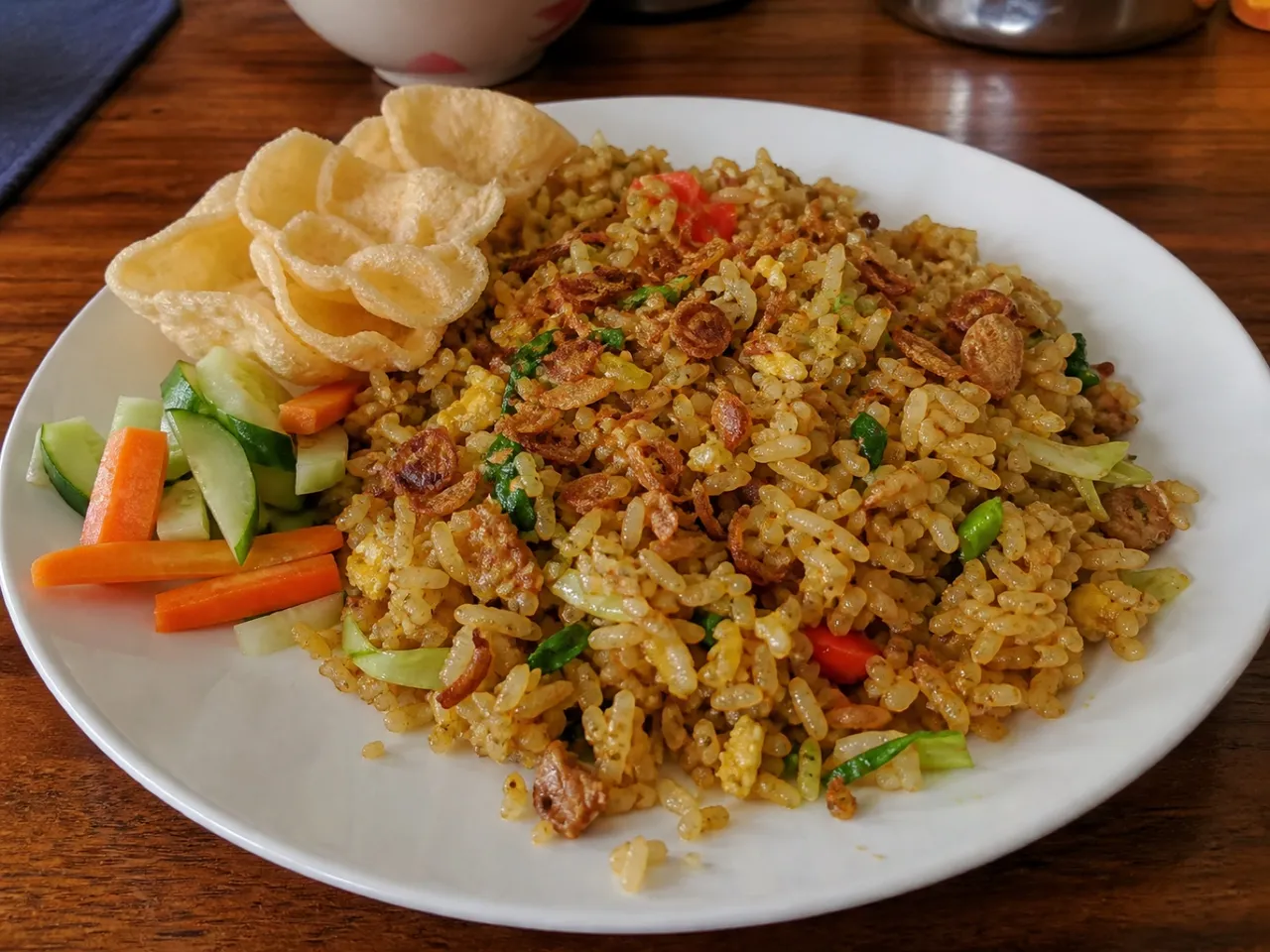
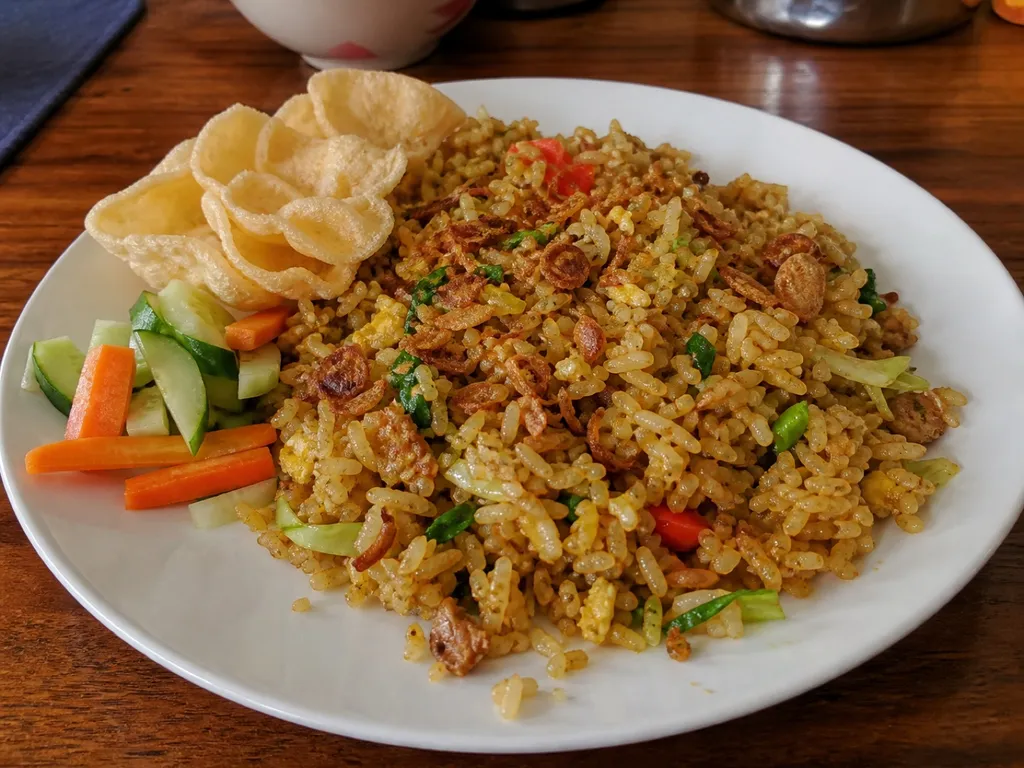
 Nasi Goreng
Indonesia's beloved fried rice — smoky, savory, and fragrant with shrimp paste and sweet soy sauce, topped with a fried egg and crispy shallots.
Contains common allergens
In the app, Listahan checks these against your household automatically.
Good to know
- Ready in under 30 minutes
Matched from this dish's own ingredients and timing. Browse more: 30-minute meals
Instructions
6 steps- 1
Heat 1 tbsp of oil in a wok over medium-high heat. Scramble the eggs until just cooked, then remove from the wok.
- 2
In the same wok, add a little more oil and sauté the minced shallots and garlic until fragrant and softened (about 2 minutes).
- 3
Stir in the sambal oelek and cook for another 30 seconds.
- 4
Add the day-old rice, breaking up any clumps with a spatula. Stir-fry for 3-4 minutes until heated through.
- 5
Drizzle the sweet soy sauce over the rice and toss evenly until all grains are coated and caramelized.
- 6
Return the scrambled eggs to the wok, toss well to combine, and serve hot with cucumber slices.
 Images are for illustrative purposes only, may be inaccurate, and do not guarantee the presence or absence of specific ingredients.
 Listahan Family Score™
66/100
Works for many families
Score reflects how well this recipe fits a typical busy household. In the app, your Family Score is personalized to your household's allergens, kids, and pantry.
Nutrition
per serving395
Calories
11 g
Protein
78 g
Carbs
3 g
Fat
Estimated per serving. Actual values depend on the brands and portions you use.
Listahan cooking guide
Chef notes & practical guide
Technique notes, ingredient swaps, serve-alongside ideas, storage guidance, and equipment for this recipe.
Cultural context
Nasi goreng — literally 'fried rice' in Indonesian — is the national dish of Indonesia and a staple eaten at any hour of the day or night. It evolved as a way to use leftover cooked rice, since frying day-old grains produces a drier, better-textured result than fresh-cooked rice. What sets the Indonesian version apart from other Asian fried rices is kecap manis, a thick sweet soy sauce that gives the dish its characteristic dark color and caramel depth.
Listahan note
This version keeps the kecap manis front and center and tops the rice with a fried egg, the way it is most commonly served as a full meal in Indonesian households.
Technique cues
- Use rice that has been refrigerated overnight — fresh rice steams in the pan and clumps, while day-old grains separate cleanly and develop better color.
- Add kecap manis toward the end of cooking rather than the beginning so the natural sugars caramelize briefly without burning to bitterness.
- Cook on the highest heat your burner can produce: the brief high-heat contact gives the rice a light smoky quality that defines good nasi goreng.
Kitchen flow
- Parallel prep
- While the skillet heats, slice shallots, mince garlic, and measure out the kecap manis so everything is ready for the fast high-heat cook.
- Make-ahead
- Cook and refrigerate rice up to 2 days ahead — this is actually required for the best texture, so it can be planned deliberately.
- Leftover move
- Reheat nasi goreng in a dry skillet over medium-high heat rather than a microwave; it refreshes the texture and revives the caramelized notes.
- Cleanup rhythm
- Use one large wok or skillet for the rice and a small nonstick pan for the fried eggs to minimize dishes.
Ingredient brief
Role, handling, and swap guidance for each key ingredient.
day-old cooked jasmine rice
starchy base
Purpose: Cold refrigerated rice has lower moisture and starch activity, which allows individual grains to fry rather than steam and stick together.
Handling: Spread leftover rice on a tray and break up any clumps with your fingers before adding to the pan.
Adaptation: Any long-grain white rice works; avoid brown rice as it takes longer to heat through and can become chewy.
kecap manis
sweet-savory seasoning
Purpose: This Indonesian sweet soy sauce is the flavor backbone of nasi goreng, adding molasses depth and the signature dark glaze.
Handling: Measure it out before cooking since the high-heat window is short.
Adaptation: Mix 2 parts regular soy sauce with 1 part brown sugar as a substitute — it is thinner but close in flavor.
shallots
aromatic foundation
Purpose: Shallots fry more evenly than onions and lend a sweeter, less pungent base that is characteristic of Indonesian cooking.
Handling: Slice thinly and let them soften and lightly color in oil before adding any other ingredients.
Adaptation: A small red onion works in a pinch, though the flavor will be slightly sharper.
eggs
protein and topping
Purpose: Eggs provide protein and richness; a fried egg placed on top with a runny yolk is the traditional finish that turns this into a complete meal.
Handling: Fry in a separate pan so you can time the yolk precisely — you want it barely set when served.
Adaptation: Scrambled egg stirred into the rice works for family-style serving where individual fried eggs are impractical.
sambal oelek or fresh chili
heat element
Purpose: A chili component is essential to balance the sweetness of kecap manis and bring the dish to life.
Handling: Stir in with the aromatics early so the heat blooms in the hot oil.
Adaptation: Sriracha is a widely available substitute that adds similar heat with a touch of garlic.
Technique notes
- A well-seasoned carbon steel wok conducts heat more intensely than a nonstick pan and produces better wok hei — that lightly smoky char that makes restaurant-style fried rice distinctive.
- Press the rice into a thin layer against the hot surface for 30 seconds without stirring to encourage light browning on the bottom before tossing.
- Taste and adjust kecap manis rather than soy sauce at the end — adding more sweet soy keeps the color dark and deepens the caramel note without making the dish saltier.
Ingredient swaps
- Gluten-free direction
- Use tamari in place of any regular soy sauce, and check that your kecap manis is labeled gluten-free — several Indonesian brands make wheat-free versions.
- Vegetarian direction
- Skip shrimp paste (terasi) and use mushroom-based soy sauce; add diced firm tofu or tempeh for protein.
- Lower-sodium direction
- Reduce kecap manis by a third and add a splash of rice vinegar to maintain depth without as much salt.
Serve alongside
- Prawn crackers (krupuk)
- Quick cucumber and tomato acar (pickled salad)
- Fried tempeh strips
- Iced jasmine tea
- Cold Bintang-style lager
Serving suggestions only — check pairings for your household's allergens.
Storage & reheating
- Store leftover nasi goreng in an airtight container in the refrigerator for up to 2 days.
- Reheat in a hot skillet with a small drizzle of oil rather than a microwave to restore the texture; add a fresh fried egg on top if desired.
Equipment
- Large carbon steel wok or heavy skillet (at least 12 inches)
- Small nonstick frying pan for the eggs
- Wide spatula or wok spatula for tossing
Make this household-aware
Listahan Pro checks this recipe against your household's allergens, finds pantry-aware swaps, builds the shopping list, and helps you plan the week around it.
Plan it in Listahan
Add Nasi Goreng to your week, check it against your household's allergens, and build the shopping list automatically.
More Indonesian & Malaysian recipes
 Indonesian & Malaysian Lens Verified Images are for illustrative purposes only, may be inaccurate, and do not guarantee the presence or absence of specific ingredients.
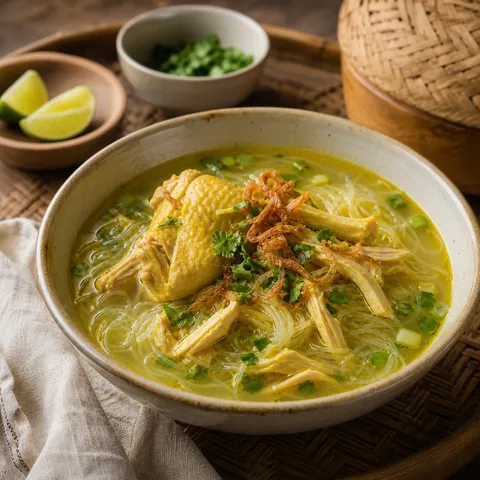
 Soto Ayam
A golden, turmeric-spiced Indonesian chicken soup with glass noodles, crispy shallots, and lime — light, herbal, and deeply comforting.
 Indonesian & Malaysian Lens Verified Images are for illustrative purposes only, may be inaccurate, and do not guarantee the presence or absence of specific ingredients.
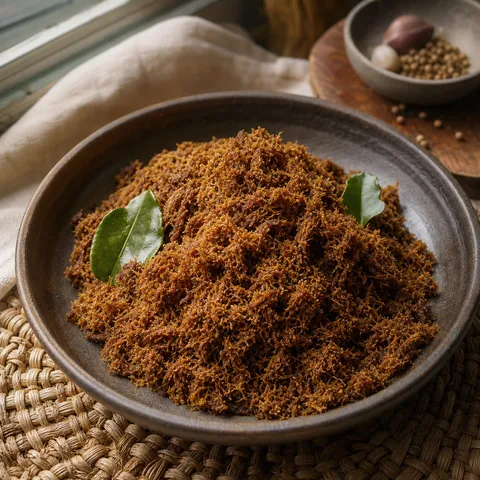
 Beef Serunding
Dry-fried spiced beef floss toasted with coconut and lemongrass until golden and fragrant — a rich, crumbly condiment that transforms plain rice.
 Indonesian & Malaysian Lens Verified Images are for illustrative purposes only, may be inaccurate, and do not guarantee the presence or absence of specific ingredients.
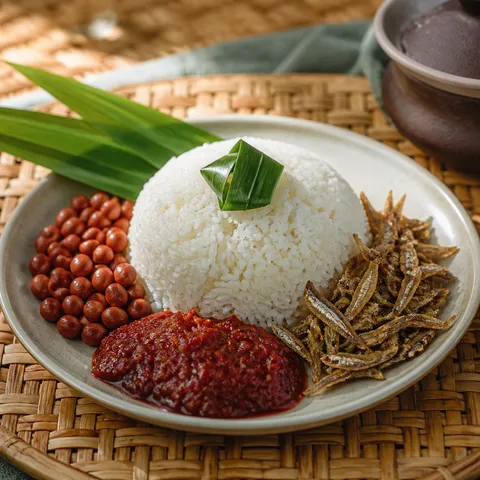
 Nasi Lemak
Malaysia's national comfort dish — fragrant coconut rice paired with sambal, crispy anchovies, roasted peanuts, and a soft-boiled egg.