 Indonesian & Malaysian Images are for illustrative purposes only, may be inaccurate, and do not guarantee the presence or absence of specific ingredients.
  Serving Images are for illustrative purposes only, may be inaccurate, and do not guarantee the presence or absence of specific ingredients.
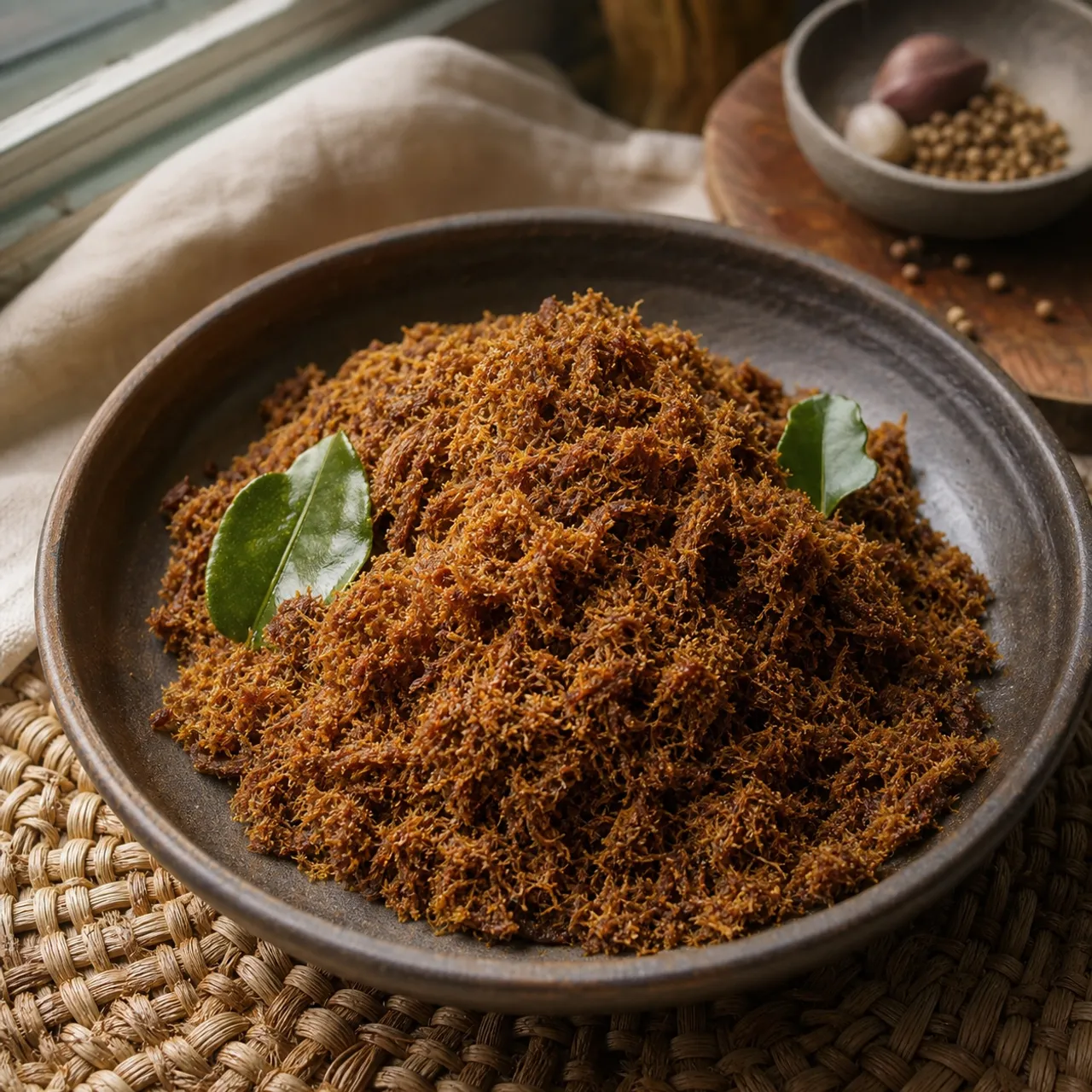
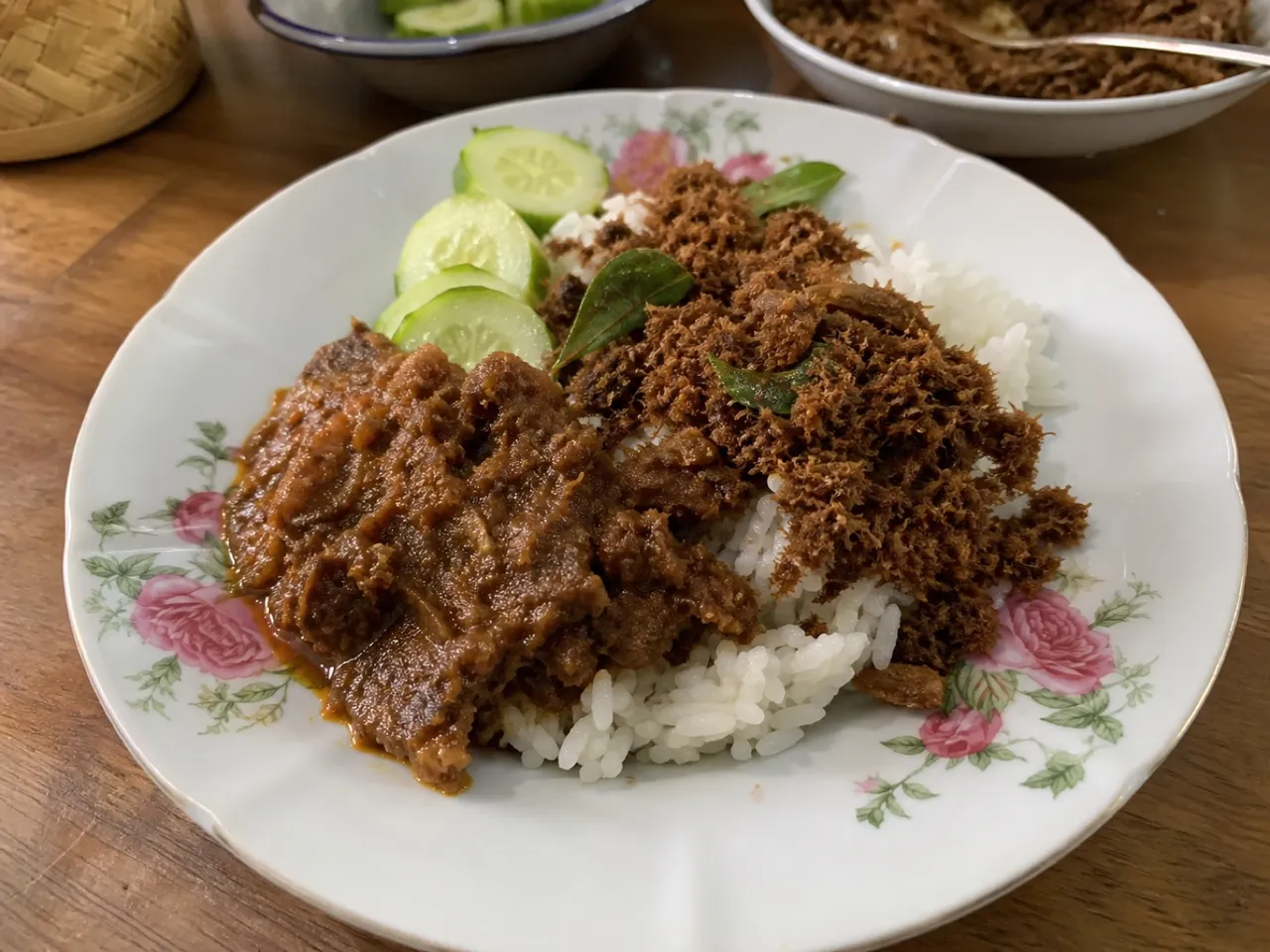
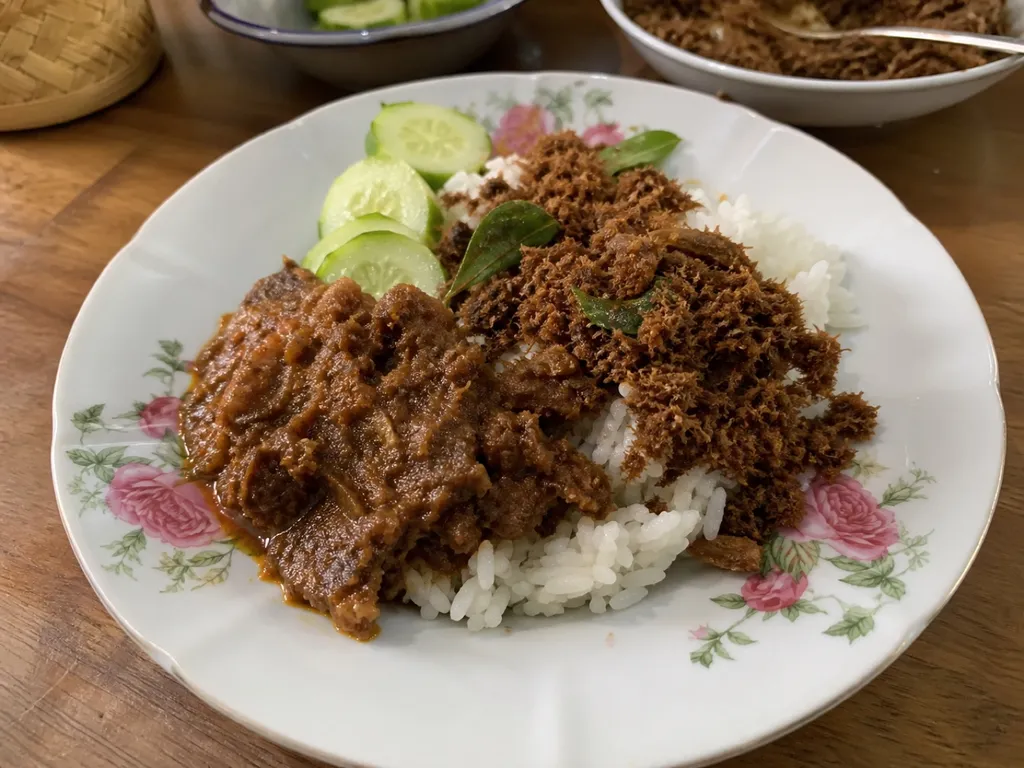
 Beef Serunding
Dry-fried spiced beef floss toasted with coconut and lemongrass until golden and fragrant — a rich, crumbly condiment that transforms plain rice.
No common allergens detected
Based on this recipe's ingredient list. Always verify with your own brands and labels.
Good to know
- Crispy
Matched from this dish's own ingredients and timing. Browse more: crispy recipes
Instructions
6 steps- 1
Boil the beef until it is very tender and easily falls apart. Remove from water and let cool.
- 2
Shred the boiled beef finely along the grain using two forks or your fingers.
- 3
In a large wok, sauté the spice paste and kaffir lime leaves until fragrant.
- 4
Add the shredded beef and tamarind juice, stirring continuously to coat the meat in the spices.
- 5
Stir in the grated coconut and reduce the heat to low.
- 6
Dry-roast the mixture in the wok, stirring constantly for 45-60 minutes, until the beef and coconut are completely dry, crispy, and dark brown.
 Images are for illustrative purposes only, may be inaccurate, and do not guarantee the presence or absence of specific ingredients.
 Listahan Family Score™
70/100
Good fit for most families
Score reflects how well this recipe fits a typical busy household. In the app, your Family Score is personalized to your household's allergens, kids, and pantry.
Nutrition
per serving625
Calories
45 g
Protein
14 g
Carbs
43 g
Fat
Estimated per serving. Actual values depend on the brands and portions you use.
Listahan cooking guide
Chef notes & practical guide
Technique notes, ingredient swaps, serve-alongside ideas, storage guidance, and equipment for this recipe.
Cultural context
Serunding is a dry, fried coconut and meat condiment originating from the Malay archipelago and closely associated with both Malaysian and Indonesian ceremonial cooking. Like rendang, it was developed as a preservation technique — the thorough drying and frying in coconut fat creates a product that keeps at room temperature for weeks. Beef serunding is a traditional accompaniment to ketupat during Eid celebrations across Malaysia and Indonesia, where it is eaten in small quantities alongside rice cakes as a rich condiment rather than a main dish.
Listahan note
This version produces a dry, crumbly, intensely flavored beef and toasted coconut condiment — used sparingly as a flavoring over rice or ketupat, not eaten in large portions as a standalone protein.
Technique cues
- Shred the beef as finely as possible before frying with the coconut — the finer the shred, the more evenly the beef and coconut will integrate and the more consistently the final product will dry.
- The final frying stage must continue until there is no moisture left and the mixture is completely dry — any residual moisture shortens the shelf life drastically and the texture will be chewy rather than the desired crumble.
- Use fresh grated coconut if available rather than desiccated — fresh coconut has natural oils that contribute to the characteristic coconut richness and it toasts more evenly than processed desiccated coconut.
Kitchen flow
- Parallel prep
- Boil and shred the beef one day ahead while preparing the spice paste; the next day, only the frying stage remains.
- Make-ahead
- Serunding keeps at room temperature in an airtight container for up to 2 weeks and refrigerated for up to 1 month — making a large batch is highly recommended.
- Leftover move
- Sprinkle serunding over rice porridge (congee), use as a filling for sandwiches, or mix into fried rice for instant depth.
- Cleanup rhythm
- Use a wide wok rather than a saucepan for the frying stage — the greater surface area speeds up moisture evaporation and makes stirring easier.
Ingredient brief
Role, handling, and swap guidance for each key ingredient.
beef brisket or chuck
main protein
Purpose: Tougher braising cuts shred easily after boiling and integrate well with the coconut during the dry-frying stage.
Handling: Boil the beef whole in seasoned water until fork-tender, then cool and shred very finely with two forks or by hand.
Adaptation: Bone-in chicken thighs can replace beef for a quicker-cooking version; shred after boiling.
fresh grated or desiccated coconut
body and rich coconut flavor
Purpose: Coconut is the defining ingredient of serunding — it absorbs the spice flavors and provides the dry, nutty texture of the finished condiment.
Handling: Use unsweetened desiccated coconut if fresh is unavailable; toast lightly before adding to the pan to jump-start the drying.
Adaptation: There is no substitute for coconut in this dish — it is the defining ingredient.
coriander seeds
aromatic backbone of spice paste
Purpose: Coriander is the dominant spice in serunding and provides a warm, citrusy depth that ties the beef and coconut together.
Handling: Toast whole coriander seeds in a dry pan until fragrant, then grind — toasting deepens the flavor significantly.
Adaptation: Pre-ground coriander can substitute; use slightly less as the flavor is more concentrated.
kaffir lime leaves
fragrant accent
Purpose: Finely sliced kaffir lime leaves release floral oils during frying that perfume the entire batch of serunding.
Handling: Remove the central stem and slice into ultra-thin strips (chiffonade) so they cook evenly.
Adaptation: A small amount of lime zest can substitute; add at the very end of cooking rather than during frying.
Technique notes
- The frying stage takes 45 minutes to 1 hour of constant low-heat stirring — do not rush it over higher heat, as the coconut will brown unevenly and the beef can scorch.
- The serunding is done when a handful pressed together crumbles apart immediately when released and there is no steam rising from the surface.
- Store with a silica gel packet or a small piece of pandan leaf in the container to absorb any residual moisture and extend shelf life.
Ingredient swaps
- Gluten-free direction
- Serunding is naturally gluten-free; verify only that any soy sauce used in the spice paste is tamari.
- Vegan direction
- Substitute soy tempeh, crumbled and pan-fried until dry, for the beef — the coconut and spice technique works identically and produces a plant-based version.
Serve alongside
- Ketupat or lontong (compressed rice cakes)
- Beef rendang
- Acar (pickled vegetables)
- Teh tarik
- Iced coconut water
Serving suggestions only — check pairings for your household's allergens.
Storage & reheating
- Completely dry serunding stores at room temperature in an airtight container for up to 2 weeks.
- Refrigerate for up to 1 month; freeze for up to 3 months and bring to room temperature before serving.
Equipment
- Large wide wok for even drying during the frying stage
- Spice grinder or mortar and pestle for toasting and grinding spices
- Large pot for boiling the beef
Make this household-aware
Listahan Pro checks this recipe against your household's allergens, finds pantry-aware swaps, builds the shopping list, and helps you plan the week around it.
Plan it in Listahan
Add Beef Serunding to your week, check it against your household's allergens, and build the shopping list automatically.
More Indonesian & Malaysian recipes
 Indonesian & Malaysian Lens Verified Images are for illustrative purposes only, may be inaccurate, and do not guarantee the presence or absence of specific ingredients.
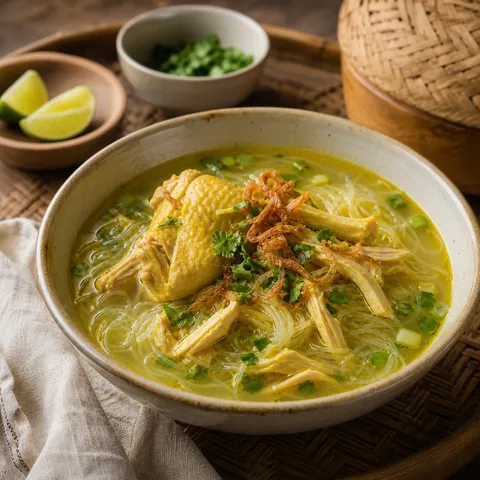
 Soto Ayam
A golden, turmeric-spiced Indonesian chicken soup with glass noodles, crispy shallots, and lime — light, herbal, and deeply comforting.
 Indonesian & Malaysian Lens Verified Images are for illustrative purposes only, may be inaccurate, and do not guarantee the presence or absence of specific ingredients.
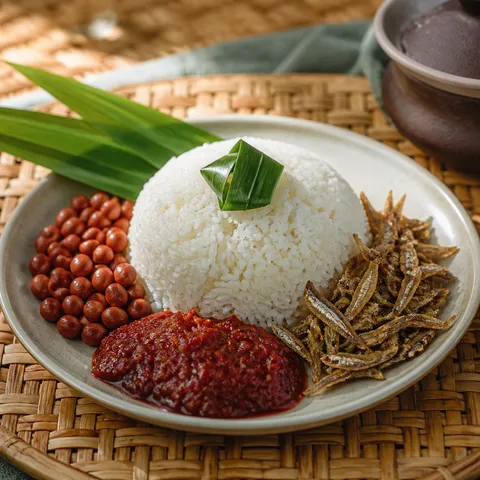
 Nasi Lemak
Malaysia's national comfort dish — fragrant coconut rice paired with sambal, crispy anchovies, roasted peanuts, and a soft-boiled egg.
 Indonesian & Malaysian Lens Verified Images are for illustrative purposes only, may be inaccurate, and do not guarantee the presence or absence of specific ingredients.
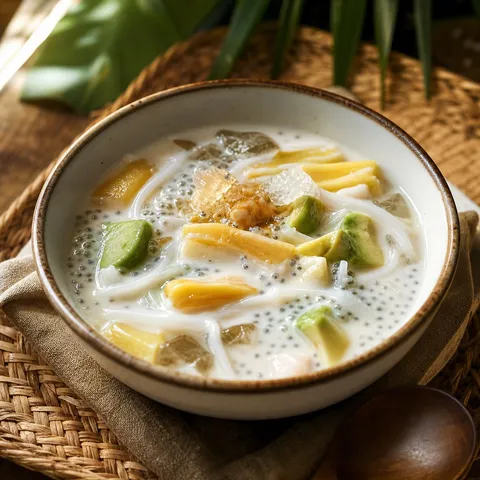
 Es Teler
A refreshing Indonesian iced dessert drink loaded with avocado, jackfruit, and young coconut in sweetened coconut milk.