 Food Lens Images are for illustrative purposes only, may be inaccurate, and do not guarantee the presence or absence of specific ingredients.
 Food Lens · Produce
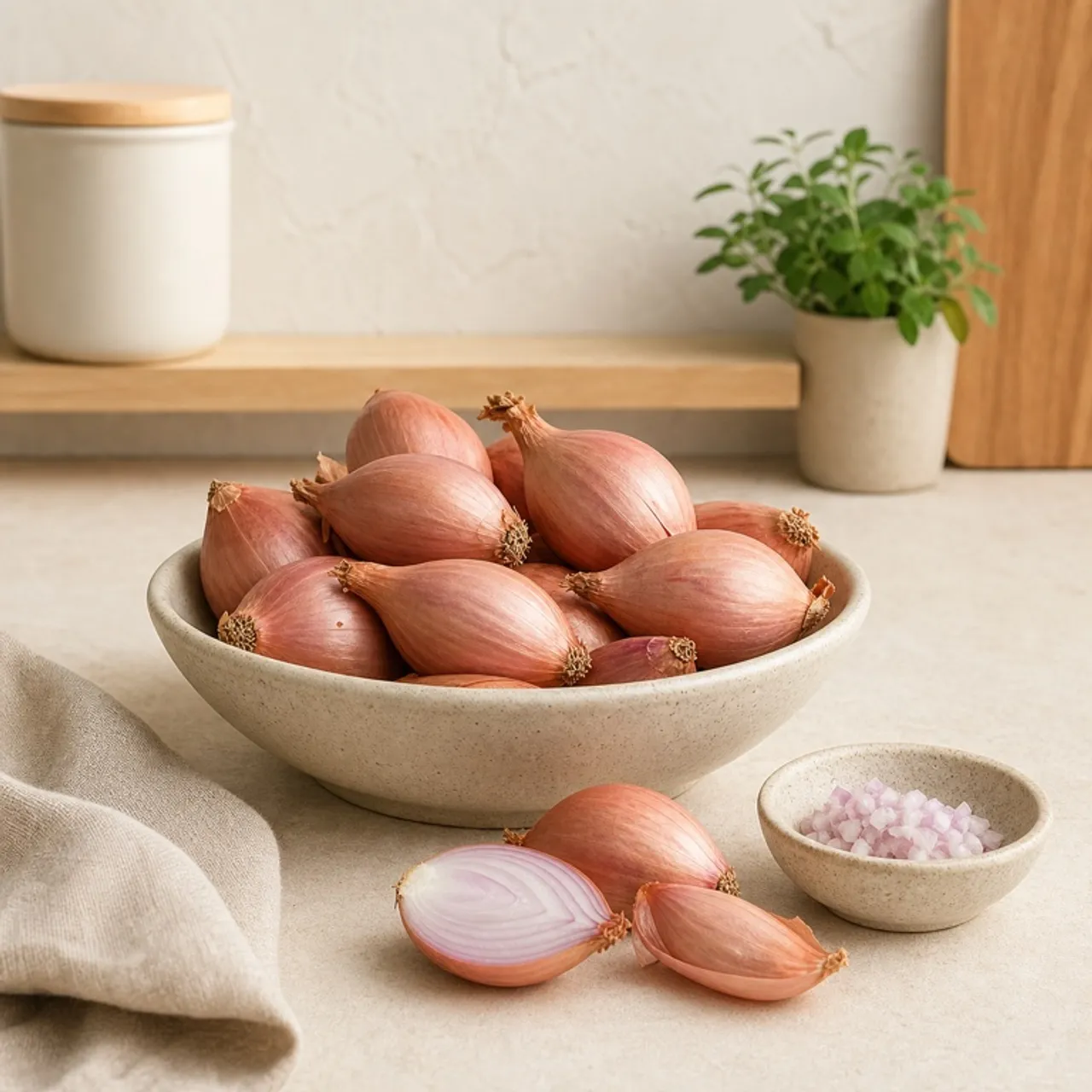
Shallots
Mild, sweet, and lightly garlicky with a wine-like complexity that deepens when cooked; less sharp and sulfurous than yellow onion.
Lens VerifiedShallots are small, elongated alliums with a milder, sweeter, and more complex flavor than yellow onions, prized in French, Southeast Asian, and Middle Eastern cooking as a foundational aromatic.
Where it comes from
Shallots have been cultivated in the Middle East and Mediterranean for at least 2,000 years, prized by Roman and medieval European cooks for their refined sweetness. They became a cornerstone of French classical cuisine and spread to Southeast Asia via the spice trade, where cooks adopted them enthusiastically — especially in fried form as a flavor-packed garnish. In North America, shallots moved from specialty produce items to mainstream grocery staples as interest in French and Southeast Asian cooking grew through the late 20th century.
Varieties — French gray shallots are considered the finest — drier and more pungent. Pink/red shallots (common in Asian cooking) are smaller, rounder, and often used fried as a garnish. Dutch yellow shallots are the most common in North American grocery stores.
Crispy fried shallots (bawang goreng in Indonesian/Malay, hanh phi in Vietnamese) are a ubiquitous table condiment across Southeast Asia; in French cuisine, shallots are the essential base of sauce béarnaise and mignonette for oysters.
In a modern kitchen — Shallots caramelize faster than onions because of their higher sugar content — watch your heat and stir frequently. Finely minced shallots raw in vinaigrettes soften in acidity within minutes, becoming silky without raw pungency.
Buying it
Choose firm, dry shallots with papery skins that crackle when squeezed — no soft spots, sprouting, or mold. Smaller shallots tend to have a more concentrated flavor. They should feel heavy and tight, not hollow.
Storing it
Store in a cool, dark, well-ventilated spot, not the fridge, same as onions. Soft spots, sprouting, or a musty smell mean it's time to toss it.
Keeps about 1 month in the pantry.
In season
Peak season is August–October, though it's available year-round.
Locally harvested in late summer to fall in much of North America; cured and imported shallots keep them available year-round.
Out of shallots? Good swaps
- Yellow onion — Sharper and more pungent; use ½ the amount and cook longer to soften — flavor won't be as refined
- Red onion — Milder and slightly sweet; use ½ the amount raw, 1:1 cooked — works in vinaigrettes
- Leeks (white part) — Very mild; use equal weight — best as a cooked substitute in sauces and braises
General cooking guidance — always check the labels on the products you use. Listahan’s allergen checks run automatically when you plan a recipe in the app. Not medical advice.
Recipes that use shallots
- Thịt Kho Tàu (Caramelized Pork and Eggs)
- Soto Ayam
- Beef Serunding
- Chả Giò (Fried Spring Rolls)
- Khao Soi
- Bún Chả (Grilled Pork with Rice Noodles)
- Cá Kho Tộ (Caramelized Fish in Clay Pot)
- Steak Tartare
- Mì Quảng (Turmeric Noodle Soup)
- Chè Trôi Nước (Sticky Rice Balls in Ginger Syrup)
- Khao Kluk Kapi
- Bubur Ayam
Common questions about shallots
Is shallots vegan?
Shallots is generally plant-based and suitable for a vegan diet, but brands differ — confirm on the label.
What can I use instead of shallots?
Good swaps include Yellow onion, Red onion, Leeks (white part). Each behaves a little differently — see the swaps above for notes, and always check labels for allergens.
How do I store shallots?
Store in a cool, dark, well-ventilated spot, not the fridge, same as onions. Soft spots, sprouting, or a musty smell mean it's time to toss it. It keeps about 1 month in the pantry.
More produce
See all


Make shallots about your kitchen — with Listahan Pro
Everything above is free, forever. Pro adds the Household Lens — the same food, seen for your family:
-
Checked for each member
Flags shallots per person against your household's allergies and school rules — not just a generic "contains" tag.
-
Pantry-aware
Knows whether you already have it, what is running low, and the best swap from what is in your kitchen tonight.
-
What it costs near you
A real price from the Presyo community index, so you can plan the budget — not guess.
-
Your household memory
Who likes it, plus your own private notes — brand, where you keep it, who skips it.
Allergen safety is always free — Pro adds the automation, never the safety.
Cook with shallots — safely
Plan a recipe in Listahan and the household allergen check runs automatically — every plan, every swap, every lunchbox. Safety is never paywalled.