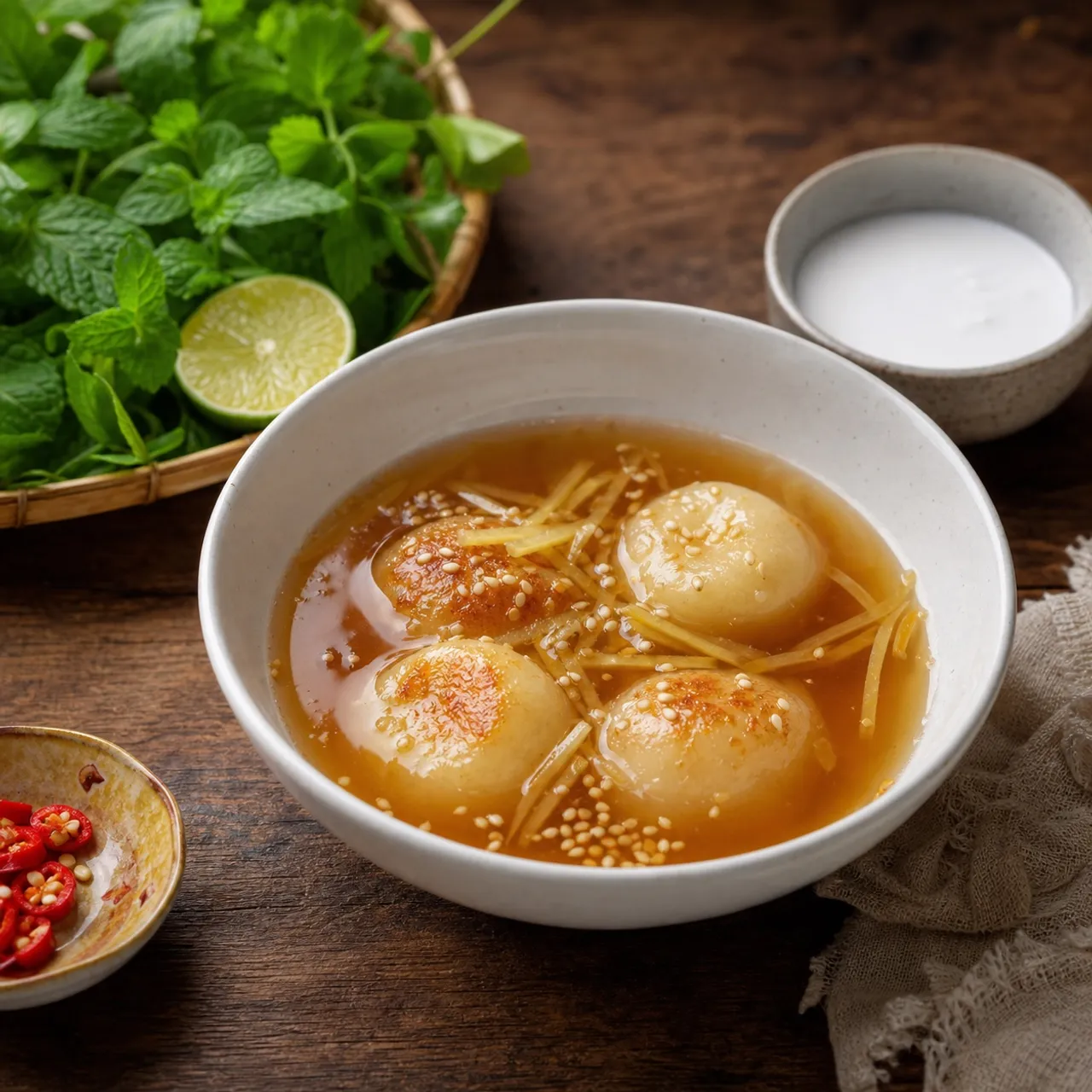
 Vietnamese Images are for illustrative purposes only, may be inaccurate, and do not guarantee the presence or absence of specific ingredients.
 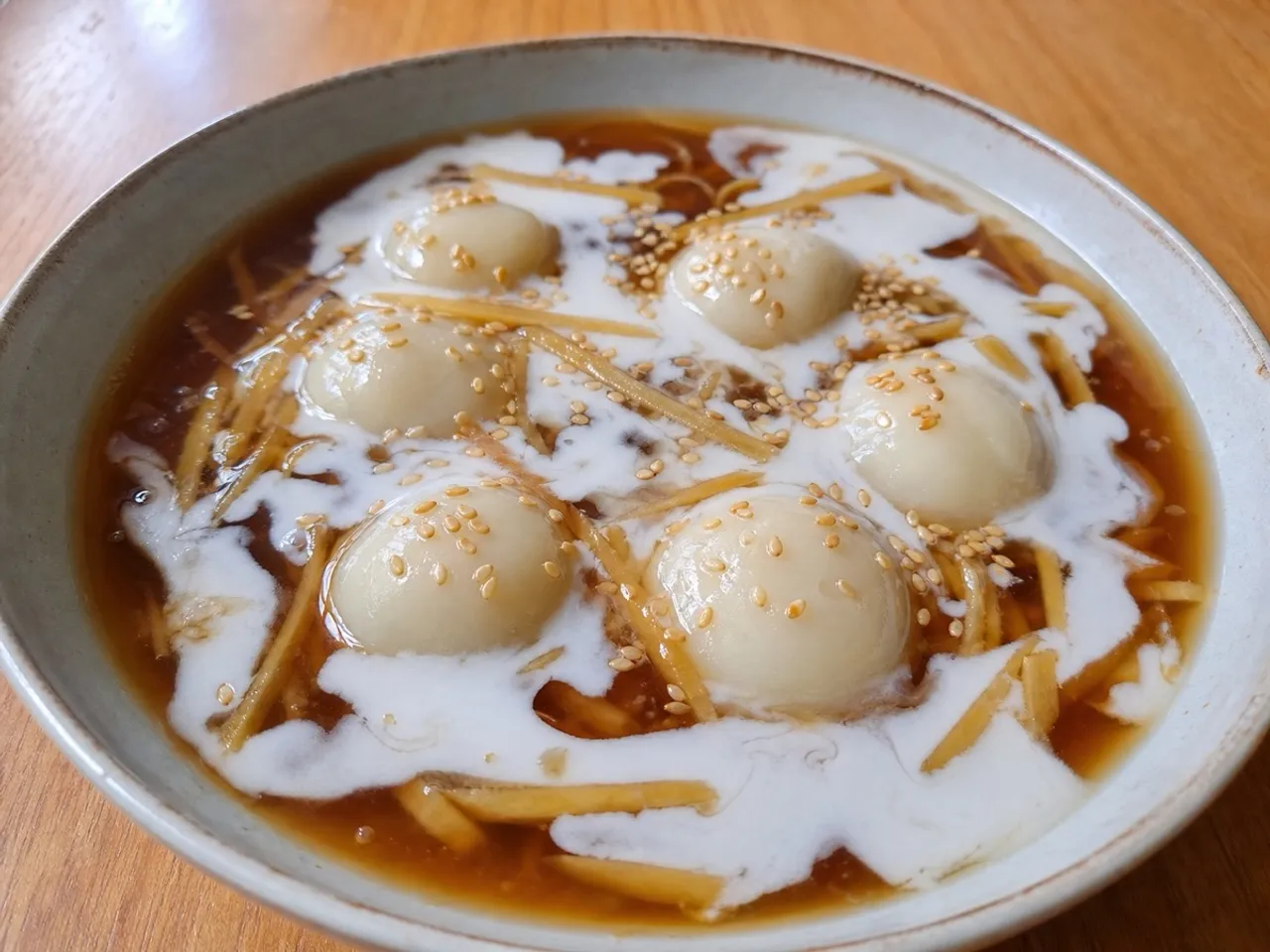 Serving Images are for illustrative purposes only, may be inaccurate, and do not guarantee the presence or absence of specific ingredients.
 Chè Trôi Nước (Sticky Rice Balls in Ginger Syrup)
Glutinous rice balls filled with mung bean paste, served in a warm ginger syrup.
Contains common allergens
In the app, Listahan checks these against your household automatically.
Instructions
6 steps- 1
Make Filling: Steam mung beans until soft. Mash and cook in a pan with 1/4 cup sugar and a little oil until thick. Stir in the fried shallots. Let cool and roll into small marble-sized balls.
- 2
Make Dough: Gradually add warm water to the glutinous rice flour, kneading until a smooth, pliable dough forms that doesn't stick to your hands.
- 3
Shape Balls: Take a piece of dough, flatten it, place a mung bean ball in the center, and pinch to seal. Roll between your palms to make a smooth, seamless ball. Make a few small, solid dough balls without filling, too.
- 4
Make Syrup: In a pot, dissolve the palm sugar in 3 cups of water. Add the julienned ginger and simmer for 10 minutes to infuse the spicy ginger flavor.
- 5
Boil Balls: Bring a separate pot of water to a boil. Drop the rice balls in. Once they float to the surface (about 3-5 minutes), they are cooked. Remove with a slotted spoon and transfer directly into the simmering ginger syrup.
- 6
Serve: Let the balls simmer in the syrup for 5 minutes to absorb flavor. Serve hot in small bowls, drizzled with salty coconut milk and sprinkled with toasted sesame seeds.
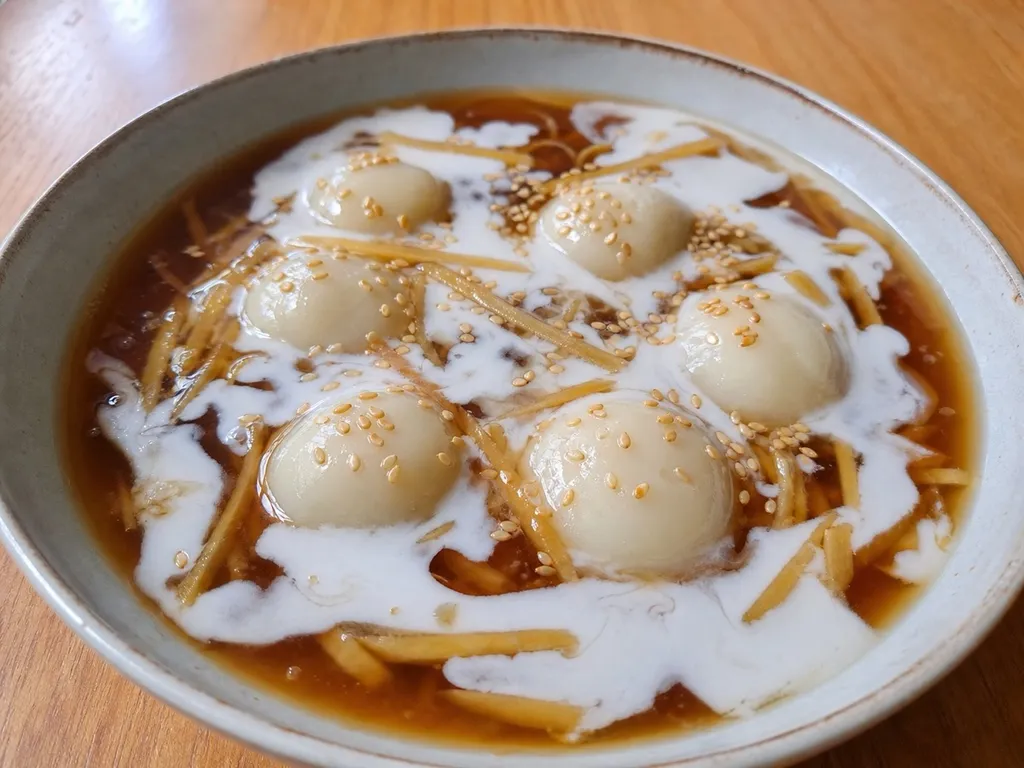 Images are for illustrative purposes only, may be inaccurate, and do not guarantee the presence or absence of specific ingredients.
 Listahan Family Score™
68/100
Works for many families
Score reflects how well this recipe fits a typical busy household. In the app, your Family Score is personalized to your household's allergens, kids, and pantry.
Nutrition
per serving190
Calories
5 g
Protein
34 g
Carbs
4 g
Fat
Estimated per serving. Actual values depend on the brands and portions you use.
Listahan cooking guide
Chef notes & practical guide
Technique notes, ingredient swaps, serve-alongside ideas, storage guidance, and equipment for this recipe.
Cultural context
Che troi nuoc belongs to the Vietnamese che (sweet soup and pudding) tradition and shares close ancestry with Chinese tang yuan, brought to Vietnam through centuries of cultural exchange and adapted with palm sugar syrup and a savory-sweet mung bean filling unusual in Chinese versions. The name means 'floating water dessert' — the rice balls are done cooking when they rise to the surface of the simmering water, which is an elegant built-in visual timer. Served on the 15th day of the lunar month and at family gatherings across Vietnam, the dish carries strong associations with family unity, derived from the balls' round shape.
Listahan note
This version adds fried shallots to the mung bean filling for a savory counterpoint that keeps the dessert from being cloying, and the coconut milk topping is lightly salted to amplify the contrast between sweet syrup and creamy richness.
Technique cues
- The glutinous rice flour dough must be worked with just enough warm water to form a smooth, non-sticky ball — too much water produces a dough that tears when wrapped around the filling, and the balls will burst open in the simmering water.
- Palm sugar melts unevenly; break it into rough pieces and dissolve it over medium-low heat with the ginger and a splash of water before increasing the heat to form the syrup — rushing it over high heat causes scorching on the bottom before the top has melted.
- The lightly salted coconut milk poured over the finished balls is not just garnish; it acts as a cooling element, a fat-based richness counterpoint to the sweet syrup, and the salt in it heightens the perception of sweetness in the syrup itself — do not skip the pinch of salt.
Kitchen flow
- Parallel prep
- Soak and steam the mung beans (start 3 hours before serving), make the filling while the dough rests, and prepare the palm sugar syrup while the balls are boiling.
- Make-ahead
- The filling can be made up to 2 days ahead and refrigerated covered; the syrup can be made 1 day ahead and rewarmed before serving. Shape and boil the balls only when ready to serve.
- Leftover move
- Leftover rice balls harden when refrigerated; reheat them in warm water or very briefly in the microwave (20 seconds) to restore their soft, chewy texture before serving with rewarmed syrup.
- Cleanup rhythm
- The rice dough residue on your hands and work surface releases easily with warm water before it dries; the syrup pot soaks out in hot water in minutes.
Ingredient brief
Role, handling, and swap guidance for each key ingredient.
2 cups glutinous rice flour
dough for the rice balls
Purpose: Glutinous rice flour forms a pliable, stretchy dough when mixed with warm water that holds together during boiling and turns translucent when cooked.
Handling: Add warm water gradually in small amounts, kneading between additions, until the dough is smooth and barely tacky — the exact amount of water varies by brand and humidity.
Adaptation: Regular rice flour produces a brittle, crumbly dough that cannot be shaped; it cannot substitute here.
1/2 cup split mung beans, soaked
filling
Purpose: Steamed mung bean paste provides a slightly sweet, earthy, starchy filling that pairs naturally with the rice flour exterior and absorbs the palm sugar syrup.
Handling: Soak for at least 2 hours, steam until fully soft, then mash into a smooth paste and cool before adding fried shallots.
Adaptation: Store-bought smooth mung bean paste from Asian grocery stores works perfectly and saves significant time.
1 block (about 1 cup) palm sugar or dark brown sugar
syrup base
Purpose: Palm sugar produces a syrup with a complex caramel-molasses depth and amber color that plain white sugar cannot replicate in this dessert.
Handling: Grate or break the palm sugar block before adding to the pot; large solid chunks dissolve unevenly and can leave raw sweet pockets in the syrup.
Adaptation: Dark brown sugar is a widely available substitute that approximates the molasses depth; use 3/4 cup packed and taste for sweetness.
2 inches fresh ginger, julienned
aromatic in syrup
Purpose: Ginger simmered in the syrup adds warmth and a bright, slightly spicy note that cuts through the richness of the coconut milk topping.
Handling: Use fresh ginger only; dried ground ginger produces a flat, dusty flavor that does not work in the syrup.
Adaptation: Lemongrass (1 stalk, bruised) can substitute for a floral, citrusy syrup variation.
1/2 cup thick coconut milk, lightly salted
topping and richness
Purpose: The unsweetened, slightly salty coconut milk poured over the warm balls creates a sweet-salty-rich contrast that makes each spoonful complex rather than one-dimensionally sweet.
Handling: Use full-fat canned coconut milk; shake the can and use from the top third where the cream concentrates, then whisk in a pinch of salt.
Adaptation: Coconut cream (even thicker) adds more richness; oat cream works for a coconut-free option but lacks the tropical note.
Technique notes
- Use a small ice cream scoop or a tablespoon to portion the filling consistently — balls with different filling amounts cook at different rates and some will burst before others are done.
- The floating cue (balls rising to the surface) is accurate but give them 1 additional minute after they float to ensure the dough at the seam is fully cooked; an undercooked seam can split when transferred to the serving bowl.
- Serve immediately after boiling — rice balls continue to absorb the syrup and harden as they cool, losing their delicate, pillowy texture within 30 minutes of cooking.
Ingredient swaps
- Gluten-free note
- Glutinous rice flour is naturally gluten-free despite the name; this dessert is entirely gluten-free as written.
- Vegan note
- This recipe is naturally vegan as written — no dairy, eggs, or animal products are used.
- Nut-free note
- This recipe contains no tree nuts or peanuts; confirm your coconut milk brand is processed in a nut-free facility if cross-contamination is a concern.
Serve alongside
- served alone as a complete dessert course
- alongside other Vietnamese che varieties for a dessert spread
- toasted sesame seeds sprinkled at the table for added texture
- hot jasmine tea as a palate cleanser
- cold chrysanthemum tea for a cooling contrast
Serving suggestions only — check pairings for your household's allergens.
Storage & reheating
- Store cooked rice balls submerged in the syrup in a covered container in the refrigerator for up to 2 days; they will absorb more syrup and become denser.
- Reheat gently in a small pot over low heat or in the microwave for 30 seconds; add a splash of water to the syrup if it has thickened too much.
- Do not freeze cooked rice balls — the texture becomes grainy and the dough splits on thawing.
Equipment
- medium saucepan for the palm sugar syrup and ginger
- large pot for boiling the rice balls
- slotted spoon for transferring balls from the boiling water
- small bowl for the salted coconut milk
Make this household-aware
Listahan Pro checks this recipe against your household's allergens, finds pantry-aware swaps, builds the shopping list, and helps you plan the week around it.
Plan it in Listahan
Add Chè Trôi Nước (Sticky Rice Balls in Ginger Syrup) to your week, check it against your household's allergens, and build the shopping list automatically.
More Vietnamese recipes
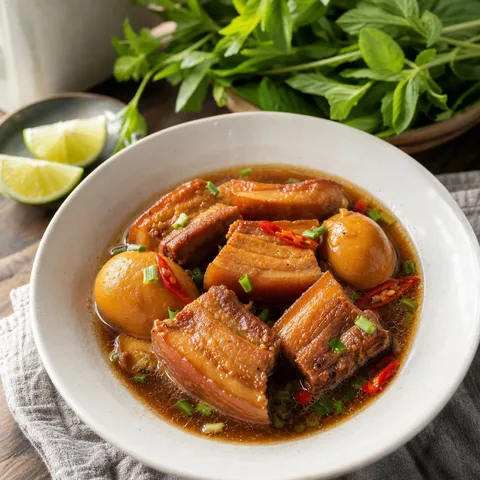 Vietnamese Lens Verified Images are for illustrative purposes only, may be inaccurate, and do not guarantee the presence or absence of specific ingredients.
 Thịt Kho Tàu (Caramelized Pork and Eggs)
Meltingly tender pork belly and hard-boiled eggs braised in a rich, sweet, and savory coconut juice caramel, perfect over steamed rice.
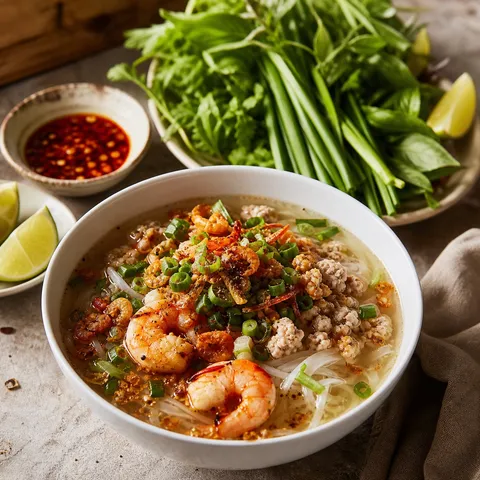 Vietnamese Lens Verified Images are for illustrative purposes only, may be inaccurate, and do not guarantee the presence or absence of specific ingredients.
 Hủ Tiếu (Pork and Seafood Noodle Soup)
A Vietnamese pork-bone broth noodle soup loaded with ground pork, shrimp, and dried shrimp over chewy tapioca noodles, finished with garlic chives and fried garlic.
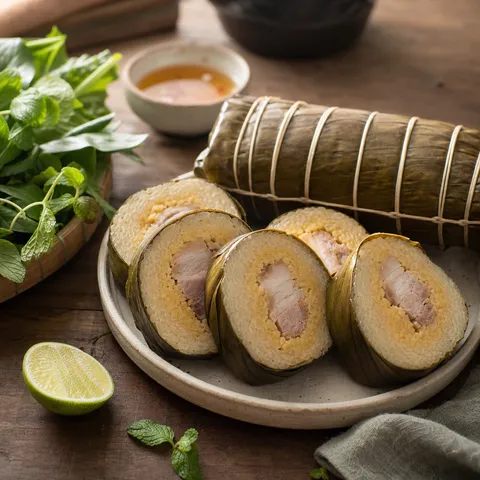 Vietnamese Lens Verified Images are for illustrative purposes only, may be inaccurate, and do not guarantee the presence or absence of specific ingredients.
 Bánh Tét (Cylindrical Sticky Rice Cake)
The Southern equivalent of Bánh Chưng, rolled into a cylinder.