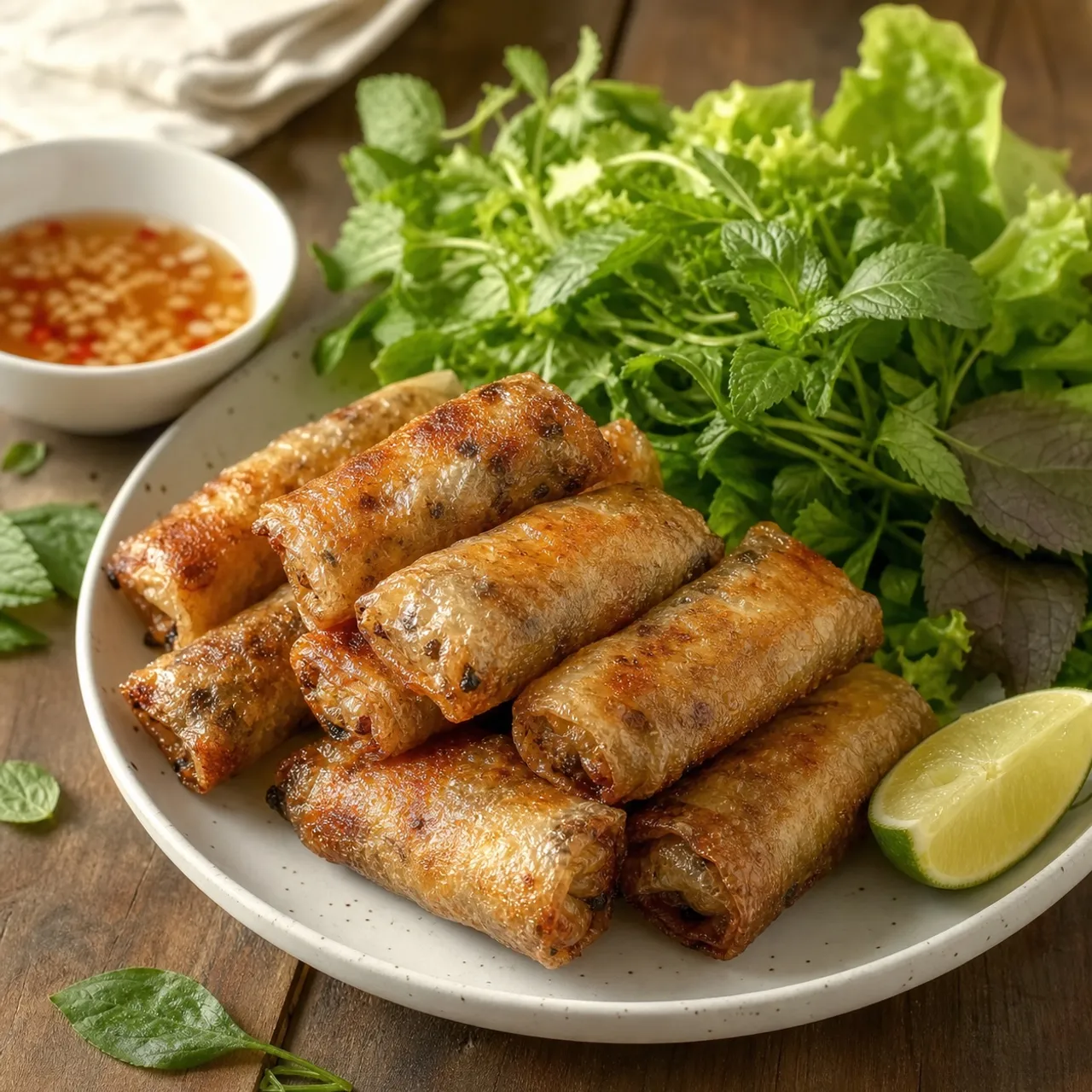
 Vietnamese Images are for illustrative purposes only, may be inaccurate, and do not guarantee the presence or absence of specific ingredients.
 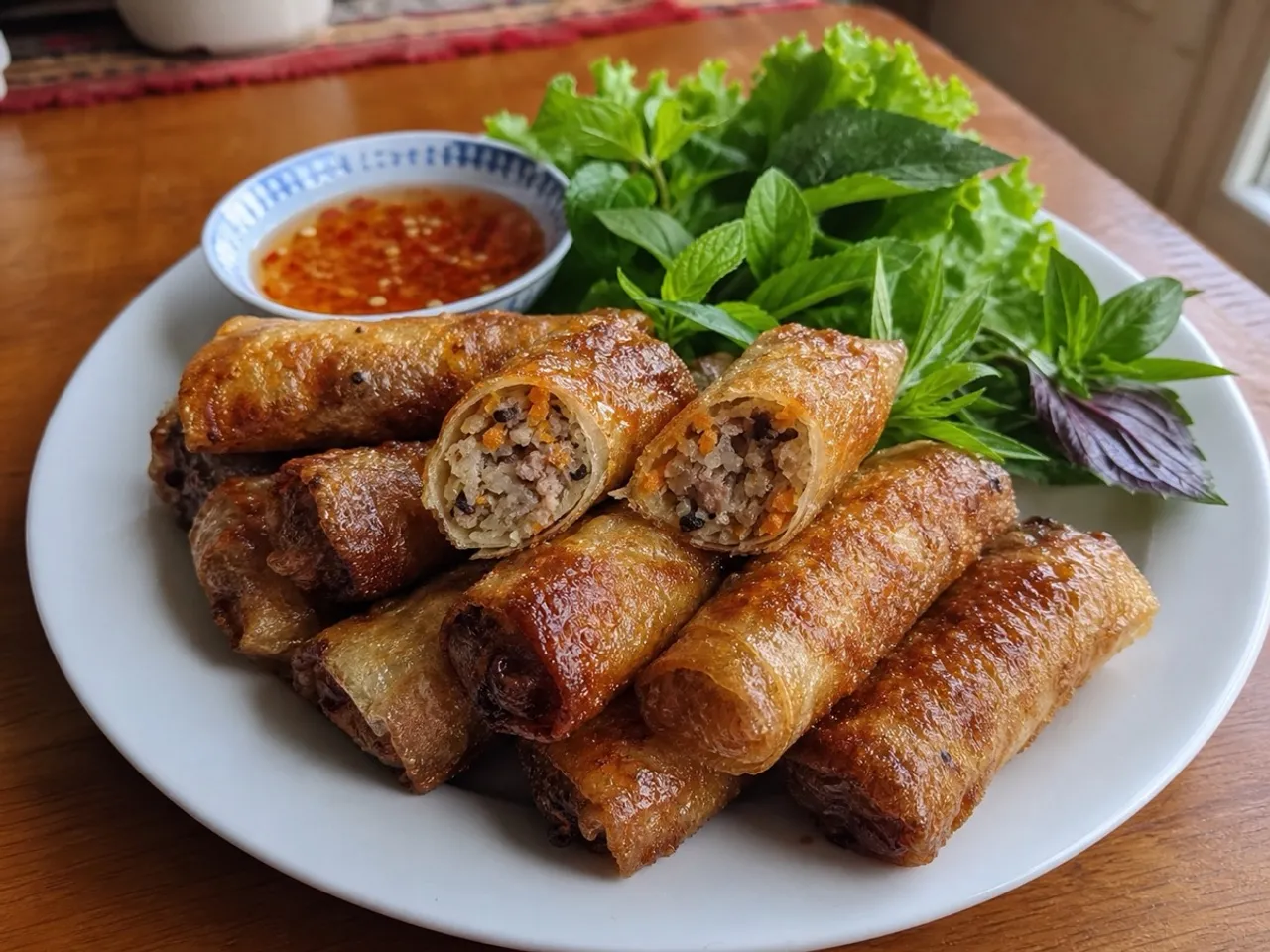 Serving Images are for illustrative purposes only, may be inaccurate, and do not guarantee the presence or absence of specific ingredients.
 Chả Giò (Fried Spring Rolls)
Intensely crispy and blistered rice paper rolls packed with a juicy, savory filling of pork, glass noodles, and earthy mushrooms.
Contains common allergens
In the app, Listahan checks these against your household automatically.
Good to know
- Crispy
Matched from this dish's own ingredients and timing. Browse more: crispy recipes
Instructions
6 steps- 1
Prepare Filling: In a large bowl, thoroughly mix the ground pork, minced wood ear mushrooms, chopped glass noodles, shredded carrot, egg, minced shallot, fish sauce, and black pepper.
- 2
Soften Wrappers: Dip a rice paper wrapper briefly in warm water with a splash of sugar or beer (this helps them crisp up). Lay it flat on a slightly damp towel.
- 3
Roll: Place 2 tablespoons of the filling near the bottom edge of the wrapper. Fold the sides in, then roll it up tightly into a cylinder. Repeat until all filling is used.
- 4
Dry Rolls: Let the assembled rolls sit uncovered in the refrigerator for 15-20 minutes. Drying the wrappers prevents them from bursting when fried.
- 5
First Fry: Heat 2 inches of oil in a wok or deep pan to 325°F (160°C). Fry the rolls in batches for 5-6 minutes until cooked through but not fully browned. Remove and let rest for 10 minutes.
- 6
Second Fry: Increase oil temperature to 375°F (190°C). Fry the rolls a second time for 2-3 minutes until deeply golden and blistered. Drain on wire racks and serve hot.
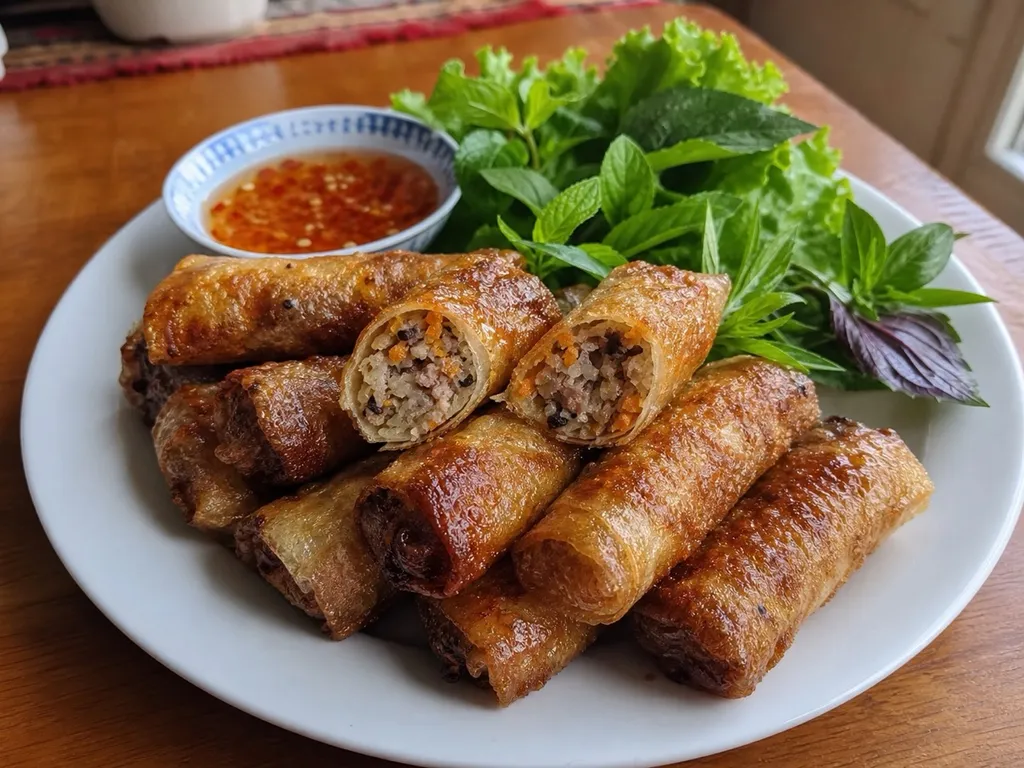 Images are for illustrative purposes only, may be inaccurate, and do not guarantee the presence or absence of specific ingredients.
 Listahan Family Score™
73/100
Good fit for most families
Score reflects how well this recipe fits a typical busy household. In the app, your Family Score is personalized to your household's allergens, kids, and pantry.
Nutrition
per serving510
Calories
47 g
Protein
25 g
Carbs
23 g
Fat
Estimated per serving. Actual values depend on the brands and portions you use.
Listahan cooking guide
Chef notes & practical guide
Technique notes, ingredient swaps, serve-alongside ideas, storage guidance, and equipment for this recipe.
Cultural context
Cha gio is the southern Vietnamese name for fried spring rolls; in the north they are called nem ran or nem chien, reflecting the linguistic divide between Hanoi and Saigon. The filling combination of ground pork, wood ear mushrooms, and glass noodles encased in rice paper is distinctly Vietnamese in execution, though the influence of Chinese spring rolls is acknowledged -- Vietnamese cooks adapted the technique to their own ingredients and developed the rice paper wrapper version that shatters into a distinct crunch rather than the thicker, chewier egg roll skin of Chinese-American varieties. Cha gio arrived in North America with Vietnamese immigration in the late 1970s and became one of the most widely recognized Vietnamese foods.
Listahan note
This version focuses on the two variables that separate excellent cha gio from soggy ones: a well-drained, properly bound filling and a double-fry technique that produces a wrapper that stays crunchy even after cooling.
Technique cues
- The wood ear mushrooms and glass noodles must be squeezed thoroughly dry after rehydrating and minced very fine before adding to the filling; excess moisture steams the inside of the roll during frying and creates a soggy, wet wrapper rather than a crisp shatter.
- Rice paper wrappers for frying are different from fresh spring roll wrappers: frying wrappers are drier, thinner, and produce a more shatteringly crisp result, while fresh-roll rice paper produces a soft, chewy texture when fried -- use the correct product or substitute wheat spring roll wrappers (not egg roll wrappers, which are thicker).
- Double-frying is the professional technique for cha gio that stays crisp: fry at 325F until cooked through and lightly golden, drain, cool for at least 10 minutes, then fry again at 375F for 2-3 minutes until deep golden and crunchy -- the second fry drives off the remaining moisture and sets the wrapper in its crispy state.
Kitchen flow
- Parallel prep
- Soak the glass noodles and wood ear mushrooms simultaneously in separate bowls while you set up the frying station; by the time they are ready, the oil can be heating.
- Make-ahead
- Rolled, unfried cha gio freeze beautifully on a parchment-lined sheet pan; freeze until solid, then transfer to a bag and store for up to 2 months -- fry from frozen at 325F for 5 minutes, then 375F for 3 minutes.
- Leftover move
- Re-crisp leftover fried cha gio in an air fryer at 375F for 4-5 minutes or on a baking rack in a 400F oven for 8 minutes; the microwave is not recommended as it softens the wrapper.
- Cleanup rhythm
- Let the frying oil cool completely before dealing with it; strain through a fine-mesh strainer and store in a sealed container for one more use (frying oil used for pork can be reused within a week for savory applications).
Ingredient brief
Role, handling, and swap guidance for each key ingredient.
1 lb ground pork
primary protein and binding base
Purpose: Ground pork provides both the protein and the fat needed to keep the filling moist inside the crispy shell; lean pork or non-pork proteins tend to dry out during frying.
Handling: Mix the filling gently with your hands or a fork until just combined -- overmixing develops the protein structure and creates a dense, rubbery filling rather than a loose, juicy one.
Adaptation: A 50/50 ground pork and shrimp combination is a common and delicious variation; the shrimp adds sweetness and a different protein texture.
1/2 cup dried wood ear mushrooms, rehydrated and minced
texture contrast and umami
Purpose: Wood ear mushrooms add a distinct, slightly crunchy texture to the filling that contrasts with the soft pork and noodles, and their earthy, savory flavor deepens the overall filling.
Handling: Soak in hot water for 20 minutes until fully soft, drain, squeeze out as much water as possible, then mince finely -- the smaller the pieces, the better the filling holds together.
Adaptation: Shiitake mushrooms can substitute with a more pronounced earthy flavor; avoid button mushrooms, which are too watery and flavorless.
1/2 cup glass noodles (cellophane noodles), soaked and chopped small
filling binder and texture
Purpose: Glass noodles absorb moisture from the other filling ingredients during frying, preventing sogginess inside the roll, and add a pleasantly slippery, slightly chewy texture.
Handling: Soak in cold water for 15 minutes until soft, drain and squeeze dry, then chop into 1-inch pieces -- long noodles make the filling difficult to roll and cause the wrapper to tear.
Adaptation: Bean thread vermicelli (mung bean) is the traditional choice; rice vermicelli is too soft and absorbs too much oil during frying.
1 egg
binder
Purpose: The egg binds the filling together so it holds its shape when bitten into and does not fall apart or leave gaps inside the wrapper.
Handling: Lightly beat before adding to the filling mixture; do not use a whole egg without beating or the white and yolk distribute unevenly.
Adaptation: For an egg-free version, a tablespoon of cornstarch dissolved in 2 tablespoons of cold water provides a similar binding function.
1 tbsp fish sauce
primary seasoning
Purpose: Fish sauce seasons the filling from within and adds the savory, fermented depth that distinguishes cha gio from Chinese-American egg rolls.
Handling: Add to the filling before mixing; do not add after the egg, which can cook slightly if the filling warms from mixing.
Adaptation: Soy sauce substitutes functionally; for a fish-free version, use soy sauce plus a few drops of sesame oil to approximate the depth.
Technique notes
- Moisten the rice paper wrapper with a barely damp cloth rather than dipping it in water -- fried rice paper wrappers hydrate with the faintest amount of moisture, and over-wetting causes them to tear during rolling and stick together before frying.
- Roll the cha gio tightly and without air pockets; air inside the roll expands dramatically during frying, causing the roll to burst and release filling into the oil -- press firmly and roll without lifting the wrapper once you begin.
- Fry in small batches of 4-5 rolls maximum so the oil temperature does not drop significantly; a crowded pot drops below 300F and the rolls absorb oil and turn greasy rather than frying crisply.
Ingredient swaps
- Gluten-free direction
- Use rice paper frying wrappers (not wheat spring roll wrappers) and verify the fish sauce is gluten-free; glass noodles and ground pork are both naturally gluten-free.
- Pork-free direction
- Substitute ground chicken or ground turkey for the pork; add a teaspoon of sesame oil to compensate for the reduced fat content and keep the filling moist.
- Vegan direction
- Replace ground pork with finely minced firm tofu (pressed very dry), add extra wood ear mushrooms and shredded carrot for bulk, and use soy sauce in place of fish sauce; the rolls are slightly more delicate during frying but hold together well when rolled tightly.
Serve alongside
- nuoc cham dipping sauce with lime, fish sauce, garlic, sugar, and chili
- butter lettuce cups and fresh mint for wrapping before dipping
- simple cucumber and tomato salad with rice vinegar
- cold Vietnamese iced tea (tra da)
- light lager or Vietnamese beer (Saigon, 333)
- sparkling water with lime
Serving suggestions only — check pairings for your household's allergens.
Storage & reheating
- Fried cha gio are best eaten within 30 minutes; after that the wrapper softens as moisture migrates from the filling.
- Reheat at 400F on a wire rack in the oven for 8-10 minutes or in an air fryer at 375F for 4-5 minutes to restore crunch.
- Unfried rolled cha gio freeze for up to 2 months; fry from frozen, adding 2-3 minutes to the first fry.
Equipment
- deep, heavy-bottomed pot or Dutch oven for frying (at least 4-inch depth of oil)
- thermometer for monitoring frying temperature
- wire rack over a baking sheet for draining
- fine-mesh strainer for straining and storing used oil
Make this household-aware
Listahan Pro checks this recipe against your household's allergens, finds pantry-aware swaps, builds the shopping list, and helps you plan the week around it.
Plan it in Listahan
Add Chả Giò (Fried Spring Rolls) to your week, check it against your household's allergens, and build the shopping list automatically.
More Vietnamese recipes
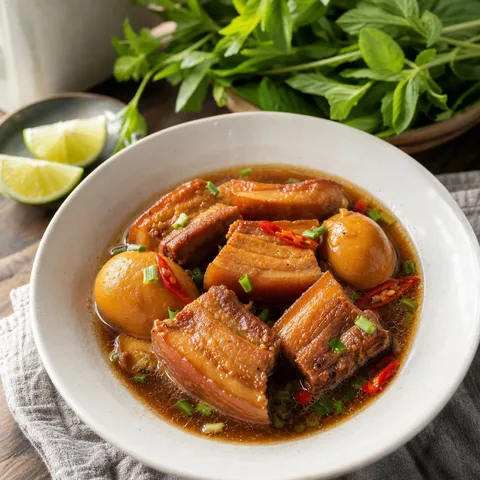 Vietnamese Lens Verified Images are for illustrative purposes only, may be inaccurate, and do not guarantee the presence or absence of specific ingredients.
 Thịt Kho Tàu (Caramelized Pork and Eggs)
Meltingly tender pork belly and hard-boiled eggs braised in a rich, sweet, and savory coconut juice caramel, perfect over steamed rice.
 Vietnamese Lens Verified Images are for illustrative purposes only, may be inaccurate, and do not guarantee the presence or absence of specific ingredients.
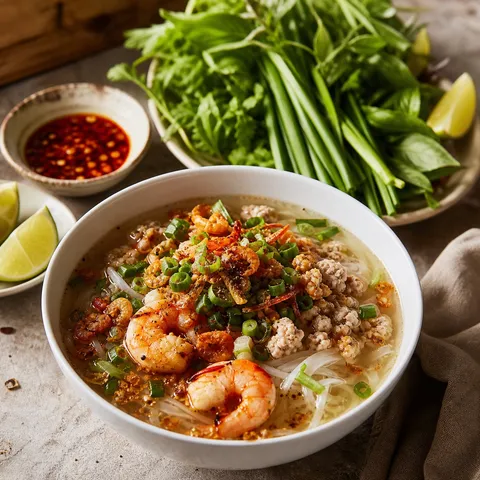
 Hủ Tiếu (Pork and Seafood Noodle Soup)
A Vietnamese pork-bone broth noodle soup loaded with ground pork, shrimp, and dried shrimp over chewy tapioca noodles, finished with garlic chives and fried garlic.
 Vietnamese Lens Verified Images are for illustrative purposes only, may be inaccurate, and do not guarantee the presence or absence of specific ingredients.
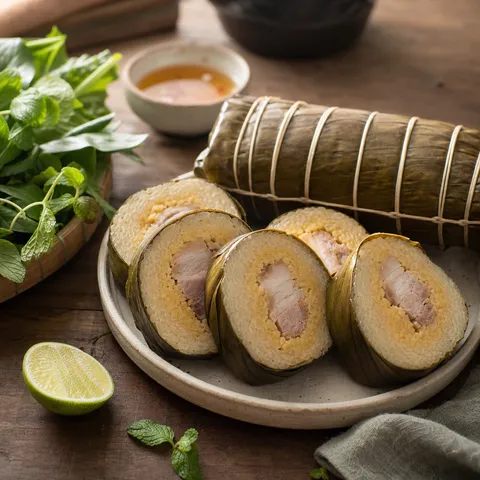
 Bánh Tét (Cylindrical Sticky Rice Cake)
The Southern equivalent of Bánh Chưng, rolled into a cylinder.