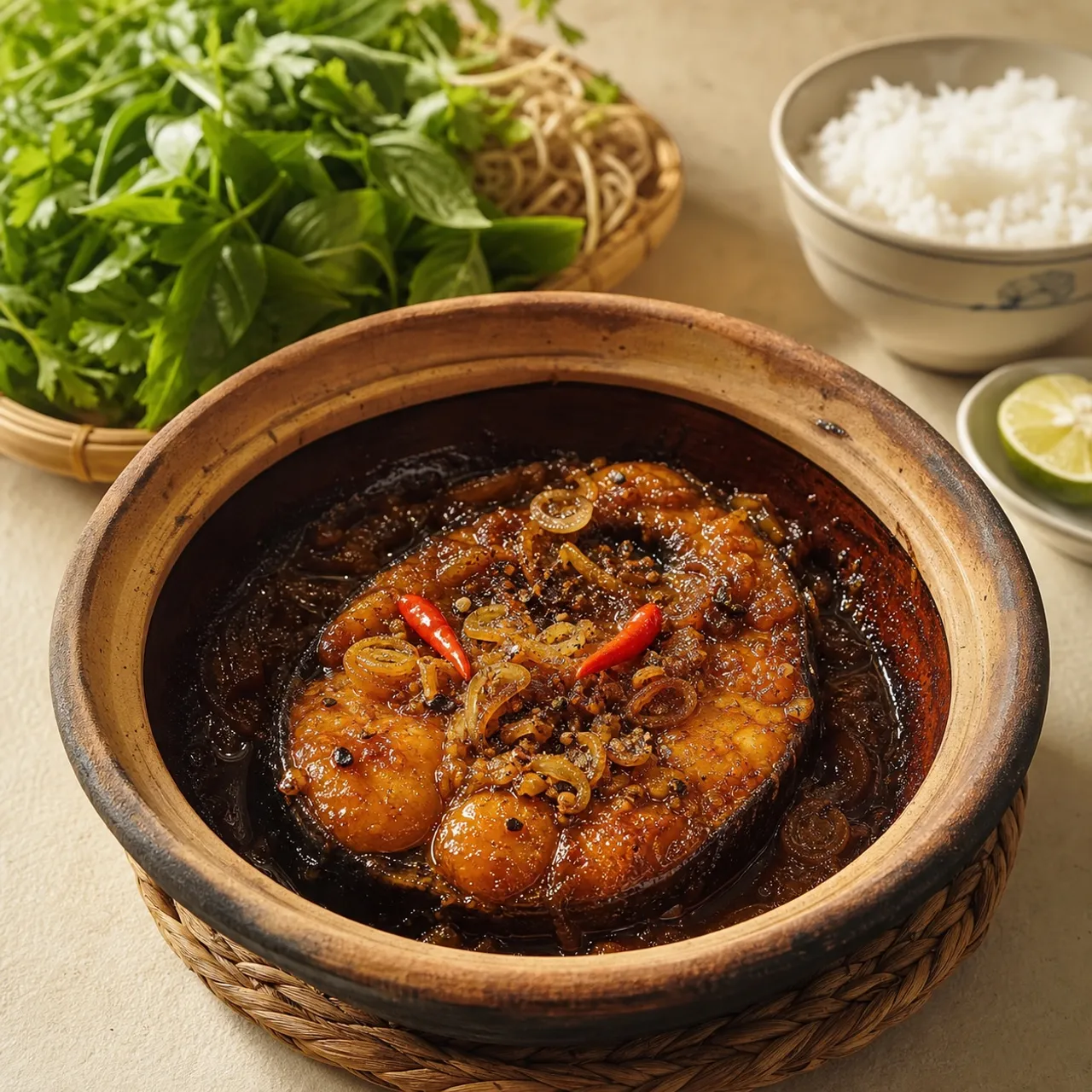
 Vietnamese Images are for illustrative purposes only, may be inaccurate, and do not guarantee the presence or absence of specific ingredients.
 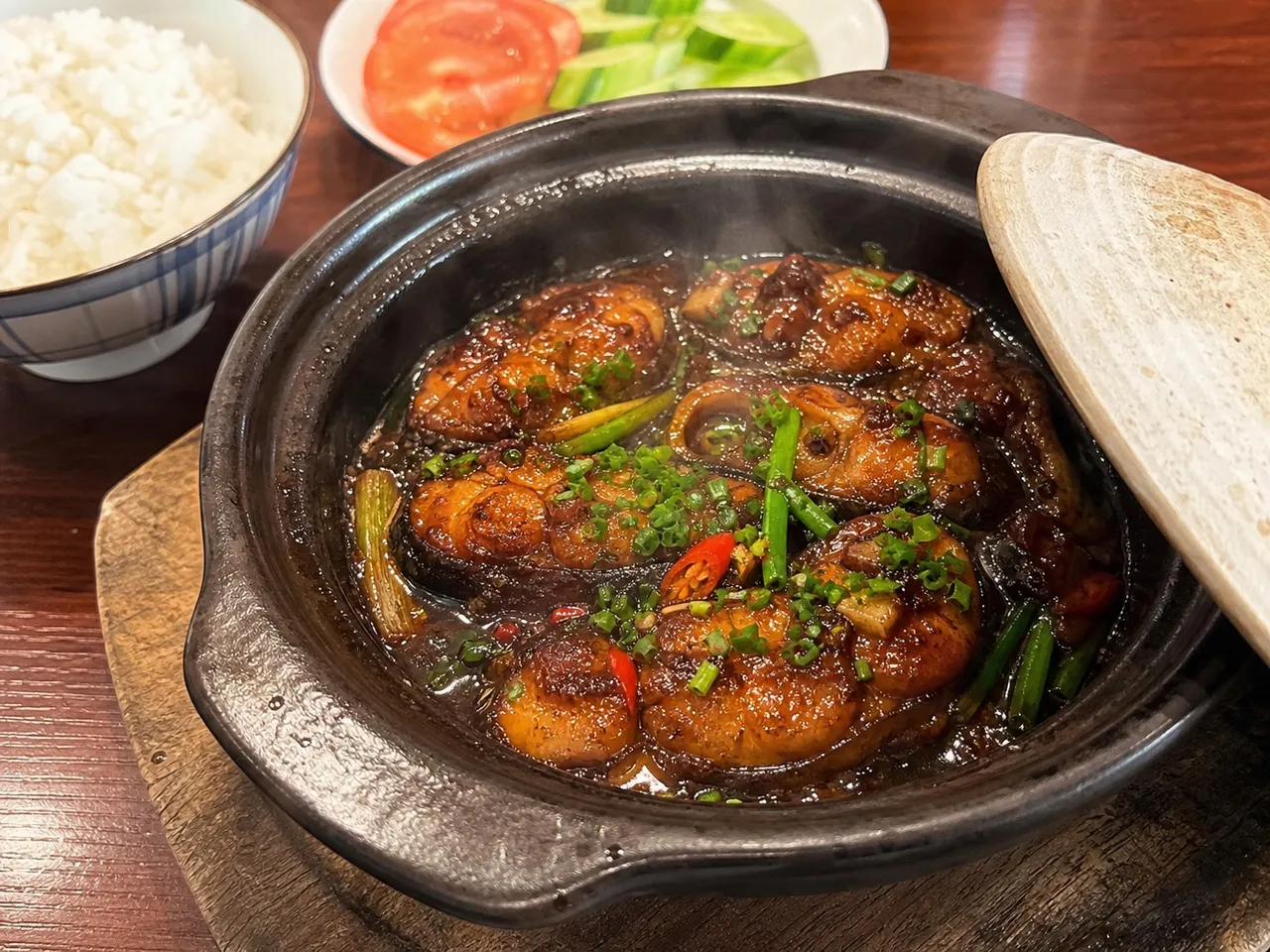 Serving Images are for illustrative purposes only, may be inaccurate, and do not guarantee the presence or absence of specific ingredients.
 Cá Kho Tộ (Caramelized Fish in Clay Pot)
Fish braised in a caramelized combination of fish sauce, sugar, and coconut water.
Contains common allergens
In the app, Listahan checks these against your household automatically.
Good to know
- One-pot
Matched from this dish's own ingredients and timing. Browse more: one-pot dinners
Instructions
6 steps- 1
Marinate Fish: In a bowl, toss the catfish steaks with 1 tbsp fish sauce, soy sauce, minced garlic, and sliced shallots. Let sit for 15 minutes.
- 2
Make Caramel: Place a traditional clay pot (or a small heavy-bottomed saucepan) over medium heat. Add the oil and sugar. Stir constantly until the sugar melts and turns a deep, dark amber color (be careful not to burn it to a bitter black).
- 3
Sear Fish: Immediately add the marinated catfish to the hot caramel. Sear for 1 minute per side so the fish takes on the dark color.
- 4
Braise: Pour in the coconut water and the remaining 2 tbsp of fish sauce. Add the whole Thai chilies. Bring to a vigorous boil, then lower the heat to a gentle simmer.
- 5
Reduce Sauce: Simmer uncovered for 25-30 minutes. Gently baste the fish occasionally. The liquid should reduce to a thick, sticky, mahogany-colored glaze that coats the fish.
- 6
Garnish: Turn off the heat. Generously crack fresh black pepper over the top and garnish with chopped scallions. Serve piping hot with steamed white rice.
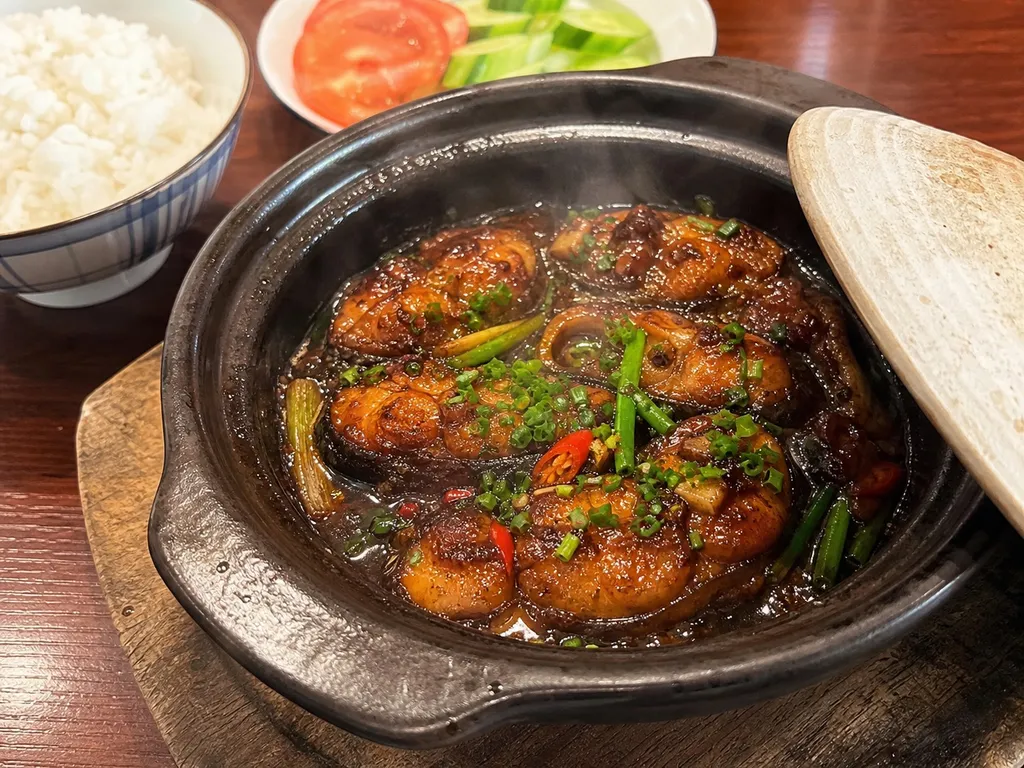 Images are for illustrative purposes only, may be inaccurate, and do not guarantee the presence or absence of specific ingredients.
 Listahan Family Score™
53/100
Works for many families
Score reflects how well this recipe fits a typical busy household. In the app, your Family Score is personalized to your household's allergens, kids, and pantry.
Nutrition
per serving330
Calories
33 g
Protein
15 g
Carbs
15 g
Fat
Estimated per serving. Actual values depend on the brands and portions you use.
Listahan cooking guide
Chef notes & practical guide
Technique notes, ingredient swaps, serve-alongside ideas, storage guidance, and equipment for this recipe.
Cultural context
Cá kho tộ belongs to the Vietnamese kho family of dishes, where fish, pork, or eggs are simmered in a salty-sweet sauce until the seasoning concentrates. The tộ is the small clay pot that holds heat steadily at the table, though many home cooks now use a heavy saucepan for the same tight, glossy braise.
Listahan note
This version keeps the focus on the caramel: taking the sugar dark enough to color the fish, then using coconut water and fish sauce to turn it into a sticky mahogany glaze. It is built for steamed rice, so the sauce should be intense rather than plentiful.
Technique cues
- Watch the sugar closely once it melts. Deep amber gives the sauce its color and slight bitterness, but blackened sugar will make the whole pot taste harsh.
- Catfish steaks are sturdy enough for this braise, but they still need gentle handling. Baste with a spoon instead of flipping often once the sauce starts thickening.
- Keep the simmer uncovered so the coconut water can reduce. The goal is a glaze that clings to the fish, not a soup-style braising liquid.
Kitchen flow
- Parallel prep
- Start the rice before making the caramel; the fish braise needs attention once the sugar begins to darken.
- Make-ahead
- Marinate the fish and slice the aromatics ahead, but make the caramel and braise close to serving so the glaze stays glossy.
- Leftover move
- Flake leftover fish and sauce over hot rice with cucumber slices or quick sauteed greens to balance the saltiness.
- Cleanup rhythm
- Soak the pot or saucepan as soon as the fish is served; caramelized fish sauce releases much more easily before it dries.
Ingredient brief
Role, handling, and swap guidance for each key ingredient.
Catfish steaks
Main fish
Purpose: Catfish has enough richness and firmness to stand up to the salty caramel sauce without drying out quickly.
Handling: Use steaks about 1 inch thick and handle them gently so the center bone and flesh stay intact.
Adaptation: Salmon steaks or firm white fish steaks can work, but lean fillets may cook faster and break apart more easily.
Fish sauce
Primary seasoning
Purpose: Fish sauce supplies the deep salty backbone that defines the kho sauce.
Handling: Use part of it in the marinade and add the rest to the braise so the flavor seasons both the fish and the glaze.
Adaptation: If using a milder fish sauce, taste near the end and adjust carefully because the sauce becomes saltier as it reduces.
Sugar
Caramel base
Purpose: Sugar gives the dish its dark color, glossy texture, and faint bitter edge that balances the fish sauce.
Handling: Stir constantly over medium heat and add the fish as soon as the caramel reaches a dark amber shade.
Adaptation: Light brown sugar can be used, but it will caramelize a little differently and bring a softer molasses note.
Fresh coconut water
Braising liquid
Purpose: Coconut water adds gentle sweetness and helps the caramel sauce reduce without tasting heavy.
Handling: Pour it in carefully after searing the fish because the hot caramel can bubble up quickly.
Adaptation: Plain water works in a pinch, but the finished glaze will taste sharper and less rounded.
Shallot, thinly sliced
Aromatic sweetness
Purpose: Shallot softens into the sauce and gives the caramel a savory sweetness behind the fish sauce.
Handling: Slice thinly so it cooks down during the short braise rather than staying crunchy.
Adaptation: A small amount of yellow onion can stand in, though it tastes broader and less delicate.
Thai bird's eye chilies
Heat and aroma
Purpose: Whole chilies perfume the sauce without spreading sharp heat through every bite.
Handling: Leave them whole for gentler heat, or slit one if you want more spice in the glaze.
Adaptation: Serrano or Fresno chile gives a different but useful fresh heat if Thai chilies are hard to find.
Technique notes
- Add the fish immediately after the caramel turns dark amber. Waiting even 20-30 seconds too long can push the sugar from pleasantly bitter to burnt.
- Use a small pot that holds the fish snugly. Too wide a pan can reduce the liquid before the fish has absorbed the sauce.
- Do not scrape aggressively once the fish is in the pot. Tilt the pan and spoon sauce over the top to keep the steaks intact.
Ingredient swaps
- Gluten-free direction
- Replace the soy sauce with a tamari that fits your household's needs; the fish sauce still carries most of the seasoning.
- Less heat path
- Leave the Thai bird's eye chilies whole and remove them before serving for aroma with a gentler finish.
- No clay pot route
- Use a small heavy-bottomed saucepan; it gives steadier heat than a thin pan and helps prevent the caramel from scorching.
- Different fish option
- Use salmon steaks or another firm fish steak and start checking earlier, since fattier fish can finish before the glaze is fully reduced.
Serve alongside
- Steamed jasmine rice
- Canh chua
- Dua leo sliced cucumbers
- Garlic sauteed water spinach
- Iced jasmine tea
- Lime soda water
- Cold lager
Serving suggestions only — check pairings for your household's allergens.
Storage & reheating
- Refrigerate leftovers with the glaze in a sealed container so the fish does not dry out.
- Reheat gently in a small covered pan with a splash of water until the sauce loosens and coats the fish again.
- Freeze only if you are comfortable with a softer fish texture; thaw overnight and rewarm slowly so the glaze does not scorch.
Equipment
- Small clay pot or heavy-bottomed saucepan
- Heatproof spoon
- Fish spatula
- Rice cooker or medium pot
Make this household-aware
Listahan Pro checks this recipe against your household's allergens, finds pantry-aware swaps, builds the shopping list, and helps you plan the week around it.
Plan it in Listahan
Add Cá Kho Tộ (Caramelized Fish in Clay Pot) to your week, check it against your household's allergens, and build the shopping list automatically.
More Vietnamese recipes
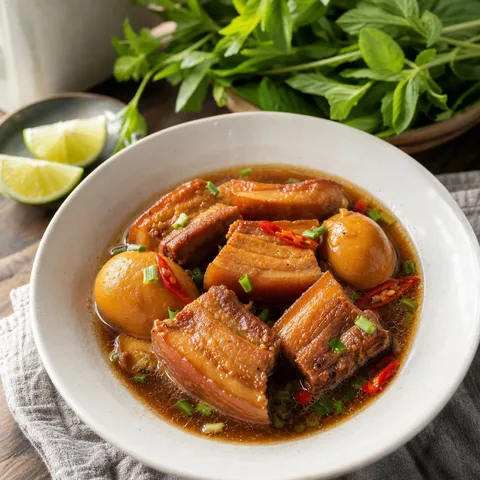 Vietnamese Lens Verified Images are for illustrative purposes only, may be inaccurate, and do not guarantee the presence or absence of specific ingredients.
 Thịt Kho Tàu (Caramelized Pork and Eggs)
Meltingly tender pork belly and hard-boiled eggs braised in a rich, sweet, and savory coconut juice caramel, perfect over steamed rice.
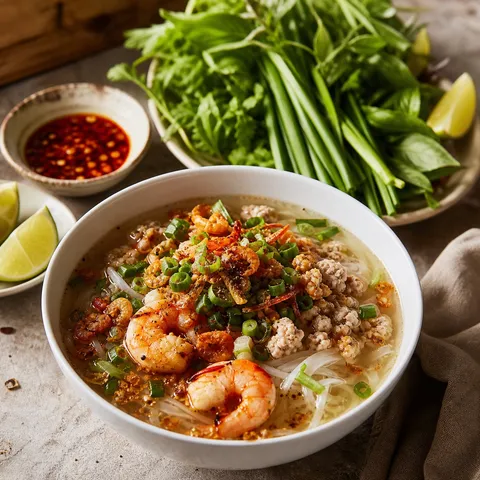 Vietnamese Lens Verified Images are for illustrative purposes only, may be inaccurate, and do not guarantee the presence or absence of specific ingredients.
 Hủ Tiếu (Pork and Seafood Noodle Soup)
A Vietnamese pork-bone broth noodle soup loaded with ground pork, shrimp, and dried shrimp over chewy tapioca noodles, finished with garlic chives and fried garlic.
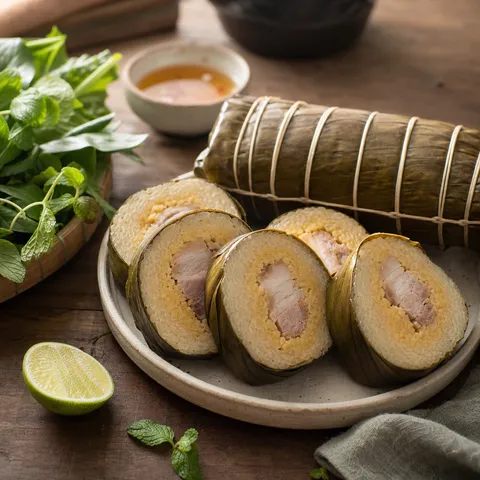 Vietnamese Lens Verified Images are for illustrative purposes only, may be inaccurate, and do not guarantee the presence or absence of specific ingredients.
 Bánh Tét (Cylindrical Sticky Rice Cake)
The Southern equivalent of Bánh Chưng, rolled into a cylinder.