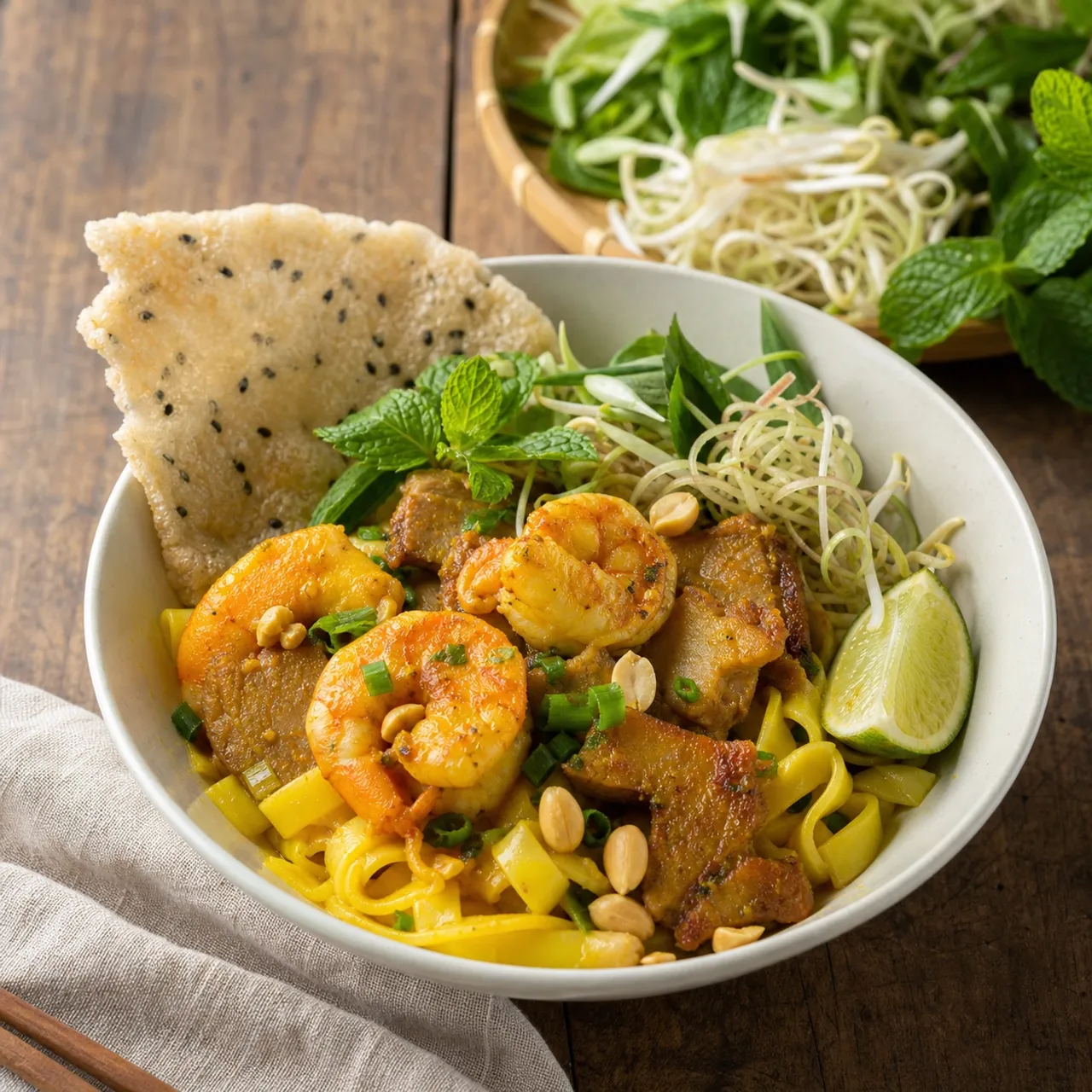
 Vietnamese Images are for illustrative purposes only, may be inaccurate, and do not guarantee the presence or absence of specific ingredients.
 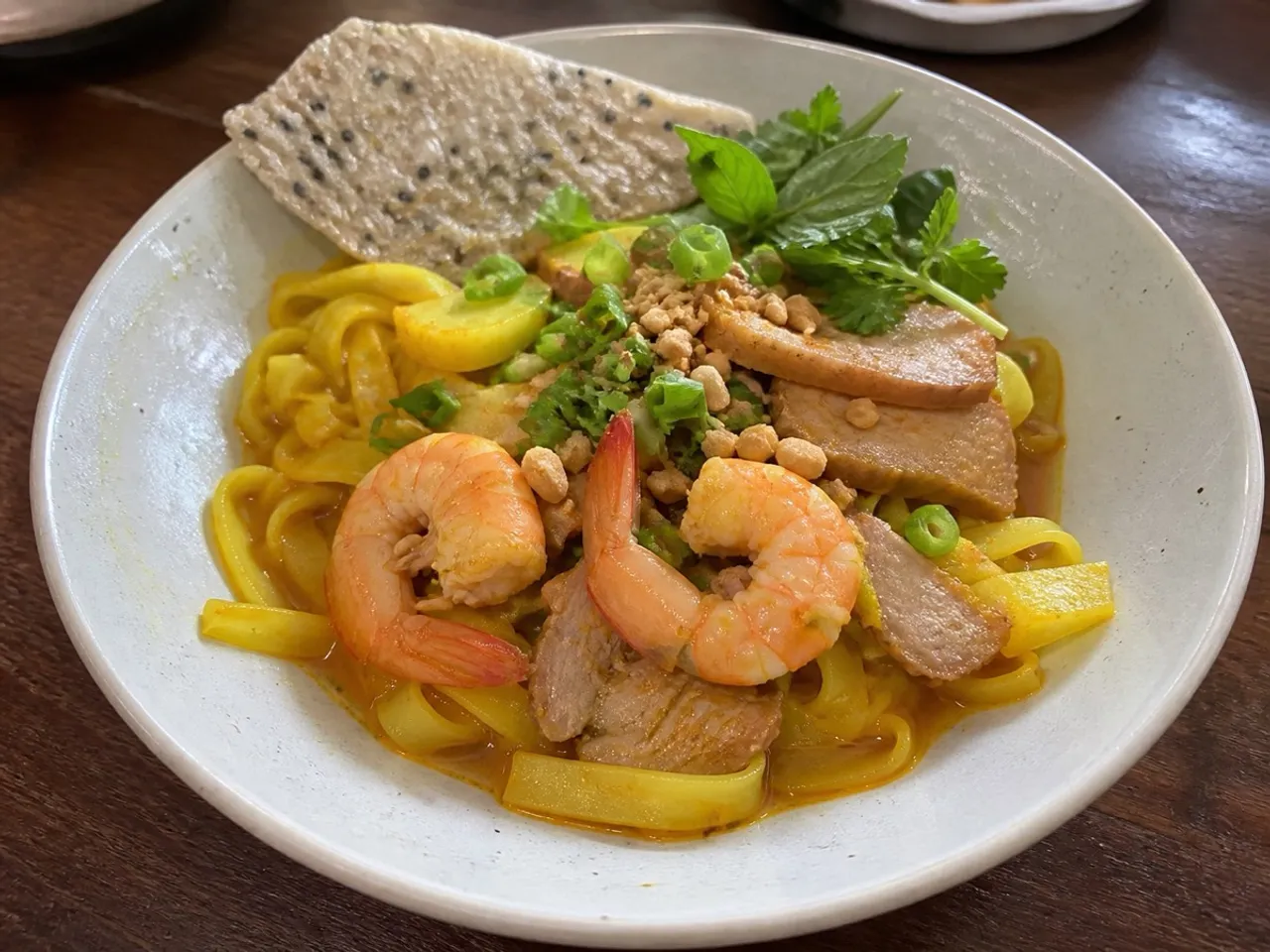 Serving Images are for illustrative purposes only, may be inaccurate, and do not guarantee the presence or absence of specific ingredients.
 Mì Quảng (Turmeric Noodle Soup)
A dish originating from Quảng Nam province, featuring turmeric-infused noodles.
Contains common allergens
In the app, Listahan checks these against your household automatically.
Instructions
6 steps- 1
Create Base Flavor: In a pot, heat the annatto oil. Sauté the minced shallots and garlic until fragrant.
- 2
Cook Proteins: Add the sliced pork belly and shrimp. Sauté until the pork renders its fat and the shrimp turns pink. Season intensely with the fish sauce and a pinch of sugar.
- 3
Make Concentrated Broth: Pour in the 2 cups of broth. Bring to a boil, then simmer for 15 minutes. The broth for Mì Quảng is very concentrated, salty, and used sparingly, unlike Pho.
- 4
Prepare Noodles: Boil the turmeric noodles until tender, drain, and place a small portion into the bottom of wide serving bowls.
- 5
Assemble: Ladle the pork, shrimp, and just enough broth to barely cover the noodles (this is a "dry" soup).
- 6
Garnish: Top heavily with crushed peanuts. Serve with fresh greens and a large toasted sesame rice cracker to break into the bowl for crunch.
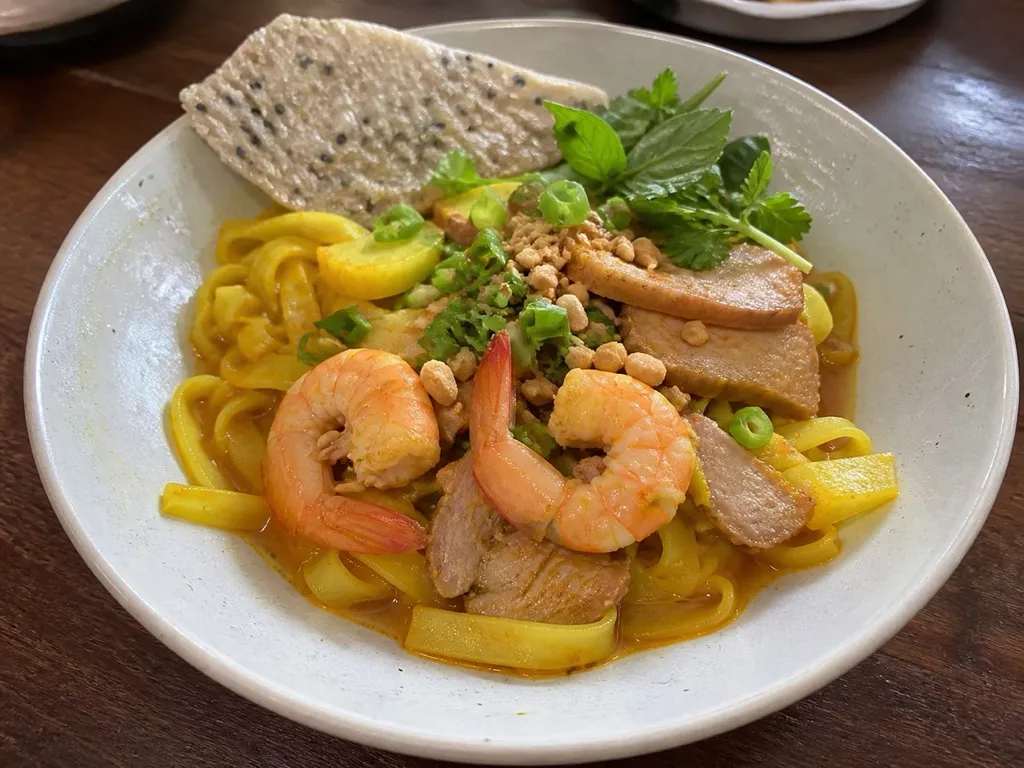 Images are for illustrative purposes only, may be inaccurate, and do not guarantee the presence or absence of specific ingredients.
 Listahan Family Score™
64/100
Works for many families
Score reflects how well this recipe fits a typical busy household. In the app, your Family Score is personalized to your household's allergens, kids, and pantry.
Nutrition
per serving710
Calories
72 g
Protein
5 g
Carbs
46 g
Fat
Estimated per serving. Actual values depend on the brands and portions you use.
Listahan cooking guide
Chef notes & practical guide
Technique notes, ingredient swaps, serve-alongside ideas, storage guidance, and equipment for this recipe.
Cultural context
Mì Quảng comes from Quảng Nam in central Vietnam, where noodle dishes often land between soup and salad rather than fitting neatly into either category. The shallow, concentrated broth is the point: it seasons the turmeric-yellow noodles, pork, shrimp, herbs, peanuts, and rice cracker without flooding the bowl.
Listahan note
This version keeps the bowl practical for a North American kitchen by using prepared broth and packaged Mì Quảng noodles. It prioritizes the right eating texture: just enough salty broth to coat, plenty of crunch on top, and fresh greens served in generous handfuls.
Technique cues
- Do not treat the broth like phở broth. It should be stronger than something you would sip from a spoon because each bowl gets only a small ladleful.
- Let the pork belly render before adding the broth. That fat carries the annatto color and helps the fish sauce taste rounded instead of thin.
- Add the rice cracker at the table, not in the pot. Breaking it into the bowl keeps some pieces crisp while others soften into the broth.
Kitchen flow
- Parallel prep
- Start the noodle water while the pork and shrimp simmer, then wash and dry the greens during the final few minutes.
- Make-ahead
- Cook the pork, shrimp, and concentrated broth ahead, then boil fresh noodles and assemble right before serving.
- Leftover move
- Toss leftover noodles, pork, shrimp, peanuts, and greens with a spoonful of warmed broth for a room-temperature noodle bowl.
- Cleanup rhythm
- Rinse the noodle pot right after draining, then soak the serving bowls before the fish sauce and annatto oil dry on the sides.
Ingredient brief
Role, handling, and swap guidance for each key ingredient.
Flat rice noodles (Mì Quảng), dyed yellow with turmeric
Noodle base
Purpose: These wide turmeric-colored noodles give the dish its central chew and yellow color.
Handling: Boil until tender, rinse or drain well, and portion into wide bowls before adding broth.
Adaptation: Wide flat rice noodles can stand in, with a pinch of turmeric in the cooking water for color and a mild earthy note.
Pork belly
Rich protein base
Purpose: Small pieces of pork belly render fat into the annatto oil and make the broth feel fuller even though there is not much liquid.
Handling: Slice into bite-size pieces so the fat softens quickly and the meat fits easily on a spoon or chopsticks.
Adaptation: Pork shoulder gives a meatier, less rich bowl but needs a little more simmering time to turn tender.
Medium shrimp
Quick-cooking seafood
Purpose: Shrimp adds sweetness and a firm bite that contrasts with the pork belly and soft noodles.
Handling: Add with the pork as written, but pull back the heat once the shrimp turns pink so it does not tighten too much.
Adaptation: Firm white fish pieces can be used near the end of simmering for a gentler texture.
Chicken or pork broth
Concentrated broth
Purpose: The broth carries the fish sauce, annatto, shallot, garlic, pork, and shrimp flavors into the noodles without becoming a full soup.
Handling: Simmer uncovered after adding the proteins so the liquid tastes seasoned and concentrated.
Adaptation: Chicken broth gives a lighter bowl; pork broth makes the finish rounder and closer to the pork belly flavor.
Annatto oil
Color and aroma base
Purpose: Annatto oil gives the broth its warm orange-red tint and helps the aromatics bloom at the start.
Handling: Heat it gently before adding shallot and garlic so the aromatics sizzle without scorching.
Adaptation: Neutral oil with a small pinch of turmeric and paprika gives color, though it will not taste exactly the same.
Crushed roasted peanuts
Crunchy garnish
Purpose: Peanuts make the bowl feel finished by adding rough crunch against the slippery noodles and broth-coated meat.
Handling: Crush them coarsely so some pieces stay large enough to notice.
Adaptation: Toasted sesame seeds add a smaller, nuttier crunch if you want a lighter topping.
Technique notes
- Season the broth assertively, then stop. The noodles, greens, peanuts, and cracker will dilute each bite once the bowl is assembled.
- Use wide bowls rather than deep soup bowls so the toppings sit over the noodles instead of sinking under too much liquid.
- Keep the greens dry after washing. Wet herbs and lettuce water down the concentrated broth faster than you might expect.
Ingredient swaps
- Weeknight shortcut
- Use peeled shrimp and boxed chicken broth to cut prep time, then concentrate the flavor with a slightly longer uncovered simmer.
- Less-rich direction
- Use pork shoulder or leaner sliced pork instead of pork belly; add a small spoon of annatto oil at the end if the broth looks flat.
- Cracker backup
- Use plain toasted rice paper or a crisp rice cracker if you cannot find toasted sesame rice crackers.
- Greens flexibility
- Use lettuce, mint, cilantro, and thin cucumber if banana blossom or water mint is hard to find.
Serve alongside
- Gỏi cuốn with herbs
- Đồ chua pickled carrot and daikon
- Cucumber rau răm salad
- Steamed gai lan with garlic
- Iced jasmine tea
- Lime soda with mint
- Light lager
Serving suggestions only — check pairings for your household's allergens.
Storage & reheating
- Refrigerate the broth, pork, and shrimp separately from noodles, greens, peanuts, and rice crackers for up to 3 days.
- Reheat the broth mixture gently until hot, then ladle it over freshly warmed noodles so they do not break down.
- Freeze the broth and pork mixture up to 2 months; add freshly cooked shrimp, noodles, greens, peanuts, and crackers after thawing and reheating.
Equipment
- Medium pot for broth
- Large pot for noodles
- Wide serving bowls
- Tongs or chopsticks for assembling
Make this household-aware
Listahan Pro checks this recipe against your household's allergens, finds pantry-aware swaps, builds the shopping list, and helps you plan the week around it.
Plan it in Listahan
Add Mì Quảng (Turmeric Noodle Soup) to your week, check it against your household's allergens, and build the shopping list automatically.
More Vietnamese recipes
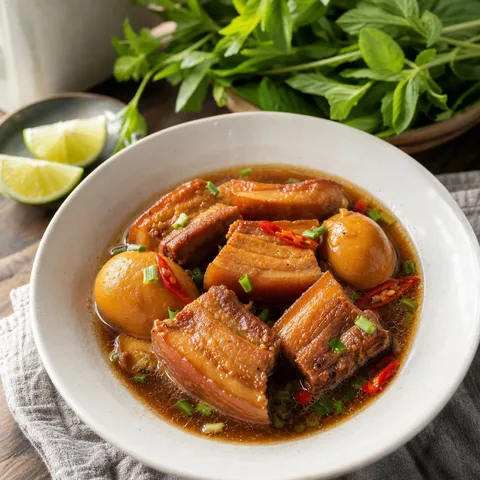 Vietnamese Lens Verified Images are for illustrative purposes only, may be inaccurate, and do not guarantee the presence or absence of specific ingredients.
 Thịt Kho Tàu (Caramelized Pork and Eggs)
Meltingly tender pork belly and hard-boiled eggs braised in a rich, sweet, and savory coconut juice caramel, perfect over steamed rice.
 Vietnamese Lens Verified Images are for illustrative purposes only, may be inaccurate, and do not guarantee the presence or absence of specific ingredients.
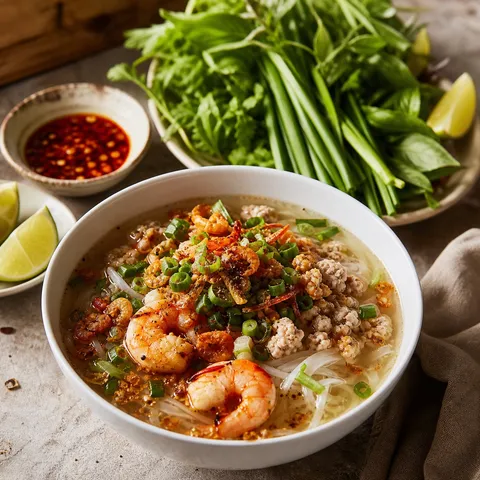
 Hủ Tiếu (Pork and Seafood Noodle Soup)
A Vietnamese pork-bone broth noodle soup loaded with ground pork, shrimp, and dried shrimp over chewy tapioca noodles, finished with garlic chives and fried garlic.
 Vietnamese Lens Verified Images are for illustrative purposes only, may be inaccurate, and do not guarantee the presence or absence of specific ingredients.
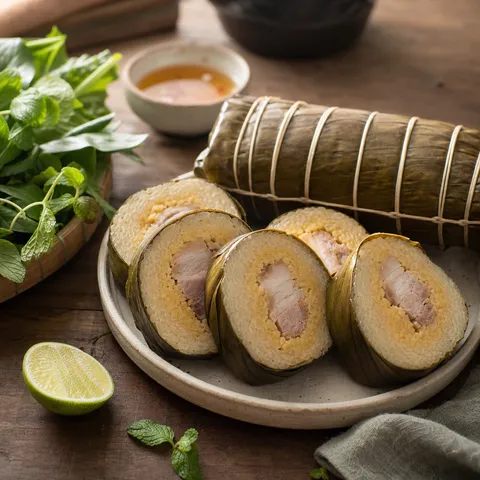
 Bánh Tét (Cylindrical Sticky Rice Cake)
The Southern equivalent of Bánh Chưng, rolled into a cylinder.