 Food Lens Images are for illustrative purposes only, may be inaccurate, and do not guarantee the presence or absence of specific ingredients.
 Food Lens · Recipe ingredients
Tamarind
Intensely sour and fruity with a warm, molasses-like depth beneath the tartness and a lingering sweet-sour finish; unlike citrus, tamarind's acidity feels rounded rather than sharp, making it uniquely effective in complex, slow-cooked dishes.
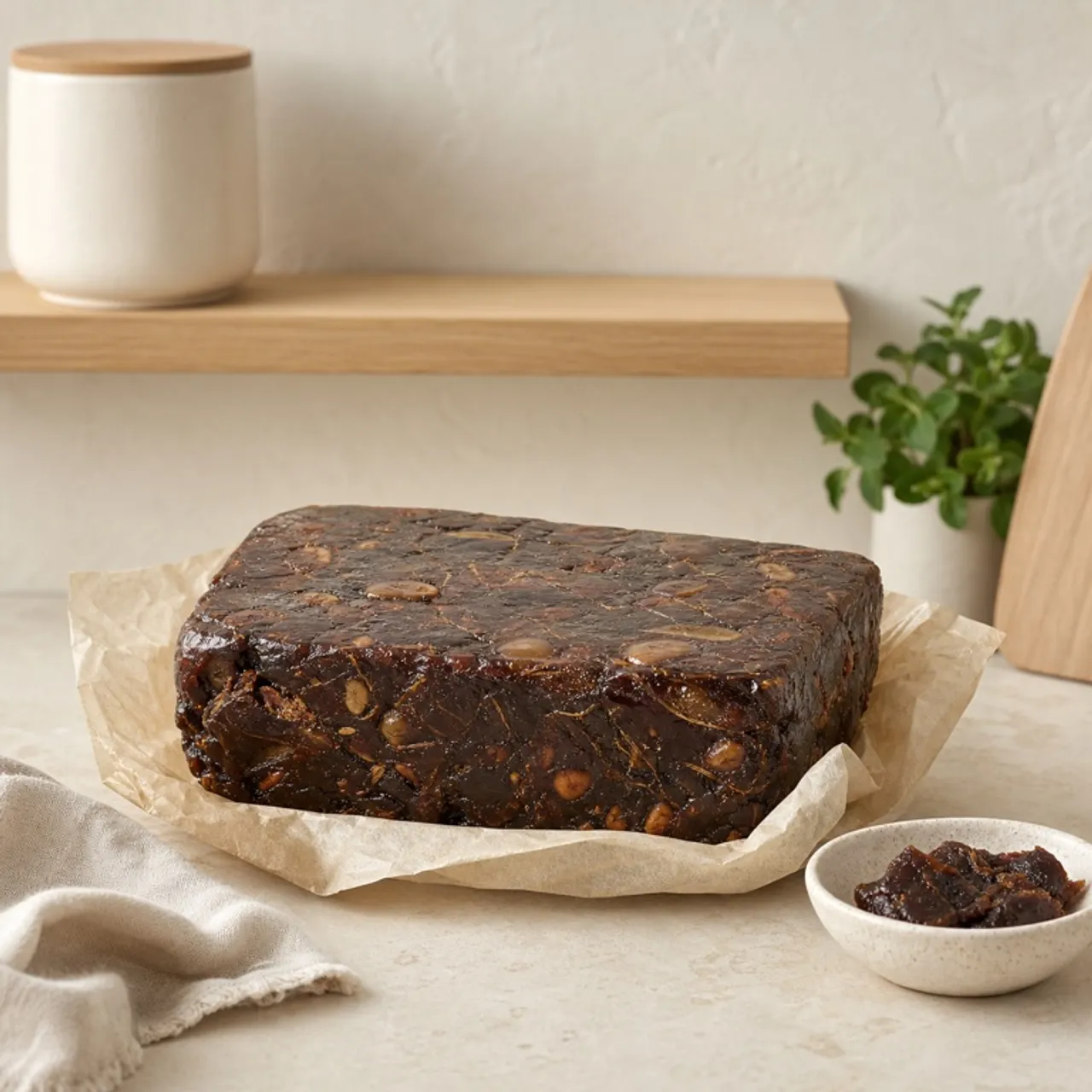
Lens VerifiedTamarind is the sour, pulpy fruit of a tropical tree, sold in multiple forms — as a block of pressed pulp with seeds, as a smooth concentrate, or as a ready-made paste — and used as a souring agent across Indian, Thai, Filipino, Mexican, and Caribbean cuisines. Its sourness is distinctly different from citrus or vinegar: warmer, fruitier, and more rounded, with a slight sweetness beneath the tartness that makes it uniquely suited to sweet-sour flavor balancing in everything from chutneys to pad thai.
Where it comes from
From African savanna to Indian temple kitchen to Thai street cart to Filipino family table — tamarind traveled slowly and stayed permanently, becoming indispensable wherever it arrived.
Varieties — Sweet tamarind varieties (popular in Southeast Asia and Mexico) are eaten fresh out of the pod as a snack. Sour tamarind — the variety used in cooking — has a more intense tartness. Products available in stores include: whole tamarind pods, pressed tamarind blocks (pulp with seeds and fibers), seedless tamarind paste, and tamarind concentrate (much more intense — use sparingly).
In Tamil Nadu, South India, tamarind is considered an essential flavor pillar alongside salt and spice — the holy trinity of South Indian seasoning. Tamarind rice (puliyogare or puliyodarai) is a temple food, a travel food, and a comfort food so important it has its own category. In the Philippines, tamarind is so associated with the sour soup sinigang that powdered tamarind broth mixes are sold specifically for it.
In a modern kitchen — Tamarind concentrate is the most convenient form for weeknight cooking — start with half a teaspoon, taste, and adjust, as it is significantly more powerful than paste or freshly made pulp water.
Buying it
Tamarind block (compressed pulp) should be soft, sticky, and deeply brown — very hard, dry blocks may be old. Paste in tubs should be dark, smooth, and intensely sour-smelling; a reddish, fruity fragrance indicates quality. Concentrate in jars is the most shelf-stable option. For Indian cooking, block or paste is more authentic; for Thai preparations, look for Thai-brand tamarind paste.
Storing it
Keep tamarind pulp or paste tightly sealed in a cool, dry pantry; once opened, it keeps best in the fridge, where the sticky pulp stays soft rather than drying out. Mould on the surface means it should be discarded, though dark color and stickiness are normal.
Keeps about 1 year in the pantry.
Out of tamarind? Good swaps
- Lime juice + brown sugar — Combine 1 tablespoon lime juice with ½ teaspoon brown sugar to approximate tamarind's sweet-sour profile in a pinch; lacks the depth and fruitiness
- Worcestershire sauce — Contains tamarind as an ingredient — works as a substitute in Western-style marinades and sauces but not in Indian or Thai applications
- Pomegranate molasses — Deep, fruity sourness with similar warming tones; an excellent swap in Middle Eastern recipes and marinades
General cooking guidance — always check the labels on the products you use. Listahan’s allergen checks run automatically when you plan a recipe in the app. Not medical advice.
Recipes that use tamarind
Common questions about tamarind
Is tamarind vegan?
Tamarind is generally plant-based and suitable for a vegan diet, but brands differ — confirm on the label.
What can I use instead of tamarind?
Good swaps include Lime juice + brown sugar, Worcestershire sauce, Pomegranate molasses. Each behaves a little differently — see the swaps above for notes, and always check labels for allergens.
How do I store tamarind?
Keep tamarind pulp or paste tightly sealed in a cool, dry pantry; once opened, it keeps best in the fridge, where the sticky pulp stays soft rather than drying out. Mould on the surface means it should be discarded, though dark color and stickiness are normal. It keeps about 1 year in the pantry.
More recipe ingredients
See all


Make tamarind about your kitchen — with Listahan Pro
Everything above is free, forever. Pro adds the Household Lens — the same food, seen for your family:
-
Checked for each member
Flags tamarind per person against your household's allergies and school rules — not just a generic "contains" tag.
-
Pantry-aware
Knows whether you already have it, what is running low, and the best swap from what is in your kitchen tonight.
-
What it costs near you
A real price from the Presyo community index, so you can plan the budget — not guess.
-
Your household memory
Who likes it, plus your own private notes — brand, where you keep it, who skips it.
Allergen safety is always free — Pro adds the automation, never the safety.
Cook with tamarind — safely
Plan a recipe in Listahan and the household allergen check runs automatically — every plan, every swap, every lunchbox. Safety is never paywalled.