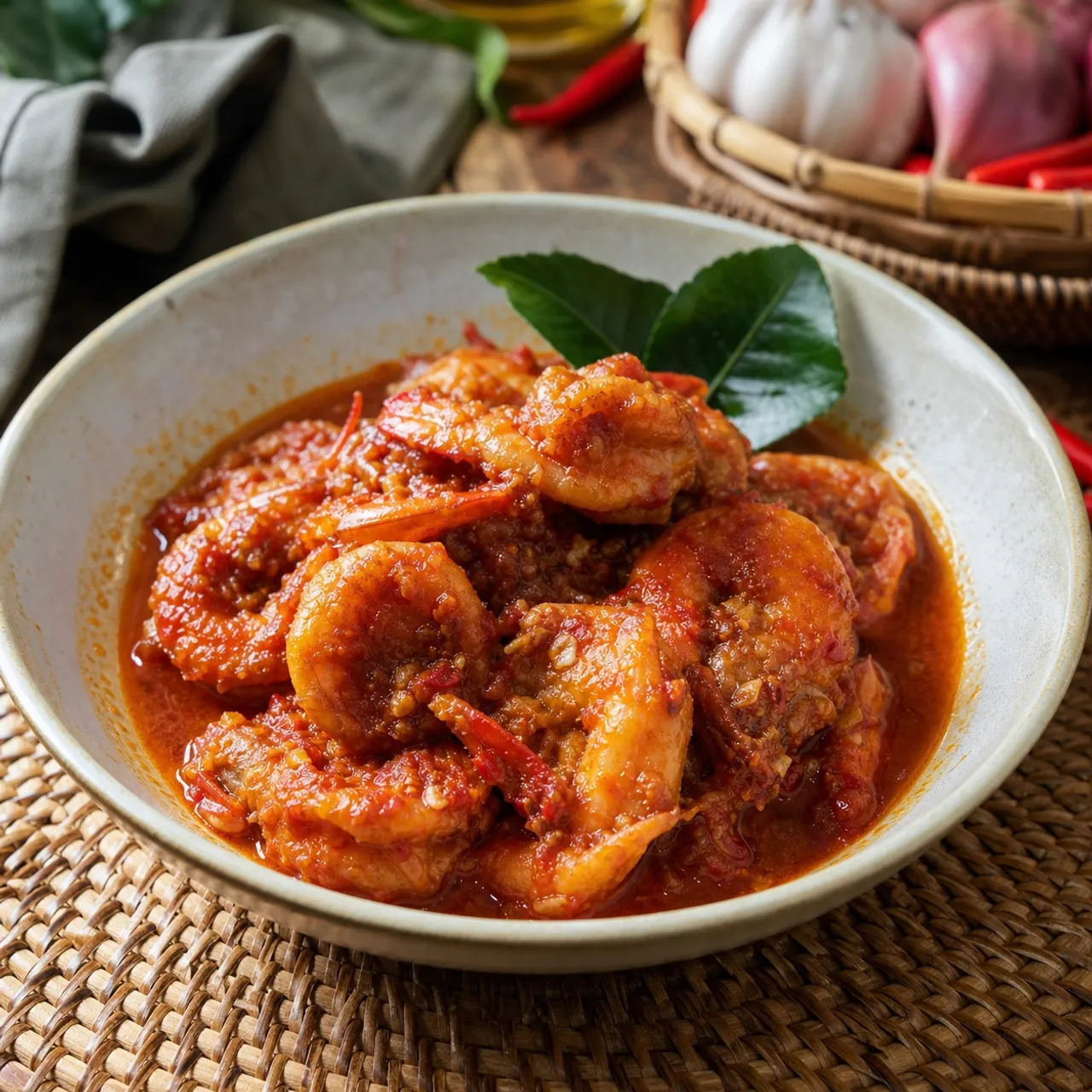
 Indonesian & Malaysian Images are for illustrative purposes only, may be inaccurate, and do not guarantee the presence or absence of specific ingredients.
 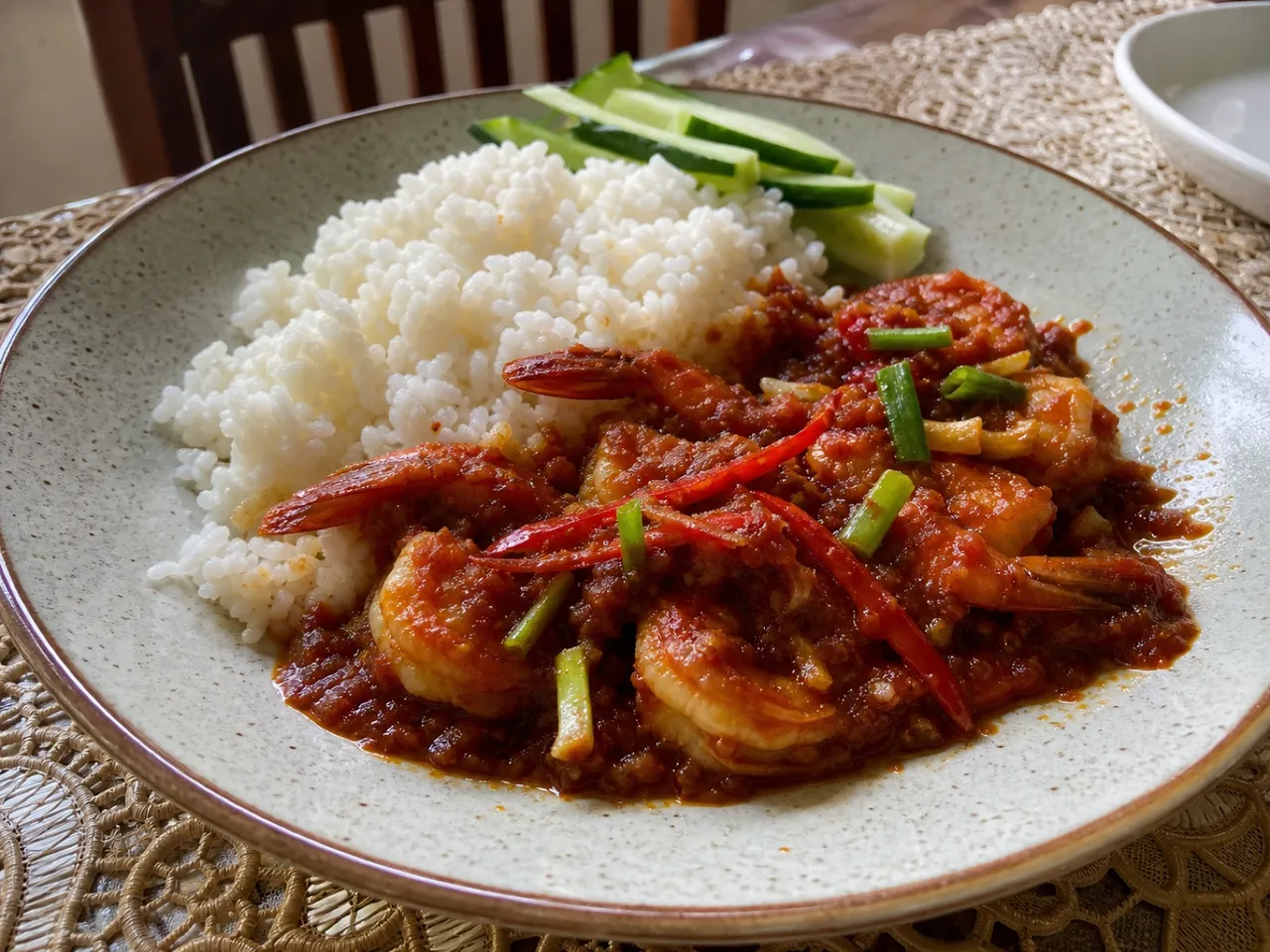 Serving Images are for illustrative purposes only, may be inaccurate, and do not guarantee the presence or absence of specific ingredients.
 Sambal Udang
Plump prawns tossed in a fiery, caramelized sambal of chili, shrimp paste, and lemongrass — intensely flavored, slightly sweet, and irresistibly saucy.
Contains common allergens
In the app, Listahan checks these against your household automatically.
Good to know
- Ready in under 30 minutes
Matched from this dish's own ingredients and timing. Browse more: 30-minute meals
Instructions
6 steps- 1
Heat the oil in a wok or large skillet over medium-high heat and saute the onion and garlic until softened and fragrant, about 3 minutes.
- 2
Add the sambal paste and cook, stirring constantly, until the oil separates and the raw chili smell mellows, 3 to 4 minutes.
- 3
Stir in the tamarind water and sugar, and simmer for 2 minutes to let the sauce come together.
- 4
Add the shrimp and toss to coat evenly in the sauce.
- 5
Cook, stirring, until the shrimp turn pink and are just cooked through, 3 to 4 minutes; do not overcook.
- 6
Season with salt to taste and serve immediately over steamed rice.
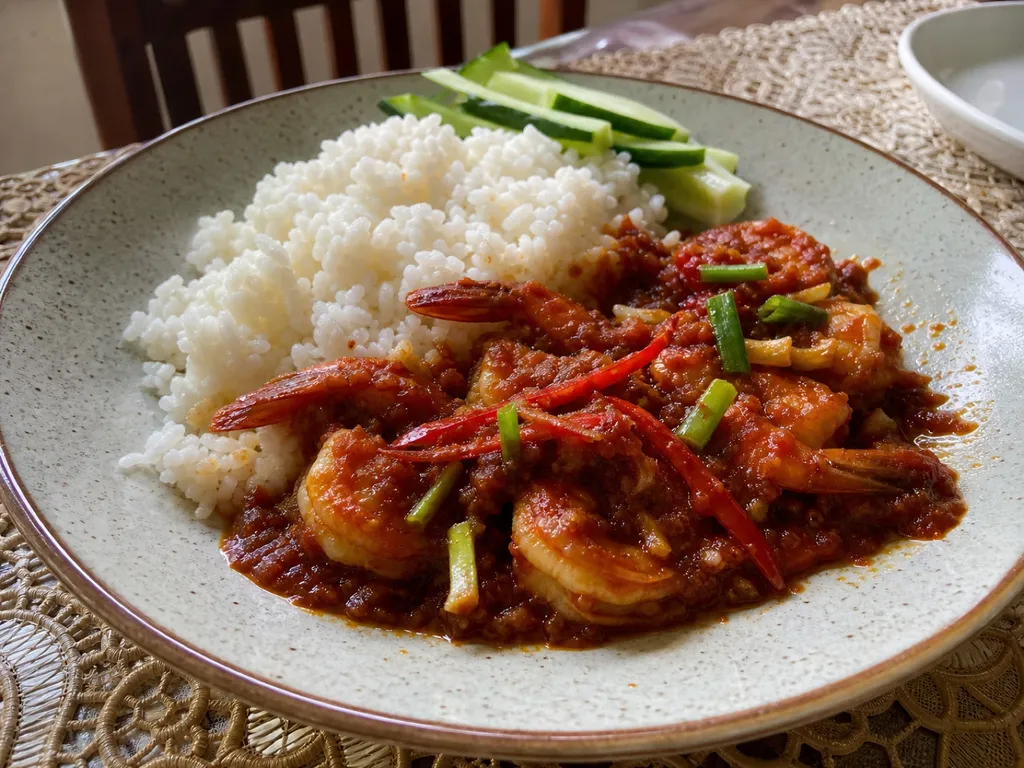 Images are for illustrative purposes only, may be inaccurate, and do not guarantee the presence or absence of specific ingredients.
 Listahan Family Score™
62/100
Works for many families
Score reflects how well this recipe fits a typical busy household. In the app, your Family Score is personalized to your household's allergens, kids, and pantry.
Nutrition
per serving135
Calories
28 g
Protein
3 g
Carbs
1 g
Fat
Estimated per serving. Actual values depend on the brands and portions you use.
Listahan cooking guide
Chef notes & practical guide
Technique notes, ingredient swaps, serve-alongside ideas, storage guidance, and equipment for this recipe.
Cultural context
Sambal udang, or chili shrimp, is a staple preparation found across Indonesia and Malaysia with dozens of regional variations, each reflecting local preferences for heat level, sweetness, and the balance between shrimp paste and fresh aromatics. The dish belongs to the larger family of sambal-based cooking in which dried or fresh chilies are ground with aromatics and cooked down into a concentrated, deeply flavored paste before any protein is added. In coastal communities, shrimp was historically plentiful and inexpensive, making this combination of seafood and chili an everyday household dish rather than a special occasion food.
Listahan note
This version prioritizes a quick-cooked sambal that stays bright and fresh-tasting rather than the long-simmered versions used in restaurants, which makes it achievable on a weeknight without sacrificing the essential punch of real chili paste.
Technique cues
- Fry the sambal paste in oil until it deepens in color from bright orange to a reddish-brown and the oil visibly separates around the edges of the paste; this step, called tumis, is what transforms raw chili paste into something rounded and complex rather than sharp.
- Add the shrimp when the sambal is fully cooked and the heat is high, then cook just until the shrimp curl into a C shape and turn opaque, about 2 minutes; a fully closed O shape means overcooked and rubbery.
- A small amount of palm sugar or brown sugar added near the end of cooking balances the heat and brings out the natural sweetness of the shrimp without making the dish taste sweet.
Kitchen flow
- Parallel prep
- Blend the sambal paste and prep the shrimp simultaneously if two people are cooking; if cooking alone, blend and measure all ingredients before heating the oil since the actual cooking moves fast.
- Make-ahead
- The sambal base without the shrimp can be cooked and refrigerated for up to 4 days, making weeknight assembly as simple as reheating the paste and cooking fresh shrimp to order in under 5 minutes.
- Leftover move
- Leftover sambal udang tossed with rice noodles or spooned over steamed rice with a fried egg makes a satisfying next-day meal; the sambal soaks into starches even better after sitting overnight.
- Cleanup rhythm
- Blend the sambal paste first and rinse the blender jar before it dries; the chili and shrimp paste will stain if left sitting and can be difficult to remove from white surfaces.
Ingredient brief
Role, handling, and swap guidance for each key ingredient.
large shrimp
main protein
Purpose: Shrimp absorbs the chili paste quickly because of its large surface area and cooks in minutes, making it the ideal protein for a sambal that has already done its flavor-building work in the pan.
Handling: Peel and devein but leave the tails on for presentation; pat dry with paper towels so excess moisture does not cause the sambal to splatter or steam when the shrimp hit the pan.
Adaptation: Prawns work identically; firm white fish fillets cut into chunks or squid rings are good protein alternatives that suit the same sambal base.
fresh red chilies
heat and body
Purpose: Fresh chilies provide the moisture and fruity chili flavor that is the foundation of the sambal; they give more complexity than dried chili flakes and produce a paste rather than a powdery sauce.
Handling: Remove seeds for less heat or leave them in for a hotter result; blend or pound with the other aromatics until a fairly smooth paste forms.
Adaptation: A mix of dried red chilies rehydrated in hot water and a small amount of fresh red bell pepper approximates the color and volume of fresh chilies with moderate heat.
shrimp paste (belacan)
umami depth
Purpose: Belacan is the fermented shrimp paste that gives sambal its characteristic savory depth; even a small amount adds a layer of complexity that makes the dish taste far more rounded than chili and aromatics alone.
Handling: Toast a small piece in a dry pan or wrap in foil and heat briefly to reduce its pungent raw smell before incorporating into the paste.
Adaptation: Fish sauce used in slightly larger quantity than the belacan called for provides similar salinity and fermented seafood umami; miso paste is a non-seafood alternative though the flavor profile shifts noticeably.
shallots
sweetness and paste body
Purpose: Shallots provide a natural sweetness when fried that rounds out the sharpness of the chili and the intensity of the shrimp paste, binding the paste into a cohesive sauce.
Handling: Peel and quarter before blending; they do not need to be fine-diced since everything is pureed.
Adaptation: Half a small red onion works well; avoid white onion, which is sharper and less sweet when cooked quickly.
palm sugar
balance and gloss
Purpose: Palm sugar adds a caramel-adjacent sweetness that tames chili heat without making the dish sweet, and dissolves into the sauce to give it a slight gloss and body.
Handling: Shave or grate hard palm sugar from a block, or use soft palm sugar directly; add in small amounts and taste as you go.
Adaptation: Brown sugar or coconut sugar works in equal amount; light brown sugar is the easiest substitute in most grocery stores.
kaffir lime leaves
citrus lift
Purpose: Added whole and bruised, kaffir lime leaves release a distinctive floral citrus fragrance during cooking that cuts through the richness of the sambal and prevents the shrimp from tasting one-dimensionally spicy.
Handling: Remove the center rib and tear the leaves in half before adding to the pan so more surface area releases their oils.
Adaptation: A few strips of lime zest added toward the end of cooking approximates the citrus quality without the same floral complexity; the dish is still very good without them.
Technique notes
- The tumis step is where patience pays off: set a timer for 8 minutes and commit to stirring the sambal paste over medium heat until it smells deeply fragrant and the oil has completely pooled at the edges, which tells you the paste is cooked through and ready to receive protein.
- Add a splash of tamarind water made by dissolving tamarind paste in warm water to the sambal about a minute before the shrimp go in; the tartness deepens the complexity of the sauce and is one of the most common professional kitchen additions to this dish.
- For the best texture, cook sambal udang in a wide wok over high heat rather than a deep pan; the large surface area lets the sauce reduce and cling to the shrimp rather than pooling at the bottom.
Ingredient swaps
- Shellfish-free direction
- Replace the shrimp with firm tofu cut into rectangles and pressed dry, or with chicken thigh cut into small pieces; replace belacan with miso paste and a few drops of fish sauce if shellfish is the only allergen to avoid.
- Lower-heat direction
- Use mild red Fresno chilies or a blend of red bell pepper and a single bird's-eye chili so the sambal color and body are preserved but the capsaicin heat is substantially reduced.
- Gluten-free direction
- The dish is naturally gluten-free when made with the listed ingredients; confirm the brand of shrimp paste used does not contain any wheat-based additives, as some commercial versions do.
- Weeknight shortcut
- Use store-bought sambal oelek as the starting chili paste and fry it with sauteed shallots and garlic until fragrant; the result is quicker and slightly less nuanced but very satisfying and comes together in 15 minutes.
Serve alongside
- Steamed jasmine rice
- Kangkung belacan (water spinach stir-fried with shrimp paste)
- Cucumber and tomato slices
- Cold coconut water
- Es teh manis (sweet iced tea)
- Cold lager beer
Serving suggestions only — check pairings for your household's allergens.
Storage & reheating
- Refrigerate leftovers in an airtight container for up to 2 days; shrimp continue to firm slightly in the sambal overnight, so gentle reheating is important.
- Reheat over low heat in a skillet with a tablespoon of water, stirring gently until just warmed through; avoid high heat which will overcook the shrimp and cause the sauce to separate.
Equipment
- High-powered blender or stone mortar and pestle for grinding the sambal paste to the right consistency
- Wide carbon steel wok or large cast-iron skillet for high-heat cooking with maximum surface area
- Fine-mesh sieve for straining tamarind water if using block tamarind
- Spider or slotted spoon for tossing the shrimp through the sambal quickly without breaking them
Make this household-aware
Listahan Pro checks this recipe against your household's allergens, finds pantry-aware swaps, builds the shopping list, and helps you plan the week around it.
Plan it in Listahan
Add Sambal Udang to your week, check it against your household's allergens, and build the shopping list automatically.
More Indonesian & Malaysian recipes
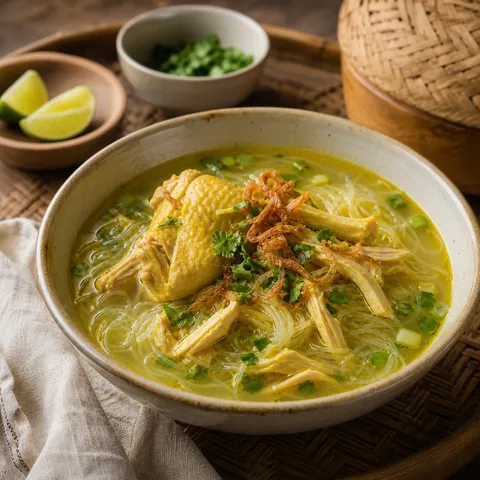 Indonesian & Malaysian Lens Verified Images are for illustrative purposes only, may be inaccurate, and do not guarantee the presence or absence of specific ingredients.
 Soto Ayam
A golden, turmeric-spiced Indonesian chicken soup with glass noodles, crispy shallots, and lime — light, herbal, and deeply comforting.
 Indonesian & Malaysian Lens Verified Images are for illustrative purposes only, may be inaccurate, and do not guarantee the presence or absence of specific ingredients.
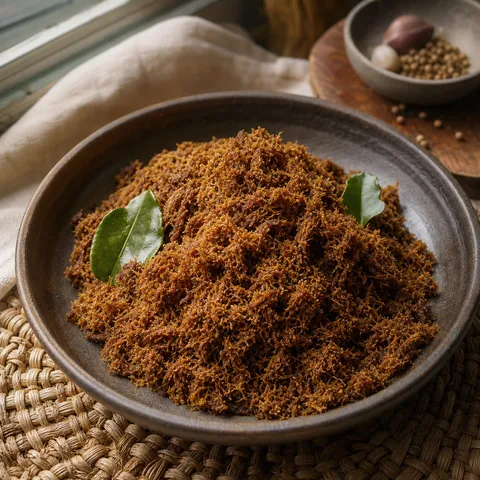
 Beef Serunding
Dry-fried spiced beef floss toasted with coconut and lemongrass until golden and fragrant — a rich, crumbly condiment that transforms plain rice.
 Indonesian & Malaysian Lens Verified Images are for illustrative purposes only, may be inaccurate, and do not guarantee the presence or absence of specific ingredients.
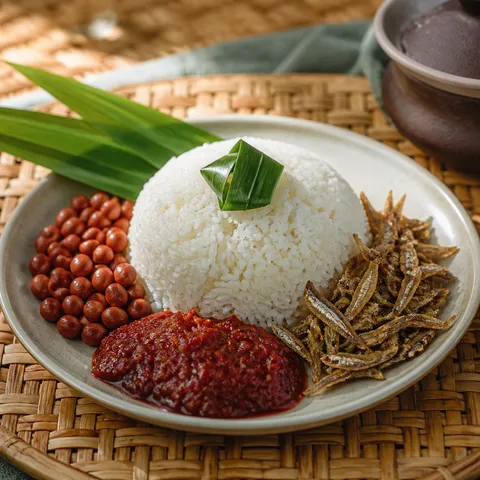
 Nasi Lemak
Malaysia's national comfort dish — fragrant coconut rice paired with sambal, crispy anchovies, roasted peanuts, and a soft-boiled egg.