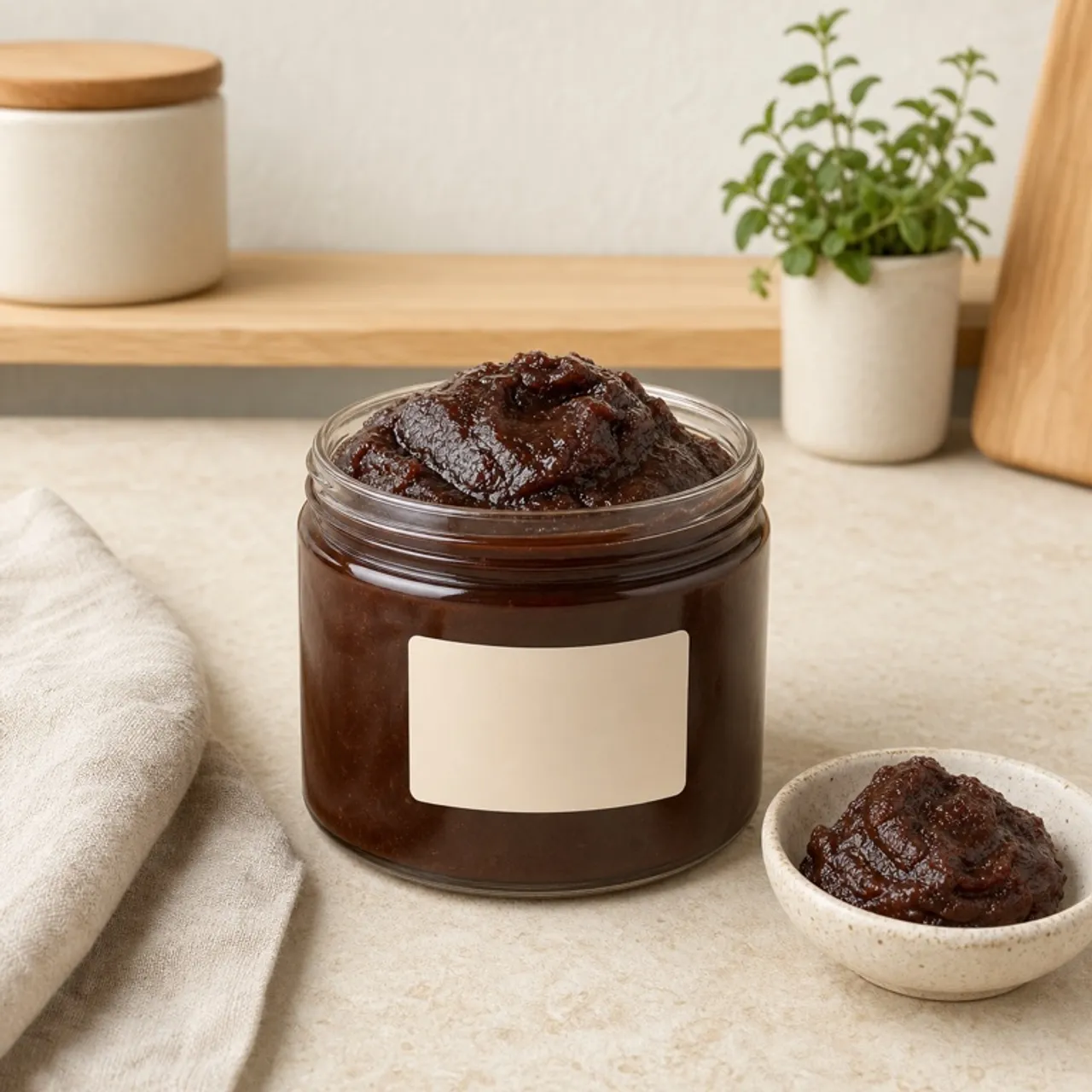
 Food Lens Images are for illustrative purposes only, may be inaccurate, and do not guarantee the presence or absence of specific ingredients.
 Food Lens · Recipe ingredients
Tamarind Paste
Intensely sour and fruity with a jammy, dates-like sweetness, earthy depth, and a long, mouth-puckering finish.
Lens VerifiedTamarind paste is a concentrated, deeply tangy and fruity condiment made from the pulp of tamarind pods, used across South Asian, Southeast Asian, Caribbean, and West African cuisines to add a distinctive sour complexity that no other ingredient quite replicates. It is essential in Pad Thai, Indian chutneys, and tamarind-based curries.
Where it comes from
Tamarind has traveled farther than almost any other pantry ingredient — from its origins in tropical Africa, to becoming a cornerstone of Indian cuisine millennia ago, to arriving in the Americas with enslaved Africans and colonial spice traders. Today it is a unifying flavor thread that connects Indian, Thai, Filipino, Mexican, and West African kitchens, and tamarind paste is found in Asian and South Asian grocery stores across North America.
Varieties — Tamarind paste (or concentrate) is the most convenient form — a smooth, ready-to-use product. Tamarind block (compressed pulp with seeds) is the traditional form and requires soaking and straining. Thai tamarind paste is generally thinner and less concentrated than Indian versions.
In Indian cooking, imli (tamarind) chutney is inseparable from chaat — a class of sweet-sour-spicy street snacks that includes pani puri and bhel puri. In Thailand, tamarind provides the essential sour note in Pad Thai that distinguishes it from other noodle dishes.
In a modern kitchen — Tamarind concentrate is quite intense — start with half the amount a recipe calls for if you are switching from block to concentrate, as concentrations vary widely by brand. Balance with sweetness (palm sugar, jaggery, or brown sugar) to round out the sourness.
Buying it
Look for deep brown, smooth paste without added thickeners; the ingredient list should be just tamarind and possibly water. Thai brands like Pantai tend to be thinner; Indian brands tend to be thicker and more concentrated. Taste to gauge intensity before adding to a recipe.
Storing it
An unopened jar of tamarind paste keeps well in a cool pantry. Once opened, refrigerate it in a sealed container — its sugar and acidity make it fairly shelf-stable, but cold storage stops surface mold from forming.
Keeps about 1 year in the pantry.
Out of tamarind paste? Good swaps
- Lime juice + brown sugar — Use 1 tbsp lime juice + ½ tsp brown sugar per 1 tbsp tamarind paste — delivers citrus sour without the fruity depth.
- Pomegranate molasses — Use 1:1 — similarly sweet-sour and fruity; works especially well in Middle Eastern and Caribbean contexts.
- Amchur (dried mango powder) — Use ½ tsp per tbsp in dry applications — provides tartness with a fruity note, common in North Indian cooking.
General cooking guidance — always check the labels on the products you use. Listahan’s allergen checks run automatically when you plan a recipe in the app. Not medical advice.
Recipes that use tamarind paste
Common questions about tamarind paste
Is tamarind paste vegan?
Tamarind Paste is generally plant-based and suitable for a vegan diet, but brands differ — confirm on the label.
What can I use instead of tamarind paste?
Good swaps include Lime juice + brown sugar, Pomegranate molasses, Amchur (dried mango powder). Each behaves a little differently — see the swaps above for notes, and always check labels for allergens.
How do I store tamarind paste?
An unopened jar of tamarind paste keeps well in a cool pantry. Once opened, refrigerate it in a sealed container — its sugar and acidity make it fairly shelf-stable, but cold storage stops surface mold from forming. It keeps about 1 year in the pantry.
More recipe ingredients
See all


Make tamarind paste about your kitchen — with Listahan Pro
Everything above is free, forever. Pro adds the Household Lens — the same food, seen for your family:
-
Checked for each member
Flags tamarind paste per person against your household's allergies and school rules — not just a generic "contains" tag.
-
Pantry-aware
Knows whether you already have it, what is running low, and the best swap from what is in your kitchen tonight.
-
What it costs near you
A real price from the Presyo community index, so you can plan the budget — not guess.
-
Your household memory
Who likes it, plus your own private notes — brand, where you keep it, who skips it.
Allergen safety is always free — Pro adds the automation, never the safety.
Cook with tamarind paste — safely
Plan a recipe in Listahan and the household allergen check runs automatically — every plan, every swap, every lunchbox. Safety is never paywalled.