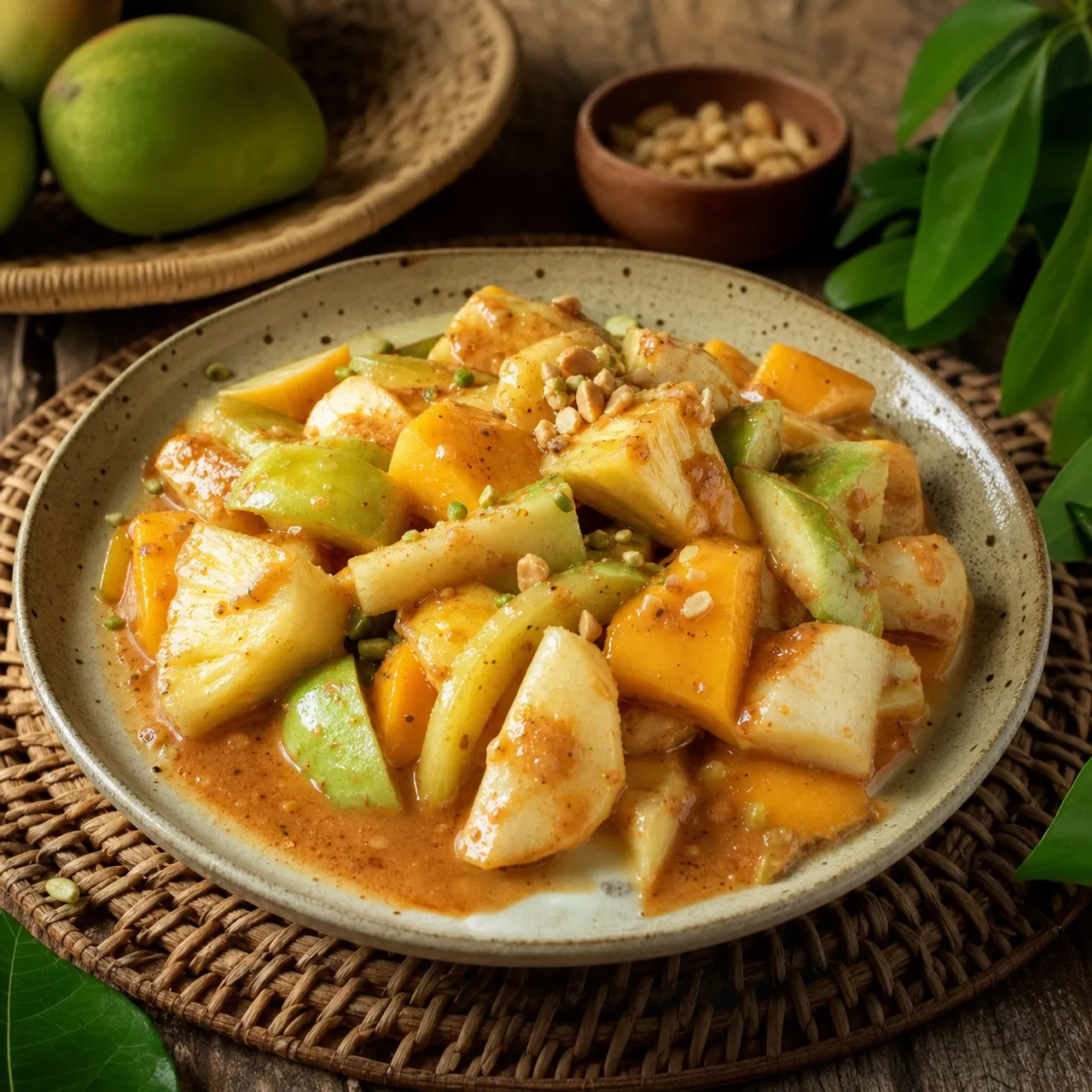
 Indonesian & Malaysian Images are for illustrative purposes only, may be inaccurate, and do not guarantee the presence or absence of specific ingredients.
 Rujak Buah
A bracing Indonesian fruit salad of crunchy unripe fruit tossed in a sweet, spicy, and tangy palm sugar and tamarind dressing.
Contains common allergens
In the app, Listahan checks these against your household automatically.
Good to know
- Ready in under 30 minutes
Matched from this dish's own ingredients and timing. Browse more: 30-minute meals
Instructions
4 steps- 1
In a small saucepan, combine the chopped palm sugar, tamarind paste, and 1/4 cup water, then warm over medium-low heat for 4 to 5 minutes, stirring, until the sugar dissolves into a thick syrup.
- 2
Using a mortar and pestle, pound the Thai chiles and salt into a coarse paste, then add the roasted peanuts and crush them roughly so the dressing keeps some texture.
- 3
Stir the chile-peanut paste into the warm tamarind syrup and let the dressing cool to room temperature; taste and balance the sweet, sour, salty, and spicy notes to your liking.
- 4
Place all the cut fruit in a large bowl, pour over the dressing, and toss until every piece is glossy and well coated. Serve immediately while the fruit is cold and crisp, topped with a few extra crushed peanuts.
Listahan Family Score™
68/100
Works for many families
Score reflects how well this recipe fits a typical busy household. In the app, your Family Score is personalized to your household's allergens, kids, and pantry.
Nutrition
per serving200
Calories
1 g
Protein
50 g
Carbs
0 g
Fat
Estimated per serving. Actual values depend on the brands and portions you use.
Listahan cooking guide
Chef notes & practical guide
Technique notes, ingredient swaps, serve-alongside ideas, storage guidance, and equipment for this recipe.
Cultural context
Rujak buah belongs to the broader rujak or rojak family found across Indonesia and Malaysia, where fruit, vegetables, or fritters are matched with a sweet-sour-spicy sauce. The fruit version is built around contrast: firm, cool pieces of fruit against a dark palm sugar and tamarind dressing that is pounded, not just stirred, so the chile and peanuts stay present.
Listahan note
This version keeps the fruit mix accessible for a North American kitchen and focuses on the dressing texture. The goal is a glossy coating that tastes sweet, sour, salty, spicy, and nutty without turning the fruit soggy.
Technique cues
- Use fruit that is firm and cold. Soft ripe fruit collapses under the thick dressing and loses the crisp bite that makes rujak buah work.
- Cool the tamarind syrup before tossing. Warm dressing pulls moisture from cucumber and jicama quickly and can make the salad watery.
- Pound the peanuts roughly instead of grinding them fine. The uneven pieces give the sauce body and a little crunch on each bite.
Kitchen flow
- Parallel prep
- Warm the palm sugar and tamarind first, then cut and chill the fruit while the syrup cools.
- Make-ahead
- Make the dressing a day ahead and keep the cut fruit separate until serving so the pieces stay crisp.
- Leftover move
- Spoon extra dressed fruit over cold rice noodles or alongside grilled chicken for a fast lunch plate.
- Cleanup rhythm
- Rinse the saucepan and mortar right after mixing; palm sugar syrup and crushed peanuts get sticky as they sit.
Ingredient brief
Role, handling, and swap guidance for each key ingredient.
Mixed firm fruit (green mango, pineapple, jicama, cucumber)
Crisp fruit base
Purpose: The mix gives sharp, sweet, juicy, and cooling bites so the dressing has more than one kind of fruit to play against.
Handling: Cut everything into bite-size pieces and chill it before tossing so the salad stays snappy.
Adaptation: Apple, underripe pear, or firm papaya can fill in for one fruit, but avoid very soft fruit because it will turn mushy.
Palm sugar
Sweet backbone
Purpose: Palm sugar brings a deeper caramel note than plain white sugar and helps the dressing cling to the fruit.
Handling: Chop it small before warming so it dissolves evenly into the tamarind water.
Adaptation: Light brown sugar can stand in, though the dressing will taste a little flatter and less earthy.
Tamarind paste
Sour base
Purpose: Tamarind gives the dressing its rounded tang, which is softer and fruitier than straight vinegar or citrus juice.
Handling: Warm it with water and palm sugar until the mixture becomes a smooth, thick syrup.
Adaptation: Lime juice can brighten the dressing in a pinch, but use less water because lime will not thicken the same way.
Thai chiles
Fresh heat
Purpose: Thai chiles cut through the sugar and fruit with clean, direct heat.
Handling: Pound them with salt first so they break down before the peanuts go in.
Adaptation: Use fewer Thai chiles for a gentler bowl, or use a small serrano for a similar fresh bite with a different heat level.
Roasted peanuts
Nutty texture
Purpose: Peanuts make the dressing thicker and give the salad a savory finish instead of tasting only sweet and sour.
Handling: Crush them coarsely so some pieces dissolve into the sauce while others stay crunchy.
Adaptation: Roasted cashews give a softer, buttery crunch, while toasted sesame seeds make the sauce lighter and less chunky.
Technique notes
- Taste the dressing before it touches the fruit. It should be a little intense on its own because the fruit will dilute it.
- If the dressing seems too thick after cooling, loosen it with a teaspoon of water at a time rather than adding more tamarind all at once.
- Toss just before serving and use a wide bowl so the fruit gets coated without being crushed.
Ingredient swaps
- Gentler heat path
- Use one Thai chile instead of two, then add more pounded chile at the end if the fruit tastes too sweet.
- Pantry sugar backup
- Use light brown sugar when palm sugar is not available; simmer it just until dissolved so it does not become candy-like.
- Fruit flexibility
- Keep at least one crunchy, neutral fruit or vegetable like jicama or cucumber in the mix so the dressing does not become overly sweet.
Serve alongside
- Nasi goreng
- Chicken satay
- Gado-gado
- Coconut rice
- Iced jasmine tea
- Lime soda
- Young coconut water
Serving suggestions only — check pairings for your household's allergens.
Storage & reheating
- Refrigerate leftover dressed fruit in a sealed container, knowing the cucumber and jicama will release liquid as they sit.
- Do not reheat; serve cold, and stir the dressing back through the fruit before eating.
- Freezing is not a good fit because thawed fruit turns watery and loses its crunch.
Equipment
- Small saucepan
- Mortar and pestle
- Large mixing bowl
- Sharp chef's knife
Make this household-aware
Listahan Pro checks this recipe against your household's allergens, finds pantry-aware swaps, builds the shopping list, and helps you plan the week around it.
Plan it in Listahan
Add Rujak Buah to your week, check it against your household's allergens, and build the shopping list automatically.
More Indonesian & Malaysian recipes
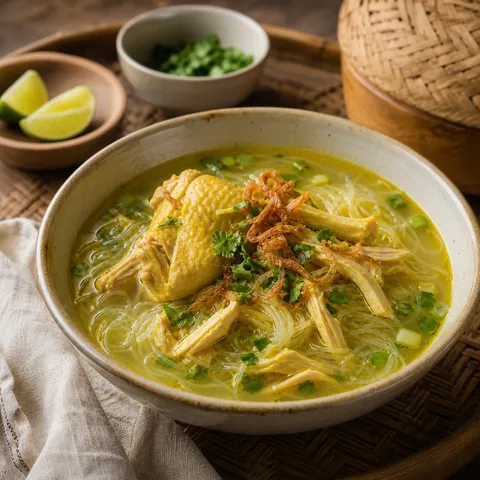 Indonesian & Malaysian Lens Verified Images are for illustrative purposes only, may be inaccurate, and do not guarantee the presence or absence of specific ingredients.
 Soto Ayam
A golden, turmeric-spiced Indonesian chicken soup with glass noodles, crispy shallots, and lime — light, herbal, and deeply comforting.
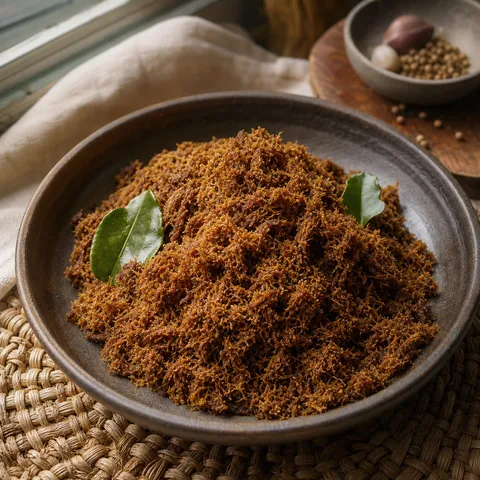 Indonesian & Malaysian Lens Verified Images are for illustrative purposes only, may be inaccurate, and do not guarantee the presence or absence of specific ingredients.
 Beef Serunding
Dry-fried spiced beef floss toasted with coconut and lemongrass until golden and fragrant — a rich, crumbly condiment that transforms plain rice.
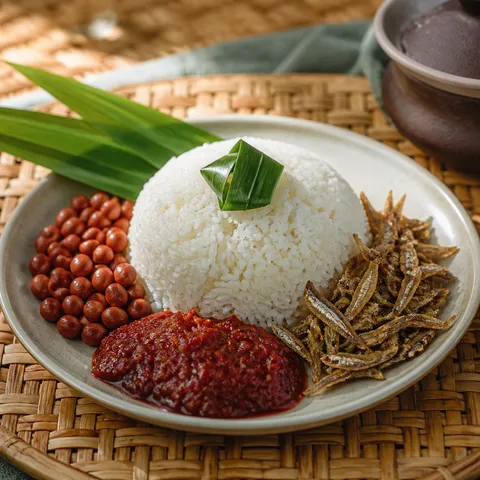 Indonesian & Malaysian Lens Verified Images are for illustrative purposes only, may be inaccurate, and do not guarantee the presence or absence of specific ingredients.
 Nasi Lemak
Malaysia's national comfort dish — fragrant coconut rice paired with sambal, crispy anchovies, roasted peanuts, and a soft-boiled egg.