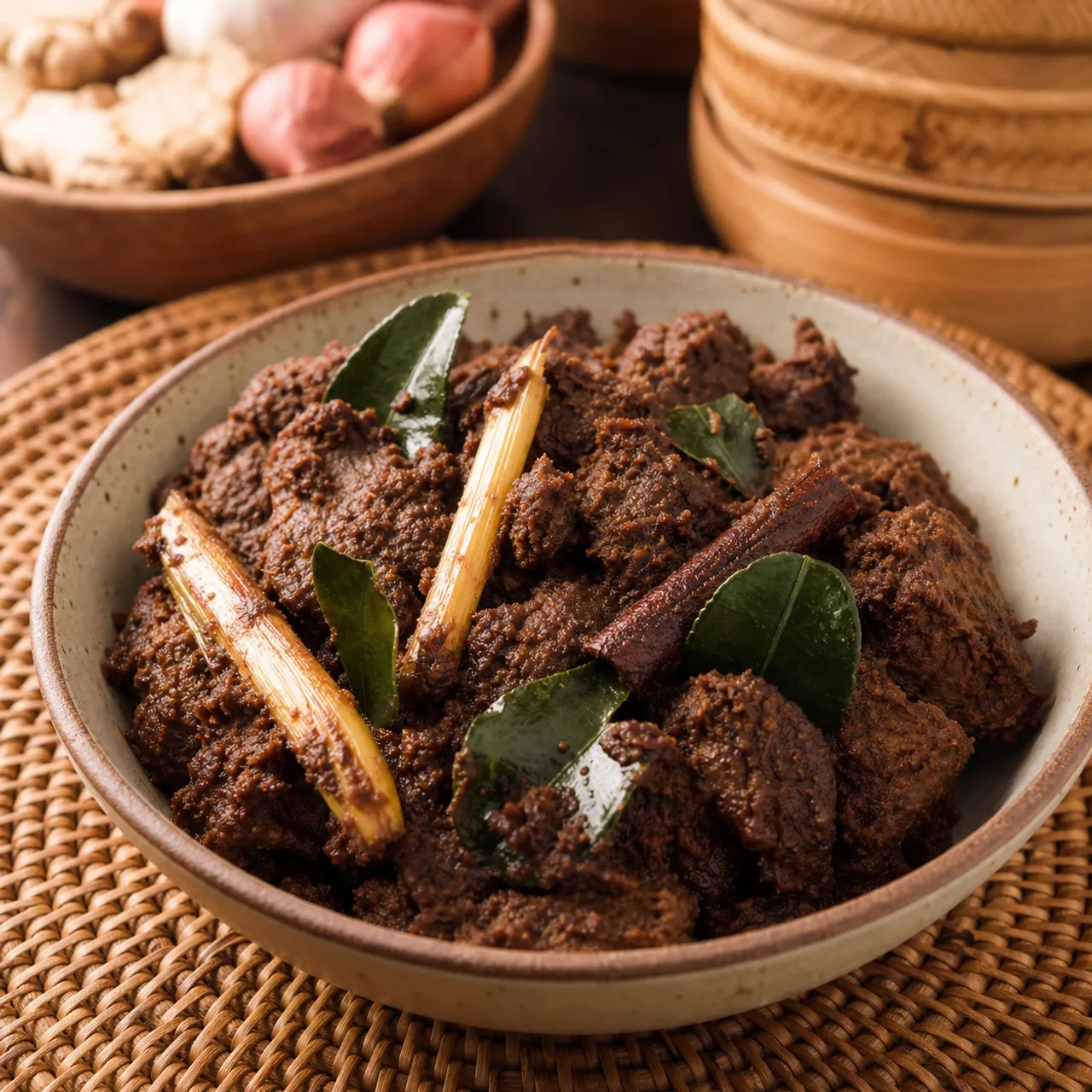
 Indonesian & Malaysian Images are for illustrative purposes only, may be inaccurate, and do not guarantee the presence or absence of specific ingredients.
 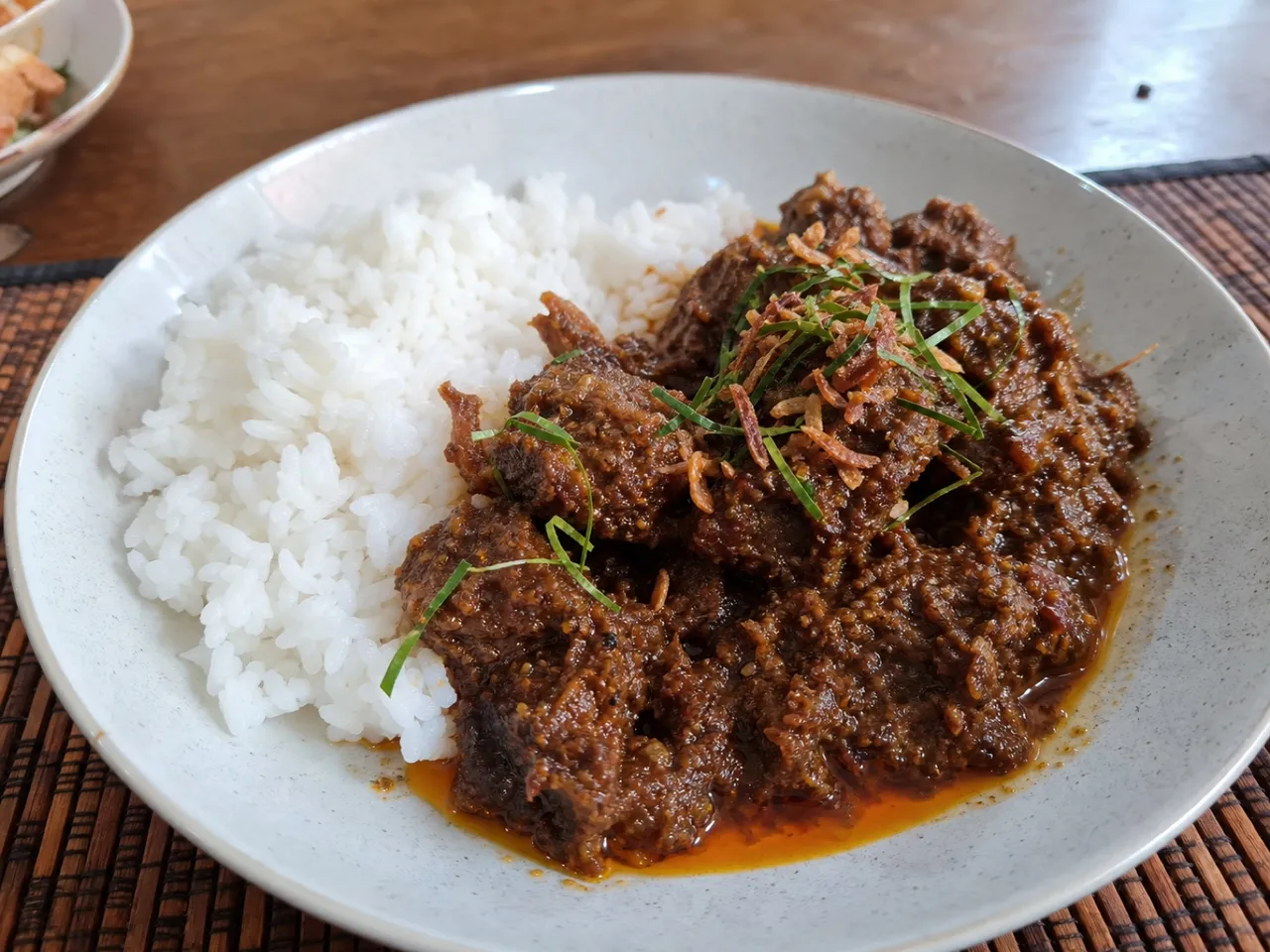 Serving Images are for illustrative purposes only, may be inaccurate, and do not guarantee the presence or absence of specific ingredients.
 Beef Rendang
Slow-braised in coconut milk and a fierce spice paste until the sauce caramelizes into the meat — rich, deeply aromatic, and fall-apart tender.
No common allergens detected
Based on this recipe's ingredient list. Always verify with your own brands and labels.
Good to know
- One-pot
Matched from this dish's own ingredients and timing. Browse more: one-pot dinners
Instructions
6 steps- 1
Blend the shallots, garlic, ginger, galangal, and rehydrated dried chilies into a smooth spice paste.
- 2
Heat a large pot over medium heat and dry-fry the spice paste for 2-3 minutes until fragrant.
- 3
Add the beef cubes, lemongrass, kaffir lime leaves, and cinnamon stick, stirring until the beef is lightly browned.
- 4
Pour in the coconut milk, bring to a gentle boil, then reduce the heat to low.
- 5
Simmer uncovered for 2 to 2.5 hours, stirring occasionally to prevent burning, until the liquid reduces and the oils separate.
- 6
Continue to cook, stirring continuously, until the beef is tender, dark brown, and coated in a dry, caramelized spice mixture.
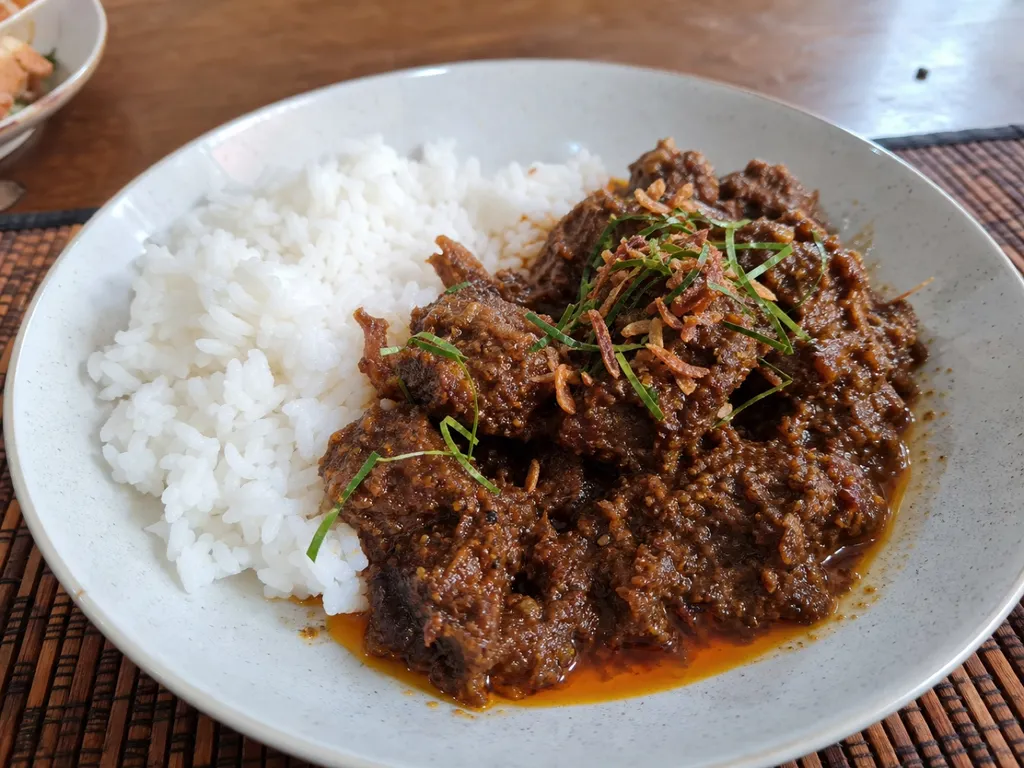 Images are for illustrative purposes only, may be inaccurate, and do not guarantee the presence or absence of specific ingredients.
 Listahan Family Score™
64/100
Works for many families
Score reflects how well this recipe fits a typical busy household. In the app, your Family Score is personalized to your household's allergens, kids, and pantry.
Nutrition
per serving765
Calories
47 g
Protein
22 g
Carbs
57 g
Fat
Estimated per serving. Actual values depend on the brands and portions you use.
Listahan cooking guide
Chef notes & practical guide
Technique notes, ingredient swaps, serve-alongside ideas, storage guidance, and equipment for this recipe.
Cultural context
Rendang originates with the Minangkabau people of West Sumatra, Indonesia, and was traditionally prepared for weddings and ceremonial feasts as a dish of honor. The technique of slow-cooking meat in coconut milk and spices until the liquid fully evaporates — leaving the meat coated in concentrated, nearly dry spiced coconut fat — was developed as a preservation method in a hot climate before refrigeration. In 2011 CNN's reader poll ranked rendang the most delicious food in the world, a title that brought this centuries-old dish to global attention.
Listahan note
This version prioritizes the dry, deeply caramelized finish of authentic rendang rather than a saucy curry texture — the beef should be almost tender-chewy and very dark when done.
Technique cues
- Do not rush the drying stage: once the coconut milk has reduced to oil, the solids and meat need to continue frying in that oil for another 15 to 20 minutes to develop the dark, nutty crust that defines rendang.
- Toast the kerisik (toasted grated coconut) separately until deep golden before adding it — this step builds the roasted coconut flavor that thickens the final coating.
- Choose a tough braising cut like beef chuck or brisket; lean cuts dry out during the long cook and lose the tender pull-apart texture that makes rendang satisfying.
Kitchen flow
- Parallel prep
- Blend the spice paste and toast the coconut while the beef is coming to room temperature, so everything is ready when the pot goes on.
- Make-ahead
- Rendang tastes dramatically better the next day as the spices continue to penetrate the meat; make it 1 to 2 days ahead and reheat gently on the stovetop.
- Leftover move
- Shred leftovers and pack into roti canai or flatbread wraps with sliced cucumber and chili for an easy next-day meal.
- Cleanup rhythm
- Soak the pot immediately after serving — the dark coconut residue loosens quickly with hot water, but sets hard if left to cool.
Ingredient brief
Role, handling, and swap guidance for each key ingredient.
beef chuck
main protein
Purpose: Chuck has enough intramuscular fat and collagen to stay moist and become tender during the 3-plus hour cook without turning dry or stringy.
Handling: Cut into 2-inch chunks; pat dry before adding to the pot so the surface browns rather than steams.
Adaptation: Bone-in short ribs or beef brisket work equally well and add extra richness from the bone marrow.
full-fat coconut milk
braising liquid and fat source
Purpose: The coconut milk provides both the braising liquid that tenderizes the beef and the coconut fat that the meat eventually fries in during the final stage.
Handling: Shake the can well before opening; use canned rather than carton coconut milk for the fat content needed.
Adaptation: Two cans of coconut cream in place of coconut milk creates a richer, faster-reducing rendang.
lemongrass
citrus-floral aromatic
Purpose: Lemongrass adds a bright citrusy backbone that prevents the rich coconut sauce from becoming one-dimensionally heavy.
Handling: Bruise the bottom 4 inches with the back of a knife and knot the stalk so it is easy to remove before serving.
Adaptation: A strip of lime zest and a drop of lemon extract can approximate the brightness, though the authentic grassy note will be missing.
galangal
piney-peppery depth
Purpose: Galangal provides a resinous pine-like note that is distinct from ginger and essential to rendang's layered spice profile.
Handling: Peel and slice thinly; it is too fibrous to eat so slice thickly enough to fish out at the end.
Adaptation: Fresh ginger is the most common substitute — use the same quantity though the flavor will be milder and less complex.
kaffir lime leaves
fragrant citrus accent
Purpose: Torn kaffir lime leaves release floral citrus oils that perfume the whole dish and lift the richness of the coconut fat.
Handling: Remove the central stem and tear the leaves in half to expose more surface area to the hot fat.
Adaptation: A small amount of fresh lime zest added in the final 10 minutes can stand in if kaffir lime leaves are unavailable.
toasted grated coconut (kerisik)
thickener and flavor builder
Purpose: Kerisik contributes body to the sauce and a deep roasted coconut flavor that would be impossible to achieve with untoasted coconut.
Handling: Toast dry desiccated coconut in a dry pan over medium heat, stirring constantly, until deep golden brown; cool before adding.
Adaptation: Creamed coconut block, grated and toasted in a dry pan, is the closest supermarket substitute.
Technique notes
- The transition from braising to frying happens silently — watch for the oil to separate visibly from the reduced coconut milk, then switch from occasional stirring to constant stirring to prevent burning.
- A wide, heavy-bottomed Dutch oven distributes heat evenly enough to prevent hot spots during the final dry-frying stage where scorching is most likely.
- If the spice paste contains dried chilies, bloom them in the oil for a full 3 minutes before adding the wet ingredients — this drives off the raw spice flavor and deepens the color.
Ingredient swaps
- Gluten-free direction
- Rendang is naturally gluten-free as long as you use gluten-free soy sauce if any soy is added; verify that prepared spice paste mixes do not contain wheat starch.
- Weeknight shortcut
- Use a pressure cooker for the first 40 minutes of braising, then transfer to an open pot for the final drying and caramelizing stage — cuts total time roughly in half.
- Chicken direction
- Bone-in chicken thighs work well but reduce the total cook time to about 45 minutes and watch the final frying stage carefully as chicken dries out faster than beef.
Serve alongside
- Steamed jasmine rice
- Ketupat (rice cakes in woven palm leaf)
- Acar (quick pickled cucumber and carrot)
- Warm teh tarik (pulled milk tea)
- Cold coconut water
Serving suggestions only — check pairings for your household's allergens.
Storage & reheating
- Rendang keeps exceptionally well — refrigerate in an airtight container for up to 5 days, and the flavor continues to improve over the first 2 days.
- Freeze portions for up to 3 months; thaw overnight in the refrigerator and reheat in a covered skillet over low heat, adding a splash of water if needed.
Equipment
- Large heavy-bottomed Dutch oven or deep wide pot (at least 6 quarts)
- Blender or food processor for the spice paste
- Dry skillet for toasting the grated coconut
Make this household-aware
Listahan Pro checks this recipe against your household's allergens, finds pantry-aware swaps, builds the shopping list, and helps you plan the week around it.
Plan it in Listahan
Add Beef Rendang to your week, check it against your household's allergens, and build the shopping list automatically.
More Indonesian & Malaysian recipes
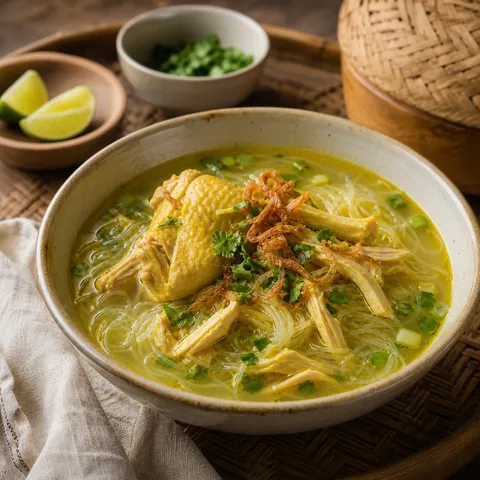 Indonesian & Malaysian Lens Verified Images are for illustrative purposes only, may be inaccurate, and do not guarantee the presence or absence of specific ingredients.
 Soto Ayam
A golden, turmeric-spiced Indonesian chicken soup with glass noodles, crispy shallots, and lime — light, herbal, and deeply comforting.
 Indonesian & Malaysian Lens Verified Images are for illustrative purposes only, may be inaccurate, and do not guarantee the presence or absence of specific ingredients.
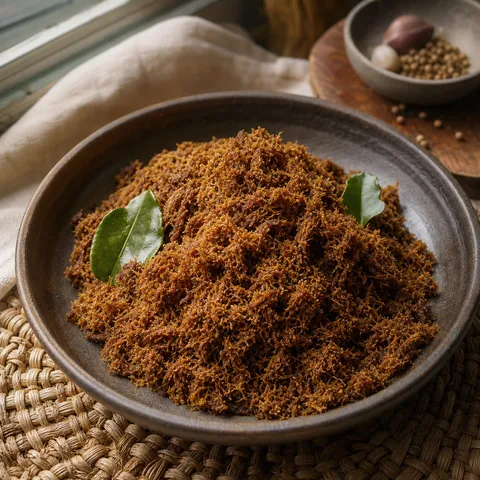
 Beef Serunding
Dry-fried spiced beef floss toasted with coconut and lemongrass until golden and fragrant — a rich, crumbly condiment that transforms plain rice.
 Indonesian & Malaysian Lens Verified Images are for illustrative purposes only, may be inaccurate, and do not guarantee the presence or absence of specific ingredients.
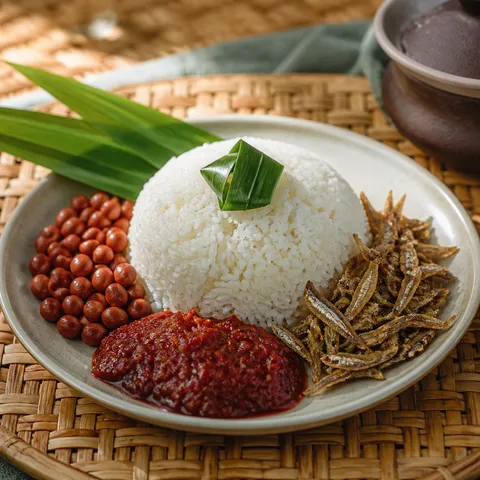
 Nasi Lemak
Malaysia's national comfort dish — fragrant coconut rice paired with sambal, crispy anchovies, roasted peanuts, and a soft-boiled egg.