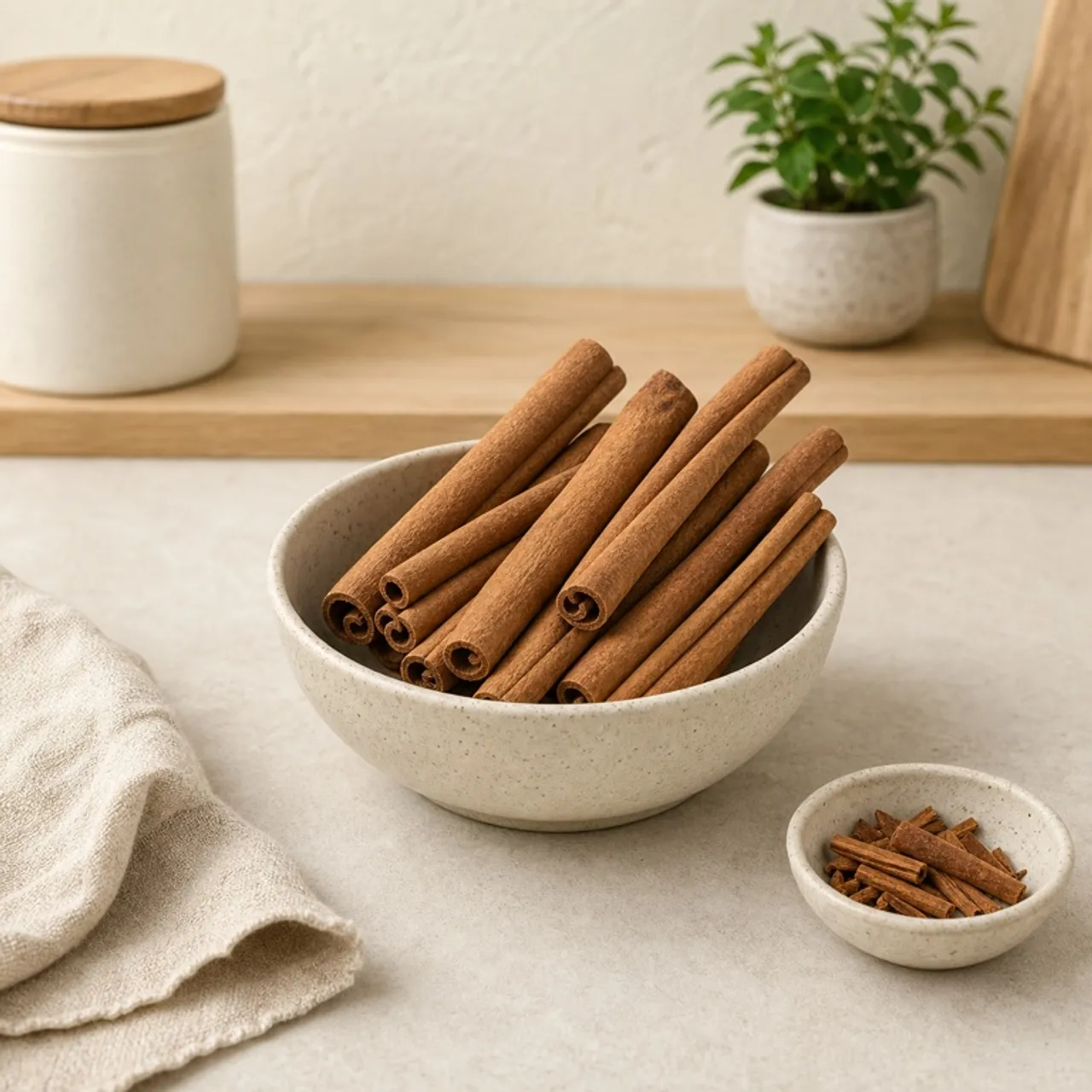
 Food Lens Images are for illustrative purposes only, may be inaccurate, and do not guarantee the presence or absence of specific ingredients.
 Food Lens · Recipe ingredients
Cinnamon Stick
Warm, sweet, and woody with a distinctly sweet-spiced aroma; cassia is bolder and spicier with a slight astringency; Ceylon is softer, more floral and citrus-adjacent.
Lens VerifiedCinnamon sticks are the dried, rolled bark of the cinnamon tree, used whole as an aromatic in slow-cooked dishes, braised meats, spiced rice, teas, and mulled drinks across South Asian, Middle Eastern, Mexican, and North African cuisines. They release their warmth gradually during cooking and are typically removed before eating.
Where it comes from
Cinnamon has one of the oldest recorded spice trade histories, mentioned in ancient Chinese texts from 2700 BCE and in Egyptian medicinal papyri. Ceylon (modern Sri Lanka) was the center of the global cinnamon trade for centuries, with Arab traders controlling the supply until Portuguese colonization in the 16th century opened direct European access. Cassia cinnamon from China was also traded throughout Asia. Today, both types are widely available in North America — look for 'Ceylon cinnamon' if you want the more delicate variety.
Varieties — Ceylon ('true') cinnamon is lighter, more delicate, and slightly floral — quills are thin and crumble easily. Cassia cinnamon is thicker, harder, darker, and spicier — more assertive flavor. Most cinnamon sticks sold in North American grocery stores are cassia (or Vietnamese/Saigon cinnamon). Sri Lankan or Mexican cinnamon sticks at specialty stores are typically Ceylon.
In Indian biryani, a cinnamon stick is one of the whole spices (along with cardamom pods, cloves, and bay leaves) that is fried in ghee at the very start to bloom the aromatics — this technique, called 'tempering whole spices,' is the backbone of much South Asian cooking.
In a modern kitchen — A single stick goes a long way in cooking — one 3-inch stick is usually sufficient for a dish serving 4. Re-use gently used sticks in simmering liquids or spice teas. Avoid grinding cassia sticks in a blender — the hard woody material can damage the blades; use a dedicated spice grinder if ground cinnamon from a stick is needed.
Buying it
Cassia cinnamon sticks are in the spice aisle of every grocery store. Ceylon cinnamon sticks are at South Asian grocery stores, specialty spice shops, and some international aisles. Vietnamese (Saigon) cinnamon sticks have the highest cassia oil content and most intense flavor — prized for baking. Store in an airtight container.
Storing it
Store in a sealed container in a cool, dark cupboard. Whole sticks hold their aroma far longer than ground cinnamon — snap one to check it still smells fragrant, not dusty.
Keeps about 1 year in the pantry.
Out of cinnamon stick? Good swaps
- Ground cinnamon — Use 1/2 tsp ground per 1 stick called for; cannot be removed later — only use when flavor will be distributed throughout the dish.
- Cassia bark pieces — A cruder form of the same spice; use in equal amounts.
General cooking guidance — always check the labels on the products you use. Listahan’s allergen checks run automatically when you plan a recipe in the app. Not medical advice.
Recipes that use cinnamon stick
- Phở Gà (Chicken Noodle Soup)
- Risgrynsgröt
- Sorrel Drink
- Crema Catalana
- Pho Bo (Vietnamese Beef Noodle Soup)
- Turrón de Doña Pepa (Peruvian Anise Nougat Cake)
- Beef Semur
- Blåbärssoppa
- Baklava
- Chicha Morada (Peruvian Purple Corn Drink)
- Phở Bò (Beef Noodle Soup)
- Youvetsi (Beef and Orzo Baked in Tomato Sauce)
Common questions about cinnamon stick
Is cinnamon stick vegan?
Cinnamon Stick is generally plant-based and suitable for a vegan diet, but brands differ — confirm on the label.
What can I use instead of cinnamon stick?
Good swaps include Ground cinnamon, Cassia bark pieces. Each behaves a little differently — see the swaps above for notes, and always check labels for allergens.
How do I store cinnamon stick?
Store in a sealed container in a cool, dark cupboard. Whole sticks hold their aroma far longer than ground cinnamon — snap one to check it still smells fragrant, not dusty. It keeps about 1 year in the pantry.
More recipe ingredients
See all


Make cinnamon stick about your kitchen — with Listahan Pro
Everything above is free, forever. Pro adds the Household Lens — the same food, seen for your family:
-
Checked for each member
Flags cinnamon stick per person against your household's allergies and school rules — not just a generic "contains" tag.
-
Pantry-aware
Knows whether you already have it, what is running low, and the best swap from what is in your kitchen tonight.
-
What it costs near you
A real price from the Presyo community index, so you can plan the budget — not guess.
-
Your household memory
Who likes it, plus your own private notes — brand, where you keep it, who skips it.
Allergen safety is always free — Pro adds the automation, never the safety.
Cook with cinnamon stick — safely
Plan a recipe in Listahan and the household allergen check runs automatically — every plan, every swap, every lunchbox. Safety is never paywalled.