 Indonesian & Malaysian Images are for illustrative purposes only, may be inaccurate, and do not guarantee the presence or absence of specific ingredients.
  Serving Images are for illustrative purposes only, may be inaccurate, and do not guarantee the presence or absence of specific ingredients.
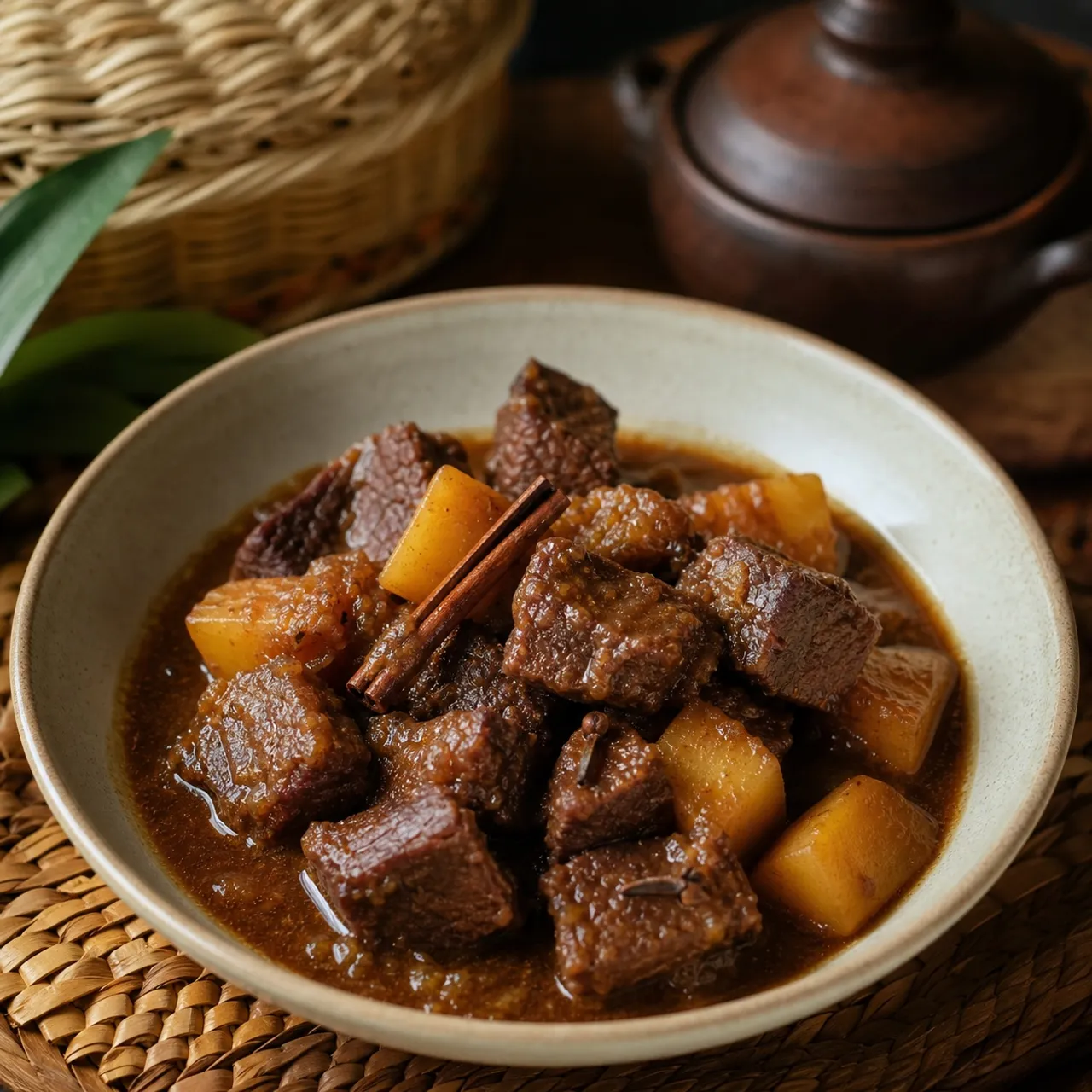
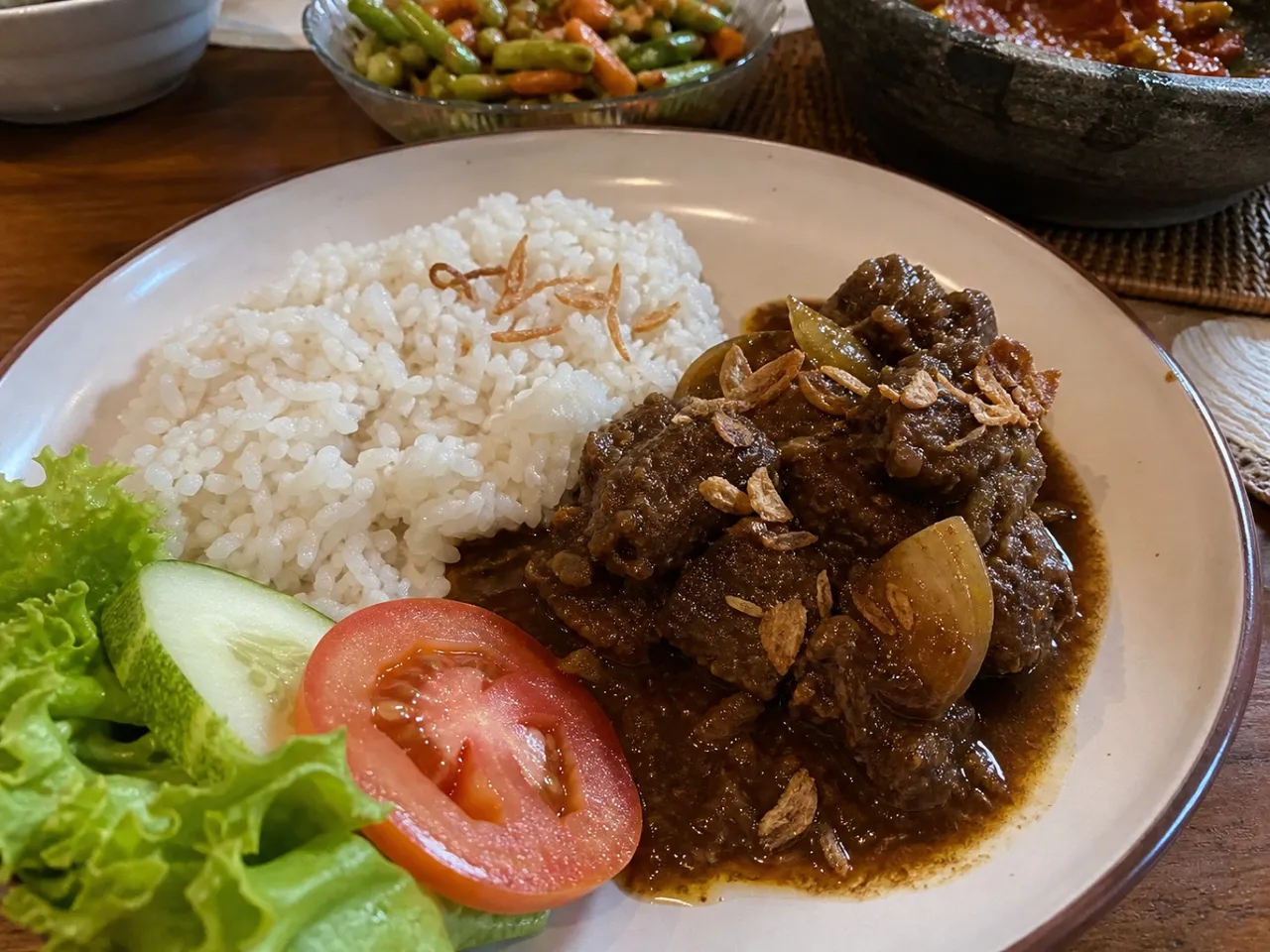
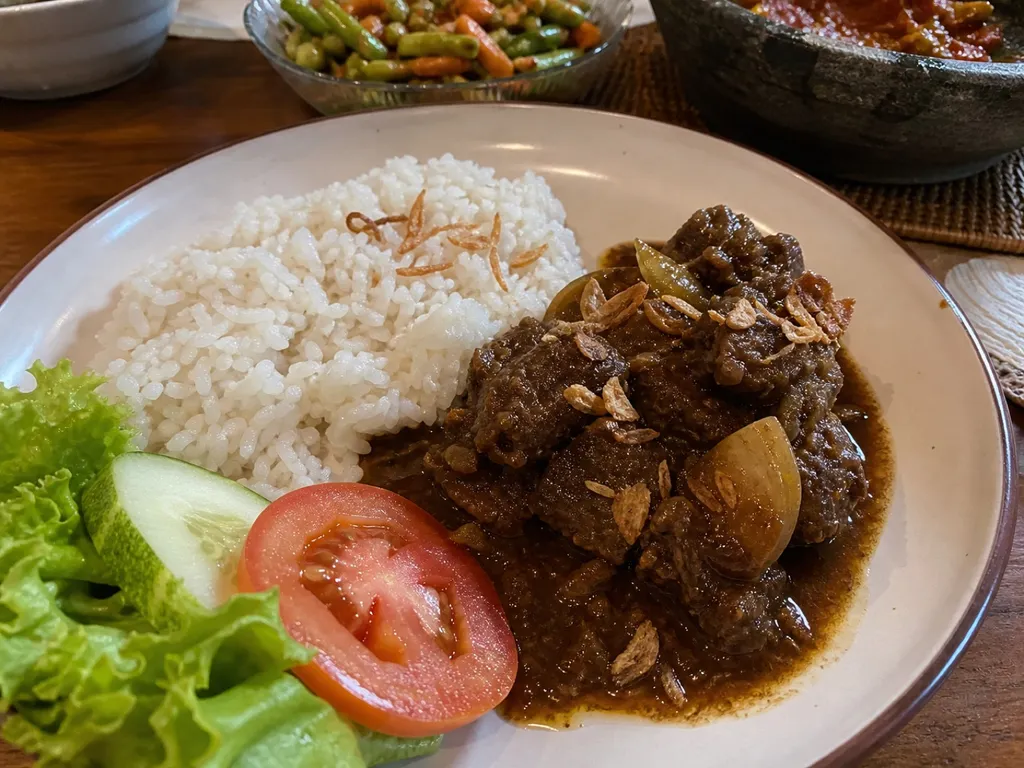
 Beef Semur
Tender beef braised in a sweet, clove-scented soy sauce until deep mahogany and meltingly soft — Indonesian comfort food with warmth in every spoonful.
Contains common allergens
In the app, Listahan checks these against your household automatically.
Good to know
- One-pot
Matched from this dish's own ingredients and timing. Browse more: one-pot dinners
Instructions
6 steps- 1
Purée shallots, garlic, ginger, and candlenuts into a smooth paste.
- 2
Heat oil in a heavy-bottomed pot and sauté the spice paste with cloves, cinnamon, and nutmeg until aromatic.
- 3
Add the beef cubes and sear them over medium-high heat until browned on all sides.
- 4
Pour in the sweet soy sauce, stir to coat the beef, and add enough water to just cover the meat.
- 5
Bring to a boil, then lower the heat, cover, and simmer for 1 hour until the beef is mostly tender.
- 6
Add the cubed potatoes and continue to simmer uncovered for another 30 minutes until the potatoes are cooked and the sauce has thickened.
 Images are for illustrative purposes only, may be inaccurate, and do not guarantee the presence or absence of specific ingredients.
 Listahan Family Score™
67/100
Works for many families
Score reflects how well this recipe fits a typical busy household. In the app, your Family Score is personalized to your household's allergens, kids, and pantry.
Nutrition
per serving535
Calories
49 g
Protein
23 g
Carbs
26 g
Fat
Estimated per serving. Actual values depend on the brands and portions you use.
Listahan cooking guide
Chef notes & practical guide
Technique notes, ingredient swaps, serve-alongside ideas, storage guidance, and equipment for this recipe.
Cultural context
Semur is Indonesia's Dutch-colonial-era braised beef, its name derived from the Dutch 'smoor' (to braise or stew). Portuguese and Dutch traders introduced sweet soy sauce — kecap manis — to the archipelago, and Indonesians incorporated it into the braise alongside nutmeg, cloves, and local shallots, creating something unmistakably its own. Today semur is made across the entire archipelago with regional variations: Betawi-style in Jakarta is sweeter and darker, while Minahasan versions add tomatoes and more aromatics.
Listahan note
This version leans on kecap manis for a deeply sweet-savory glaze and uses a slow simmer to coax the beef into fork-tender submission without needing a pressure cooker.
Technique cues
- Sear the beef in batches in a hot, dry pan before adding liquids — the dark fond on the bottom of the pot will dissolve into the braise and deepen the semur's already-dark flavor.
- Add the kecap manis in two stages: half at the start for body and half in the final 10 minutes so its natural sugars caramelize on the beef without burning.
- The braise is done when a wooden skewer slides through the thickest piece of beef with no resistance and the sauce has reduced to a glossy coating — not a thin soup.
Kitchen flow
- Parallel prep
- Fry shallots in one pan while searing beef in batches in another; combine them once both are ready to shorten active cook time.
- Make-ahead
- Semur improves overnight — make it a full day ahead, refrigerate, and skim the solidified fat from the top before reheating gently.
- Leftover move
- Shred leftover beef into the remaining sauce and serve over instant noodles or fold into a toasted sandwich with sliced tomato.
- Cleanup rhythm
- Deglaze the searing pan with a splash of water immediately after searing — the stuck fond loosens while still hot and adds flavor to the braise.
Ingredient brief
Role, handling, and swap guidance for each key ingredient.
beef chuck
braising protein
Purpose: Chuck has enough intramuscular fat and collagen to stay moist through a 90-minute simmer and absorb the spiced sauce.
Handling: Cut into 2-inch cubes, trim only the thickest sinew, and pat dry before searing.
Adaptation: Beef short ribs (bone-in) give even richer results; brisket also works but requires an extra 30 minutes of cooking.
kecap manis
sweet soy glaze
Purpose: Kecap manis is the defining ingredient of semur — its palm-sugar sweetness and thick viscosity give the dish its distinctive dark, sticky sauce.
Handling: Measure it out before cooking; it pours slowly and caramelizes fast if left unattended in a hot pan.
Adaptation: A mix of 3 parts regular soy sauce and 1 part dark brown sugar reduced until syrupy approximates the flavor and texture.
nutmeg
warm spice note
Purpose: Nutmeg is the colonial-era signature of semur, linking it to the spice trade that shaped Indonesian culinary history.
Handling: Grate fresh nutmeg if possible — pre-ground loses potency quickly and the fragrance difference is noticeable in a braise this simple.
Adaptation: A pinch of mace (nutmeg's outer hull) is an equally authentic substitute at half the quantity.
shallots
aromatic base
Purpose: Shallots dissolve into the braise more completely than onions, creating a sweeter, more unified sauce body.
Handling: Slice thinly and fry in oil until golden before adding the beef — this step creates depth that raw shallots cannot provide.
Adaptation: One medium yellow onion finely diced can substitute; the sauce will be slightly less sweet and complex.
cloves
spice backbone
Purpose: Cloves add the warm, slightly medicinal depth that anchors semur's spice profile and reflects its Maluku island roots.
Handling: Use 3-4 whole cloves; remove them before serving as biting into one is intensely pungent.
Adaptation: A small pinch of ground cloves (one-eighth teaspoon) disperses more evenly through the sauce.
Technique notes
- A tablespoon of tomato paste stirred in with the shallots adds acidity that balances the sweetness of kecap manis without tasting like a different dish.
- Simmer with the lid slightly ajar so steam can escape and the sauce reduces to a glossy consistency — a fully covered pot keeps too much liquid and the semur will taste dilute.
- Taste the sauce before serving and adjust with a few drops of regular soy sauce if it tastes too sweet, or a pinch of palm sugar if the kecap manis added sharpness from the brand.
Ingredient swaps
- Gluten-free direction
- Use tamari-based kecap manis (available at Asian grocery stores) or make your own with tamari and palm sugar.
- Lower-sodium direction
- Dilute regular kecap manis with 1 tablespoon water and reduce added soy sauce; the long braise concentrates flavors so you can afford to start with less salt.
- Weeknight shortcut
- Use a pressure cooker or Instant Pot at high pressure for 35 minutes with a natural release to cut the braise time by half.
Serve alongside
- Steamed jasmine rice
- Perkedel jagung (corn fritters)
- Sauteed bok choy with garlic
- Wedang jahe (Indonesian ginger tea)
- Iced jasmine tea
Serving suggestions only — check pairings for your household's allergens.
Storage & reheating
- Refrigerate in a sealed container for up to 4 days; the sauce continues to penetrate the beef and the flavor improves by day two.
- Freeze the beef and sauce together for up to 2 months; thaw overnight in the refrigerator and reheat gently on the stovetop over low heat, adding a splash of water if the sauce has thickened too much.
Equipment
- Heavy-bottomed Dutch oven or braiser for even heat distribution
- Fine-mesh strainer for removing whole spices before serving
- Wide, shallow spoon for skimming fat from the surface
Make this household-aware
Listahan Pro checks this recipe against your household's allergens, finds pantry-aware swaps, builds the shopping list, and helps you plan the week around it.
Plan it in Listahan
Add Beef Semur to your week, check it against your household's allergens, and build the shopping list automatically.
More Indonesian & Malaysian recipes
 Indonesian & Malaysian Lens Verified Images are for illustrative purposes only, may be inaccurate, and do not guarantee the presence or absence of specific ingredients.
 Soto Ayam
A golden, turmeric-spiced Indonesian chicken soup with glass noodles, crispy shallots, and lime — light, herbal, and deeply comforting.
 Indonesian & Malaysian Lens Verified Images are for illustrative purposes only, may be inaccurate, and do not guarantee the presence or absence of specific ingredients.
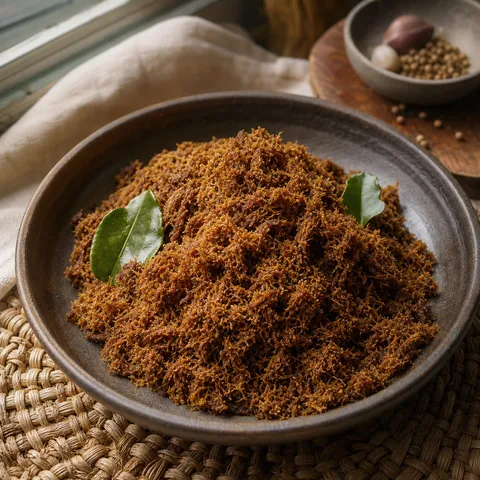
 Beef Serunding
Dry-fried spiced beef floss toasted with coconut and lemongrass until golden and fragrant — a rich, crumbly condiment that transforms plain rice.
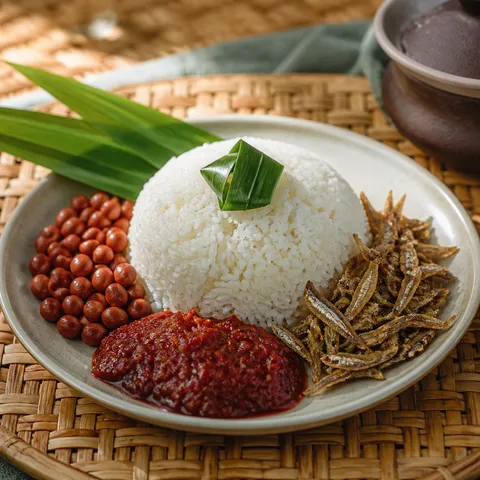 Indonesian & Malaysian Lens Verified Images are for illustrative purposes only, may be inaccurate, and do not guarantee the presence or absence of specific ingredients.
 Nasi Lemak
Malaysia's national comfort dish — fragrant coconut rice paired with sambal, crispy anchovies, roasted peanuts, and a soft-boiled egg.