 Food Lens Images are for illustrative purposes only, may be inaccurate, and do not guarantee the presence or absence of specific ingredients.
 Food Lens · Protein
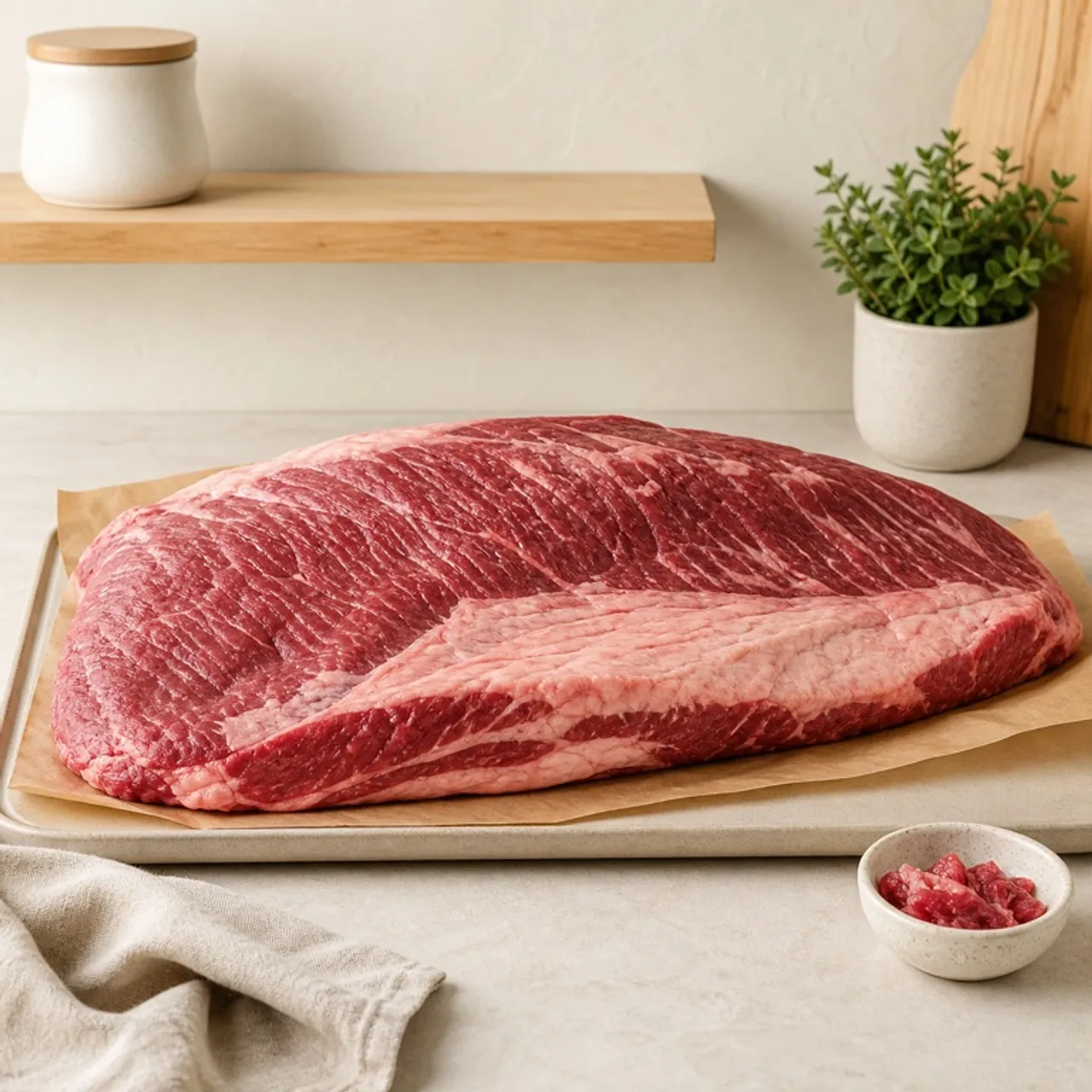
Beef brisket
Deeply beefy, rich, and savory with significant fat flavor that becomes silky and unctuous when properly cooked. Smoked brisket develops complex smoke, bark (the crust formed by the rub), and rendered-fat flavors that are simultaneously rustic and luxurious. Braised brisket absorbs the flavors of its cooking liquid — wine, tomato, aromatics — and delivers a more European, wine-braised richness. The texture, when correctly cooked, should be fork-tender but still hold its slice.
Lens VerifiedBeef brisket is a large, tough, and flavor-rich cut taken from the breast and lower chest of the cow — one of the most heavily worked muscle groups on the animal. It is laced with connective tissue that, when subjected to long, slow cooking, melts into gelatin and transforms the meat from chewy to extraordinarily tender and succulent. Brisket is the definitive centerpiece of American barbecue, Jewish holiday cooking, and braised beef traditions around the world.
Where it comes from
Brisket's culinary traditions developed across multiple cultures wherever cattle were raised — from Eastern European Jewish braising traditions to Central Texas barbecue, shaped by German and Czech immigrant butchers in the 19th century.
Varieties — Brisket is sold in two sections: the flat (or first cut), which is leaner and more uniform — better for slicing — and the point (or second cut / deckle), which is fattier, more marbled, and better for pulling or chopping. The 'packer' brisket is the whole uncut piece, containing both sections with the fat cap intact, standard in competition and serious barbecue.
In Texas barbecue culture, brisket is the measure of a pit master's skill — achieving a deep mahogany bark, a pink smoke ring, and impossibly moist slices after a full day's cook is a matter of serious pride. In Jewish culinary tradition, braised brisket occupies the same emotional territory as a roast turkey at Thanksgiving — the centerpiece of celebration and family memory. Korean braised brisket (chadolbaegi and jangjorim) and Vietnamese phở broth made with brisket represent equally important traditions.
In a modern kitchen — Sous vide has given home cooks access to brisket results previously limited to professional barbecue pits — cooking at 74°C / 165°F for 24–36 hours delivers extraordinary tenderness with full control, followed by a quick sear or oven finish for bark. The fat rendered from brisket during cooking is prized as a cooking fat for potatoes, onions, and basting.
Buying it
For smoking, look for a whole packer brisket (10–16 lbs) with even fat cap thickness (ideally 1/4 to 1/2 inch) and good marbling throughout — USDA Choice or Prime grades smoke significantly better than Select. For braising, the flat or first cut is easier to handle and more available at standard grocery stores. Look for deep red color and moist (not wet) surface. Avoid brisket with excessive discoloration or very dry edges.
Storing it
Keep raw beef brisket refrigerated in its original packaging or wrapped tightly, and cook or freeze it within a few days of purchase. Fresh brisket should be deep red with white marbling — sliminess, greying, or a sour smell mean it should go.
Keeps about 4 days in the fridge.
Out of beef brisket? Good swaps
General cooking guidance — always check the labels on the products you use. Listahan’s allergen checks run automatically when you plan a recipe in the app. Not medical advice.
Recipes that use beef brisket
- Corned Beef and Cabbage
- Texas Smoked Beef Brisket
- Pho Bo (Vietnamese Beef Noodle Soup)
- Miyeok Guk (Seaweed Soup)
- Beef Semur
- Bún Bò Huế (Spicy Beef Noodle Soup)
- Soegogi Muguk (Beef and Radish Soup)
- Rawon
- Naengmyeon (Cold Buckwheat Noodles)
- Haejangguk (Hangover Soup)
- BBQ Brisket Sandwich
- Passover Braised Brisket
Common questions about beef brisket
What can I use instead of beef brisket?
Good swaps include , , , . Each behaves a little differently — see the swaps above for notes, and always check labels for allergens.
How do I store beef brisket?
Keep raw beef brisket refrigerated in its original packaging or wrapped tightly, and cook or freeze it within a few days of purchase. Fresh brisket should be deep red with white marbling — sliminess, greying, or a sour smell mean it should go. It keeps about 4 days in the fridge.
More protein
See all


Make beef brisket about your kitchen — with Listahan Pro
Everything above is free, forever. Pro adds the Household Lens — the same food, seen for your family:
-
Checked for each member
Flags beef brisket per person against your household's allergies and school rules — not just a generic "contains" tag.
-
Pantry-aware
Knows whether you already have it, what is running low, and the best swap from what is in your kitchen tonight.
-
What it costs near you
A real price from the Presyo community index, so you can plan the budget — not guess.
-
Your household memory
Who likes it, plus your own private notes — brand, where you keep it, who skips it.
Allergen safety is always free — Pro adds the automation, never the safety.
Cook with beef brisket — safely
Plan a recipe in Listahan and the household allergen check runs automatically — every plan, every swap, every lunchbox. Safety is never paywalled.