 Vietnamese Images are for illustrative purposes only, may be inaccurate, and do not guarantee the presence or absence of specific ingredients.
  Serving Images are for illustrative purposes only, may be inaccurate, and do not guarantee the presence or absence of specific ingredients.
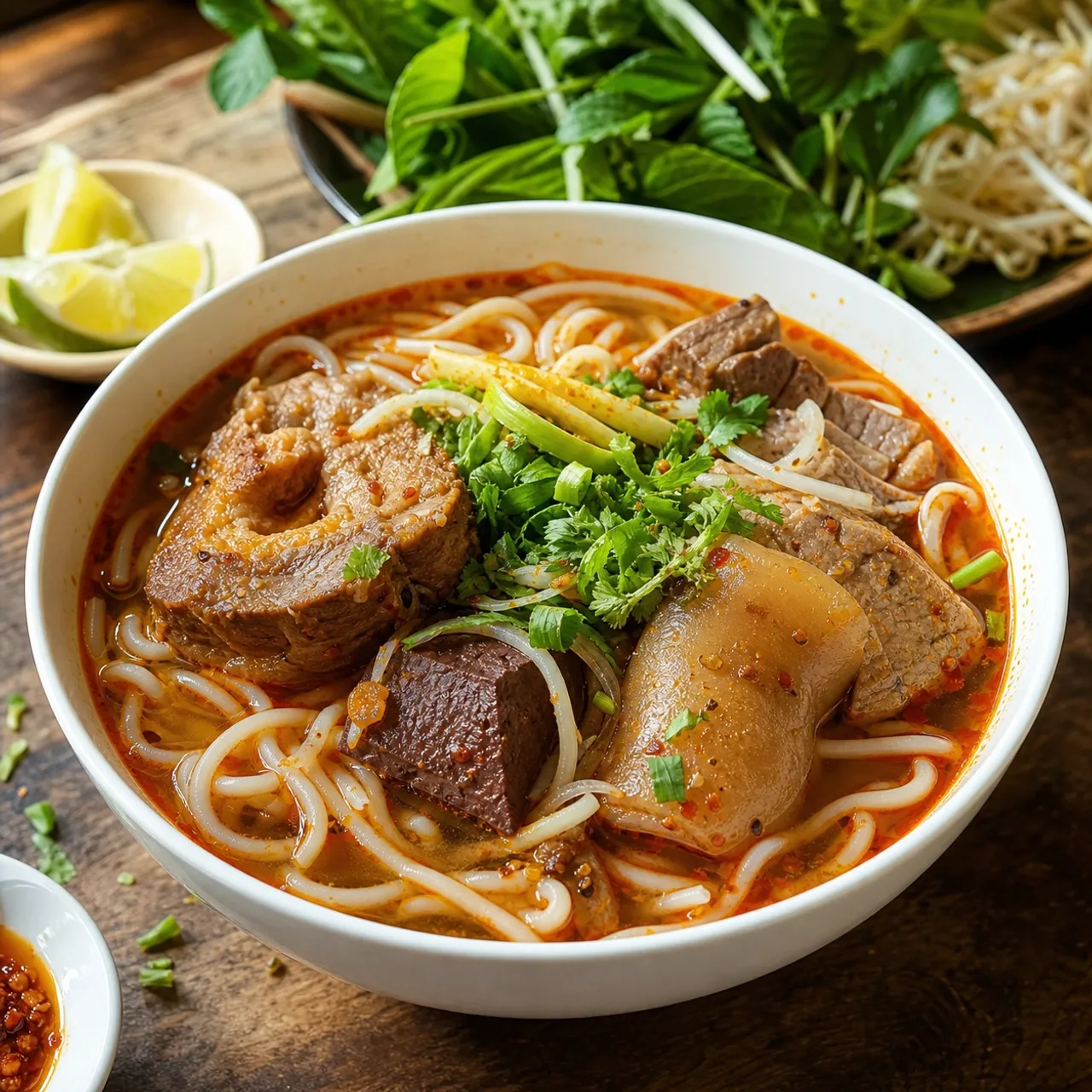
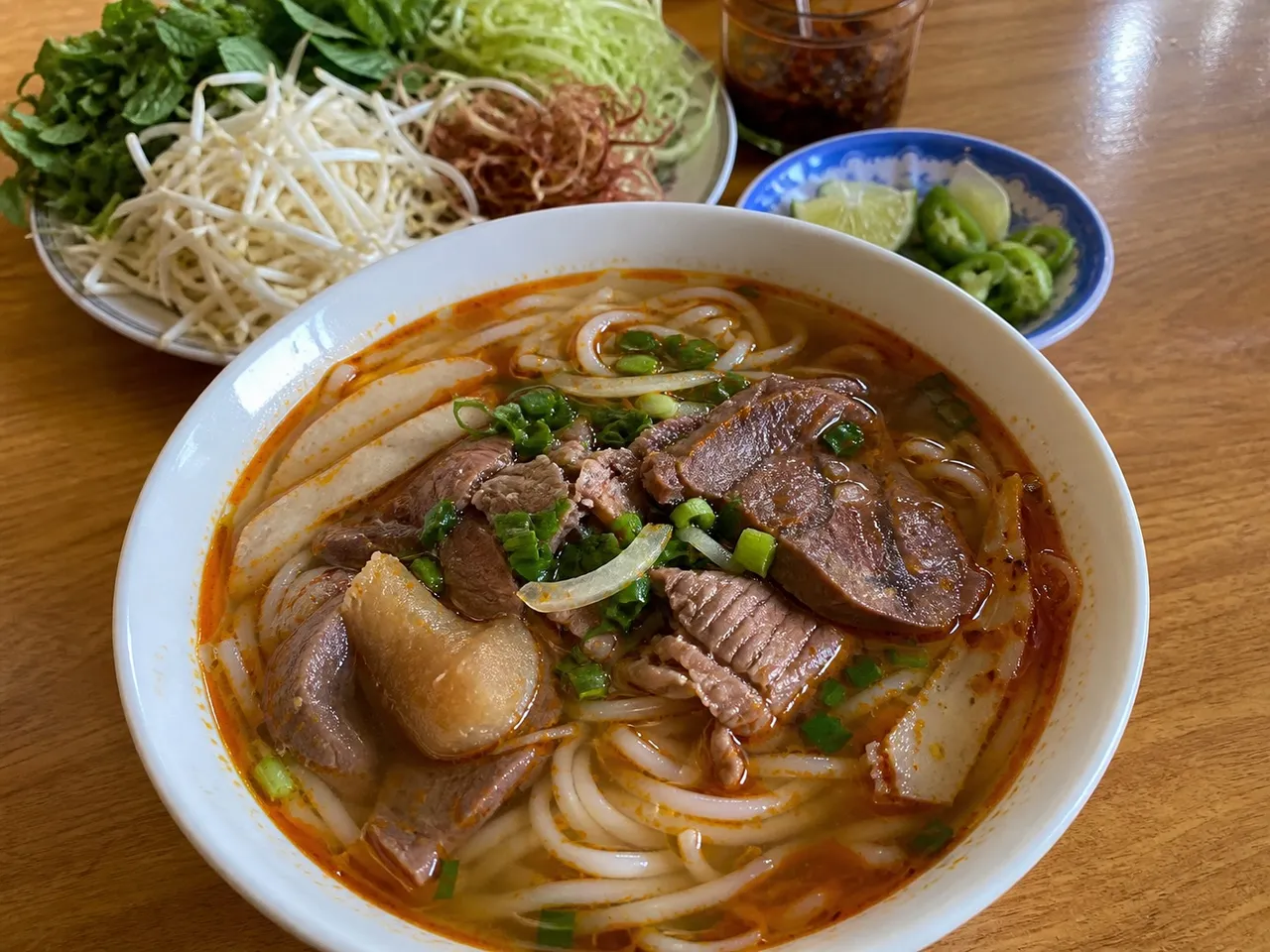
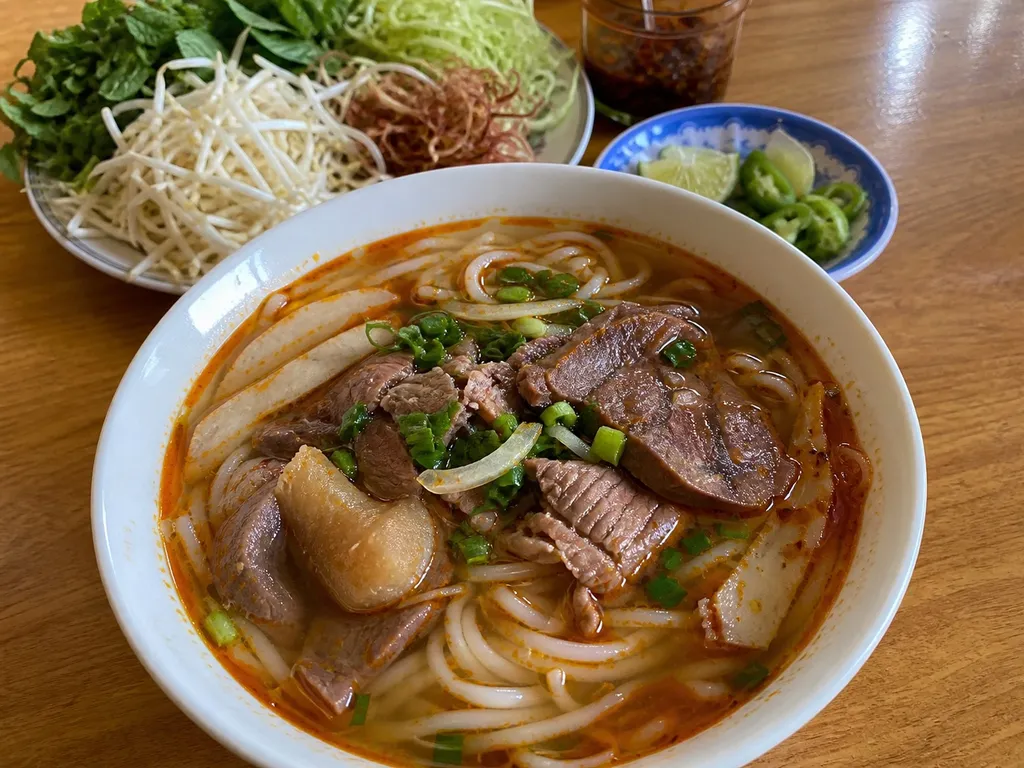
 Bún Bò Huế (Spicy Beef Noodle Soup)
A popular Vietnamese soup containing rice vermicelli and beef in a spicy, lemongrass-infused broth.
Contains common allergens
In the app, Listahan checks these against your household automatically.
Instructions
6 steps- 1
Clean Bones and Meats: Parboil the beef bones, beef shank, and pork knuckles for 10 minutes. Drain, rinse everything thoroughly, and clean the pot.
- 2
Simmer Broth: Return the bones and meats to the pot with 6 quarts of water. Add 4 bruised lemongrass stalks and 1 tbsp salt. Simmer gently. Remove the pork knuckles after 1.5 hours and the beef shank after 2 hours (when tender). Let meats cool, then slice thinly. Continue simmering the bones for another 2 hours.
- 3
Prepare Shrimp Paste: Dissolve the shrimp paste in 1 cup of cold water. Let it sit so impurities settle, then carefully pour only the clear liquid into the simmering broth.
- 4
Make Saté Chili Oil: Heat annatto oil in a pan. Sauté minced garlic, shallots, and the remaining finely minced lemongrass until fragrant. Add chili flakes. Stir this flavorful, bright red oil mixture directly into the broth.
- 5
Season Broth: Season the finished broth with fish sauce and a pinch of sugar until it is robust, spicy, and savory.
- 6
Assemble: Blanch the thick rice noodles. Place noodles in a bowl, top with sliced beef shank, pork knuckle, and Vietnamese sausage (chả lụa). Pour the boiling, fiery red broth over the top and serve with shredded banana blossom and cabbage.
 Images are for illustrative purposes only, may be inaccurate, and do not guarantee the presence or absence of specific ingredients.
 Listahan Family Score™
56/100
Works for many families
Score reflects how well this recipe fits a typical busy household. In the app, your Family Score is personalized to your household's allergens, kids, and pantry.
Nutrition
per serving505
Calories
49 g
Protein
4 g
Carbs
31 g
Fat
Estimated per serving. Actual values depend on the brands and portions you use.
Listahan cooking guide
Chef notes & practical guide
Technique notes, ingredient swaps, serve-alongside ideas, storage guidance, and equipment for this recipe.
Cultural context
Bun bo Hue is the signature noodle soup of Hue, the former imperial capital of Vietnam in the central region, and it is widely considered the most complex and assertively flavored of Vietnam's major noodle soups. Unlike the clear, nuanced broth of pho, bun bo Hue uses shrimp paste (mam ruoc), lemongrass, and annatto seed oil to produce a reddish-orange, spiced broth with a funk and heat that is unmistakably central Vietnamese. The dish reflects Hue's history as a royal court city -- the cooking tradition is elaborate, layered, and uncompromising in its use of specific ingredients.
Listahan note
This version focuses on building the fermented-funky, lemongrass-forward broth layer by layer -- the shrimp paste and annatto oil are the two elements most often skipped by North American cooks that make the difference between bun bo Hue and a generic spicy beef noodle soup.
Technique cues
- Mam ruoc (Vietnamese fermented shrimp paste) must be dissolved in warm water and strained before adding to the broth; adding it directly without this step distributes the paste unevenly and creates strong pockets of funk rather than a balanced, integrated background fermentation note throughout the soup.
- Annatto seed oil gives bun bo Hue its characteristic reddish-orange color and a subtle earthy, slightly peppery flavor; make it fresh by heating neutral oil with annatto seeds over low heat until the oil turns a deep red-orange, then strain out the seeds -- pre-made annatto oil is a convenience option but often lacks the fresh color intensity.
- Lemongrass goes into the broth in two forms for maximum impact: the bruised whole stalks simmer in the broth for the aromatic base note, and additional minced lemongrass is sauteed in annatto oil separately and added near the end of cooking for a bright, fresh citrus foreground.
Kitchen flow
- Parallel prep
- While the bones blanch, bruise the lemongrass, dissolve the shrimp paste, and make the annatto oil -- all three take about 10-15 minutes and can run simultaneously before the main simmer begins.
- Make-ahead
- Like all Vietnamese bone broths, bun bo Hue improves dramatically when made a day ahead; strain, cool overnight, and remove the fat cap before reheating.
- Leftover move
- Leftover broth freezes well for up to 3 months; frozen in 2-cup portions, it reheats quickly for a fast weeknight bowl with fresh rice noodles and whatever vegetables you have on hand.
- Cleanup rhythm
- The blanching pot and the annatto oil skillet are the two main pieces to clean; tackle both during the 2-hour unattended broth simmer so by the time you strain the finished stock, the prep work is behind you.
Ingredient brief
Role, handling, and swap guidance for each key ingredient.
2 lbs beef marrow bones
broth body and richness
Purpose: Marrow bones provide the gelatin and beefy richness that give bun bo Hue its substantial, slightly viscous broth character, which is thicker and more assertive than pho.
Handling: Blanch in boiling water for 10 minutes and rinse thoroughly before the long simmer to remove impurities; this step is even more important here because the other strong flavors in the broth can mask rather than cover bitterness from un-blanched bones.
Adaptation: Oxtail can replace or supplement the marrow bones for additional collagen and a more intensely beefy flavor.
1 lb beef shank or brisket
sliced meat topping
Purpose: Beef shank or brisket simmered in the broth becomes tender enough to slice cleanly while contributing beefiness to the stock; it is served sliced on top of the finished bowl.
Handling: Simmer in the broth for the first 2-2.5 hours until just fork-tender, then remove and cool before slicing thin; returning the whole shank to simmering broth past this point makes it fall apart rather than slice.
Adaptation: Flank steak or beef round can substitute if shank is unavailable; adjust simmer time downward as these cuts are leaner and tenderize faster.
6 stalks lemongrass, bruised
signature aromatic
Purpose: Lemongrass is the defining aromatic of bun bo Hue, providing the citrusy, floral backbone that sets the broth apart from beef pho; six stalks is not excessive for a large pot of broth.
Handling: Remove the tough outer layers, bruise with the flat of a knife or a rolling pin to release the oils, then tie in bundles so they can be easily removed before serving.
Adaptation: There is no close substitute for lemongrass in this dish; if fresh lemongrass is unavailable, frozen lemongrass stalks from Asian grocery stores are a good alternative.
2 tbsp Vietnamese shrimp paste (mam ruoc)
fermented depth and funk
Purpose: Shrimp paste is the ingredient that most distinguishes bun bo Hue from all other Vietnamese noodle soups and cannot be skipped without fundamentally changing the dish's character.
Handling: Dissolve in 1/2 cup warm water, let sit for 5 minutes, then strain through a fine-mesh strainer and add only the liquid to the broth, discarding the solids.
Adaptation: Thai shrimp paste (kapi) is a reasonable substitute with a slightly different fermentation profile; for a shrimp-free direction, miso dissolved in water approximates the fermented depth but lacks the seafood character.
3 tbsp annatto seed oil
color, flavor, and aromatic carrier
Purpose: Annatto oil gives the broth its signature reddish-orange color and a subtle earthy, peppery flavor while also serving as the cooking medium for the sauteed garlic and lemongrass aromatics.
Handling: Heat 3 tablespoons of neutral oil with 1 tablespoon of annatto seeds over low heat until the oil turns deep red-orange (about 5 minutes), then strain out the seeds before using.
Adaptation: Paprika oil (neutral oil simmered with sweet paprika) approximates the color and a faint earthy note, though the flavor is different.
Technique notes
- Bun bo Hue uses thick, round rice noodles (different from the flat banh pho noodles of pho); the thickness matters for texture -- the round noodles soak up the spiced broth differently and provide more chew against the tender beef.
- The traditional Hue garnish of shredded banana blossom (raw) and shredded cabbage is not decorative -- it provides crunch and a slightly bitter, green note that cuts through the rich, funky broth and resets the palate between bites.
- Adjust the chili heat by adding the chili flakes gradually to the annatto-sauteed aromatics and tasting as you go; bun bo Hue is supposed to be noticeably spicy, but the level is variable even in Hue itself -- cook for your household's tolerance.
Ingredient swaps
- Shrimp-free direction
- Replace the shrimp paste with 2 tablespoons of miso paste dissolved in warm water; add 1 tablespoon of soy sauce for additional depth. The dish loses its characteristic funk but remains a well-structured spicy beef noodle soup.
- Gluten-free direction
- Rice noodles are naturally gluten-free; verify the shrimp paste brand, as some contain wheat starch, and use a confirmed gluten-free brand.
- Milder family direction
- Reduce chili flakes to 1 teaspoon and serve chili oil and additional sliced jalapeno on the side so each diner can build heat to their own tolerance; the lemongrass and shrimp paste flavors come through more clearly in a milder broth.
Serve alongside
- shredded banana blossom and raw cabbage garnish platter
- lime wedges, bean sprouts, and fresh mint and perilla
- chili oil and hoisin sauce condiment tray for tableside finishing
- cold Vietnamese iced tea (tra da) to temper the heat
- light lager or Vietnamese beer
- coconut water with lime
Serving suggestions only — check pairings for your household's allergens.
Storage & reheating
- Broth keeps refrigerated for up to 5 days; reheat to a full boil before serving and taste for seasoning, as the spice and funk concentrates as it sits.
- Store beef slices separately in a small amount of broth to prevent drying; reheat gently in the broth before plating.
- Freeze broth for up to 3 months in 2-cup portions; fresh rice noodles should be purchased the day of serving.
Equipment
- large stockpot (8-quart minimum) for bones and broth
- fine-mesh strainer for dissolving shrimp paste and straining broth
- small skillet for making annatto oil and sauteing aromatics
- tongs for managing bones and lemongrass bundles
Make this household-aware
Listahan Pro checks this recipe against your household's allergens, finds pantry-aware swaps, builds the shopping list, and helps you plan the week around it.
Plan it in Listahan
Add Bún Bò Huế (Spicy Beef Noodle Soup) to your week, check it against your household's allergens, and build the shopping list automatically.
More Vietnamese recipes
 Vietnamese Lens Verified Images are for illustrative purposes only, may be inaccurate, and do not guarantee the presence or absence of specific ingredients.
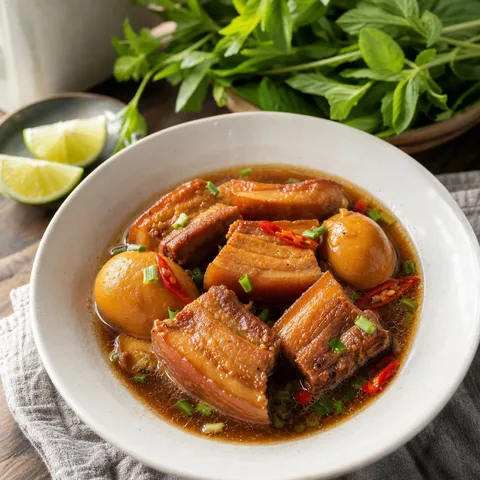
 Thịt Kho Tàu (Caramelized Pork and Eggs)
Meltingly tender pork belly and hard-boiled eggs braised in a rich, sweet, and savory coconut juice caramel, perfect over steamed rice.
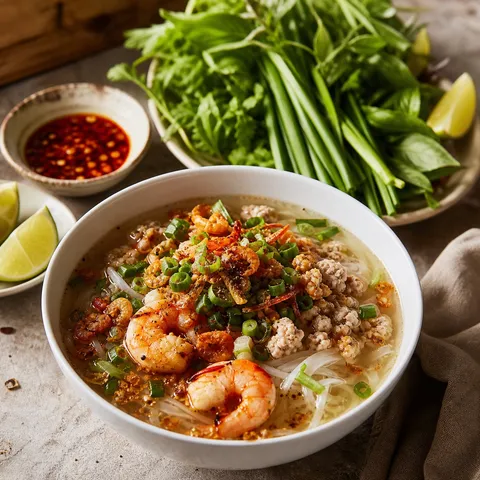 Vietnamese Lens Verified Images are for illustrative purposes only, may be inaccurate, and do not guarantee the presence or absence of specific ingredients.
 Hủ Tiếu (Pork and Seafood Noodle Soup)
A Vietnamese pork-bone broth noodle soup loaded with ground pork, shrimp, and dried shrimp over chewy tapioca noodles, finished with garlic chives and fried garlic.
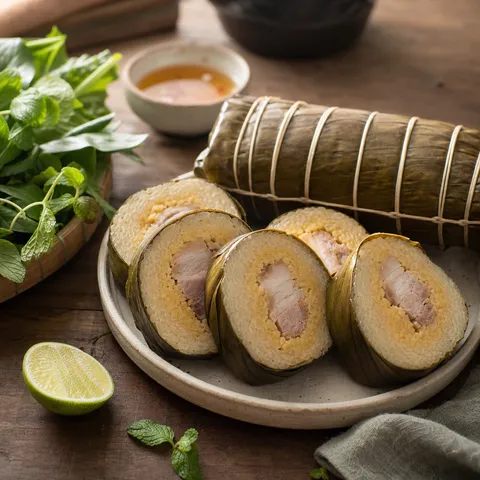 Vietnamese Lens Verified Images are for illustrative purposes only, may be inaccurate, and do not guarantee the presence or absence of specific ingredients.
 Bánh Tét (Cylindrical Sticky Rice Cake)
The Southern equivalent of Bánh Chưng, rolled into a cylinder.