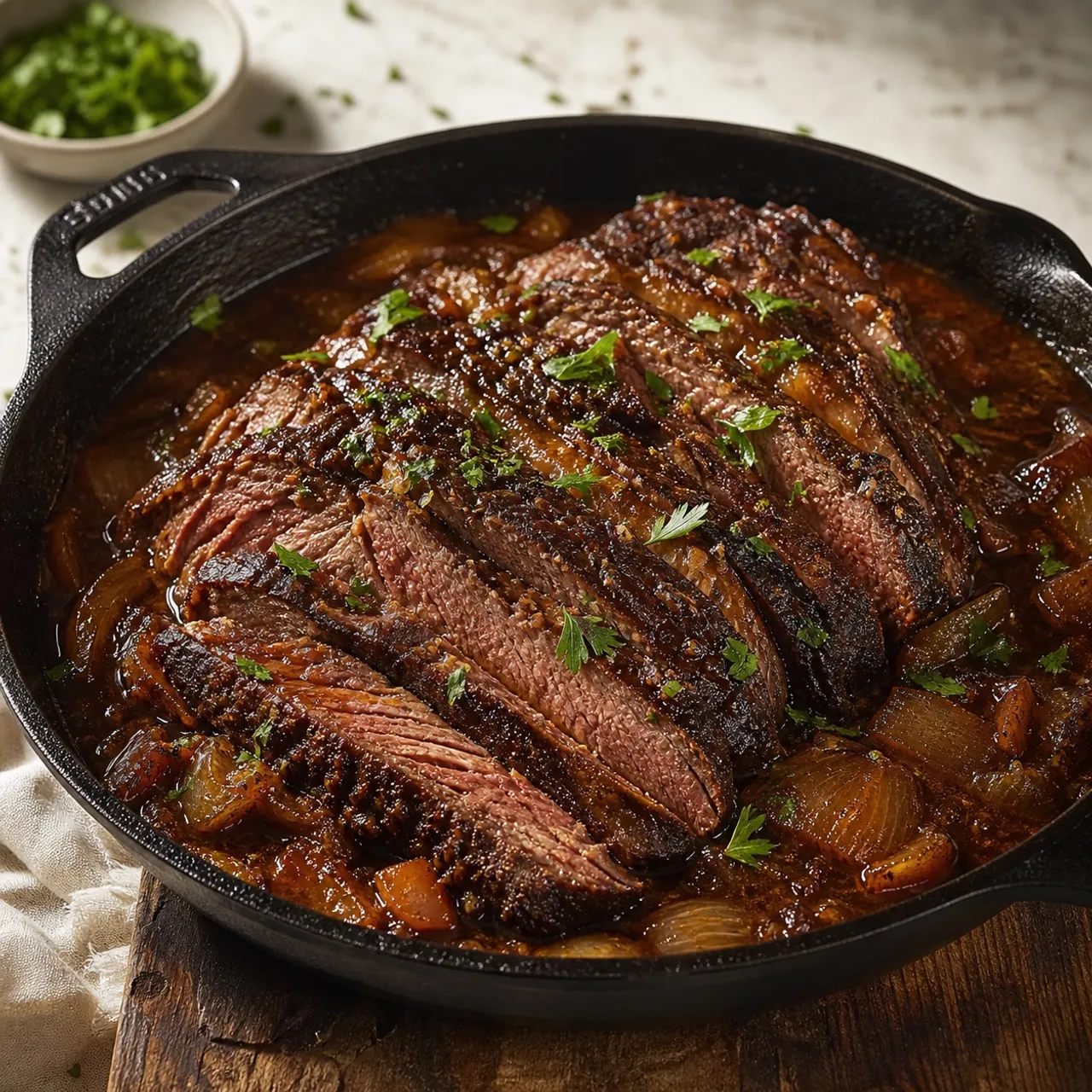
 Meat & Pork Images are for illustrative purposes only, may be inaccurate, and do not guarantee the presence or absence of specific ingredients.
 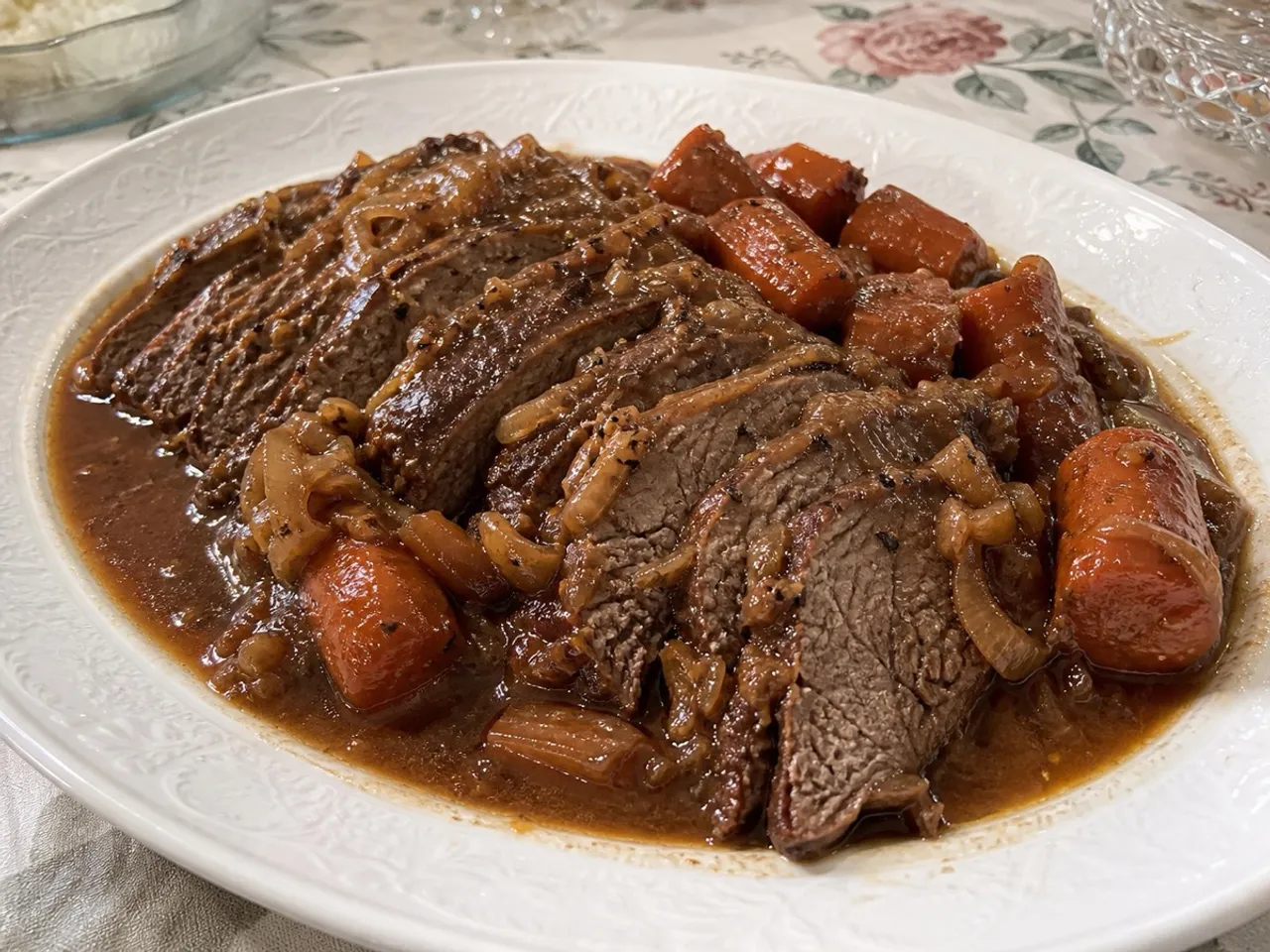 Serving Images are for illustrative purposes only, may be inaccurate, and do not guarantee the presence or absence of specific ingredients.
 Passover Braised Brisket
A seder-table centerpiece: beef brisket slow-braised in red wine, onions, and carrots until fork-tender, traditionally served for the Passover meal.
No common allergens detected
Based on this recipe's ingredient list. Always verify with your own brands and labels.
Good to know
- One-pot
Matched from this dish's own ingredients and timing. Browse more: one-pot dinners
Instructions
7 steps- 1
Preheat the oven to 325°F (165°C). Season the brisket all over with salt and pepper.
- 2
Heat the oil in a large Dutch oven over medium-high heat and sear the brisket on both sides until deeply browned, about 5 minutes per side. Remove and set aside.
- 3
Add the onions and carrots to the same pot and cook for 8-10 minutes until softened, then stir in the garlic and cook 1 minute more.
- 4
Stir in the tomato paste, then pour in the red wine, scraping up any browned bits from the bottom of the pot.
- 5
Add the beef broth, bay leaves, and thyme, then nestle the brisket back into the pot.
- 6
Cover and braise in the oven for 3-3.5 hours, until the meat is fork-tender.
- 7
Let the brisket rest, then slice against the grain and serve with the braising vegetables and pan juices spooned over the top.
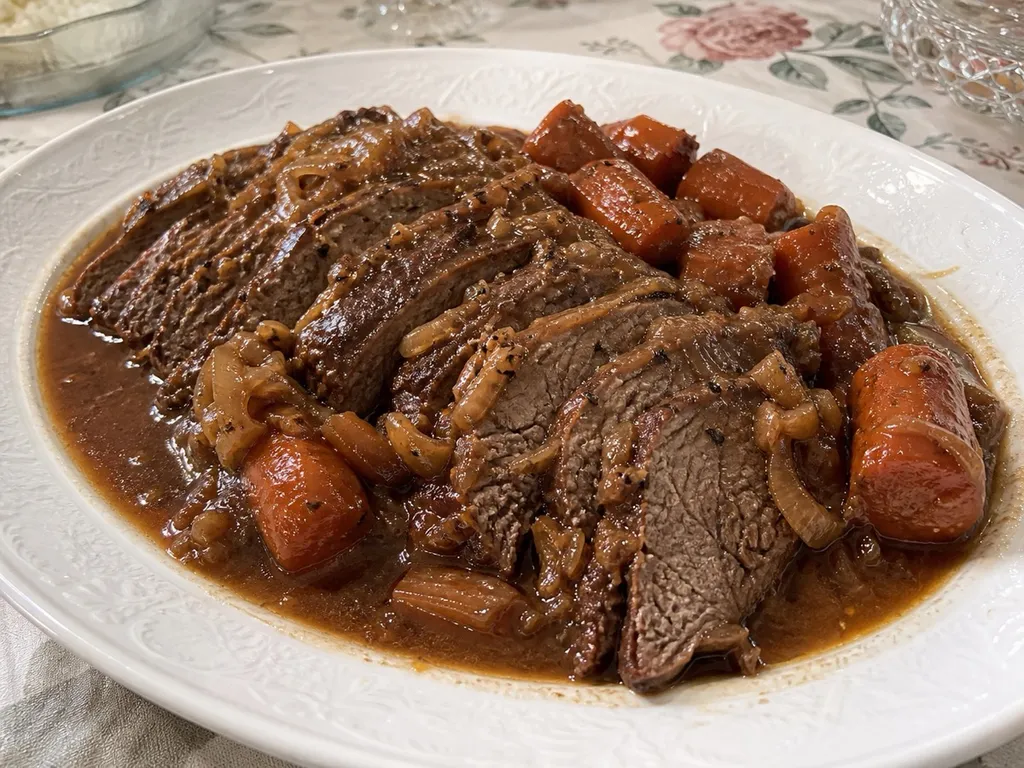 Images are for illustrative purposes only, may be inaccurate, and do not guarantee the presence or absence of specific ingredients.
 Listahan Family Score™
72/100
Good fit for most families
Score reflects how well this recipe fits a typical busy household. In the app, your Family Score is personalized to your household's allergens, kids, and pantry.
Nutrition
per serving665
Calories
61 g
Protein
9 g
Carbs
38 g
Fat
Estimated per serving. Actual values depend on the brands and portions you use.
Listahan cooking guide
Chef notes & practical guide
Technique notes, ingredient swaps, serve-alongside ideas, storage guidance, and equipment for this recipe.
Cultural context
Braised brisket became a familiar Passover centerpiece in many Ashkenazi Jewish households because the cut was flavorful, practical for feeding a crowd, and forgiving when cooked slowly before a long seder meal. The onion-rich, make-ahead style also fits the rhythm of holiday cooking: cook it until tender, chill it, slice it cleanly, then reheat it in its own sauce.
Listahan note
This version keeps the brisket classic and sturdy, with red wine, onions, carrots, tomato paste, and broth doing the quiet work. It prioritizes a deep sear, enough braising time for tenderness, and pan juices that are worth spooning over every slice.
Technique cues
- Slice brisket against the grain after it rests; the same tender meat can feel stringy if the knife follows the muscle fibers.
- Browning matters because the braise itself will not create that crust later. Let the brisket sit undisturbed in the hot pot until it releases easily.
- Chilling the cooked brisket before slicing gives neater pieces, which is useful when serving a seder crowd.
Kitchen flow
- Parallel prep
- While the brisket sears, slice the onions and cut the carrots; once the pot is in the oven, set the table or start the sides.
- Make-ahead
- Braise the brisket a day ahead, chill it in the sauce, then slice it cold and reheat the slices gently in the pan juices.
- Leftover move
- Tuck sliced brisket and softened onions into a warm sandwich or serve chopped pieces over roasted potatoes with extra sauce.
- Cleanup rhythm
- Deglaze thoroughly before the braise so the browned bits become sauce, then soak the Dutch oven after serving while the juices are still warm.
Ingredient brief
Role, handling, and swap guidance for each key ingredient.
4 lb beef brisket
Main cut
Purpose: Brisket has enough connective tissue to become tender and sliceable after a long covered braise.
Handling: Season it well and pat the surface dry so it browns instead of steaming.
Adaptation: A smaller brisket works with the same method; start checking tenderness earlier.
3 large onions, sliced
Sauce foundation
Purpose: Onions soften into the braising liquid and give the pan juices sweetness and body.
Handling: Slice them evenly so they cook down at the same pace under the brisket.
Adaptation: Yellow onions are the standard choice; sweet onions make the sauce a little softer and sweeter.
4 carrots, cut into chunks
Braising vegetable
Purpose: Carrots add gentle sweetness and give the platter a familiar holiday-table shape.
Handling: Cut them into large chunks so they hold together through the long oven time.
Adaptation: Parsnips can replace part of the carrots for a deeper, earthier sweetness.
1 cup dry red wine
Braising liquid
Purpose: Red wine loosens the browned bits and gives the sauce depth without needing many extra seasonings.
Handling: Simmer it briefly after adding so the raw edge cooks off before the broth goes in.
Adaptation: Use more beef broth with a small splash of vinegar if you want to skip wine.
2 tbsp tomato paste
Savory thickener
Purpose: Tomato paste adds color, body, and a rounded savoriness to the pan juices.
Handling: Stir it into the vegetables for a minute before adding liquid so it tastes less raw.
Adaptation: A few spoonfuls of crushed tomato can work, but the sauce will be looser and brighter.
2 bay leaves and 1 tsp dried thyme
Background herbs
Purpose: They season the braise quietly, giving the sauce a traditional pot-roast aroma without taking over.
Handling: Keep the bay leaves whole so they are easy to remove before serving.
Adaptation: Fresh thyme sprigs can stand in for dried thyme; remove the stems after braising.
Technique notes
- Use a Dutch oven that holds the brisket snugly but not tightly; too much empty space lets the liquid reduce faster than intended.
- Check tenderness with a fork in the thickest part, not just at the edge, because brisket can soften unevenly.
- If the sauce tastes flat after braising, remove the meat and simmer the liquid uncovered for a few minutes before serving.
Ingredient swaps
- No-wine direction
- Replace the red wine with additional beef broth and add a small splash of vinegar near the end for balance.
- Passover pantry direction
- Choose wine, broth, tomato paste, and seasonings that match the ingredients your household uses for the holiday.
- Smaller brisket path
- For a 2.5 to 3 lb brisket, keep the same oven temperature and begin checking for tenderness around the 2.5 hour mark.
- Vegetable-forward platter
- Add extra carrot chunks and onions, but keep the brisket partly exposed above the vegetables so the slices do not get lost in the pot.
Serve alongside
- Potato kugel
- Matzo farfel stuffing
- Roasted asparagus with lemon
- Tzimmes with carrots and sweet potatoes
- Dry red wine
- Sparkling grape juice
- Black tea with lemon
Serving suggestions only — check pairings for your household's allergens.
Storage & reheating
- Refrigerate sliced brisket with enough pan juices to keep the meat covered and moist.
- Reheat covered in a low oven or gently on the stovetop with a splash of broth if the sauce has tightened.
- Freeze brisket in slices with sauce, then thaw overnight and reheat slowly so the meat stays tender.
Equipment
- Large Dutch oven with lid
- Tongs for searing and turning
- Sharp slicing knife
- Cutting board with juice groove
Make this household-aware
Listahan Pro checks this recipe against your household's allergens, finds pantry-aware swaps, builds the shopping list, and helps you plan the week around it.
Plan it in Listahan
Add Passover Braised Brisket to your week, check it against your household's allergens, and build the shopping list automatically.
More Meat & Pork recipes
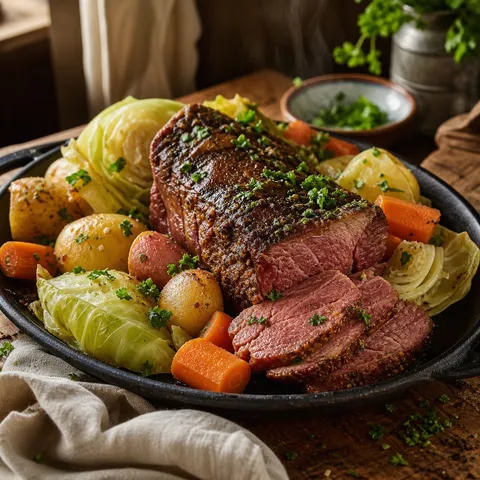 Meat & Pork Lens Verified Images are for illustrative purposes only, may be inaccurate, and do not guarantee the presence or absence of specific ingredients.
 Corned Beef and Cabbage
A classic Irish-American simmer of brined corned beef brisket with cabbage, carrots, and potatoes, served with mustard.
 Meat & Pork Lens Verified Images are for illustrative purposes only, may be inaccurate, and do not guarantee the presence or absence of specific ingredients.
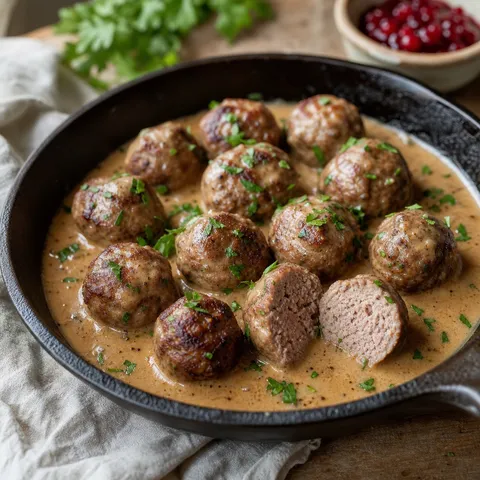
 Swedish Meatballs
Warmly spiced beef and pork meatballs in a velvety sour cream gravy, served over egg noodles with a spoonful of lingonberry jam.
 Meat & Pork Lens Verified Images are for illustrative purposes only, may be inaccurate, and do not guarantee the presence or absence of specific ingredients.
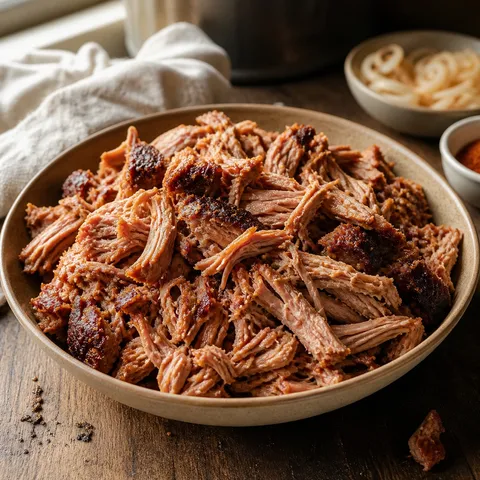
 Slow Cooker Pulled Pork
Fork-tender pork shoulder slow-cooked with a smoky-sweet spice rub until it shreds effortlessly, perfect piled on buns with barbecue sauce.