 Food Lens Images are for illustrative purposes only, may be inaccurate, and do not guarantee the presence or absence of specific ingredients.
 Food Lens · Canned
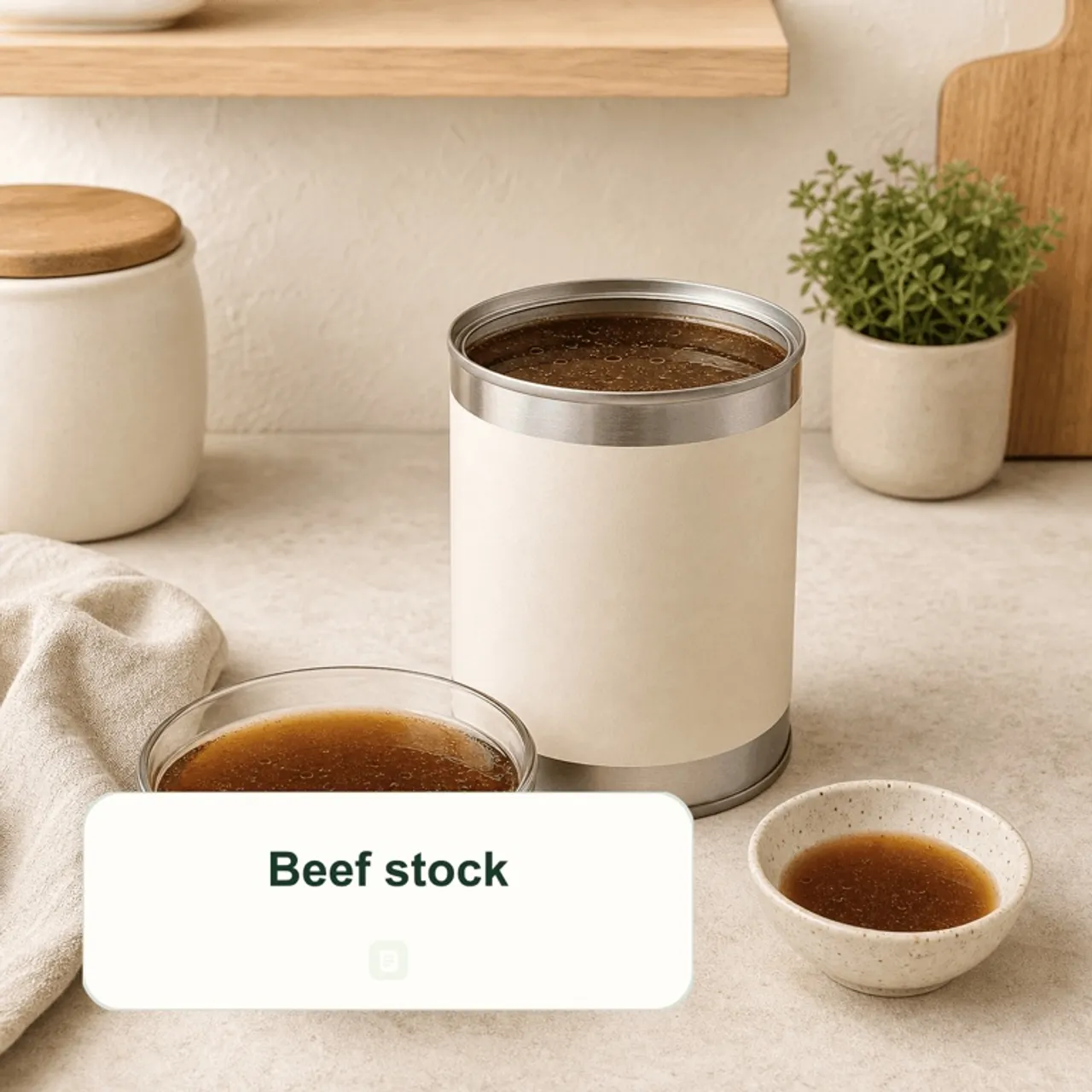
Beef stock
Deep, savory, meaty, lightly caramelized, and full-bodied with richness from collagen in good-quality stock.
Lens VerifiedBeef stock is a rich, savory liquid made from simmered beef bones and aromatics. It forms the base of soups, sauces, braises, and gravies where deep meaty flavor and body are needed.
Where it comes from
Beef stock is one of the oldest preparations in professional and home cooking, born from the practice of simmering bones to extract gelatin, minerals, and flavor from what would otherwise be scraps. Today it is sold as canned broth, boxed stock, and concentrated paste, making it a quick pantry liquid for weeknight cooking.
Varieties — Beef stock is made from bones and has more body from collagen; broth is typically lighter. Reduced demi-glace is even more concentrated. Carton stocks vary widely in richness.
Stock-based sauces are central to French classical cooking, while rich braising broths appear in Korean galbitang, Italian bollito, and North American pot roast.
In a modern kitchen — Canned and carton stocks vary widely in sodium — check before seasoning, especially in reduced sauces.
Buying it
Choose low-sodium stock when you need to control seasoning, especially for reduced sauces. Look for stocks where beef is the first ingredient. Refrigerated stocks often taste cleaner than shelf-stable canned versions.
Storing it
Keep unopened cartons or cans in a cool pantry. Once opened, refrigerate in a sealed container and use within a few days — cloudiness or a sour smell means it's turned.
Keeps about 1 year in the pantry.
Out of beef stock? Good swaps
- Vegetable stock — Lighter and plant-based; lacks the meaty depth but works for mild braises and soups.
- Chicken stock — More neutral; useful in many beef recipes when beef stock is unavailable.
- Beef bouillon dissolved in water — Quick substitute; typically very high in sodium — adjust other salt accordingly.
General cooking guidance — always check the labels on the products you use. Listahan’s allergen checks run automatically when you plan a recipe in the app. Not medical advice.
Recipes that use beef stock
Common questions about beef stock
What can I use instead of beef stock?
Good swaps include Vegetable stock, Chicken stock, Beef bouillon dissolved in water. Each behaves a little differently — see the swaps above for notes, and always check labels for allergens.
How do I store beef stock?
Keep unopened cartons or cans in a cool pantry. Once opened, refrigerate in a sealed container and use within a few days — cloudiness or a sour smell means it's turned. It keeps about 1 year in the pantry.
More canned
See all


Make beef stock about your kitchen — with Listahan Pro
Everything above is free, forever. Pro adds the Household Lens — the same food, seen for your family:
-
Checked for each member
Flags beef stock per person against your household's allergies and school rules — not just a generic "contains" tag.
-
Pantry-aware
Knows whether you already have it, what is running low, and the best swap from what is in your kitchen tonight.
-
What it costs near you
A real price from the Presyo community index, so you can plan the budget — not guess.
-
Your household memory
Who likes it, plus your own private notes — brand, where you keep it, who skips it.
Allergen safety is always free — Pro adds the automation, never the safety.
Cook with beef stock — safely
Plan a recipe in Listahan and the household allergen check runs automatically — every plan, every swap, every lunchbox. Safety is never paywalled.