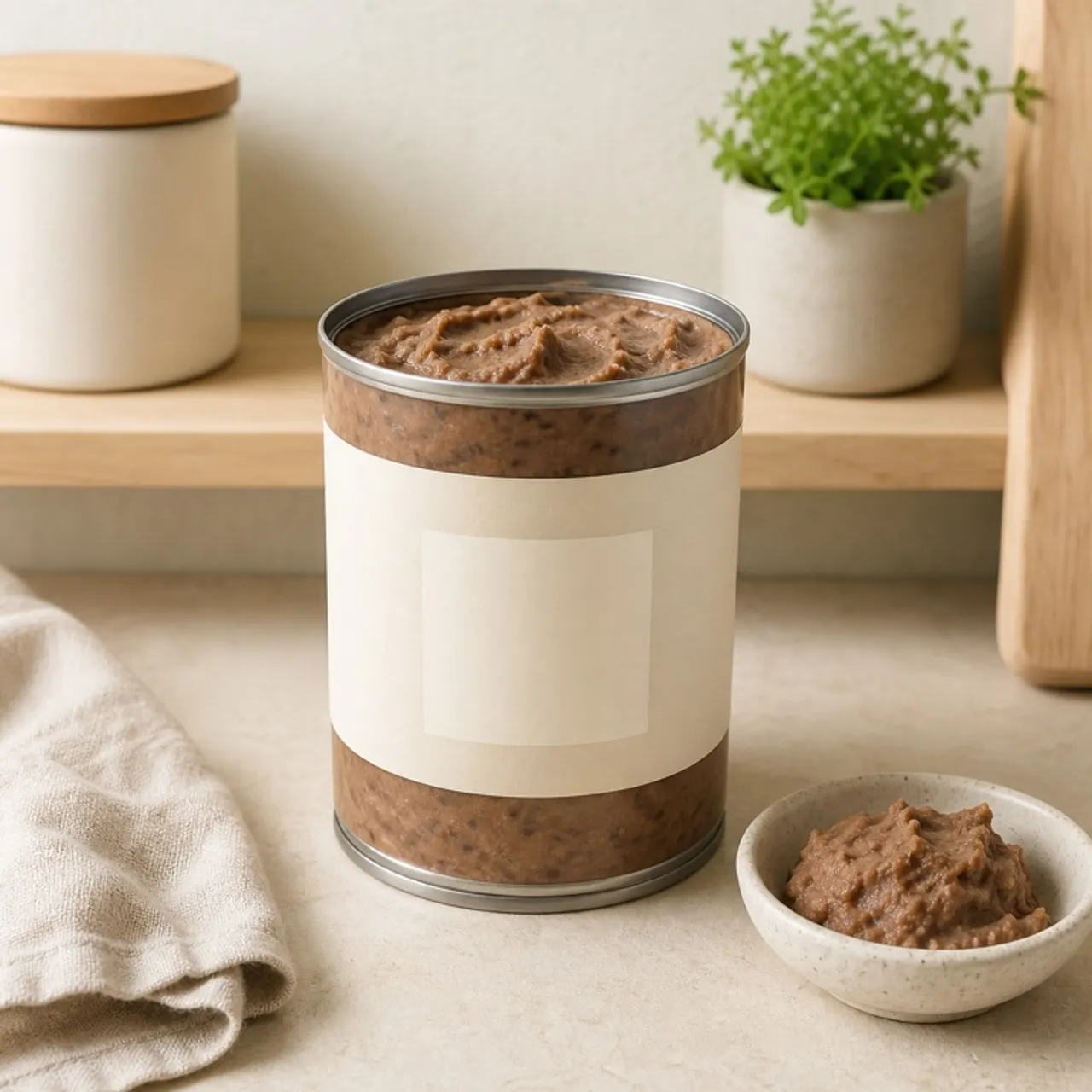
 Food Lens Images are for illustrative purposes only, may be inaccurate, and do not guarantee the presence or absence of specific ingredients.
 Food Lens · Canned
Refried beans
Earthy, savory, and creamy with a rich, thick texture; lard-fried versions are fuller and more unctuous, oil-based versions are lighter; seasoned with cumin and salt in most commercial versions.
Lens VerifiedRefried beans are cooked pinto or black beans that have been mashed and then fried in lard or oil until thick and creamy — the name is a mild mistranslation of 'frijoles refritos,' which means 'well-fried beans' rather than 'fried twice.' They're a deeply satisfying staple of Mexican cuisine, used as a filling, side dish, dip, and binding agent across dozens of preparations.
Where it comes from
Frijoles refritos didn't get fried twice — they got fried right once, the way generations of Mexican cooks learned: low heat, good lard, and patience that makes beans into something silkier than the sum of their parts.
Varieties — Pinto beans are the most traditional base, producing a tan, earthy paste; black bean refried beans are common in southern Mexico and the Yucatán, with a darker color and earthier flavor. Lard-fried versions are richer; oil-based versions are lighter.
In Mexico, frijoles refritos made with lard in a well-seasoned clay pot are the gold standard — a flavor built from generations of cooking in the same vessel. The dish appears in some form at nearly every traditional Mexican meal.
In a modern kitchen — A spoonful of refried beans stirred into a sauce or taco meat adds body, richness, and a subtle earthy depth that's hard to identify but deeply satisfying.
Buying it
Canned refried beans are a reliable pantry staple — look for 'traditional' or 'lard-fried' varieties for richer flavor, or 'vegetarian' for oil-based versions. Check that the ingredients list is short: beans, water, salt, and fat. Avoid versions with added gums or thickeners.
Storing it
Store unopened cans in a cool, dry pantry. Once opened, transfer leftovers to a sealed container, refrigerate, and use within about four days — canned beans don't keep once exposed to air.
Keeps about 2 years in the pantry.
Out of refried beans? Good swaps
- Whole cooked pinto beans (mashed) — Mash with a fork and fry in oil with salt and cumin — essentially the homemade version
- Black bean dip — Similar consistency and purpose; earthier and slightly more pronounced in flavor
General cooking guidance — always check the labels on the products you use. Listahan’s allergen checks run automatically when you plan a recipe in the app. Not medical advice.
Recipes that use refried beans
Common questions about refried beans
What can I use instead of refried beans?
Good swaps include Whole cooked pinto beans (mashed), Black bean dip. Each behaves a little differently — see the swaps above for notes, and always check labels for allergens.
How do I store refried beans?
Store unopened cans in a cool, dry pantry. Once opened, transfer leftovers to a sealed container, refrigerate, and use within about four days — canned beans don't keep once exposed to air. It keeps about 2 years in the pantry.
More canned
See all


Make refried beans about your kitchen — with Listahan Pro
Everything above is free, forever. Pro adds the Household Lens — the same food, seen for your family:
-
Checked for each member
Flags refried beans per person against your household's allergies and school rules — not just a generic "contains" tag.
-
Pantry-aware
Knows whether you already have it, what is running low, and the best swap from what is in your kitchen tonight.
-
What it costs near you
A real price from the Presyo community index, so you can plan the budget — not guess.
-
Your household memory
Who likes it, plus your own private notes — brand, where you keep it, who skips it.
Allergen safety is always free — Pro adds the automation, never the safety.
Cook with refried beans — safely
Plan a recipe in Listahan and the household allergen check runs automatically — every plan, every swap, every lunchbox. Safety is never paywalled.