 Peruvian Images are for illustrative purposes only, may be inaccurate, and do not guarantee the presence or absence of specific ingredients.
  Serving Images are for illustrative purposes only, may be inaccurate, and do not guarantee the presence or absence of specific ingredients.
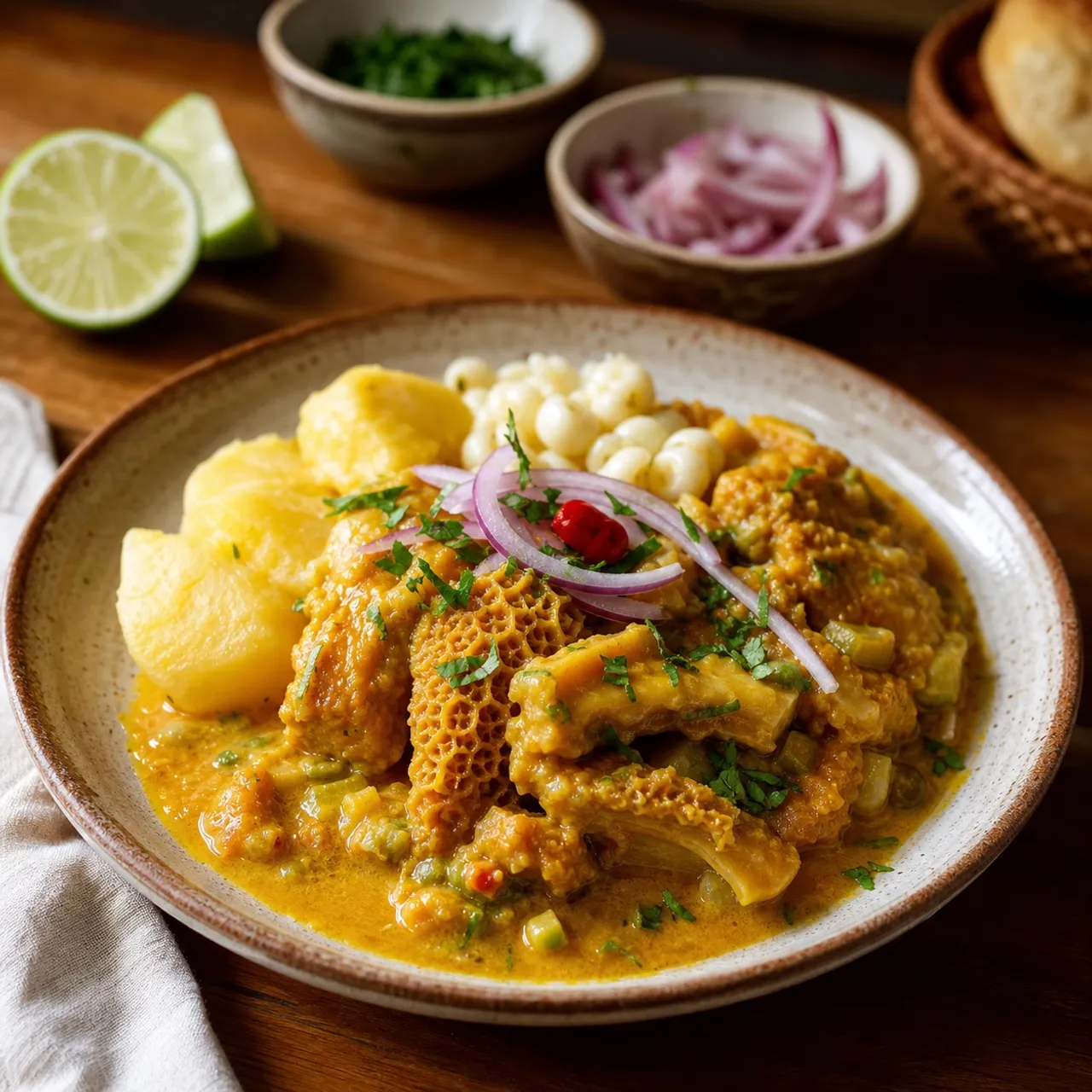
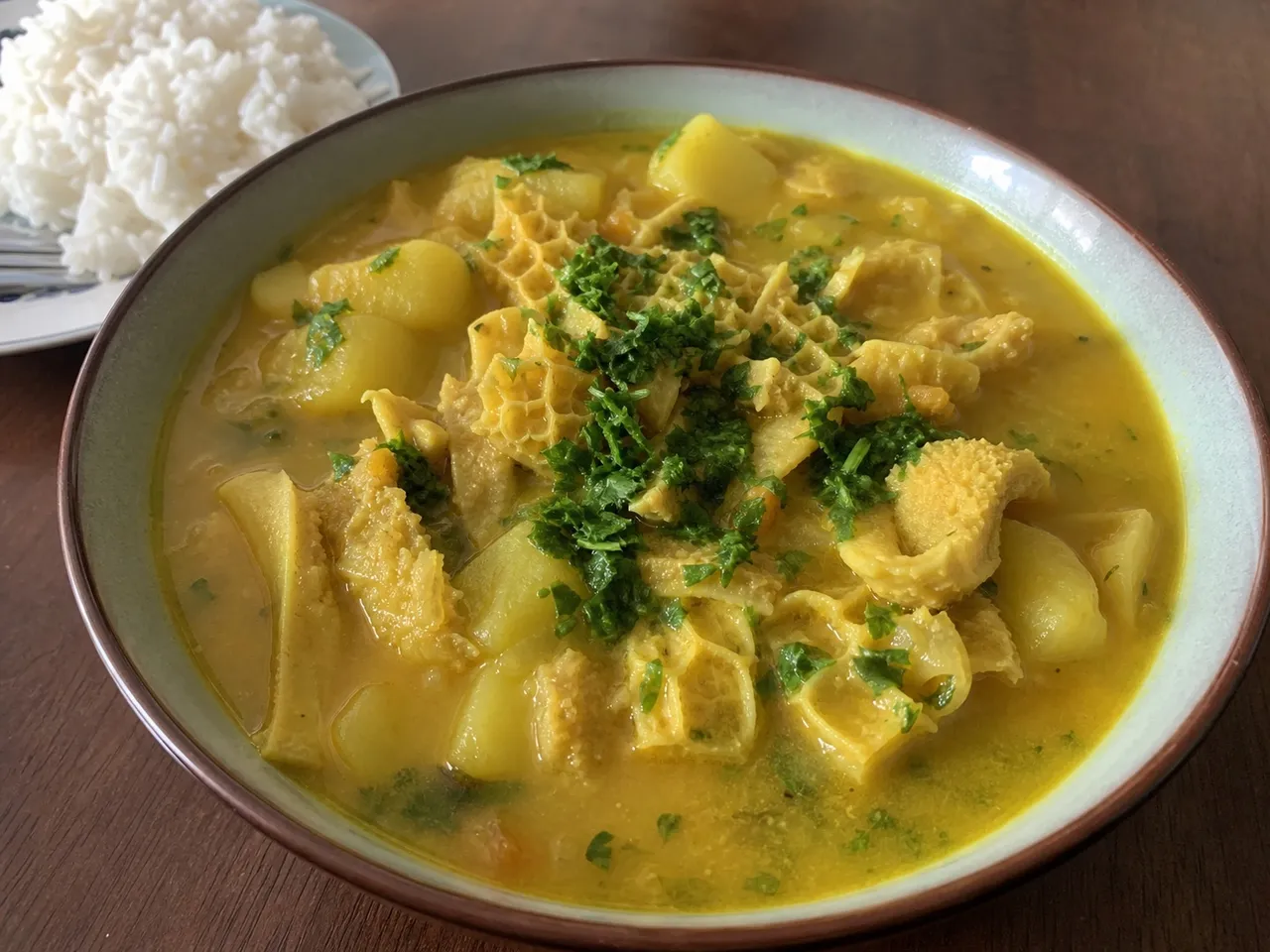
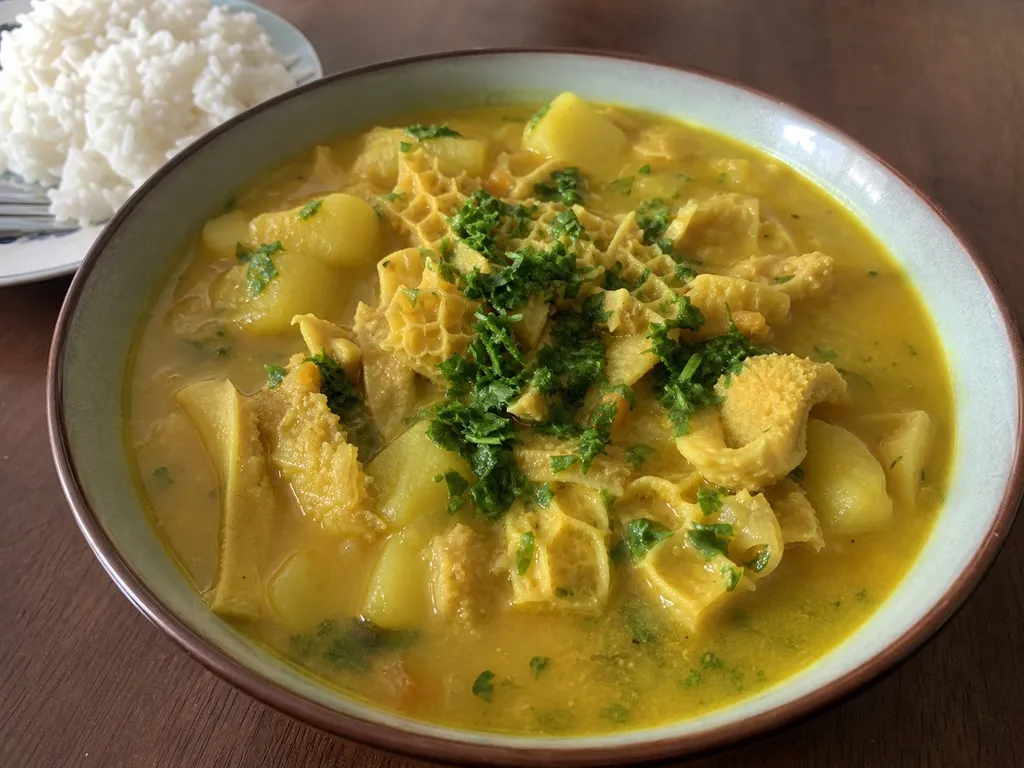
 Cau Cau (Peruvian Tripe Stew)
A hearty yellow stew of tender beef tripe and potatoes simmered in aji amarillo and mint, spooned over rice for a classic home-style meal.
No common allergens detected
Based on this recipe's ingredient list. Always verify with your own brands and labels.
Instructions
6 steps- 1
Boil the cleaned tripe in salted water for 45 minutes until tender, then drain and cut into bite-size strips.
- 2
Heat oil in a large pot and sauté the onion and garlic until soft, then stir in the aji amarillo paste and turmeric.
- 3
Add the tripe and beef broth, and simmer for 20 minutes to let the flavors combine.
- 4
Add the diced potatoes and cook until tender, about 15 minutes.
- 5
Stir in the peas, mint, and parsley, and season with salt and pepper.
- 6
Serve hot over steamed white rice.
 Images are for illustrative purposes only, may be inaccurate, and do not guarantee the presence or absence of specific ingredients.
 Listahan Family Score™
72/100
Good fit for most families
Score reflects how well this recipe fits a typical busy household. In the app, your Family Score is personalized to your household's allergens, kids, and pantry.
Nutrition
per serving820
Calories
66 g
Protein
31 g
Carbs
46 g
Fat
Estimated per serving. Actual values depend on the brands and portions you use.
Listahan cooking guide
Chef notes & practical guide
Technique notes, ingredient swaps, serve-alongside ideas, storage guidance, and equipment for this recipe.
Cultural context
Cau cau is a Lima classic built around beef tripe simmered until tender in an aji amarillo and turmeric sauce. The name is thought to echo the sound of the stew bubbling, and the dish sits alongside anticuchos as one of the most recognizable ways Peruvian cooking transforms offal into a dish with its own identity rather than treating it as a lesser cut.
Listahan note
This version leans on a long tripe pre-boil before it ever hits the sauce, which is the step that determines whether the final texture is tender or rubbery.
Technique cues
- Boiling the tripe separately and at length before it goes into the sauce is not optional - tripe needs a long, gentle simmer to break down its connective tissue, and skipping this step leaves it tough no matter how long the stew simmers afterward.
- Turmeric alongside aji amarillo gives cau cau its distinct yellow-orange color, a combination less common in other Peruvian stews and part of what makes this dish visually and flavor-wise distinct from seco or aji de gallina.
- Adding potatoes partway through rather than at the start lets them finish cooking through at the same time as everything else without turning to mush.
Kitchen flow
- Parallel prep
- Dice the potatoes and chop the herbs while the tripe finishes its initial boil, so the stew comes together quickly once everything's ready.
- Make-ahead
- The tripe can be boiled and cut a day ahead and refrigerated, cutting the active stew-building time significantly on the day you serve it.
- Leftover move
- Leftovers reheat well over low heat; the sauce may need a splash of broth to loosen back up.
- Cleanup rhythm
- Boil the tripe in a separate pot you're comfortable soaking overnight, since the initial simmer can leave a stubborn film.
Ingredient brief
Role, handling, and swap guidance for each key ingredient.
beef tripe
the dish's signature ingredient and primary protein
Purpose: tripe's mild flavor and chewy-tender texture, once properly cooked, is the entire identity of cau cau
Handling: clean thoroughly and boil separately until tender before cutting into strips and adding to the sauce
Adaptation: beef tripe has no close substitute that keeps this as cau cau; for a milder alternative, tender beef chuck can be used but the dish becomes a different stew entirely.
aji amarillo paste
the sauce's primary chile flavor
Purpose: its fruity, moderate heat and bright color are the backbone of the sauce that coats the tripe
Handling: stir into the softened onion and garlic so it toasts briefly before liquid is added
Adaptation: a milder yellow chile paste with a pinch of achiote for color if aji amarillo isn't available.
ground turmeric
color and earthy background note
Purpose: turmeric deepens the golden-yellow color alongside the aji amarillo and adds a subtle earthiness distinct from the chile's fruitiness
Handling: bloom briefly in the oil with the onions so its flavor isn't raw
Adaptation: there's no true substitute for the color, but a small pinch of saffron or annatto oil approximates the hue.
fresh mint
a bright finishing herb
Purpose: mint stirred in near the end cuts through the richness of the tripe and broth with a cooling note that's distinctive to this dish
Handling: chop and add in the last few minutes so its flavor stays fresh rather than cooking flat
Adaptation: if mint isn't available, extra parsley alone still works, though the dish loses its characteristic herbal lift.
potatoes
body and starch
Purpose: diced potatoes soak up the turmeric-aji sauce and add heartiness to the stew
Handling: add once the tripe and broth have simmered together so the potatoes finish tender without overcooking
Adaptation: Yukon gold or red potatoes both hold their shape well; starchy russets can break down more than desired.
Technique notes
- Cut the tripe into uniform, bite-sized strips after boiling so every piece cooks and reheats evenly.
- Taste and adjust the aji amarillo level after the sauce has simmered a while - its heat mellows and rounds out over time, so what tastes sharp at first may need a touch more once the stew has cooked down.
- Keep the simmer gentle rather than a hard boil once everything is combined; a rolling boil can toughen the tripe again even after it's been tenderized.
Ingredient swaps
- Milder heat direction
- Cut the aji amarillo paste by half and add a touch of bell pepper puree for color without as much heat.
- Gluten-free direction
- This dish has no gluten-containing ingredients as written; just confirm the broth used doesn't include wheat-based additives.
- Weeknight shortcut
- Using pre-cleaned tripe from a butcher and a pressure cooker for the initial boil cuts the tenderizing time significantly.
Serve alongside
- Steamed white rice
- Boiled Andean potatoes
- Salsa criolla
- Crusty bread for the sauce
- Chicha morada
- A crisp Peruvian lager
- Sparkling water with lime
Serving suggestions only — check pairings for your household's allergens.
Storage & reheating
- Refrigerate up to 3 days in an airtight container
- Reheat gently on the stovetop over low heat to avoid toughening the tripe again
- Freezes reasonably well up to 2 months, though texture softens slightly on thawing
Equipment
- Large pot for boiling tripe
- Second heavy pot or Dutch oven for the stew
- Cutting board and sharp knife
- Ladle
Make this household-aware
Listahan Pro checks this recipe against your household's allergens, finds pantry-aware swaps, builds the shopping list, and helps you plan the week around it.
Plan it in Listahan
Add Cau Cau (Peruvian Tripe Stew) to your week, check it against your household's allergens, and build the shopping list automatically.
More Peruvian recipes
 Peruvian Lens Verified Images are for illustrative purposes only, may be inaccurate, and do not guarantee the presence or absence of specific ingredients.
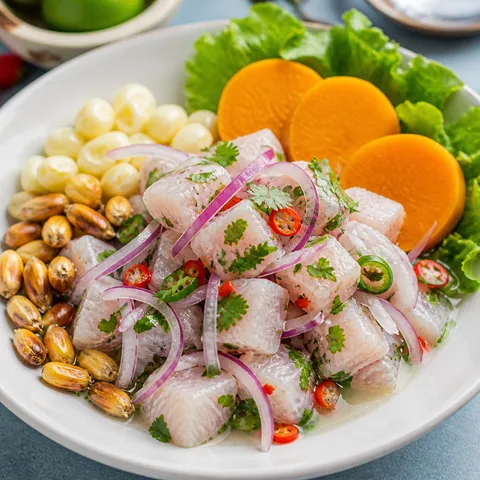
 Ceviche de Pescado
The iconic dish of Peru—exquisitely fresh, raw white fish "cooked" purely by the acidity of freshly squeezed lime juice, infused with chili heat and red onion bite.
 Peruvian Lens Verified Images are for illustrative purposes only, may be inaccurate, and do not guarantee the presence or absence of specific ingredients.
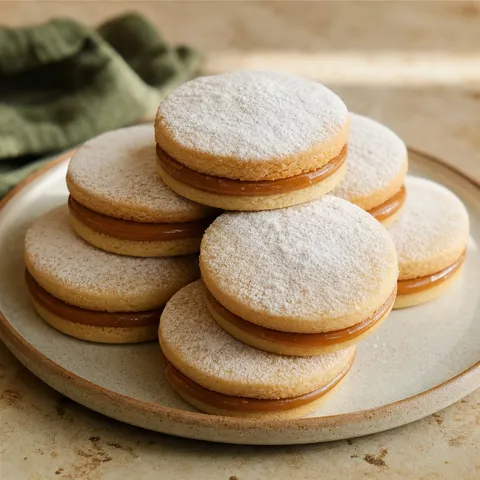
 Alfajores (Peruvian Dulce de Leche Sandwich Cookies)
Delicate, crumbly shortbread cookies sandwiched with rich dulce de leche and dusted with powdered sugar, a favorite Peruvian teatime treat.
 Peruvian Lens Verified Images are for illustrative purposes only, may be inaccurate, and do not guarantee the presence or absence of specific ingredients.
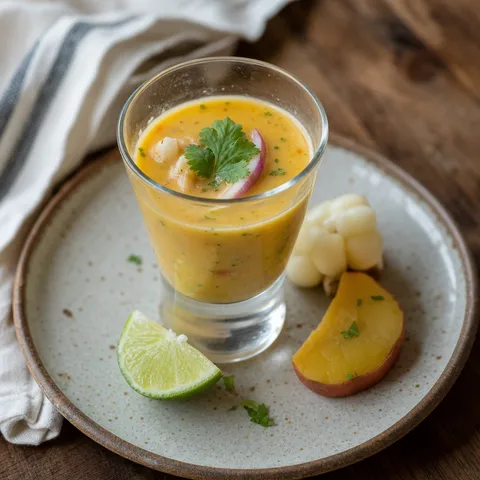
 Leche de Tigre (Peruvian Ceviche Shot)
The zesty, spicy marinade left over from ceviche, served chilled as a bracing shot garnished with bits of fish and crunchy corn nuts.