 Peruvian Images are for illustrative purposes only, may be inaccurate, and do not guarantee the presence or absence of specific ingredients.
  Serving Images are for illustrative purposes only, may be inaccurate, and do not guarantee the presence or absence of specific ingredients.
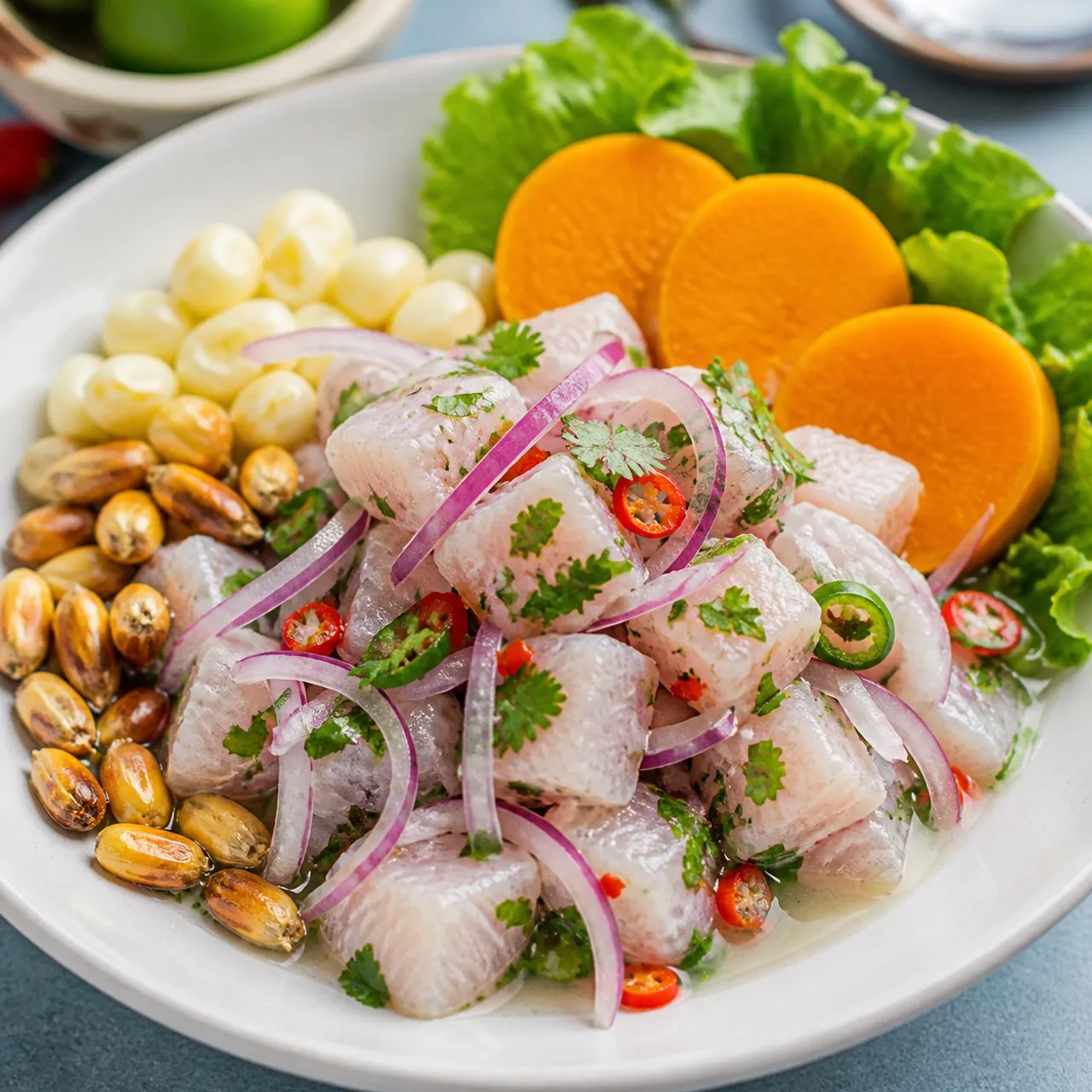
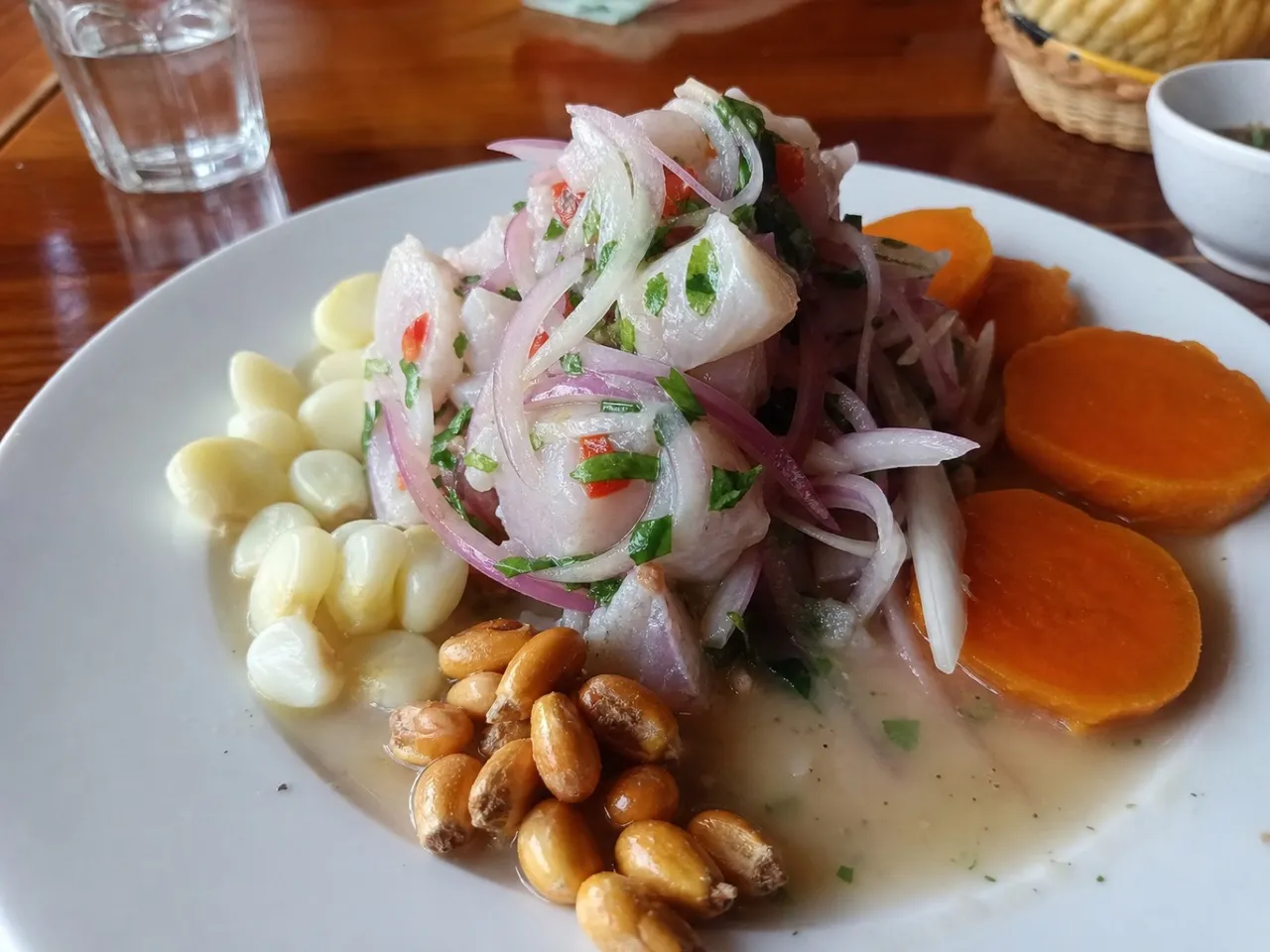
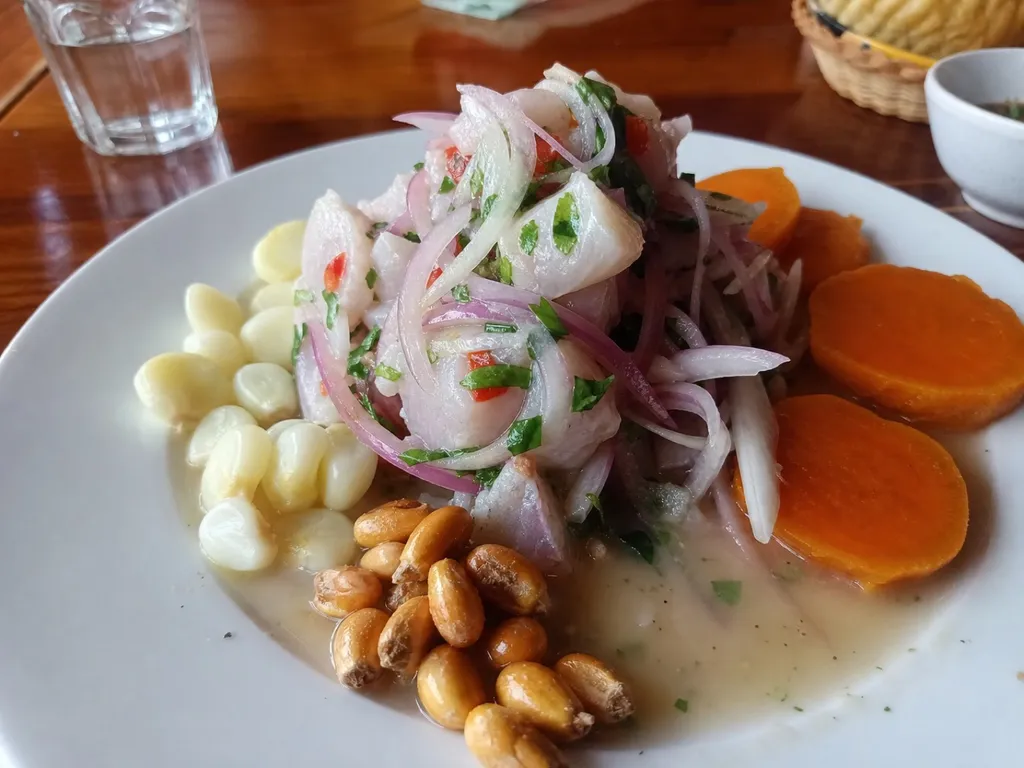
 Ceviche de Pescado
The iconic dish of Peru—exquisitely fresh, raw white fish "cooked" purely by the acidity of freshly squeezed lime juice, infused with chili heat and red onion bite.
Contains common allergens
In the app, Listahan checks these against your household automatically.
Good to know
- Ready in under 30 minutes
Matched from this dish's own ingredients and timing. Browse more: 30-minute meals
Instructions
5 steps- 1
Prep Onion: Soak the sliced red onion in ice water for 10 minutes to remove its harsh bite, then drain well.
- 2
Mix: In a large glass or non-reactive bowl, gently toss the fish cubes with the salt, minced chili pepper, and cilantro.
- 3
Cure (The "Tiger's Milk"): Pour the fresh lime juice over the fish. Let it sit for just 5 to 10 minutes. The exterior of the fish will turn opaque white, while the center remains tender.
- 4
Toss: Gently fold in the drained red onions.
- 5
Serve: Serve immediately, very cold, with slices of boiled sweet potato and kernels of corn to balance the acidity.
 Images are for illustrative purposes only, may be inaccurate, and do not guarantee the presence or absence of specific ingredients.
 Listahan Family Score™
68/100
Works for many families
Score reflects how well this recipe fits a typical busy household. In the app, your Family Score is personalized to your household's allergens, kids, and pantry.
Nutrition
per serving90
Calories
2 g
Protein
22 g
Carbs
0 g
Fat
Estimated per serving. Actual values depend on the brands and portions you use.
Listahan cooking guide
Chef notes & practical guide
Technique notes, ingredient swaps, serve-alongside ideas, storage guidance, and equipment for this recipe.
Cultural context
Ceviche is Peru's national dish and a point of genuine pride, with a coastal history stretching back to pre-Columbian fishermen who cured raw fish in fermented fruit juices long before limes arrived with the Spanish. The modern Peruvian version is defined by its speed and its leche de tigre, the sharp, garlicky lime marinade that lightly cures the fish in minutes rather than hours. Unlike longer-marinated styles elsewhere in Latin America, Peruvians prize fish that is still tender and barely opaque, dressed and eaten almost immediately.
Listahan note
This version treats the leche de tigre as the star and keeps the cure short, so the fish stays silky rather than rubbery. It balances the lime with aji and red onion the Peruvian way, and leans on sushi-grade fish for safety since the fish is never cooked with heat.
Technique cues
- Cut the fish into even bite-size cubes so every piece cures at the same rate; mismatched sizes leave you with some pieces raw and others tough.
- Add the lime juice only minutes before serving and toss gently; the acid keeps working, so a ceviche that sits too long turns chalky and over-firm.
- Rinse the sliced red onion in cold water before adding it to wash away the harsh sulfur bite and keep its color bright and its crunch clean.
Kitchen flow
- Parallel prep
- While the rinsed onion drains, blend the leche de tigre and cube the fish so the actual cure takes only the final few minutes.
- Make-ahead
- Make the leche de tigre and slice the onion a few hours ahead, but never add the lime to the fish until just before serving.
- Leftover move
- Ceviche does not keep; if you have leftover cured fish, fold it into a quick salad the same day and eat within hours, not the next day.
- Cleanup rhythm
- Wash the cutting board and knife with hot soapy water immediately after the raw fish, before they touch anything else.
Ingredient brief
Role, handling, and swap guidance for each key ingredient.
fresh white fish
the raw, lime-cured centerpiece
Purpose: A firm, lean white fish like sea bass or sole stays tender and turns just opaque in the brief cure.
Handling: Use the freshest sushi-grade fish you can get, pat it dry, and cut into even half-inch cubes.
Adaptation: Sole, halibut, or corvina all work; cooked, peeled shrimp is a no-raw-fish option for nervous eaters.
lime juice
the acid that cures the fish
Purpose: Fresh lime juice both flavors and gently cooks the fish, and is the heart of the leche de tigre.
Handling: Squeeze it fresh right before using; bottled juice tastes flat and bitter here.
Adaptation: A mix of lime and a little lemon works; key limes give a more authentic Peruvian sharpness.
red onion
sharp crunch and color
Purpose: Thin red onion adds bite and a pink edge that defines the look of Peruvian ceviche.
Handling: Slice paper-thin lengthwise and rinse in cold water to soften the bite.
Adaptation: Shallot works for a milder result; white onion in a pinch but loses the color.
aji amarillo
the fruity Peruvian heat
Purpose: Aji amarillo gives the leche de tigre its sunny color and gentle, fragrant warmth.
Handling: Blend a small amount of paste into the lime juice, or mince the fresh pepper finely.
Adaptation: A milder fresh chili plus a pinch of paprika approximates it; omit entirely for kids.
cilantro
fresh herbal lift
Purpose: Cilantro brightens the leche de tigre and ties the lime and chili together.
Handling: Chop finely and add at the very end so it stays vivid and green.
Adaptation: Flat-leaf parsley for those who taste cilantro as soapy, though the flavor shifts.
Technique notes
- Chill the bowl, the fish, and the lime juice beforehand; ceviche is a cold dish and warmth makes the cure go mushy and uneven.
- Salt the fish a couple of minutes before the lime hits it so it seasons through rather than just on the surface.
- Serve it the instant it is dressed, ideally tableside, because the texture is at its best within the first five minutes.
Ingredient swaps
- No-raw-fish option
- Use cooked, chilled shrimp or scallops and toss them in the leche de tigre just to coat for a food-safety-friendly version.
- Lower-sodium direction
- Cut the added salt and lean on the lime, aji, and onion; finish with a small pinch only at the table.
- Milder family direction
- Leave out the aji amarillo and serve the chili on the side so kids and spice-shy eaters can opt in.
Serve alongside
- Boiled sweet potato (camote)
- Toasted corn (cancha)
- Boiled choclo corn on the cob
- Chicha morada
- Pisco sour
- A crisp sauvignon blanc
Serving suggestions only — check pairings for your household's allergens.
Storage & reheating
- Ceviche is meant to be eaten right after it is made and does not store well; the fish keeps firming up in the lime and turns rubbery.
- If you must hold it, refrigerate for no more than two hours and drain off some of the lime to slow the cure.
- Do not freeze cured ceviche; the texture collapses completely on thaw.
Equipment
- A non-reactive glass or ceramic bowl that will not react with lime acid
- A very sharp knife for clean fish cubes
- A citrus juicer or reamer for fresh lime
- A fine strainer for the leche de tigre
Make this household-aware
Listahan Pro checks this recipe against your household's allergens, finds pantry-aware swaps, builds the shopping list, and helps you plan the week around it.
Plan it in Listahan
Add Ceviche de Pescado to your week, check it against your household's allergens, and build the shopping list automatically.
More Peruvian recipes
 Peruvian Lens Verified Images are for illustrative purposes only, may be inaccurate, and do not guarantee the presence or absence of specific ingredients.
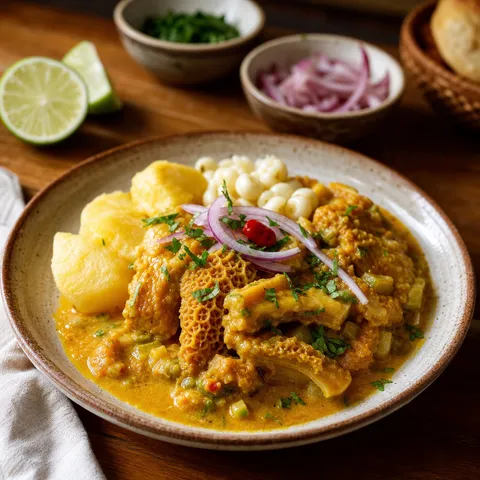
 Cau Cau (Peruvian Tripe Stew)
A hearty yellow stew of tender beef tripe and potatoes simmered in aji amarillo and mint, spooned over rice for a classic home-style meal.
 Peruvian Lens Verified Images are for illustrative purposes only, may be inaccurate, and do not guarantee the presence or absence of specific ingredients.
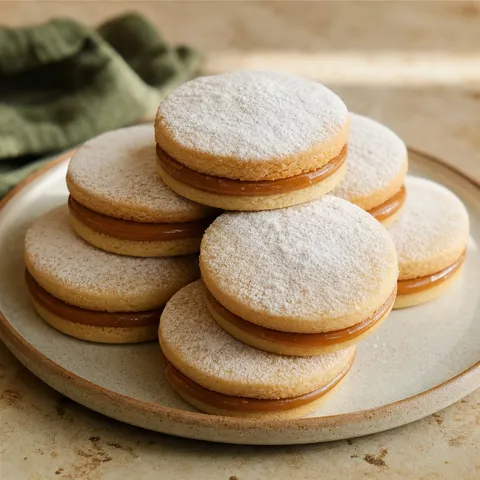
 Alfajores (Peruvian Dulce de Leche Sandwich Cookies)
Delicate, crumbly shortbread cookies sandwiched with rich dulce de leche and dusted with powdered sugar, a favorite Peruvian teatime treat.
 Peruvian Lens Verified Images are for illustrative purposes only, may be inaccurate, and do not guarantee the presence or absence of specific ingredients.
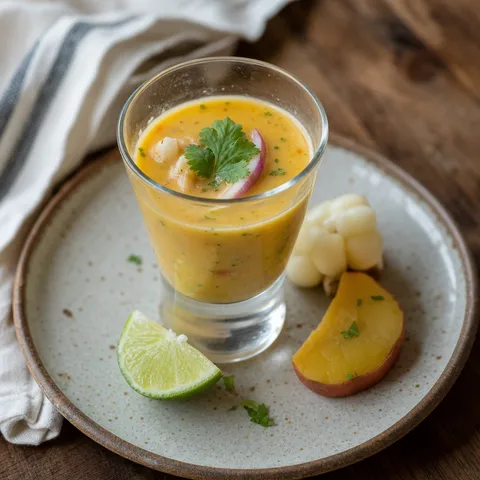
 Leche de Tigre (Peruvian Ceviche Shot)
The zesty, spicy marinade left over from ceviche, served chilled as a bracing shot garnished with bits of fish and crunchy corn nuts.