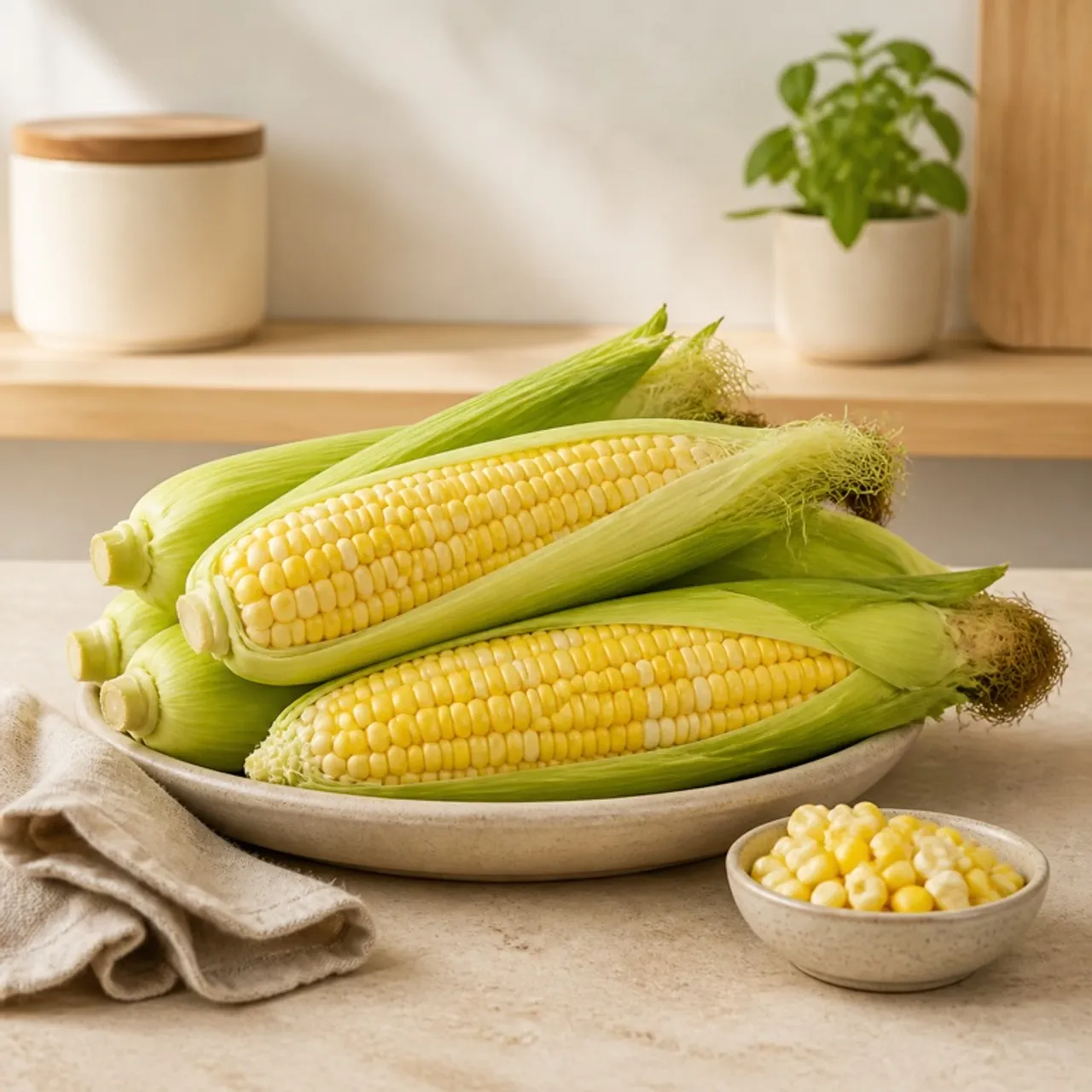
 Food Lens Images are for illustrative purposes only, may be inaccurate, and do not guarantee the presence or absence of specific ingredients.
 Food Lens · Produce
Corn
Sweet, milky, and faintly grassy when fresh; starchy and concentrated when dried or aged; smoky and nutty when grilled over high heat.
Lens VerifiedCorn (sweetcorn) is a naturally sweet, starchy grain-vegetable eaten fresh off the cob, cut as kernels, or used as a pantry staple in its canned and frozen forms across virtually every cuisine.
Where it comes from
No crop shaped the Americas as profoundly as corn. Domesticated in Mexico thousands of years ago, it spread north and south through indigenous trade networks and became the dietary foundation of civilizations from the Aztec to the Iroquois. European colonizers brought it to Europe, Asia, and Africa, where it became a food security staple. Today corn is one of the world's most produced crops, and in North America it fills backyard barbecues, farmers markets, and pantry shelves in equal measure.
Varieties — Yellow sweet corn is the most common; white corn is sweeter and more tender; bicolor corn combines both. Silver Queen and Butter & Sugar are popular American varieties. Baby corn is harvested very early and eaten whole.
Corn is sacred in Mesoamerican cultures and remains central to Mexican cuisine in masa-based foods; Filipino street corn (mais con queso) is a popular snack; esquites (Mexican corn cups) and elotes (street corn) have become widely loved across North America.
In a modern kitchen — Fresh corn is sweetest the day it is picked — sugars convert to starch rapidly. Cook within 1–2 days of purchase. To cut kernels easily, stand the cob upright in a large bowl and slice downward — the bowl catches every kernel.
Buying it
Pull back the husk slightly to check the kernels — they should be plump, tightly packed, and milky when pressed. Silk should be pale gold to light brown. Husks should be bright green and moist, not dried out. Avoid cobs with gaps in the kernel rows.
Storing it
Keep corn in its husk in the fridge and use it within a few days — its sugars convert to starch quickly once picked, so it's best eaten sooner rather than later.
Keeps about 5 days in the fridge.
In season
Peak season is July–September, though it's available year-round.
Fresh local sweet corn is most common in midsummer to early fall, while packaged forms are available year-round.
Out of corn? Good swaps
- Frozen corn kernels — Excellent swap for fresh cut corn in cooked dishes — use 1:1 by volume, no prep needed
- Canned corn — Softer and less sweet; rinse and drain before using — 1:1 in soups, stews, and salsas
- Edamame — Different flavor but similar sweetness and pop; use 1:1 in salads and stir-fries — note edamame is soy, a major allergen corn doesn't carry
General cooking guidance — always check the labels on the products you use. Listahan’s allergen checks run automatically when you plan a recipe in the app. Not medical advice.
Recipes that use corn
Common questions about corn
Is corn vegan?
Corn is generally plant-based and suitable for a vegan diet, but brands differ — confirm on the label.
What can I use instead of corn?
Good swaps include Frozen corn kernels, Canned corn, Edamame. Each behaves a little differently — see the swaps above for notes, and always check labels for allergens.
How do I store corn?
Keep corn in its husk in the fridge and use it within a few days — its sugars convert to starch quickly once picked, so it's best eaten sooner rather than later. It keeps about 5 days in the fridge.
More produce
See all


Make corn about your kitchen — with Listahan Pro
Everything above is free, forever. Pro adds the Household Lens — the same food, seen for your family:
-
Checked for each member
Flags corn per person against your household's allergies and school rules — not just a generic "contains" tag.
-
Pantry-aware
Knows whether you already have it, what is running low, and the best swap from what is in your kitchen tonight.
-
What it costs near you
A real price from the Presyo community index, so you can plan the budget — not guess.
-
Your household memory
Who likes it, plus your own private notes — brand, where you keep it, who skips it.
Allergen safety is always free — Pro adds the automation, never the safety.
Cook with corn — safely
Plan a recipe in Listahan and the household allergen check runs automatically — every plan, every swap, every lunchbox. Safety is never paywalled.