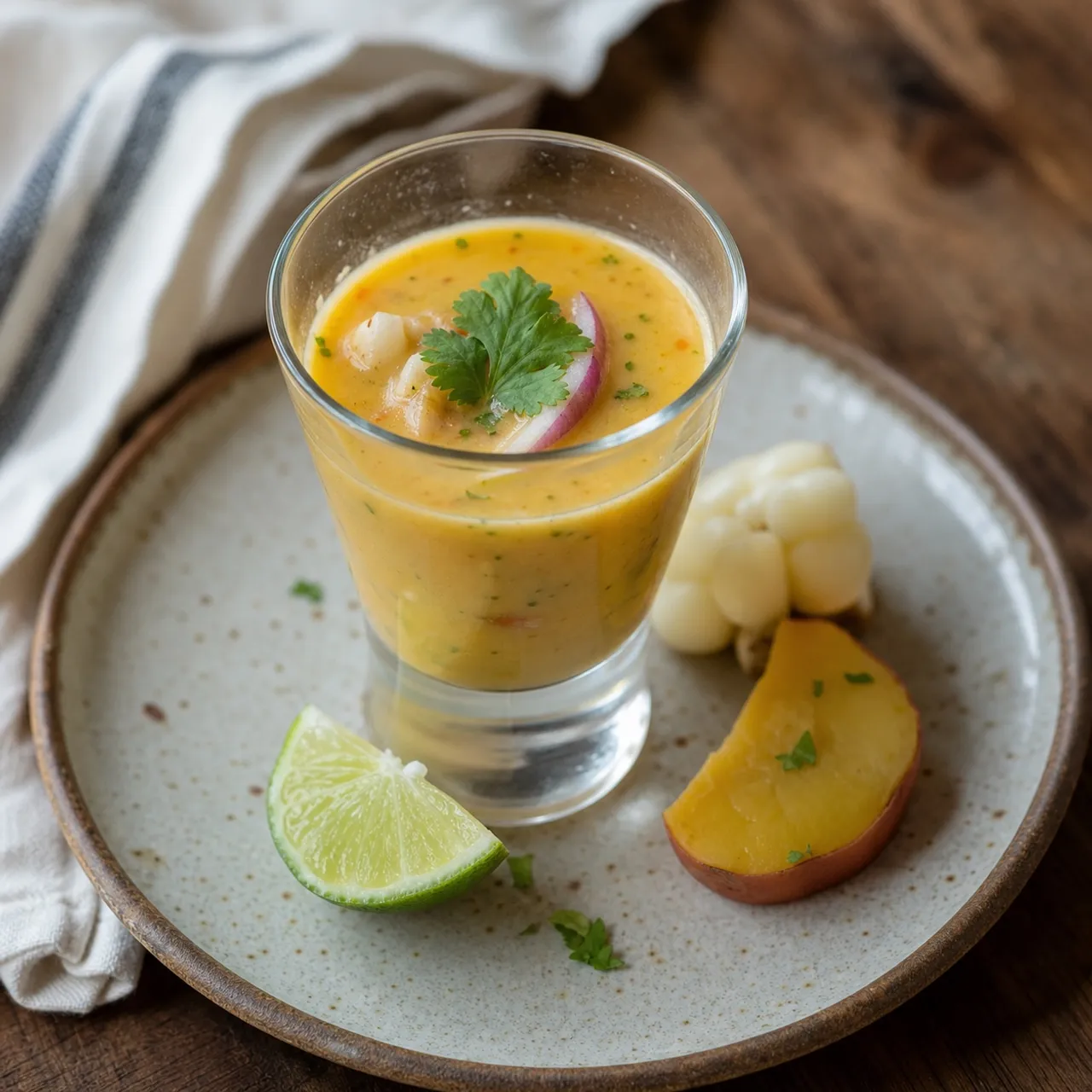
 Peruvian Images are for illustrative purposes only, may be inaccurate, and do not guarantee the presence or absence of specific ingredients.
 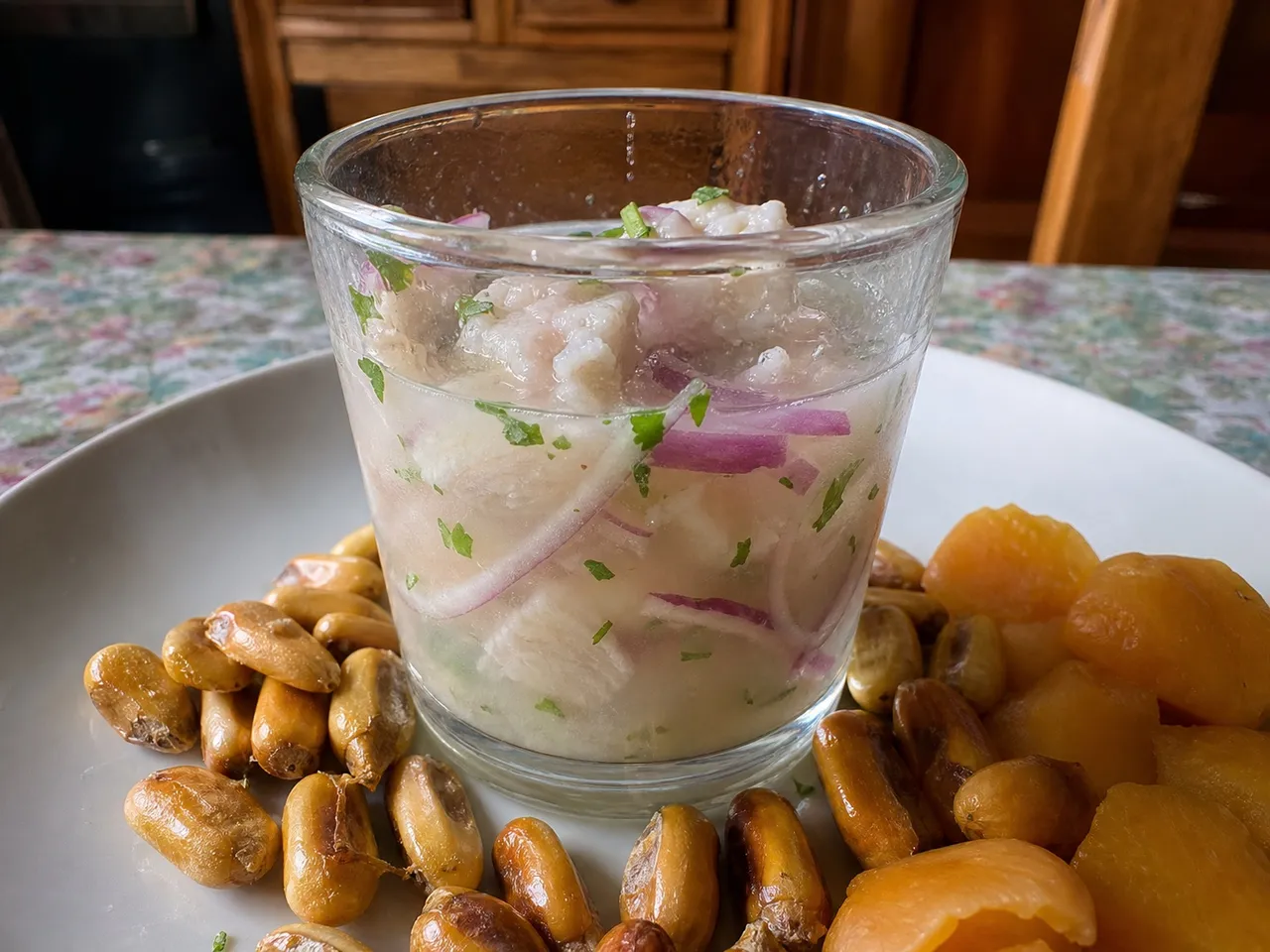 Serving Images are for illustrative purposes only, may be inaccurate, and do not guarantee the presence or absence of specific ingredients.
 Leche de Tigre (Peruvian Ceviche Shot)
The zesty, spicy marinade left over from ceviche, served chilled as a bracing shot garnished with bits of fish and crunchy corn nuts.
Contains common allergens
In the app, Listahan checks these against your household automatically.
Good to know
- Ready in under 30 minutes
Matched from this dish's own ingredients and timing. Browse more: 30-minute meals
Instructions
6 steps- 1
Blend the lime juice, half of the fish, onion, garlic, celery, aji pepper, fish stock, and salt until smooth.
- 2
Strain the mixture through a fine sieve into a pitcher, pressing to extract all the liquid.
- 3
Stir in the chopped cilantro and adjust salt to taste.
- 4
Dice the remaining fish into small cubes and stir a few pieces into the strained liquid.
- 5
Pour into small shot glasses and chill for 10 minutes.
- 6
Garnish each shot with a few corn nuts before serving.
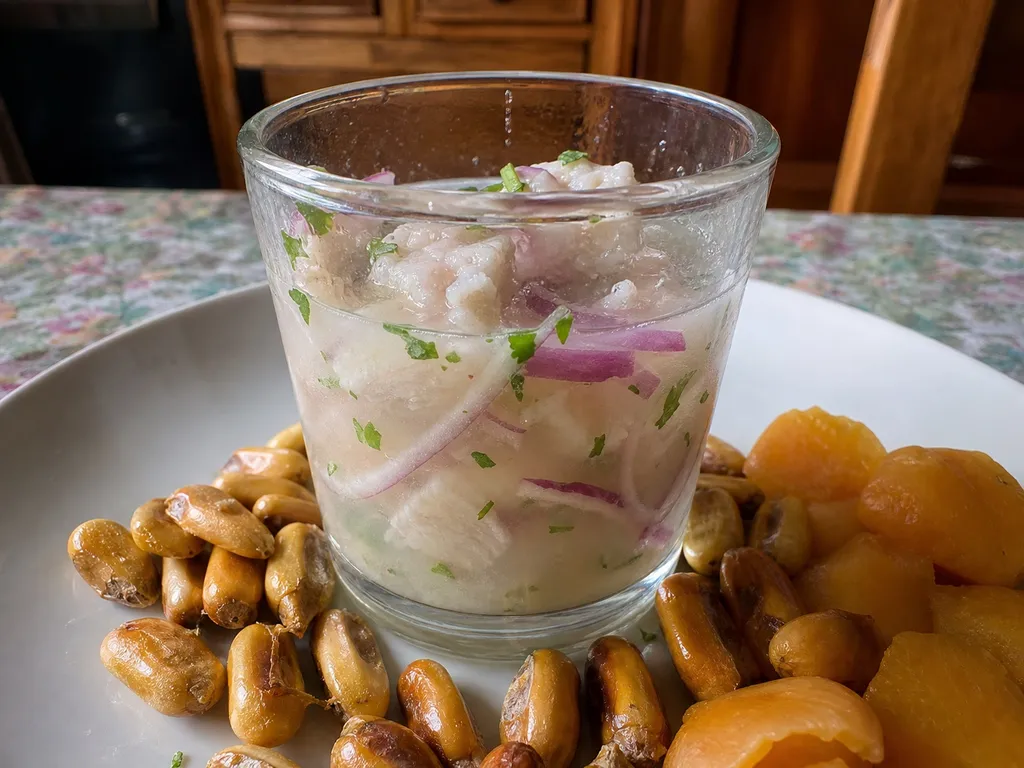 Images are for illustrative purposes only, may be inaccurate, and do not guarantee the presence or absence of specific ingredients.
 Listahan Family Score™
63/100
Works for many families
Score reflects how well this recipe fits a typical busy household. In the app, your Family Score is personalized to your household's allergens, kids, and pantry.
Nutrition
per serving100
Calories
13 g
Protein
9 g
Carbs
3 g
Fat
Estimated per serving. Actual values depend on the brands and portions you use.
Listahan cooking guide
Chef notes & practical guide
Technique notes, ingredient swaps, serve-alongside ideas, storage guidance, and equipment for this recipe.
Cultural context
Leche de tigre, meaning tiger's milk, originated as the leftover citrus marinating liquid from making ceviche along the Peruvian coast. Fishermen and home cooks began drinking it on its own, believing it cured hangovers and restored energy, and it eventually became a standalone starter in its own right. Today it is often served in small shot glasses, sometimes with a few pieces of raw fish and a scattering of toasted corn.
Listahan note
This version blends half the fish directly into the sauce for extra body and flavor, then adds a few diced pieces of the remaining fish back in for texture, rather than serving the liquid alone.
Technique cues
- Blending some of the raw fish directly into the citrus liquid, rather than straining out fish entirely, gives the leche de tigre a fuller, slightly opaque body and deeper flavor than a clear citrus mix alone.
- Straining through a fine sieve after blending removes fish fiber and pulp, leaving the smooth, drinkable consistency the dish is known for.
- Chilling briefly before serving lets the flavors meld and takes the raw edge off the lime's sharpness without cooking the fish through.
Kitchen flow
- Parallel prep
- Chop the aromatics for blending while dicing the reserved fish.
- Make-ahead
- The sauce can be blended and strained a few hours ahead and chilled, though flavor is brightest within a couple of hours.
- Leftover move
- This is meant to be a fresh, single-serving shot; consume within a few hours rather than saving overnight.
- Cleanup rhythm
- The blender and strainer are the only tools needed; rinse them immediately after straining.
Ingredient brief
Role, handling, and swap guidance for each key ingredient.
sushi-grade white fish
the base
Purpose: it's blended into the sauce and also added diced, so it must be safe to eat essentially raw
Handling: keep it very cold until ready to use, slicing half for blending and dicing the rest
Adaptation: sushi-grade snapper, halibut, or sea bass all work; do not use fish not rated for raw consumption.
fresh lime juice
the acid cure
Purpose: its acidity is what cooks the surface of the fish and defines the tangy, sharp flavor of the sauce
Handling: use fresh-squeezed, never bottled, for the right brightness
Adaptation: a small amount of orange juice blended in softens the acidity if a milder version is wanted.
aji limo or aji amarillo
heat
Purpose: it gives the shot its characteristic warmth; aji limo is a fruitier, more traditional choice in ceviche-adjacent dishes
Handling: seed before blending to control the heat level
Adaptation: aji amarillo paste if fresh peppers aren't available; adjust quantity since paste is more concentrated.
celery
aromatic backbone
Purpose: it adds a subtle vegetal freshness that rounds out the sharp citrus and heat, a traditional leche de tigre component
Handling: chop roughly since it will be strained out later
Adaptation: a small piece of fennel gives a similar aromatic quality with a different note.
corn nuts (cancha)
garnish crunch
Purpose: their toasted, crunchy texture is the traditional contrast to the smooth, cold liquid
Handling: add just before serving so they stay crisp
Adaptation: plantain chips for a different but complementary crunch.
Technique notes
- Serve the shots very cold; chill the glasses themselves in the freezer for extra effect.
- Taste and adjust the salt after straining, since straining can mute seasoning slightly.
- Add the diced fish pieces to the liquid only right before serving so they don't over-cure and turn firm.
Ingredient swaps
- Tree nut caution
- Cancha corn nuts are corn-based, not a tree nut, but if using a store-bought seasoned corn nut mix, check the label for tree nut cross-contact before serving to a tree-nut-allergic guest.
- Raw-fish caution
- Because the fish is essentially raw, skip this dish or replace it with a fully cooked cocktail, like a cooked shrimp version, for pregnant members, young children, or immunocompromised guests.
- Milder heat
- Use half the aji limo or amarillo and add it gradually, tasting as you go, since fresh chile heat varies widely.
Serve alongside
- ceviche mixto
- tostones or fried plantain chips
- extra cancha for garnish
- a chilled pisco sour
- a cold Peruvian lager
- sparkling water
Serving suggestions only — check pairings for your household's allergens.
Storage & reheating
- Best consumed within a few hours of making.
- Keep refrigerated and covered if holding briefly before serving.
- Do not freeze; texture and raw fish quality won't survive.
Equipment
- blender
- fine-mesh sieve
- small shot glasses
- sharp knife
Make this household-aware
Listahan Pro checks this recipe against your household's allergens, finds pantry-aware swaps, builds the shopping list, and helps you plan the week around it.
Plan it in Listahan
Add Leche de Tigre (Peruvian Ceviche Shot) to your week, check it against your household's allergens, and build the shopping list automatically.
More Peruvian recipes
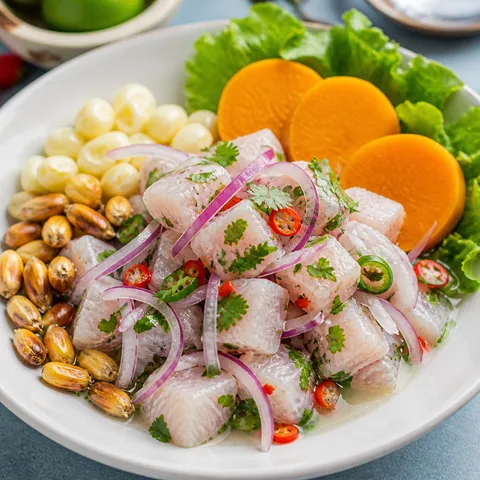 Peruvian Lens Verified Images are for illustrative purposes only, may be inaccurate, and do not guarantee the presence or absence of specific ingredients.
 Ceviche de Pescado
The iconic dish of Peru—exquisitely fresh, raw white fish "cooked" purely by the acidity of freshly squeezed lime juice, infused with chili heat and red onion bite.
 Peruvian Lens Verified Images are for illustrative purposes only, may be inaccurate, and do not guarantee the presence or absence of specific ingredients.
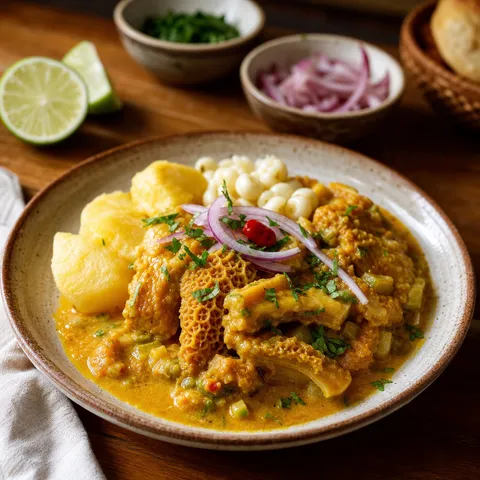
 Cau Cau (Peruvian Tripe Stew)
A hearty yellow stew of tender beef tripe and potatoes simmered in aji amarillo and mint, spooned over rice for a classic home-style meal.
 Peruvian Lens Verified Images are for illustrative purposes only, may be inaccurate, and do not guarantee the presence or absence of specific ingredients.
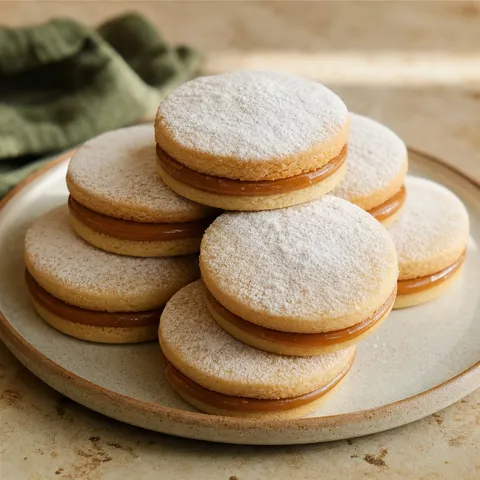
 Alfajores (Peruvian Dulce de Leche Sandwich Cookies)
Delicate, crumbly shortbread cookies sandwiched with rich dulce de leche and dusted with powdered sugar, a favorite Peruvian teatime treat.