 Soups & Stews Images are for illustrative purposes only, may be inaccurate, and do not guarantee the presence or absence of specific ingredients.
  Serving Images are for illustrative purposes only, may be inaccurate, and do not guarantee the presence or absence of specific ingredients.
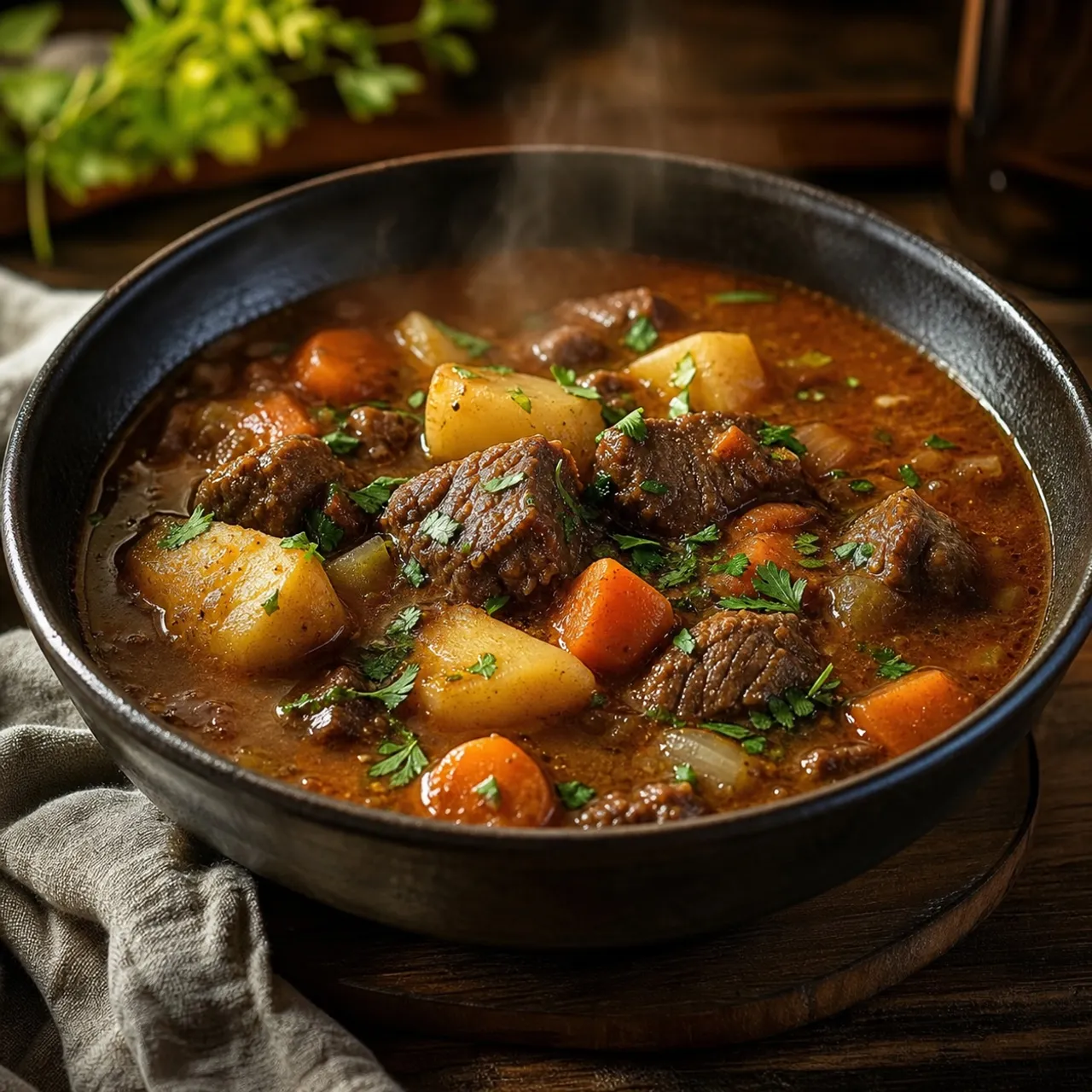
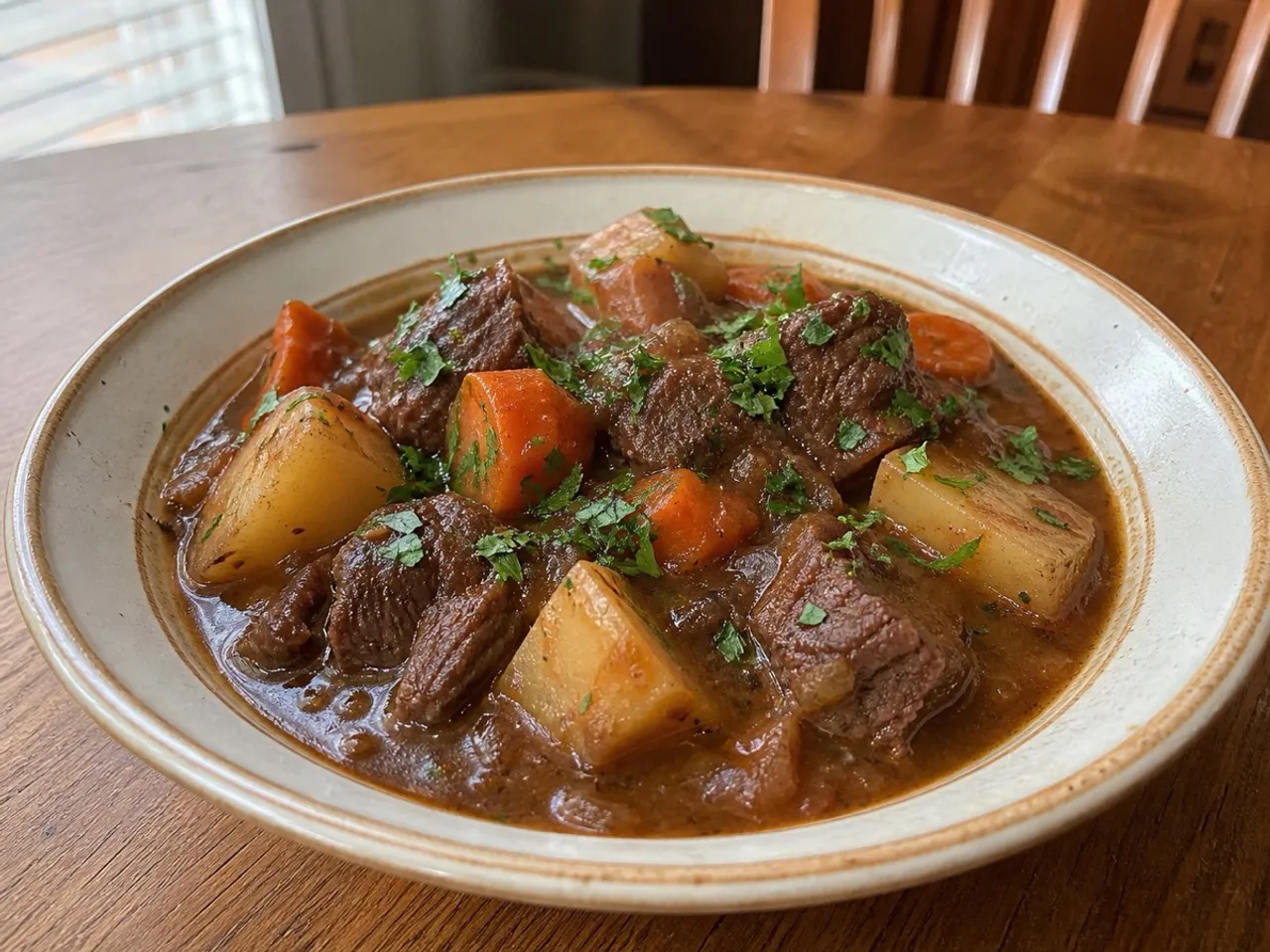
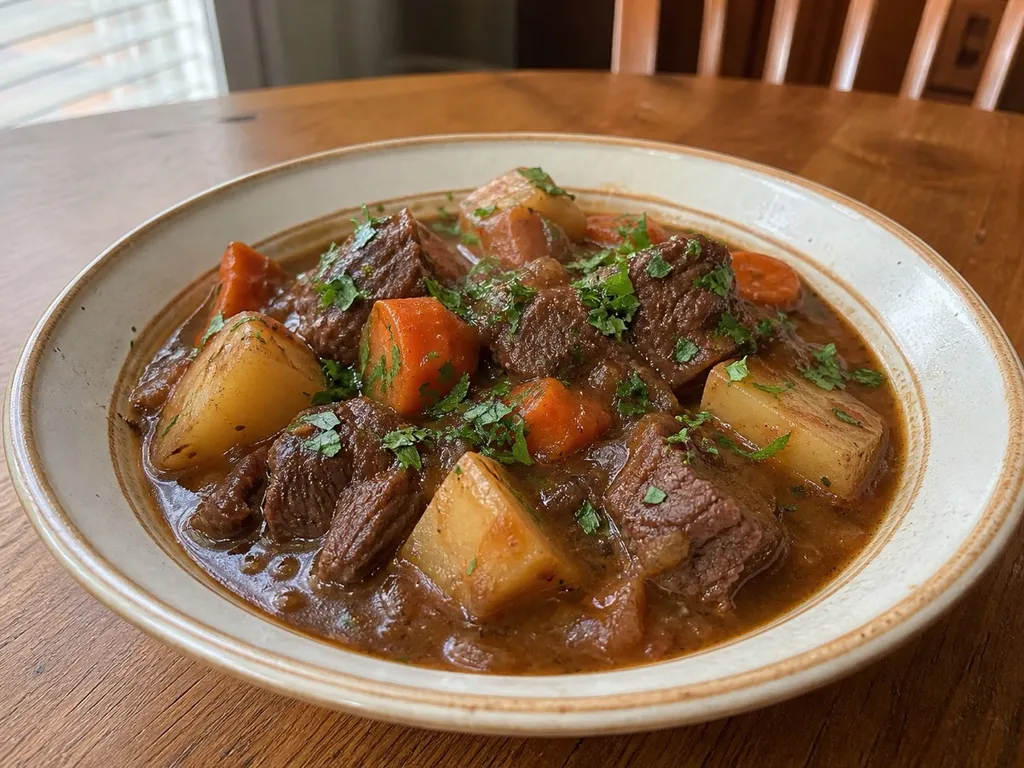
 Classic Beef Stew
Tender chunks of slow-braised beef with carrots and potatoes in a rich, thickened brown gravy.
Contains common allergens
In the app, Listahan checks these against your household automatically.
Good to know
- One-pot
Matched from this dish's own ingredients and timing. Browse more: one-pot dinners
Instructions
8 steps- 1
Toss beef cubes with flour, salt, and pepper.
- 2
Heat oil in a Dutch oven over medium-high heat and brown beef in batches; set aside.
- 3
Add onion to the pot and sauté until soft, then add garlic and cook 1 minute.
- 4
Stir in tomato paste, then deglaze with red wine, scraping up browned bits.
- 5
Return beef to the pot, add beef broth, bay leaves, and thyme, and bring to a boil.
- 6
Reduce heat, cover, and simmer 1.5 hours until beef is nearly tender.
- 7
Add carrots and potatoes and simmer 30 minutes more until vegetables and beef are fork-tender.
- 8
Remove bay leaves, season with salt and pepper, and garnish with parsley before serving.
 Images are for illustrative purposes only, may be inaccurate, and do not guarantee the presence or absence of specific ingredients.
 Listahan Family Score™
66/100
Works for many families
Score reflects how well this recipe fits a typical busy household. In the app, your Family Score is personalized to your household's allergens, kids, and pantry.
Nutrition
per serving600
Calories
45 g
Protein
27 g
Carbs
30 g
Fat
Estimated per serving. Actual values depend on the brands and portions you use.
Listahan cooking guide
Chef notes & practical guide
Technique notes, ingredient swaps, serve-alongside ideas, storage guidance, and equipment for this recipe.
Cultural context
Beef stew sits in a long line of European and North American pot cooking, where tougher cuts became dinner through time, moisture, and a heavy covered pot. The familiar brown-gravy version is shaped by butcher-counter chuck, root vegetables, flour thickening, and the practical habit of stretching a modest amount of meat into a full family meal.
Listahan note
This version keeps the stew squarely classic: browned chuck, onion and garlic, tomato paste, broth, and the optional red wine for depth. The recipe prioritizes a thick, spoon-coating gravy and vegetables that go in late enough to stay distinct instead of dissolving.
Technique cues
- Brown the beef in batches and give each piece room. Crowding the pot makes the flour coating steam instead of forming the browned layer that flavors the gravy.
- Tomato paste needs a minute against the hot pot before the liquid goes in. That brief cooking takes away the raw edge and makes the stew taste deeper.
- Add carrots and potatoes after the beef has already had a long head start. They need enough time to soften, but not the full braise.
Kitchen flow
- Parallel prep
- Chop the onion, garlic, carrots, and potatoes while the beef browns in batches, keeping the carrots and potatoes separate for their later add-in.
- Make-ahead
- Cook the stew fully, chill it, then reheat gently; the gravy thickens and the beef flavor settles after a rest.
- Leftover move
- Spoon leftover stew over buttered egg noodles or split biscuits, adding a splash of broth if the gravy has tightened.
- Cleanup rhythm
- Wipe flour from the prep area before the long simmer, then soak the Dutch oven after serving so the browned gravy loosens.
Ingredient brief
Role, handling, and swap guidance for each key ingredient.
Beef chuck
Braising meat
Purpose: Chuck has enough connective tissue and marbling to turn tender during a long simmer.
Handling: Cut into even cubes and pat dry before tossing with flour, salt, and pepper.
Adaptation: Beef stew meat can work if it is mostly chuck, but mixed packages may cook unevenly.
All-purpose flour
Browning coating and thickener
Purpose: A light flour coating helps the beef brown and gives the gravy body as it simmers.
Handling: Toss the beef lightly so the pieces are dusted, not caked.
Adaptation: For a flourless path, skip the coating and thicken near the end with a small cornstarch slurry.
Yellow onion
Savory base
Purpose: Onion softens into the gravy and gives the stew its rounded, cooked-all-day flavor.
Handling: Dice it small enough to melt into the sauce rather than compete with the carrots and potatoes.
Adaptation: Pearl onions give a more old-fashioned look and a sweeter bite if added later in the simmer.
Red wine (optional)
Deglazing liquid
Purpose: Wine lifts the browned bits from the pot and adds acidity that balances the rich beef broth.
Handling: Let it bubble for a minute after scraping the pot so the flavor concentrates before the broth goes in.
Adaptation: Use more beef broth if skipping wine, with a small splash of vinegar at the end if the stew tastes flat.
Tomato paste
Umami and color builder
Purpose: A small amount darkens the gravy and adds savory depth without making the stew taste like tomato soup.
Handling: Stir it into the onion and garlic until it darkens slightly and leaves a film on the pot.
Adaptation: A spoonful of crushed tomato can stand in, but the gravy will be looser and less concentrated.
Carrots and potatoes
Root vegetable body
Purpose: They make the stew feel complete and soak up the beefy gravy while holding their shape.
Handling: Cut them into sturdy chunks so they finish tender at roughly the same time.
Adaptation: Parsnips can replace some carrots for a sweeter earthiness, and turnips can replace some potatoes for a lighter bite.
Technique notes
- Season in layers, but save the final salt adjustment until the broth has reduced and the beef is tender.
- Keep the simmer low after the first boil. A hard boil can make the beef tighten before the collagen has time to soften.
- If the gravy is too thin at the end, simmer uncovered for a few minutes after removing the bay leaves; if it is too thick, loosen it with a splash of broth.
Ingredient swaps
- Flourless thickening path
- Skip the flour on the beef, brown the meat well, then stir in a cornstarch slurry near the end for a glossy gravy.
- No-wine direction
- Use an extra cup of beef broth for deglazing and finish with a small splash of vinegar if the stew needs brightness.
- Weeknight shortcut
- Cut the beef into slightly smaller cubes and use a wide Dutch oven; it will still need time, but the pieces tenderize a little faster.
- Vegetable variation
- Replace part of the potatoes with parsnips, turnips, or mushrooms, adding mushrooms with the onion so they can brown off their moisture.
Serve alongside
- Buttered egg noodles
- Crusty sourdough bread
- Green beans almondine
- Simple cabbage slaw
- Dry red wine
- English brown ale
- Black tea with lemon
Serving suggestions only — check pairings for your household's allergens.
Storage & reheating
- Refrigerate the stew in sealed containers with enough gravy to cover the beef and vegetables.
- Reheat gently on the stovetop, adding a splash of broth or water as needed to loosen the gravy.
- Freeze in portions without extra parsley, then thaw overnight and warm slowly so the potatoes hold together as much as possible.
Equipment
- Large Dutch oven with lid
- Tongs for browning beef
- Wooden spoon for scraping browned bits
- Ladle for serving
Make this household-aware
Listahan Pro checks this recipe against your household's allergens, finds pantry-aware swaps, builds the shopping list, and helps you plan the week around it.
Plan it in Listahan
Add Classic Beef Stew to your week, check it against your household's allergens, and build the shopping list automatically.
More Soups & Stews recipes
 Soups & Stews Lens Verified Images are for illustrative purposes only, may be inaccurate, and do not guarantee the presence or absence of specific ingredients.
 Broccoli Cheddar Soup
A creamy, cheesy soup packed with tender broccoli florets and shredded carrot in a smooth cheddar base.
 Soups & Stews Lens Verified Images are for illustrative purposes only, may be inaccurate, and do not guarantee the presence or absence of specific ingredients.
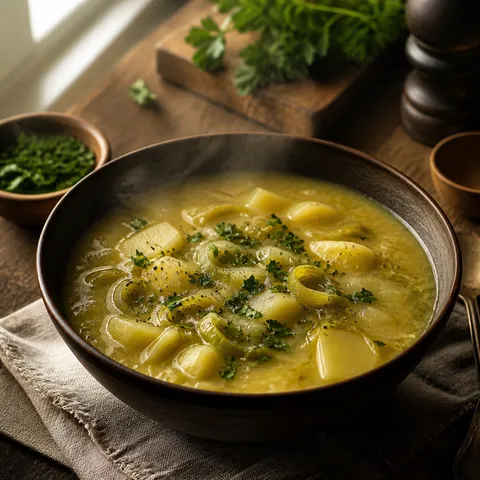
 Potato Leek Soup
A silky, buttery blended soup of leeks and potatoes finished with cream.
 Soups & Stews Lens Verified Images are for illustrative purposes only, may be inaccurate, and do not guarantee the presence or absence of specific ingredients.
 Corn Chowder
A creamy, comforting chowder bursting with sweet corn, potatoes, and smoky paprika.