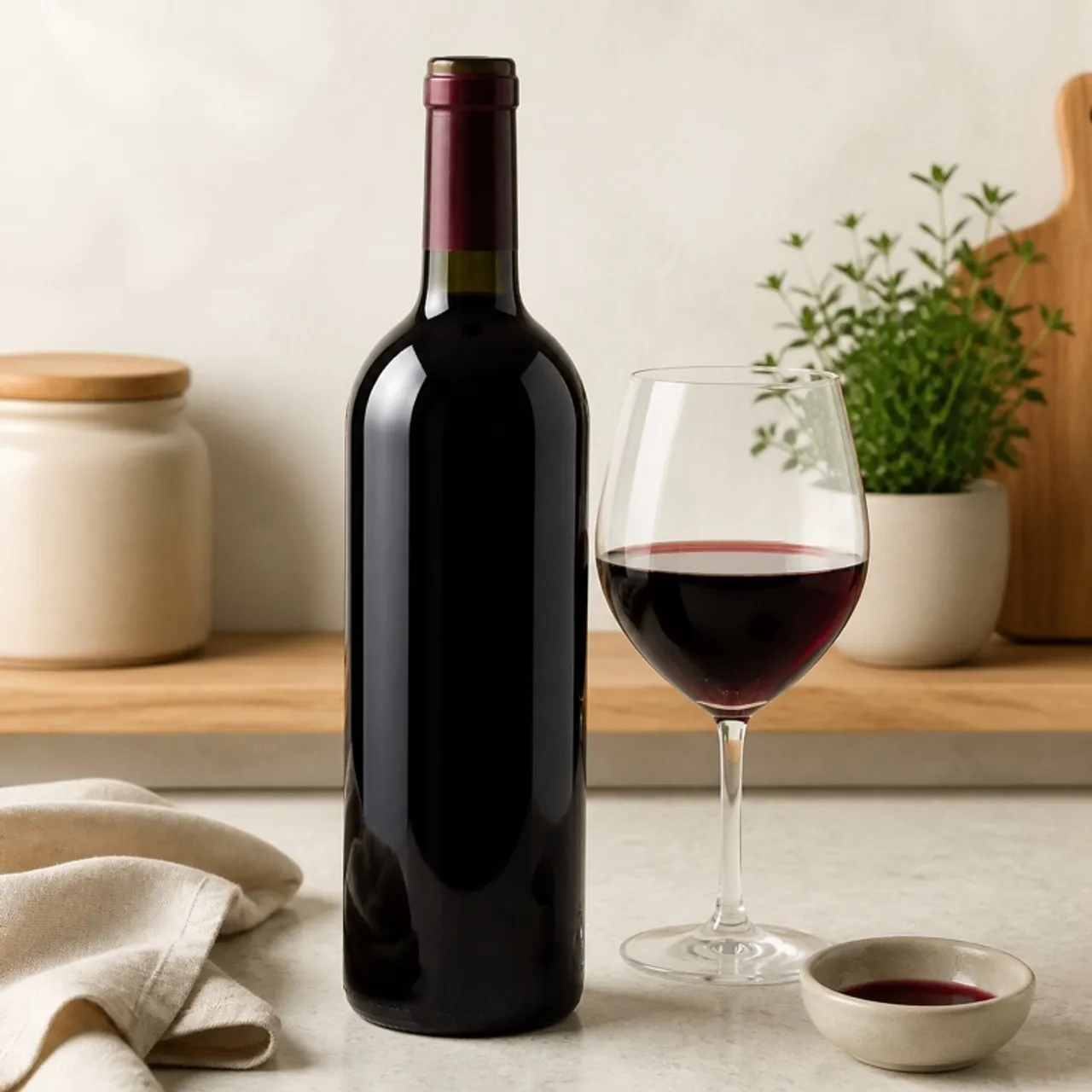
 Food Lens Images are for illustrative purposes only, may be inaccurate, and do not guarantee the presence or absence of specific ingredients.
 Food Lens · Recipe ingredients
Dry Red Wine
Complex and savory with fruit notes (plum, cherry, blackcurrant), earthy depth, and a tannic dryness; when reduced in cooking, it concentrates into a rich, almost meaty umami-forward liquid with lingering acidity.
Lens VerifiedDry red wine is fermented grape juice with minimal residual sugar, prized in cooking for the complex acidity, tannins, and fruit depth it brings to sauces, braises, and marinades. When reduced with heat, alcohol cooks off and the wine concentrates into a rich, layered flavor agent that no other liquid quite replicates. It is a foundational ingredient in French, Italian, and Spanish culinary traditions.
Where it comes from
The use of wine in cooking dates back at least 6,000 years, with evidence from ancient Georgian, Egyptian, and Roman kitchens showing that wine was a routine cooking ingredient well before sophisticated culinary traditions were formalized.
Varieties — For cooking, medium-bodied reds like Merlot, Côtes du Rhône, and Montepulciano are the most versatile. Fuller-bodied wines like Cabernet Sauvignon or Shiraz suit long braises; lighter Pinot Noir works in delicate pan sauces. The general rule: cook with wine you'd drink, but not your best bottle.
French cuisine built entire dishes around wine — coq au vin (chicken braised in red wine) and boeuf bourguignon are perhaps the most iconic. Italian cooking relies heavily on the regional principle of cooking with the wine of the area — Chianti in Tuscany, Barolo in Piedmont.
In a modern kitchen — A small pour of dry red wine stirred into a tomato sauce at the start of cooking adds a depth that takes the sauce from flat to complex. Alcohol-free red grape juice mixed with a splash of red wine vinegar is the closest non-alcoholic parallel for deglazing and braising.
Buying it
Choose a wine you would find pleasant to drink — cooking concentrates all flavors, including off-notes. Avoid bottles labeled 'cooking wine' as they often contain added salt and preservatives that compromise the dish. Affordable everyday table wines in the $10–15 range are ideal.
Storing it
Store unopened bottles in a cool, dark spot away from heat. Once opened, recork and refrigerate — even wine kept for cooking stays fresher this way — and use within about a week.
Keeps about 1 year in the pantry.
Out of dry red wine? Good swaps
General cooking guidance — always check the labels on the products you use. Listahan’s allergen checks run automatically when you plan a recipe in the app. Not medical advice.
Recipes that use dry red wine
Common questions about dry red wine
Is dry red wine vegan?
Dry Red Wine is generally plant-based and suitable for a vegan diet, but brands differ — confirm on the label.
What can I use instead of dry red wine?
Good swaps include , , . Each behaves a little differently — see the swaps above for notes, and always check labels for allergens.
How do I store dry red wine?
Store unopened bottles in a cool, dark spot away from heat. Once opened, recork and refrigerate — even wine kept for cooking stays fresher this way — and use within about a week. It keeps about 1 year in the pantry.
More recipe ingredients
See all


Make dry red wine about your kitchen — with Listahan Pro
Everything above is free, forever. Pro adds the Household Lens — the same food, seen for your family:
-
Checked for each member
Flags dry red wine per person against your household's allergies and school rules — not just a generic "contains" tag.
-
Pantry-aware
Knows whether you already have it, what is running low, and the best swap from what is in your kitchen tonight.
-
What it costs near you
A real price from the Presyo community index, so you can plan the budget — not guess.
-
Your household memory
Who likes it, plus your own private notes — brand, where you keep it, who skips it.
Allergen safety is always free — Pro adds the automation, never the safety.
Cook with dry red wine — safely
Plan a recipe in Listahan and the household allergen check runs automatically — every plan, every swap, every lunchbox. Safety is never paywalled.