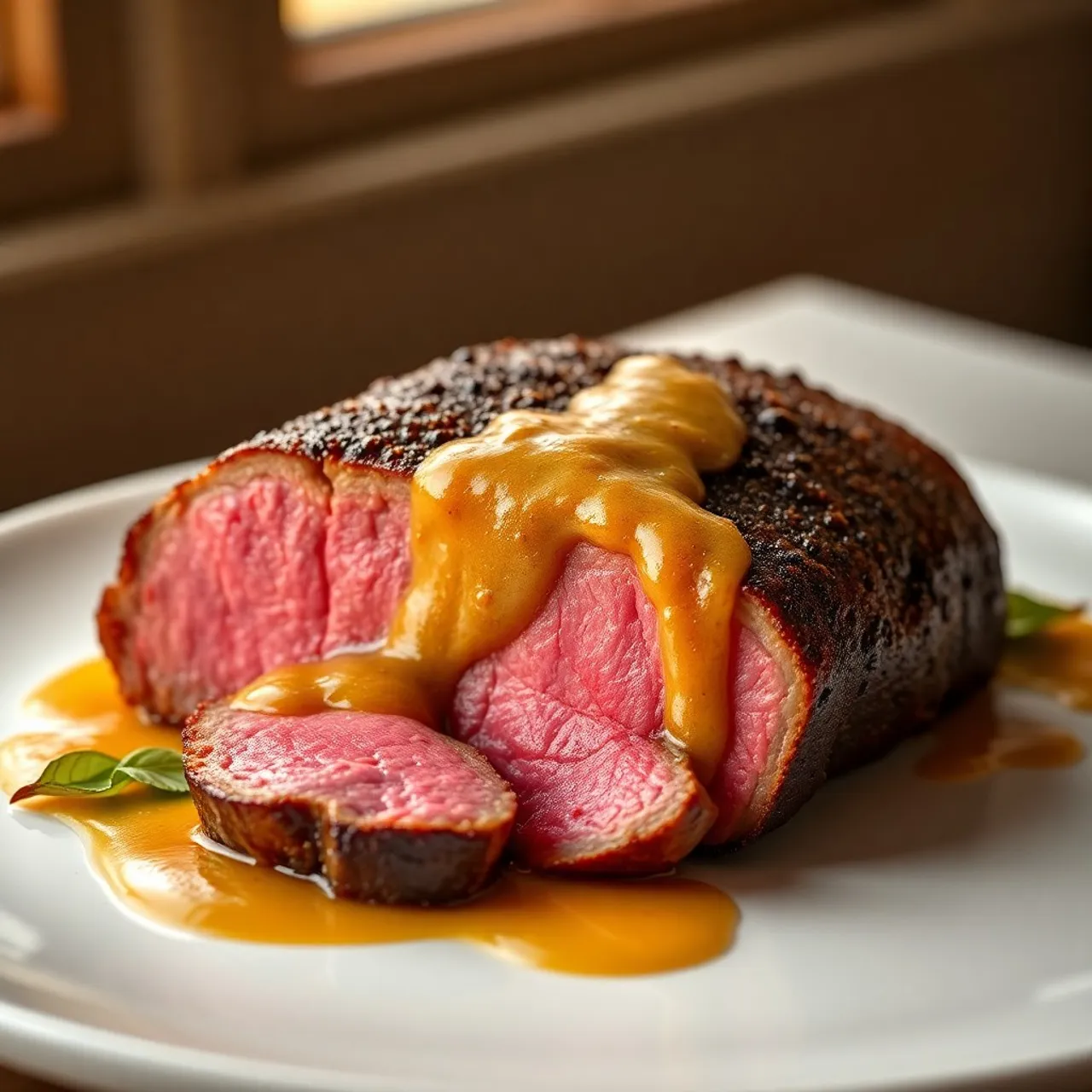
 French Images are for illustrative purposes only, may be inaccurate, and do not guarantee the presence or absence of specific ingredients.
 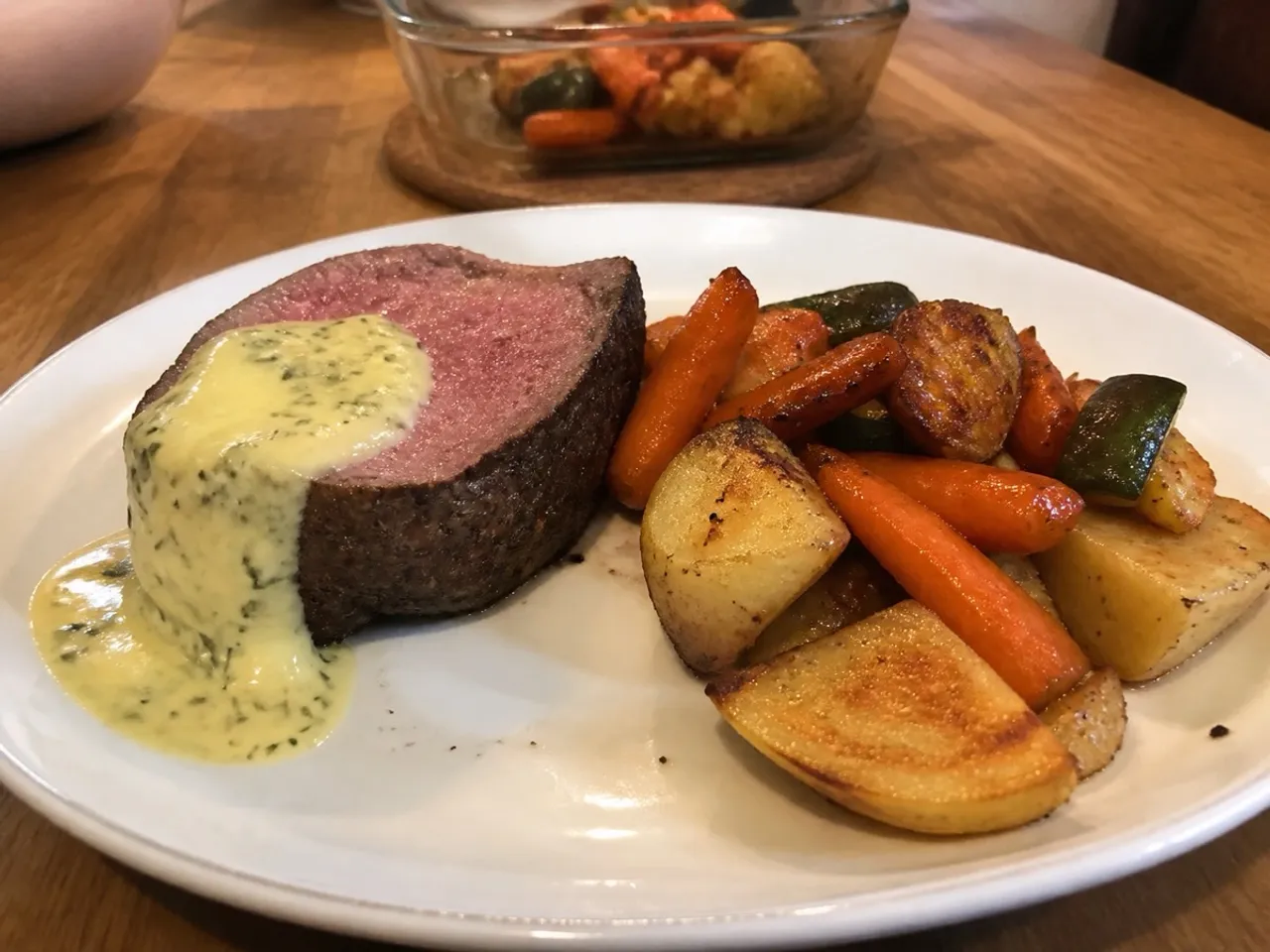 Serving Images are for illustrative purposes only, may be inaccurate, and do not guarantee the presence or absence of specific ingredients.
 Chateaubriand
A thick, prime center-cut beef tenderloin, seared and roasted to a perfect blush, classically served with béarnaise and tender vegetables.
Contains common allergens
In the app, Listahan checks these against your household automatically.
Instructions
8 steps- 1
Bring the tenderloin to room temperature and season generously all over with salt and pepper.
- 2
Heat the oil in a heavy skillet over high heat and sear the roast on all sides until deeply browned, about 6 to 8 minutes total.
- 3
Add the butter, thyme, and garlic to the pan, and tilt and baste the roast with the foaming butter for 1 to 2 minutes.
- 4
Transfer to a 400F oven and roast until an instant-read thermometer reads 125F for medium-rare, about 15 to 20 minutes; rest 10 minutes before slicing.
- 5
Meanwhile, for the bearnaise, simmer the vinegar, white wine, and shallot until reduced to about a tablespoon; strain and cool slightly.
- 6
Whisk the egg yolks with the reduction in a heatproof bowl over a pan of barely simmering water until pale, thick, and doubled in volume.
- 7
Remove from heat and slowly whisk in the warm clarified butter drop by drop, then in a thin stream, until the sauce is thick and glossy; stir in the tarragon and season with salt.
- 8
Slice the rested chateaubriand against the grain into thick medallions and serve with the bearnaise sauce alongside.
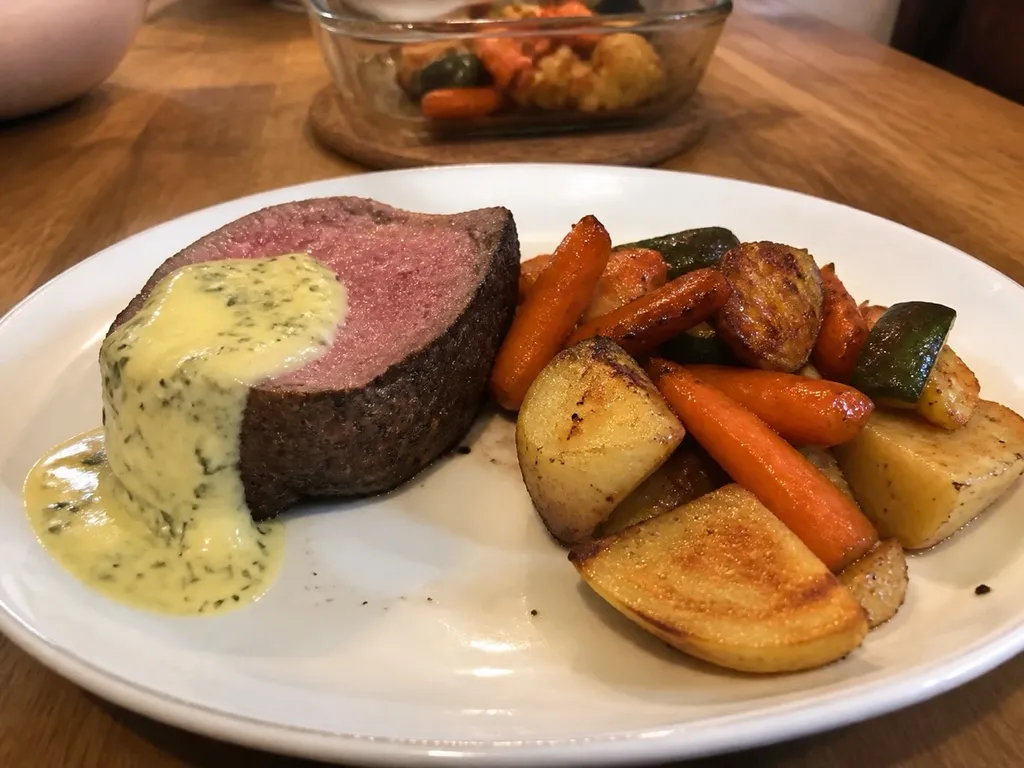 Images are for illustrative purposes only, may be inaccurate, and do not guarantee the presence or absence of specific ingredients.
 Listahan Family Score™
67/100
Works for many families
Score reflects how well this recipe fits a typical busy household. In the app, your Family Score is personalized to your household's allergens, kids, and pantry.
Nutrition
per serving540
Calories
45 g
Protein
3 g
Carbs
37 g
Fat
Estimated per serving. Actual values depend on the brands and portions you use.
Listahan cooking guide
Chef notes & practical guide
Technique notes, ingredient swaps, serve-alongside ideas, storage guidance, and equipment for this recipe.
Cultural context
Chateaubriand takes its name from the French writer and statesman François-René de Chateaubriand, though the exact story behind the naming has been debated by food historians for generations. What's clear is that the dish refers to a thick cut from the center of the beef tenderloin, cooked whole and carved at the table, traditionally paired with a butter-and-shallot reduction sauce.
Listahan note
This version sears the whole center-cut tenderloin hard on all sides before finishing it in the oven, rather than cooking thinner individual steaks, since the thick roast needs that gentler indirect heat to reach the center without overcooking the exterior.
Technique cues
- Sear the tenderloin in a very hot pan on all sides until deeply browned before it goes into the oven; this crust is the only place the roast picks up real browned flavor, since the interior cooks gently from indirect heat afterward.
- Use a meat thermometer rather than timing alone to judge doneness — the thickness of a whole tenderloin roast makes it easy to either undercook the center or overcook the outer inch while guessing by time.
- Rest the roast for a full 10 minutes before slicing, tented loosely with foil, so the juices redistribute through the meat instead of pooling out onto the cutting board.
- Build the shallot reduction sauce in the same pan used for searing, scraping up the browned bits with butter and shallots, which carries the roast's own flavor directly into the sauce.
Kitchen flow
- Parallel prep
- Prep any side dishes while Chateaubriand finishes with the beef tenderloin — the hands-off cook time is the window to use. Everything else is quick — the roast is the one step that takes real time.
- Make-ahead
- Chateaubriand reheats well, so cooking it a day ahead and finishing it just before serving is a reasonable way to spread out the work. This one leans on the beef tenderloin. Plan around the roast; that's the slow part.
- Leftover move
- Leftover Chateaubriand reheats well covered on the stove or in the oven with a splash of liquid; avoid the microwave, which tends to toughen the beef tenderloin on a fast reheat. Everything else is quick — the roast is the one step that takes real time.
- Cleanup rhythm
- Deglaze the pan used for Chateaubriand with a splash of water or broth right after cooking — it lifts the browned bits before they dry on and saves scrubbing later. This one leans on the beef tenderloin. The roast step is what sets the pace here.
Ingredient brief
Role, handling, and swap guidance for each key ingredient.
Beef tenderloin
Main protein or body
Purpose: Beef tenderloin gives Chateaubriand its main substance and carries the seasoning.
Handling: Pat dry, cut evenly, and season before cooking so browning or sauce coverage is consistent.
Adaptation: Use the closest fresh equivalent and expect a modest shift in flavor or texture.
butter
Richness and texture
Purpose: butter rounds the texture and helps the dish feel complete.
Handling: Prep before heat is high so the cooking step can move without rushing.
Adaptation: Use unsweetened dairy-free alternatives only where they still provide enough fat and body.
shallots
Aromatic base
Purpose: shallots creates the savory foundation before stronger ingredients are added.
Handling: Prep before heat is high so the cooking step can move without rushing.
Adaptation: Use the closest fresh equivalent and expect a modest shift in flavor or texture.
Technique notes
- Slice the rested Chateaubriand into thick rounds rather than thin slices, since the cut is meant to showcase the tenderloin's texture rather than be served like a thinner steak.
- Serve immediately after slicing with the sauce either poured over or offered on the side, since the sauce is meant to complement the beef rather than mask it.
- A classic side of simple roasted or château-style potatoes keeps the plate from competing with the beef for attention.
Ingredient swaps
- Dairy-free direction
- Swap the unsalted butter for a neutral dairy-free butter or oil and a full-fat plant milk (oat or coconut work best for body) — the texture shifts slightly but the dish holds together. This one leans on the beef tenderloin.
- Lower-sodium direction
- Use a low-sodium or no-salt-added version of the beef stock, then season to taste with fresh herbs, citrus, or vinegar at the end instead of more salt. This one leans on the beef tenderloin.
- Weeknight shortcut
- For a faster version, prep the longest-cooking component a day ahead so the night-of cook is mostly assembly and finishing. This one leans on the beef tenderloin.
Serve alongside
- Fresh fruit
- Cucumber slices
- Plain rice crackers
- Cold water
- Sparkling water
Serving suggestions only — check pairings for your household's allergens.
Storage & reheating
- Refrigerate covered for up to 3 days when the drink is brewed, blended, or mixed ahead.
- Stir or shake before serving over fresh ice.
- Do not freeze unless the recipe is meant to become pops or granita.
Equipment
- Pitcher or blender
- Measuring cup
- Long spoon
Make this household-aware
Listahan Pro checks this recipe against your household's allergens, finds pantry-aware swaps, builds the shopping list, and helps you plan the week around it.
Plan it in Listahan
Add Chateaubriand to your week, check it against your household's allergens, and build the shopping list automatically.
More French recipes
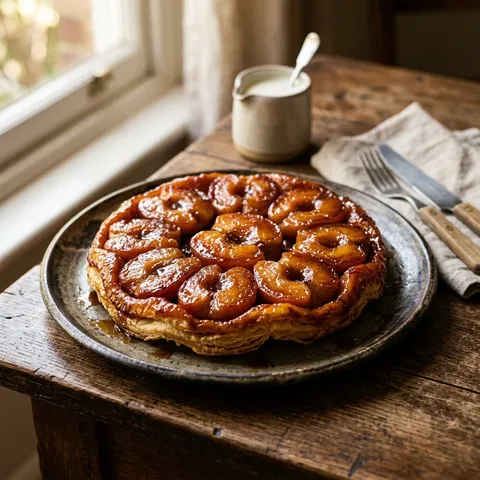 French Lens Verified Images are for illustrative purposes only, may be inaccurate, and do not guarantee the presence or absence of specific ingredients.
 Tarte Tatin
Apples cooked in caramel until jammy and burnished, then flipped onto buttery pastry — a rustic upside-down tart from the Loire Valley.
 French Lens Verified Images are for illustrative purposes only, may be inaccurate, and do not guarantee the presence or absence of specific ingredients.
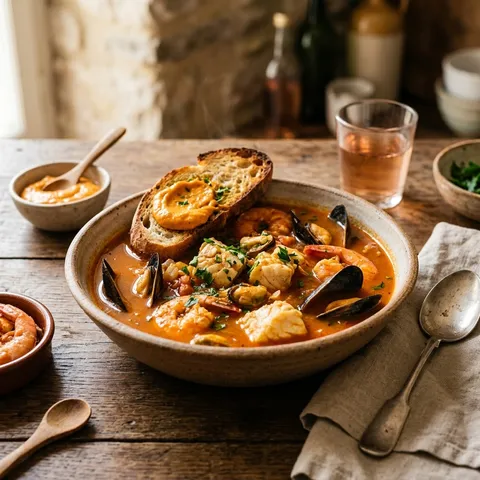
 Bouillabaisse
Marseille's legendary saffron-scented fisherman's stew, brimming with fresh seafood and served with garlicky rouille on toasted baguette.
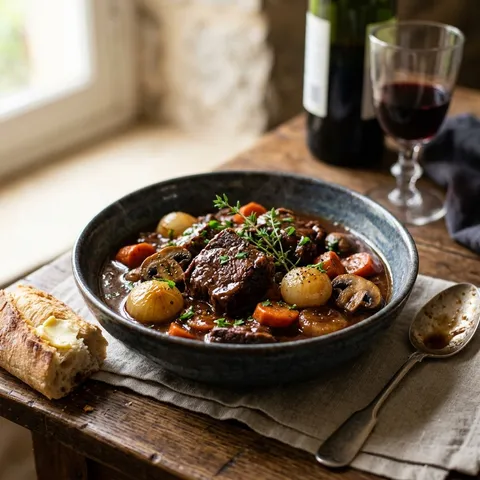 French Lens Verified Images are for illustrative purposes only, may be inaccurate, and do not guarantee the presence or absence of specific ingredients.
 Bœuf Bourguignon
Burgundy's legendary beef stew — rich, wine-dark, and fall-apart tender after hours of slow braising with carrots, mushrooms, and thyme.