 French Images are for illustrative purposes only, may be inaccurate, and do not guarantee the presence or absence of specific ingredients.
  Serving Images are for illustrative purposes only, may be inaccurate, and do not guarantee the presence or absence of specific ingredients.
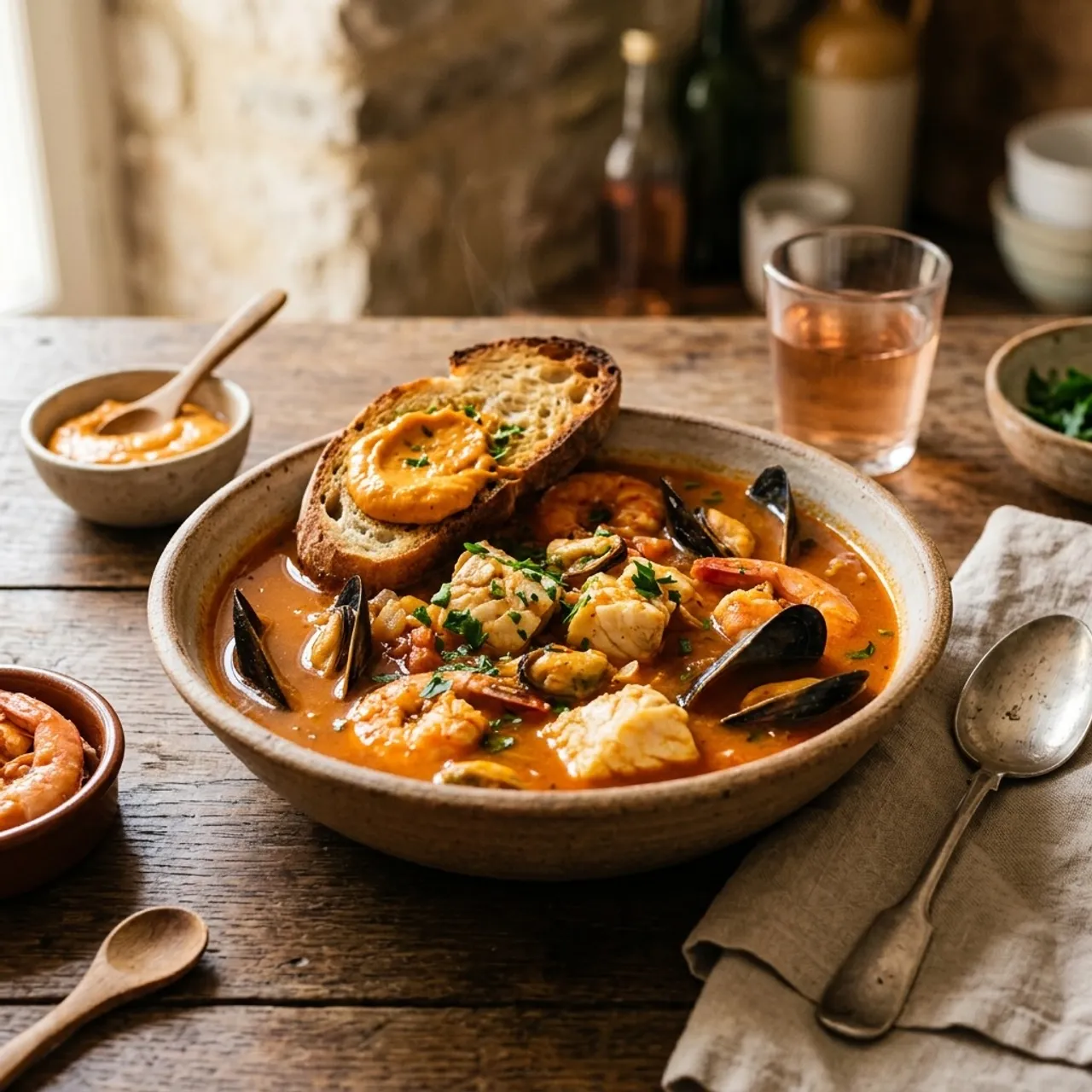
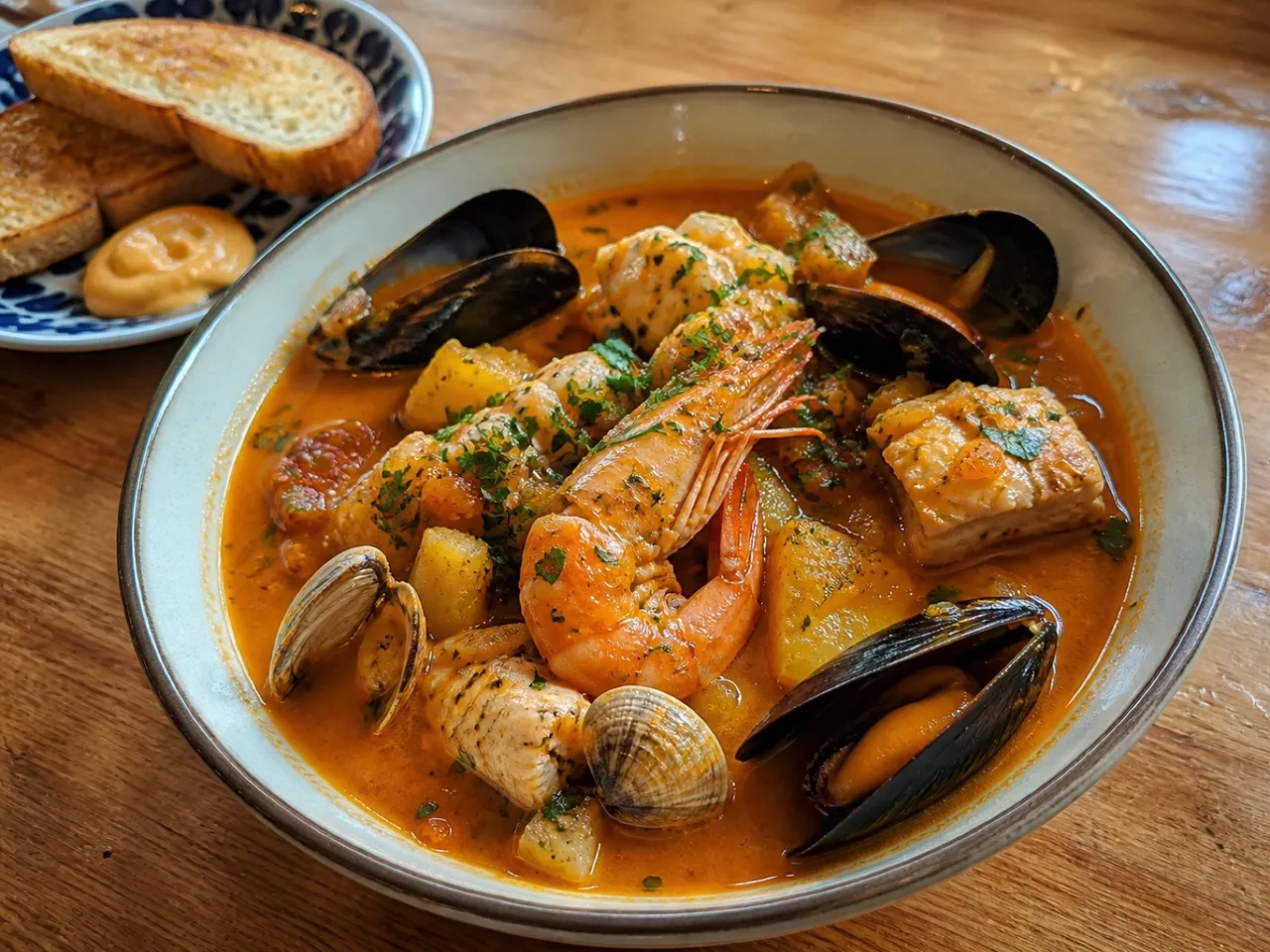
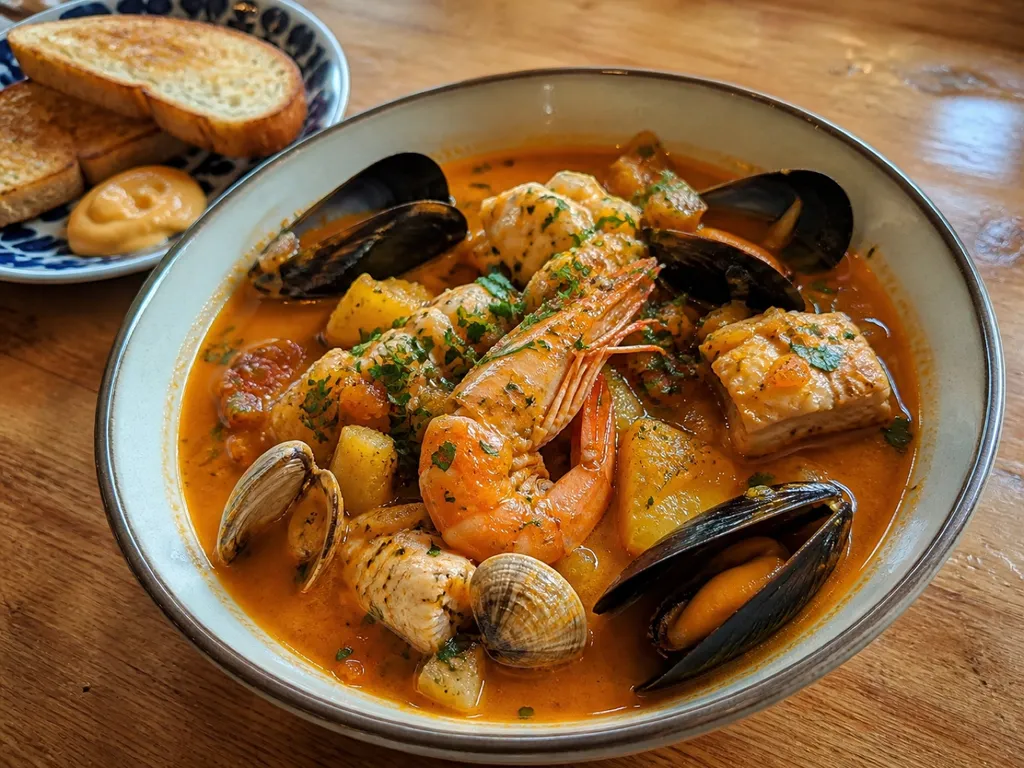
 Bouillabaisse
Marseille's legendary saffron-scented fisherman's stew, brimming with fresh seafood and served with garlicky rouille on toasted baguette.
Contains common allergens
In the app, Listahan checks these against your household automatically.
Good to know
- One-pot
Matched from this dish's own ingredients and timing. Browse more: one-pot dinners
Instructions
6 steps- 1
Heat olive oil in a large, wide pot over medium heat. Sauté the onions, fennel, and garlic until softened and fragrant (about 10 minutes).
- 2
Add the chopped tomatoes, orange peel, saffron threads, and a pinch of salt. Cook until the tomatoes break down.
- 3
Pour in 6 cups of water or fish stock and bring to a rapid boil. Simmer vigorously for 15 minutes to create an aromatic broth.
- 4
Lower the heat to a gentle simmer. Add the thickest, firmest pieces of fish first and cook for 3 minutes.
- 5
Add the more delicate fish, followed by the shrimp and mussels. Cover and simmer for another 5-7 minutes until the mussels open and the fish is opaque and flaky.
- 6
Serve hot, ladling the broth and seafood over thick slices of toasted rustic bread rubbed with garlic, accompanied by rouille (garlic saffron mayonnaise).
 Images are for illustrative purposes only, may be inaccurate, and do not guarantee the presence or absence of specific ingredients.
 Listahan Family Score™
58/100
Works for many families
Score reflects how well this recipe fits a typical busy household. In the app, your Family Score is personalized to your household's allergens, kids, and pantry.
Nutrition
per serving270
Calories
44 g
Protein
6 g
Carbs
7 g
Fat
Estimated per serving. Actual values depend on the brands and portions you use.
Listahan cooking guide
Chef notes & practical guide
Technique notes, ingredient swaps, serve-alongside ideas, storage guidance, and equipment for this recipe.
Cultural context
Bouillabaisse is the great fish stew of Marseille, the ancient port city on the Mediterranean coast of Provence. Its origins lie in the practice of local fishermen simmering whatever bony, unsellable rockfish were left over at the end of the market day with olive oil, tomatoes, saffron, and whatever else was at hand. Over centuries the dish transformed from a humble fisherman's pot into a celebrated centerpiece of Provencal cuisine, and today the 'Charte de la Bouillabaisse Marseillaise' specifies which fish are required for an authentic version. Outside France, firm white fish, shellfish, and a good saffron broth capture its essential character.
Listahan note
This version prioritizes the saffron-scented broth and a manageable mix of fish and shellfish rather than chasing authenticity with specific Mediterranean rockfish most North American markets don't carry.
Technique cues
- Build a serious flavor base by simmering the fish bones and shrimp shells with the aromatics for at least 30 minutes before adding any fish — the broth is where the soul of the dish lives.
- Add fish in order of cooking time: start with the firmest pieces like monkfish or halibut, then mussels and clams, and add delicate shrimp and scallops only in the last 3 minutes so they don't overcook.
- Bloom the saffron in a tablespoon of warm water for 10 minutes before adding it to the pot; this releases the pigments and full aromatic compounds rather than letting saffron threads steep unevenly in the broth.
Kitchen flow
- Parallel prep
- Make the saffron broth base up to an hour ahead and keep it at a gentle simmer; add the fish and shellfish in the last 10 minutes only when guests are seated.
- Make-ahead
- The broth and all aromatics can be made a day ahead and refrigerated; the fish must always be added fresh just before serving.
- Leftover move
- Strain leftover broth, add cooked pasta or orzo, and serve as a next-day soup; remove any remaining shellfish first to avoid toughening.
- Cleanup rhythm
- Use one large wide pot for the entire dish and set out bowls, rouille, and toasted bread before cooking so service is streamlined.
Ingredient brief
Role, handling, and swap guidance for each key ingredient.
saffron
signature flavor and color
Purpose: Saffron is non-negotiable in bouillabaisse; without it the stew tastes like fish soup rather than something distinct and Provencal.
Handling: Steep a generous pinch in 2 tablespoons of warm water for 10 minutes before adding to the pot.
Adaptation: There is no flavor substitute for saffron; if unavailable, a small pinch of turmeric approximates the color but not the flavor.
firm white fish fillets (halibut, cod, or monkfish)
main protein
Purpose: Firm-fleshed fish holds together in the broth without falling apart, giving the stew substance and clean ocean flavor.
Handling: Cut into 2-inch chunks and add to the simmering broth according to thickness.
Adaptation: Sea bass, mahi-mahi, or Chilean sea bass are excellent alternatives; avoid thin-fleshed fish like tilapia, which will disintegrate.
mussels and clams
shellfish broth contribution
Purpose: Shellfish release their own concentrated, briny juices as they open, deepening the broth in the final minutes of cooking.
Handling: Scrub clean and debeard mussels; discard any that don't close when tapped.
Adaptation: Use only mussels or only clams depending on availability; frozen mussels on the half-shell work in a pinch.
fennel bulb
Provencal aromatic
Purpose: Fennel is central to the flavor profile of Marseillaise cuisine; its anise note is a defining characteristic of an authentic bouillabaisse broth.
Handling: Thinly slice the bulb and saute with onion until soft before adding tomatoes and liquid.
Adaptation: A teaspoon of Pernod or pastis stirred into the finished broth replicates the anise note if fresh fennel isn't available.
rouille
traditional spiced aioli accompaniment
Purpose: Rouille — a saffron and cayenne-spiked garlic mayonnaise — is spread on toasted bread and floated in the broth; it is as much a part of the dish as the fish.
Handling: Make a quick rouille by whisking saffron, minced garlic, cayenne, and olive oil into store-bought mayonnaise.
Adaptation: A quality store-bought garlic aioli with a pinch of saffron and cayenne stirred in is an honest shortcut.
Technique notes
- A boiling broth toughens fish immediately; after adding the fish, reduce to a lively simmer and watch closely — properly cooked bouillabaisse fish is barely opaque, not flaking into strings.
- Toast baguette slices in the oven while the broth simmers, then rub each piece with a raw garlic clove right out of the oven — this is the authentic way to serve the croutons that accompany the rouille.
- If the broth tastes flat, a tablespoon of Pernod or a squeeze of orange juice brightens it dramatically because bouillabaisse is meant to taste vividly of the sea, not timidly.
Ingredient swaps
- Shellfish allergy direction
- Use all firm white fish and increase the fish quantity; replace shellfish broth depth with a splash of clam juice (if tolerated) or a tablespoon of fish sauce and extra tomato paste.
- Lower-effort direction
- Use good-quality store-bought seafood stock instead of making the broth from scratch; add the saffron, fennel, and aromatics to simmer in the purchased stock for 20 minutes before adding fish.
Serve alongside
- Toasted baguette slices with rouille
- Simple green salad with sherry vinegar dressing
- Steamed new potatoes
- Provencal rose wine or dry white Cassis
- Sparkling water with a slice of orange
Serving suggestions only — check pairings for your household's allergens.
Storage & reheating
- Bouillabaisse does not store well with the fish in it — the seafood toughens within hours; store only the broth separately for up to 2 days and add fresh fish when reheating.
- Freeze the broth base without any fish for up to 2 months and use it as a foundation for any future seafood preparation.
Equipment
- Wide, heavy-bottomed pot or Dutch oven to hold all the fish without crowding
- Fine-mesh strainer for clarifying the broth if making from scratch
- Small whisk for making rouille
Make this household-aware
Listahan Pro checks this recipe against your household's allergens, finds pantry-aware swaps, builds the shopping list, and helps you plan the week around it.
Plan it in Listahan
Add Bouillabaisse to your week, check it against your household's allergens, and build the shopping list automatically.
More French recipes
 French Lens Verified Images are for illustrative purposes only, may be inaccurate, and do not guarantee the presence or absence of specific ingredients.
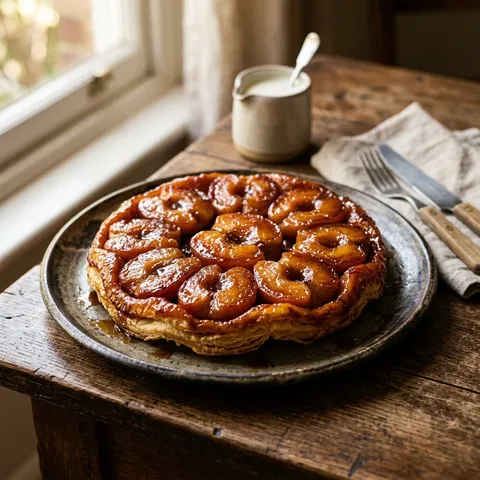
 Tarte Tatin
Apples cooked in caramel until jammy and burnished, then flipped onto buttery pastry — a rustic upside-down tart from the Loire Valley.
 French Lens Verified Images are for illustrative purposes only, may be inaccurate, and do not guarantee the presence or absence of specific ingredients.
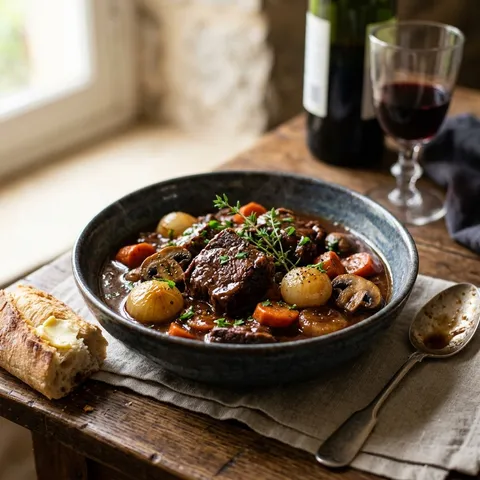
 Bœuf Bourguignon
Burgundy's legendary beef stew — rich, wine-dark, and fall-apart tender after hours of slow braising with carrots, mushrooms, and thyme.
 French Lens Verified Images are for illustrative purposes only, may be inaccurate, and do not guarantee the presence or absence of specific ingredients.
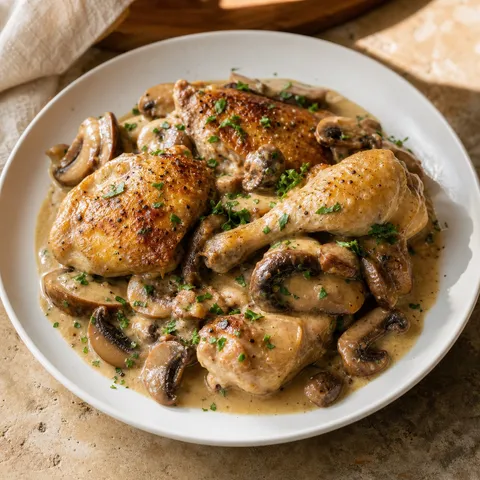
 Fricassée de Poulet
Chicken pieces gently braised in a velvety white wine cream sauce with mushrooms and tarragon — mild, comforting, and deeply satisfying.