 Food Lens Images are for illustrative purposes only, may be inaccurate, and do not guarantee the presence or absence of specific ingredients.
 Food Lens · Recipe ingredients
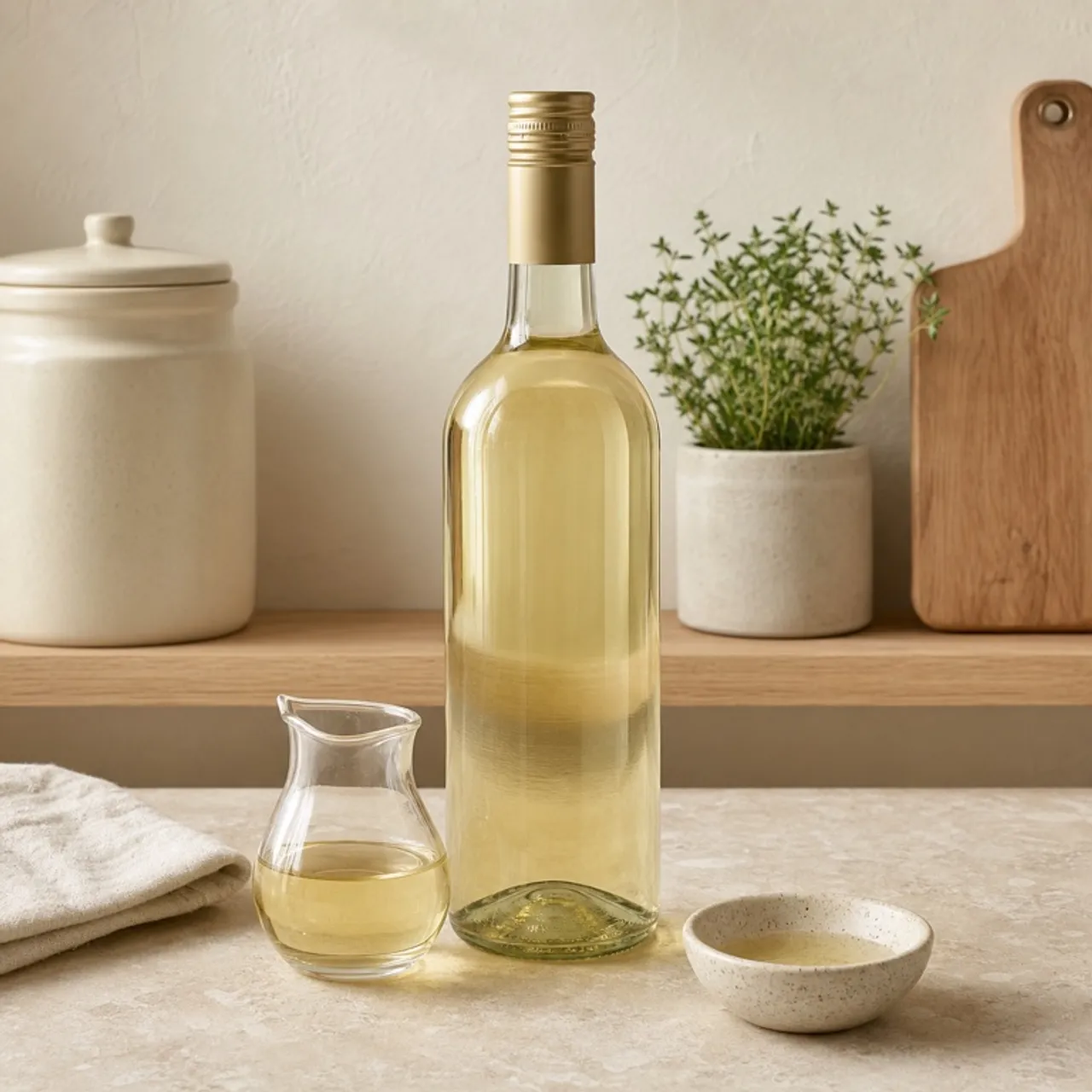
Dry White Wine
Dry, crisp, lightly fruity, and acidic — the alcohol cooks off to leave behind brightness and depth.
Lens VerifiedDry white wine used in cooking adds acidity, aromatic complexity, and depth to sauces, risottos, seafood, and braises. It cooks off quickly, leaving behind flavor without strong alcohol.
Where it comes from
Cooking with wine is a practice rooted in French and Italian kitchens, where the wine's acidity and complexity balanced rich fats and developed pan sauces. Most supermarkets carry inexpensive bottles suitable for cooking — a simple drinkable dry white works equally well in most recipes.
Varieties — Pinot Grigio, Sauvignon Blanc, and unoaked Chardonnay are versatile cooking whites; avoid very sweet or heavily oaked wines for savory dishes.
Deglazing with white wine is central to French sauté technique; it also appears in Italian risotto, Spanish sauces, and many North American home recipes.
In a modern kitchen — Use a wine you would drink — low-quality wine with off flavors will not improve by cooking.
Buying it
Choose an inexpensive dry white wine — something crisp and unoaked works best for most savory cooking. Avoid wines labeled 'sweet' or 'off-dry.' A small bottle or wine-in-a-box means less waste if you don't drink wine regularly.
Storing it
Store unopened bottles upright in a cool, dark spot. Once opened, recork and refrigerate — it stays good for cooking about a week before turning flat or vinegary.
Keeps about 1 year in the pantry.
Out of dry white wine? Good swaps
- Chicken or vegetable stock plus 1 tsp white wine vinegar — Approximates the acidity and liquid volume without alcohol.
- Dry vermouth — More concentrated; use about half the amount and supplement with stock.
- Apple juice plus a splash of white wine vinegar — Adds sweetness and acidity; works in lighter sauces and braises.
General cooking guidance — always check the labels on the products you use. Listahan’s allergen checks run automatically when you plan a recipe in the app. Not medical advice.
Recipes that use dry white wine
Common questions about dry white wine
Is dry white wine vegan?
Dry White Wine is generally plant-based and suitable for a vegan diet, but brands differ — confirm on the label.
What can I use instead of dry white wine?
Good swaps include Chicken or vegetable stock plus 1 tsp white wine vinegar, Dry vermouth, Apple juice plus a splash of white wine vinegar. Each behaves a little differently — see the swaps above for notes, and always check labels for allergens.
How do I store dry white wine?
Store unopened bottles upright in a cool, dark spot. Once opened, recork and refrigerate — it stays good for cooking about a week before turning flat or vinegary. It keeps about 1 year in the pantry.
More recipe ingredients
See all


Make dry white wine about your kitchen — with Listahan Pro
Everything above is free, forever. Pro adds the Household Lens — the same food, seen for your family:
-
Checked for each member
Flags dry white wine per person against your household's allergies and school rules — not just a generic "contains" tag.
-
Pantry-aware
Knows whether you already have it, what is running low, and the best swap from what is in your kitchen tonight.
-
What it costs near you
A real price from the Presyo community index, so you can plan the budget — not guess.
-
Your household memory
Who likes it, plus your own private notes — brand, where you keep it, who skips it.
Allergen safety is always free — Pro adds the automation, never the safety.
Cook with dry white wine — safely
Plan a recipe in Listahan and the household allergen check runs automatically — every plan, every swap, every lunchbox. Safety is never paywalled.