 Spanish Images are for illustrative purposes only, may be inaccurate, and do not guarantee the presence or absence of specific ingredients.
  Serving Images are for illustrative purposes only, may be inaccurate, and do not guarantee the presence or absence of specific ingredients.
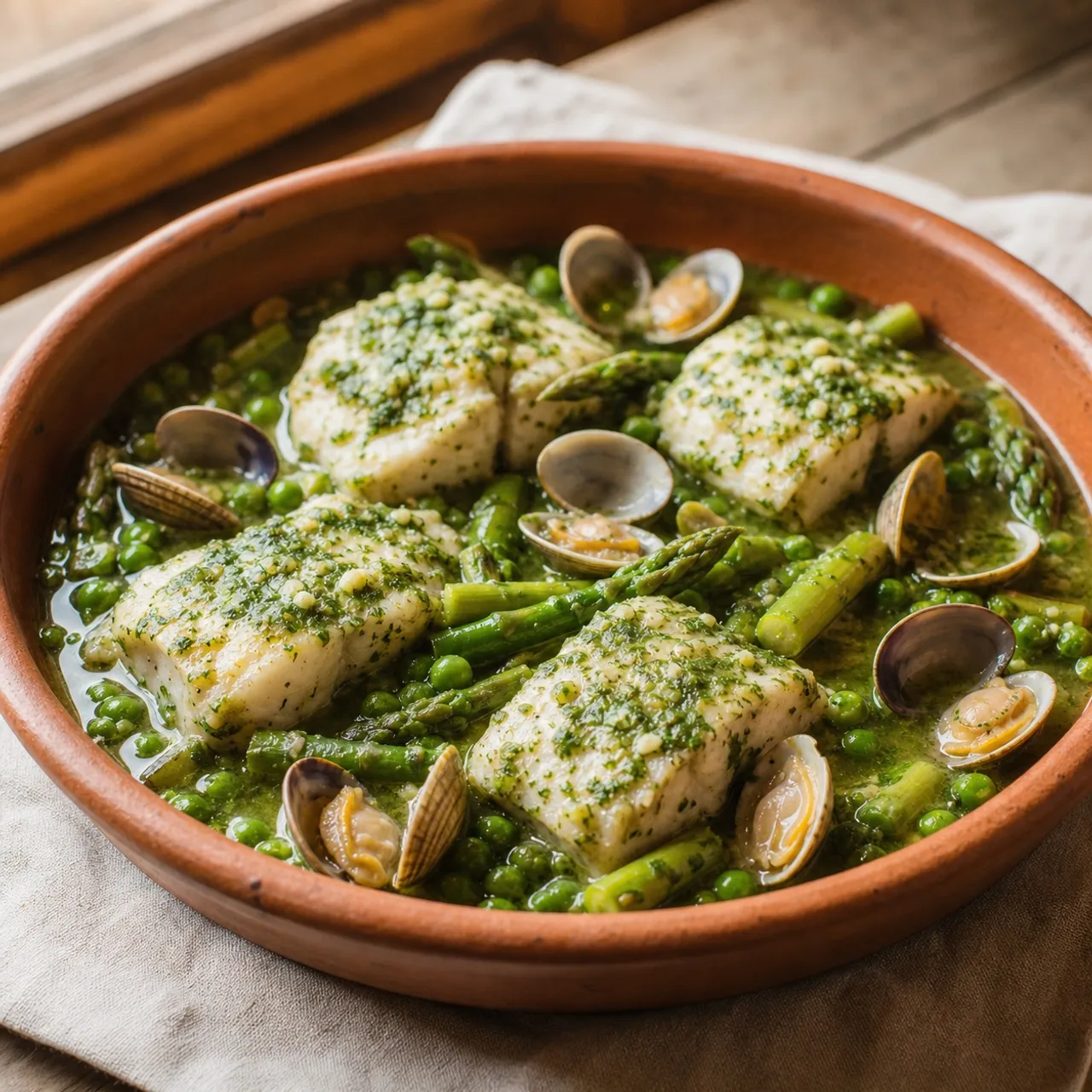
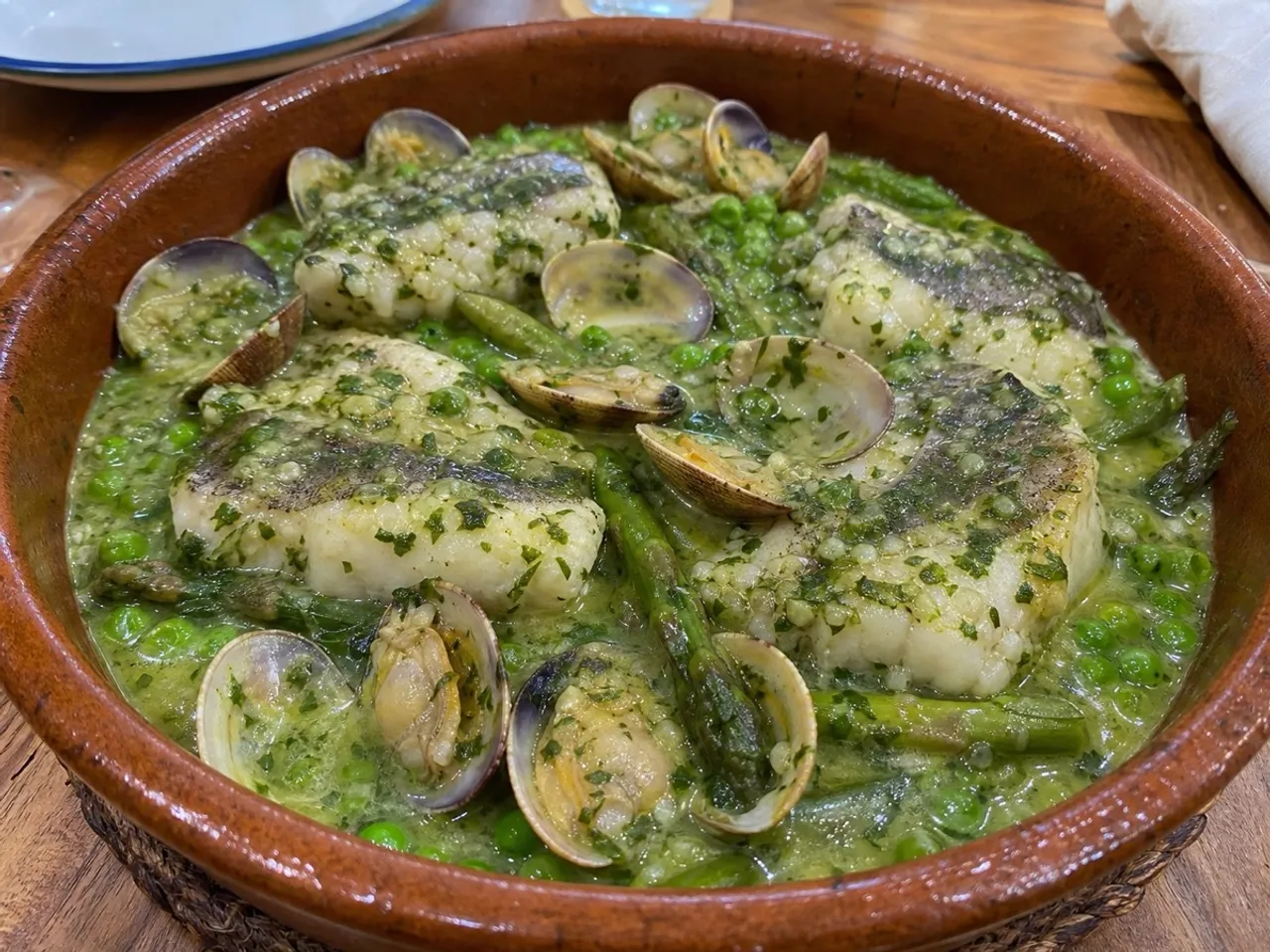
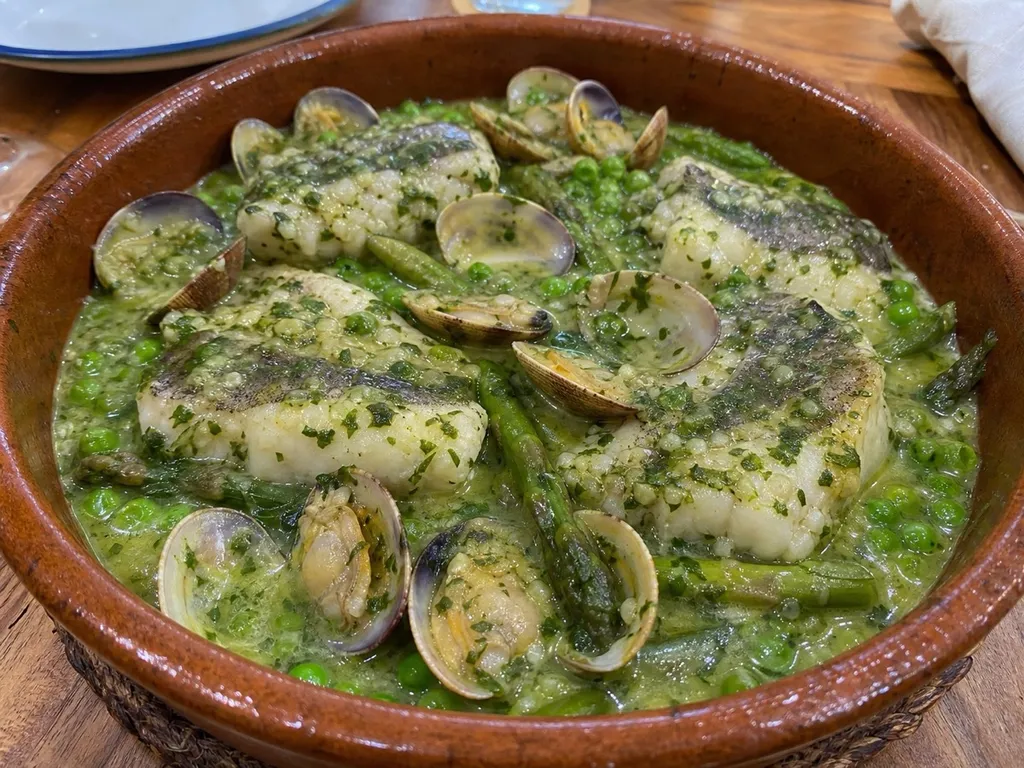
 Merluza a la Vasca
Delicate hake fillets gently cooked in a vibrant green parsley and garlic sauce with clams and asparagus — refined, light Basque coastal cuisine.
Contains common allergens
In the app, Listahan checks these against your household automatically.
Good to know
- Ready in under 30 minutes
Matched from this dish's own ingredients and timing. Browse more: 30-minute meals
Instructions
7 steps- 1
Season the hake fillets with salt and set aside.
- 2
Heat the olive oil in a wide shallow pan over medium heat, add the sliced garlic, and cook until golden, about 1 minute.
- 3
Stir in the flour and cook 30 seconds to form a light roux.
- 4
Pour in the white wine and let it bubble and reduce by half.
- 5
Add the fish stock and half the parsley, swirling the pan gently rather than stirring to emulsify the sauce, and bring to a light simmer.
- 6
Nestle the hake fillets skin-side up into the sauce, add the clams, asparagus, and peas, cover, and cook 8-10 minutes, shaking the pan occasionally, until the clams open and the fish flakes easily.
- 7
Discard any unopened clams, scatter over the remaining parsley, and serve immediately straight from the pan.
 Images are for illustrative purposes only, may be inaccurate, and do not guarantee the presence or absence of specific ingredients.
 Listahan Family Score™
61/100
Works for many families
Score reflects how well this recipe fits a typical busy household. In the app, your Family Score is personalized to your household's allergens, kids, and pantry.
Nutrition
per serving110
Calories
11 g
Protein
8 g
Carbs
1 g
Fat
Estimated per serving. Actual values depend on the brands and portions you use.
Listahan cooking guide
Chef notes & practical guide
Technique notes, ingredient swaps, serve-alongside ideas, storage guidance, and equipment for this recipe.
Cultural context
Merluza a la vasca, Basque-style hake, is a cornerstone of Basque cooking, where hake is gently cooked in a green sauce, salsa verde, built from olive oil, garlic, parsley, and the fish's own juices emulsified into a silky sauce. Often it is finished with clams, asparagus, peas, and hard-boiled egg. The dish is famous for the gentle pan-swirling technique that thickens the sauce without any flour.
Listahan note
This version cooks hake gently in a garlic-parsley salsa verde, swirling the pan so the fish's gelatin and oil emulsify into a glossy green sauce. It is built to be an elegant but achievable one-pan seafood dinner.
Technique cues
- Cook the garlic gently in plenty of olive oil so it flavors the sauce without browning, which keeps the salsa verde pale and sweet.
- Swirl the pan in a constant gentle motion as the fish releases its juices; this movement is what emulsifies the sauce without flour.
- Add the parsley near the end so it stays vivid green and fresh rather than cooking dull and muddy.
Kitchen flow
- Parallel prep
- Chop the garlic and parsley and purge the clams ahead so the cooking flows quickly once the fish hits the pan.
- Make-ahead
- This dish is best cooked fresh, but you can build the garlic-oil base and purge the clams a few hours ahead and refrigerate.
- Leftover move
- Flake leftover hake and its sauce into hot pasta or fold into a rice dish for a quick second meal.
- Cleanup rhythm
- Wipe the pan while the residual green sauce is warm so the emulsion lifts off instead of drying onto the pan.
Ingredient brief
Role, handling, and swap guidance for each key ingredient.
Hake fillets
The main fish
Purpose: Hake's gentle flavor and gelatin-rich flesh are ideal for the emulsified green sauce.
Handling: Pat dry and season, and cook just until the flesh turns opaque and flakes.
Adaptation: Cod or haddock are the best stand-ins, with similar flake and mildness.
Garlic
Aromatic base
Purpose: Gently cooked garlic is the flavor foundation of the salsa verde.
Handling: Slice thin and cook slowly in oil so it softens without browning.
Adaptation: There is no real substitute; garlic is core to the green sauce.
Fresh parsley
The green in green sauce
Purpose: A generous amount of parsley gives the sauce its color and fresh herbal character.
Handling: Chop finely and add toward the end to keep it bright.
Adaptation: Cannot really be swapped without changing the dish, though a little cilantro can join.
Clams
Briny accent
Purpose: Clams add brininess and their liquor enriches the sauce as they open.
Handling: Purge in salted water first, then add to the pan to steam open.
Adaptation: Mussels work, or omit for a simpler version and rely on fish stock for brine.
Olive oil and white wine
Sauce body and lift
Purpose: Olive oil emulsifies into the sauce while a splash of wine adds acidity and depth.
Handling: Use plenty of oil and add the wine to simmer briefly before the fish goes in.
Adaptation: Fish stock with a squeeze of lemon can replace the wine for an alcohol-free sauce.
Technique notes
- Keep the heat low and the fish skin-side down at first so it holds together and releases its gelatin slowly into the sauce.
- If the sauce splits or stays thin, swirl in a little cold olive oil off the heat to re-emulsify it.
- Add steamed asparagus, peas, and quartered hard-boiled eggs at the end for the fully traditional plate.
Ingredient swaps
- Shellfish-free direction
- Skip the clams and use a splash of fish stock for brine so the dish stays allergy-safer.
- Alcohol-free direction
- Replace the white wine with fish stock and a squeeze of lemon for the same brightness.
- Different fish direction
- Use cod or haddock fillets, which behave much like hake in the gentle green sauce.
Serve alongside
- Boiled new potatoes
- Steamed white asparagus
- Crusty bread
- A simple butter lettuce salad
- A crisp Txakoli white
- An Albarino
- Sparkling water with lemon
Serving suggestions only — check pairings for your household's allergens.
Storage & reheating
- Store the cooled fish and sauce together in an airtight container in the fridge for up to two days. Reheat very gently in a covered pan over low heat so the fish does not toughen and the sauce does not split. It is not suitable for freezing, since both the fish and the emulsified sauce suffer on thawing.
Equipment
- A wide shallow skillet or cazuela
- A fish spatula for gentle turning
- A sharp knife for the garlic and parsley
- A ladle for the sauce
Make this household-aware
Listahan Pro checks this recipe against your household's allergens, finds pantry-aware swaps, builds the shopping list, and helps you plan the week around it.
Plan it in Listahan
Add Merluza a la Vasca to your week, check it against your household's allergens, and build the shopping list automatically.
More Spanish recipes
 Spanish Lens Verified Images are for illustrative purposes only, may be inaccurate, and do not guarantee the presence or absence of specific ingredients.
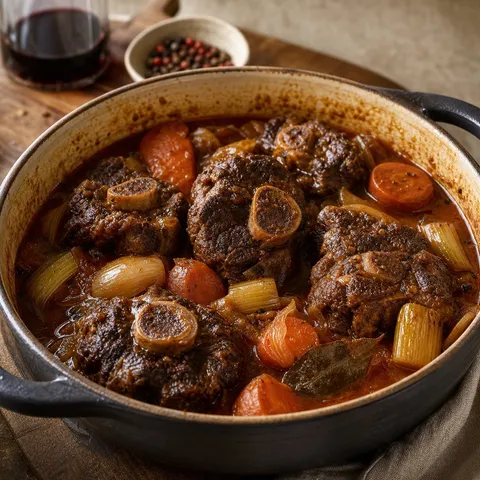
 Rabo de Toro
Oxtail slow-braised for hours with red wine, vegetables, and cloves until the meat falls from the bone in a deeply savoury, velvety Andalusian stew.
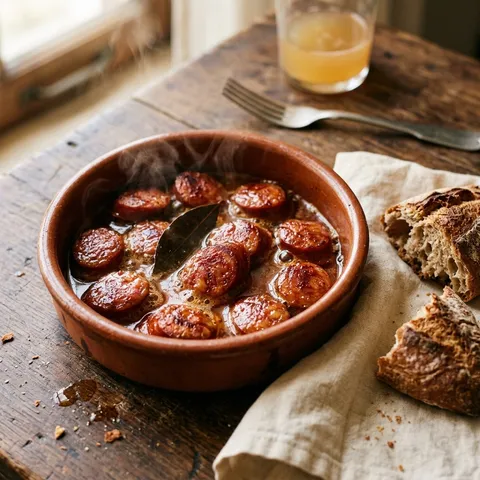 Spanish Lens Verified Images are for illustrative purposes only, may be inaccurate, and do not guarantee the presence or absence of specific ingredients.
 Chorizo a la Sidra
Sliced Spanish chorizo simmered in dry Asturian cider until the sauce is tangy, smoky, and gloriously red — a quick tapas that pairs beautifully with beer.
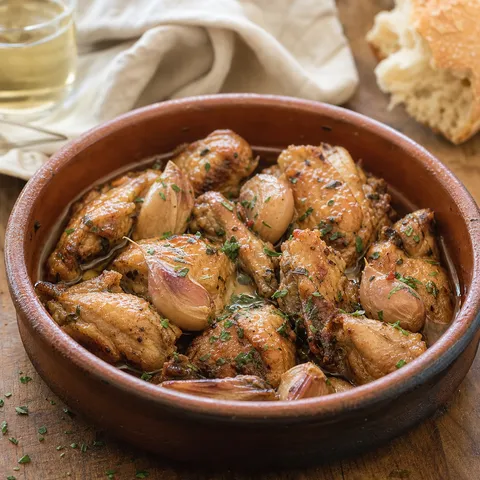 Spanish Lens Verified Images are for illustrative purposes only, may be inaccurate, and do not guarantee the presence or absence of specific ingredients.
 Pollo al Ajillo
Chicken pieces braised in white wine and a generous amount of garlic until the sauce is sticky, fragrant, and impossible to resist mopping up.