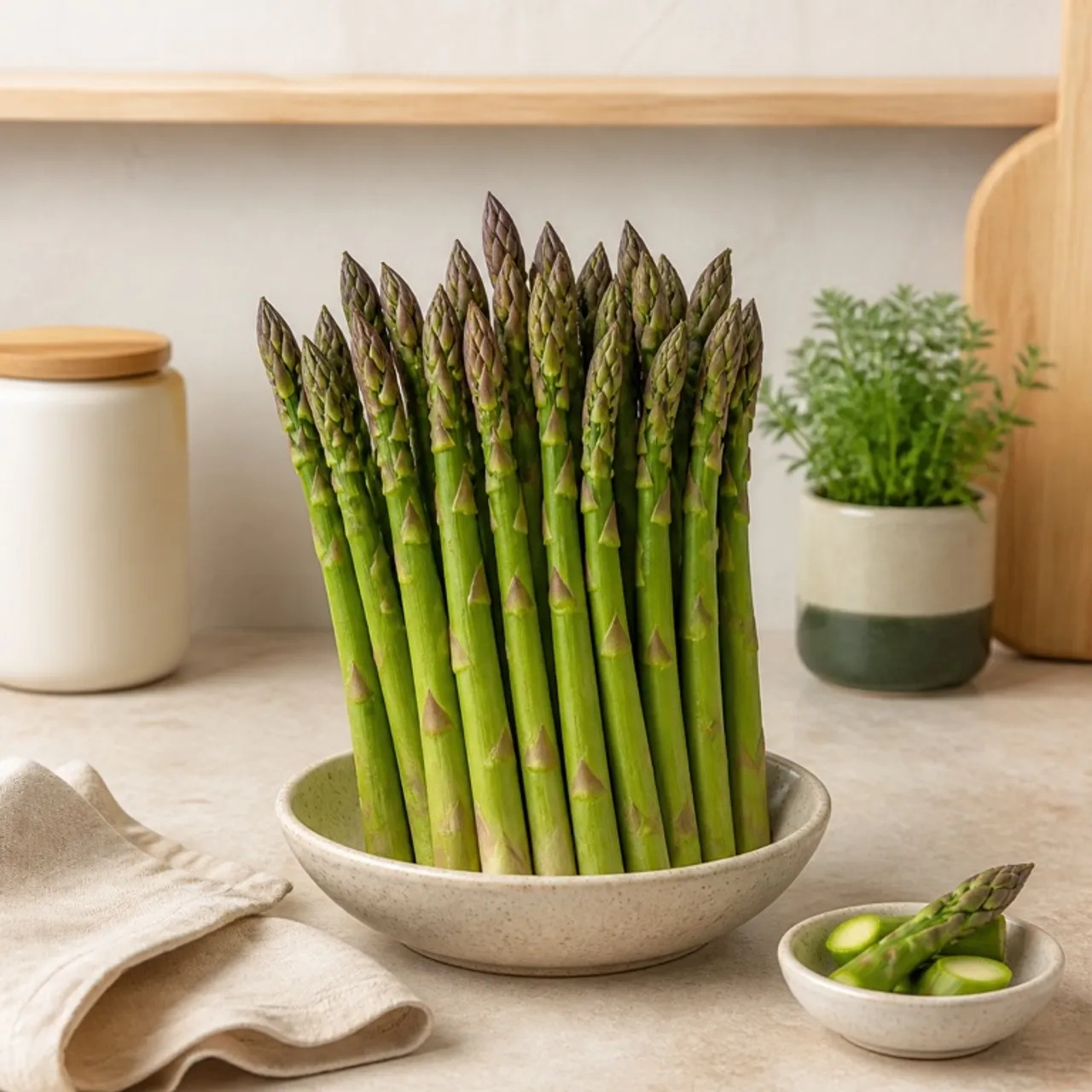
 Food Lens Images are for illustrative purposes only, may be inaccurate, and do not guarantee the presence or absence of specific ingredients.
 Food Lens · Produce
Asparagus
Grassy, sweet, and faintly bitter with a clean, spring-vegetable freshness. Raw asparagus is crisp and vegetal; cooking mellows the bitterness and develops a deeper, more complex sweetness with a savory undertone. The tips are the most tender and flavorful part. White asparagus is notably milder, earthier, and less bitter than green.
Lens VerifiedAsparagus is a spring perennial vegetable prized for its tender shoots, elegant form, and distinctive grassy-sweet flavor. It is among the first vegetables of spring in temperate climates, and its brief season has historically made it a symbol of seasonal luxury. From quick blanching to high-heat roasting, asparagus adapts readily to nearly every cooking method while retaining its characteristic character.
Where it comes from
Asparagus has been cultivated for at least 2,000 years across the Mediterranean, with ancient Roman records of its cultivation and trade establishing it as one of the ancient world's most valued vegetables.
Varieties — Green asparagus is the most common globally, with a grassy, slightly bitter flavor. White asparagus, grown under mounds of soil to block light and prevent chlorophyll development, is a European delicacy — especially prized in Germany and France — with a milder, earthier, more delicate flavor. Purple asparagus has higher sugar content and a slightly fruitier taste. Thickness ranges from pencil-thin (sweeter, more tender) to jumbo (meatier, better for roasting and grilling).
White asparagus season (Spargelsaison) is a genuine cultural event in Germany and the Netherlands — markets, restaurants, and festivals celebrate the vegetable throughout May and early June. In France, asparagus from Argenteuil was historically famous. In the United States, California's Sacramento Delta region was once the world's leading asparagus producer.
In a modern kitchen — Charring asparagus on a very hot dry pan or grill without any oil until it blisters delivers a concentrated, sweet-bitter flavor that simple steaming cannot match. Raw shaved asparagus ribbons (made with a peeler) in salads with lemon and Parmesan have become a modern classic. Asparagus pairs especially well with eggs, cream, lemon, ham, parmesan, and almonds.
Buying it
Choose stalks with tightly closed, firm tips — loose or feathery tips indicate age. Cut ends should look moist and fresh, not dried or woody. Stalks should be firm and upright, not limp. Uniform thickness within a bunch ensures even cooking. For most uses, medium stalks (about pencil-diameter) are the most versatile. Very thin spears cook quickly but can become mushy easily; fat spears are excellent for roasting.
Storing it
Trim the woody ends and stand spears upright in a jar with an inch of water, loosely covered, in the fridge — like fresh flowers. Use within a few days, before tips turn slimy or stalks go limp.
Keeps about 5 days in the fridge.
In season
Peak season is April–June, though it's available year-round.
Local asparagus is a spring crop in much of North America; imports keep it on shelves off-season.
Out of asparagus? Good swaps
General cooking guidance — always check the labels on the products you use. Listahan’s allergen checks run automatically when you plan a recipe in the app. Not medical advice.
Recipes that use asparagus
Common questions about asparagus
Is asparagus vegan?
Asparagus is generally plant-based and suitable for a vegan diet, but brands differ — confirm on the label.
What can I use instead of asparagus?
Good swaps include , , , . Each behaves a little differently — see the swaps above for notes, and always check labels for allergens.
How do I store asparagus?
Trim the woody ends and stand spears upright in a jar with an inch of water, loosely covered, in the fridge — like fresh flowers. Use within a few days, before tips turn slimy or stalks go limp. It keeps about 5 days in the fridge.
More produce
See all


Make asparagus about your kitchen — with Listahan Pro
Everything above is free, forever. Pro adds the Household Lens — the same food, seen for your family:
-
Checked for each member
Flags asparagus per person against your household's allergies and school rules — not just a generic "contains" tag.
-
Pantry-aware
Knows whether you already have it, what is running low, and the best swap from what is in your kitchen tonight.
-
What it costs near you
A real price from the Presyo community index, so you can plan the budget — not guess.
-
Your household memory
Who likes it, plus your own private notes — brand, where you keep it, who skips it.
Allergen safety is always free — Pro adds the automation, never the safety.
Cook with asparagus — safely
Plan a recipe in Listahan and the household allergen check runs automatically — every plan, every swap, every lunchbox. Safety is never paywalled.