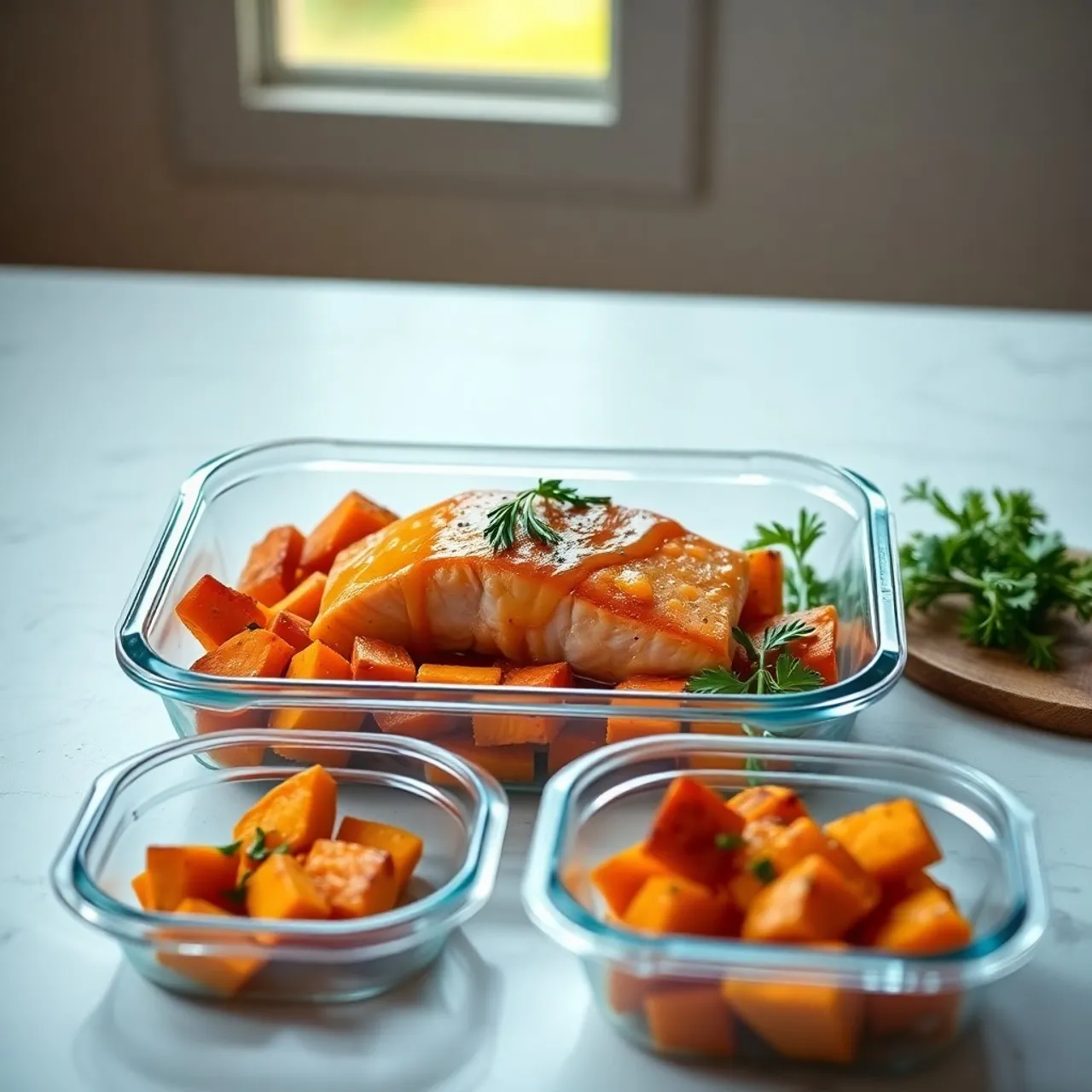
 Meal Prep Images are for illustrative purposes only, may be inaccurate, and do not guarantee the presence or absence of specific ingredients.
 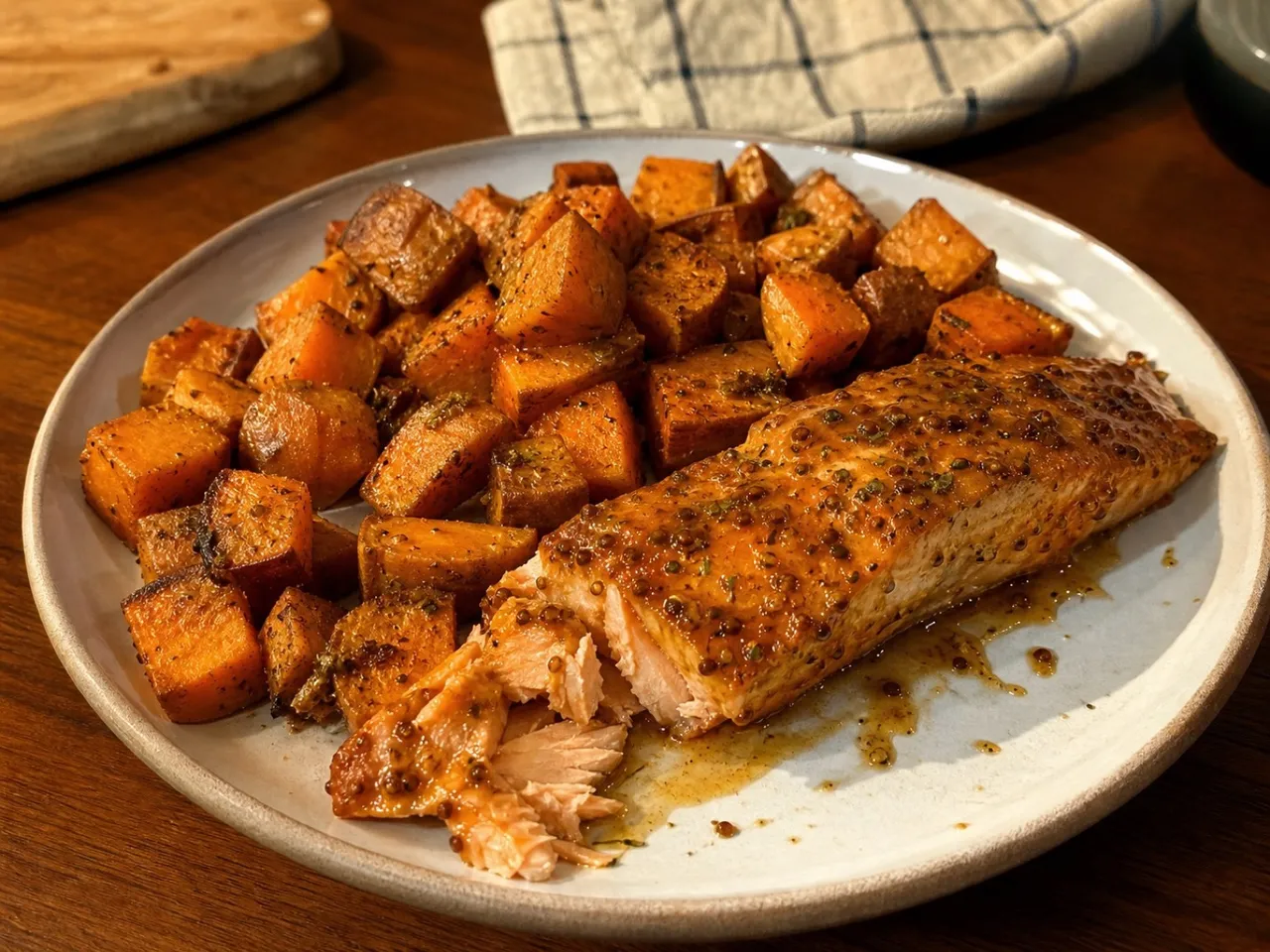 Serving Images are for illustrative purposes only, may be inaccurate, and do not guarantee the presence or absence of specific ingredients.
 Honey-Mustard Glazed Salmon with Roasted Sweet Potatoes
A nutrient-dense dinner featuring omega-3 rich salmon and slow-digesting complex carbohydrates.
Contains common allergens
In the app, Listahan checks these against your household automatically.
Instructions
6 steps- 1
Preheat the oven to 425°F (220°C). Line two baking sheets with parchment paper.
- 2
Toss the cubed sweet potatoes in 1 tbsp olive oil, a pinch of salt, and paprika. Spread evenly on one baking sheet and roast for 25-30 minutes, tossing halfway, until tender and caramelized.
- 3
In a small bowl, whisk together the honey and Dijon mustard to create a smooth glaze.
- 4
Place the salmon fillets on the second baking sheet. Brush the honey-mustard glaze generously over each fillet.
- 5
Arrange the trimmed asparagus around the salmon. Lightly mist the asparagus with cooking spray and sprinkle with salt.
- 6
Bake the salmon and asparagus for 10-12 minutes, or until the salmon flakes easily with a fork (internal temp 145°F) and the asparagus is tender. Divide into containers.
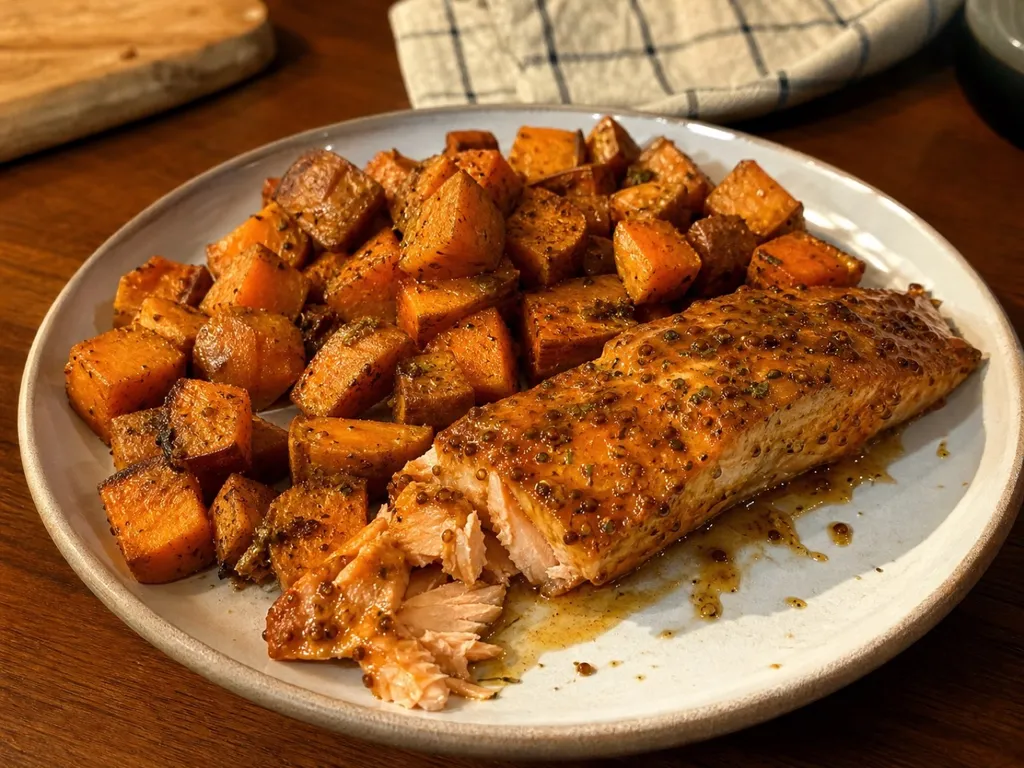 Images are for illustrative purposes only, may be inaccurate, and do not guarantee the presence or absence of specific ingredients.
 Listahan Family Score™
70/100
Good fit for most families
Score reflects how well this recipe fits a typical busy household. In the app, your Family Score is personalized to your household's allergens, kids, and pantry.
Nutrition
per serving470
Calories
35 g
Protein
22 g
Carbs
26 g
Fat
Estimated per serving. Actual values depend on the brands and portions you use.
Listahan cooking guide
Chef notes & practical guide
Technique notes, ingredient swaps, serve-alongside ideas, storage guidance, and equipment for this recipe.
Cultural context
Honey and mustard is a classic glaze pairing that predates the meal-prep era by decades — French bistros have paired Dijon with honey or maple for roasted meats and fish for generations. Baking the salmon and sweet potatoes on separate trays in the same oven, as this version does, is the practical meal-prep adaptation that keeps the fish from steaming in the vegetables' moisture.
Listahan note
Roasting the sweet potatoes on their own sheet first buys them the head start they need, since they take roughly twice as long as the salmon to cook through.
Technique cues
- Roast the sweet potatoes first and add the salmon partway through; salmon needs only 10-12 minutes at 425°F while sweet potato cubes need 25-30.
- Brush the glaze on right before baking, not earlier — honey burns and turns bitter if it sits on the salmon too long before heat hits it.
- Pull the salmon at 145°F internal or when it flakes easily; a minute past that and it turns dry and chalky, especially after a reheat.
Kitchen flow
- Parallel prep
- Whisk the glaze and trim the asparagus while the sweet potatoes get their head start in the oven.
- Make-ahead
- Roast the sweet potatoes up to 2 days ahead and reheat them while the salmon bakes fresh.
- Leftover move
- Flake leftover salmon over a green salad with extra Dijon vinaigrette for a quick next-day lunch.
- Cleanup rhythm
- Line both sheets with parchment — the honey glaze caramelizes onto bare metal and is hard to scrub off.
Ingredient brief
Role, handling, and swap guidance for each key ingredient.
Salmon fillets
main protein
Purpose: Salmon's natural fat keeps it from drying out in the oven and pairs well with the sweet glaze.
Handling: Pat dry before brushing on the glaze so it adheres rather than sliding off.
Adaptation: Trout fillets cook in about the same time with a milder flavor.
Sweet potatoes
starch base
Purpose: Sweet potato cubes caramelize at the edges and add natural sweetness that echoes the honey glaze.
Handling: Cut into even cubes so they roast at the same rate.
Adaptation: Butternut squash roasts similarly and swaps in 1:1.
Fresh asparagus
vegetable component
Purpose: Asparagus roasts quickly alongside the salmon and adds a fresh, slightly bitter contrast to the sweet glaze.
Handling: Trim the woody ends before roasting; they stay tough even after cooking.
Adaptation: Green beans work in the same roasting window.
Honey and Dijon mustard
glaze
Purpose: The honey provides sweetness and a sticky finish while the Dijon adds tang and cuts through the richness of the salmon.
Handling: Whisk together until smooth before brushing so the glaze coats evenly.
Adaptation: Maple syrup in place of honey gives a deeper, less floral sweetness.
Olive oil and paprika
roasting seasoning
Purpose: Oil and paprika season the sweet potatoes and add color before the salmon and glaze take over the second tray.
Handling: Toss the sweet potatoes in oil and paprika before they go in the oven.
Adaptation: Smoked paprika adds a deeper, smokier note than sweet paprika.
Technique notes
- Salmon is the one component here that doesn't reheat as gently as the rest — a quick 30-second microwave burst keeps it from overcooking on reheat.
- If the glaze looks too thin to cling, let it sit 5 minutes; the mustard thickens slightly as it sits.
- Check the sweet potatoes with a fork before pulling them — they should offer no resistance, since underdone cubes don't soften further once they're off the heat.
Ingredient swaps
- Lower-sugar direction
- Cut the honey to 1 tablespoon and add a squeeze of lemon juice to keep the glaze bright without as much sweetness.
- Spicier direction
- Whisk a teaspoon of hot honey or a pinch of cayenne into the glaze for heat that plays well against the sweet potato.
- Weeknight shortcut
- Roast everything on one tray with the salmon added halfway through, skipping the second sheet.
Serve alongside
- Steamed green beans
- Simple arugula salad
- Lemon rice
- Sparkling water with lemon
- Iced herbal tea
Serving suggestions only — check pairings for your household's allergens.
Storage & reheating
- Refrigerate up to 3 days; salmon is best eaten within that window since its texture degrades faster than chicken or beef.
- Not recommended for freezing — the glaze separates and the salmon’s texture turns mealy on thawing.
- Reheat gently, covered, at low microwave power or a quick pan warm to avoid overcooking the fish.
Equipment
- Two rimmed baking sheets
- Parchment paper
- Pastry brush for the glaze
- Instant-read thermometer
Make this household-aware
Listahan Pro checks this recipe against your household's allergens, finds pantry-aware swaps, builds the shopping list, and helps you plan the week around it.
Plan it in Listahan
Add Honey-Mustard Glazed Salmon with Roasted Sweet Potatoes to your week, check it against your household's allergens, and build the shopping list automatically.
More Meal Prep recipes
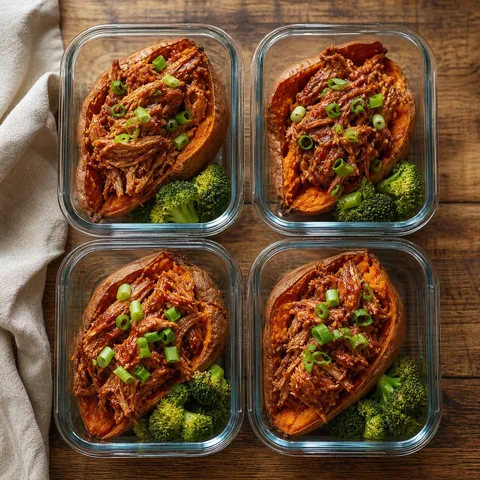 Meal Prep Lens Verified Images are for illustrative purposes only, may be inaccurate, and do not guarantee the presence or absence of specific ingredients.
 BBQ Pulled Pork Stuffed Sweet Potatoes
A hearty, smoky, and sweet combination that balances protein and complex carbohydrates perfectly.
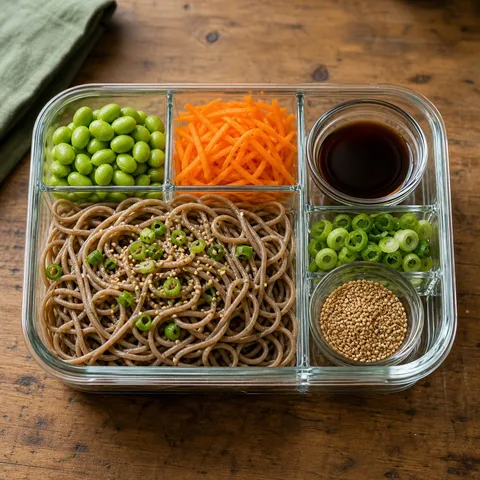 Meal Prep Lens Verified Images are for illustrative purposes only, may be inaccurate, and do not guarantee the presence or absence of specific ingredients.
 Soba Noodle Salad
Buckwheat soba noodles tossed in a sesame-ginger dressing with edamame, shredded carrots, and scallions — nutty, refreshing, and endlessly satisfying served cold.
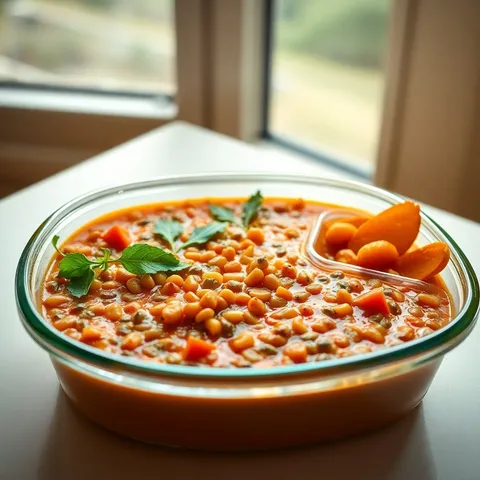 Meal Prep Lens Verified Images are for illustrative purposes only, may be inaccurate, and do not guarantee the presence or absence of specific ingredients.
 Rustic French Lentil Soup
A deeply nourishing and earthy soup that is rich in plant-based protein and freezes exceptionally well.