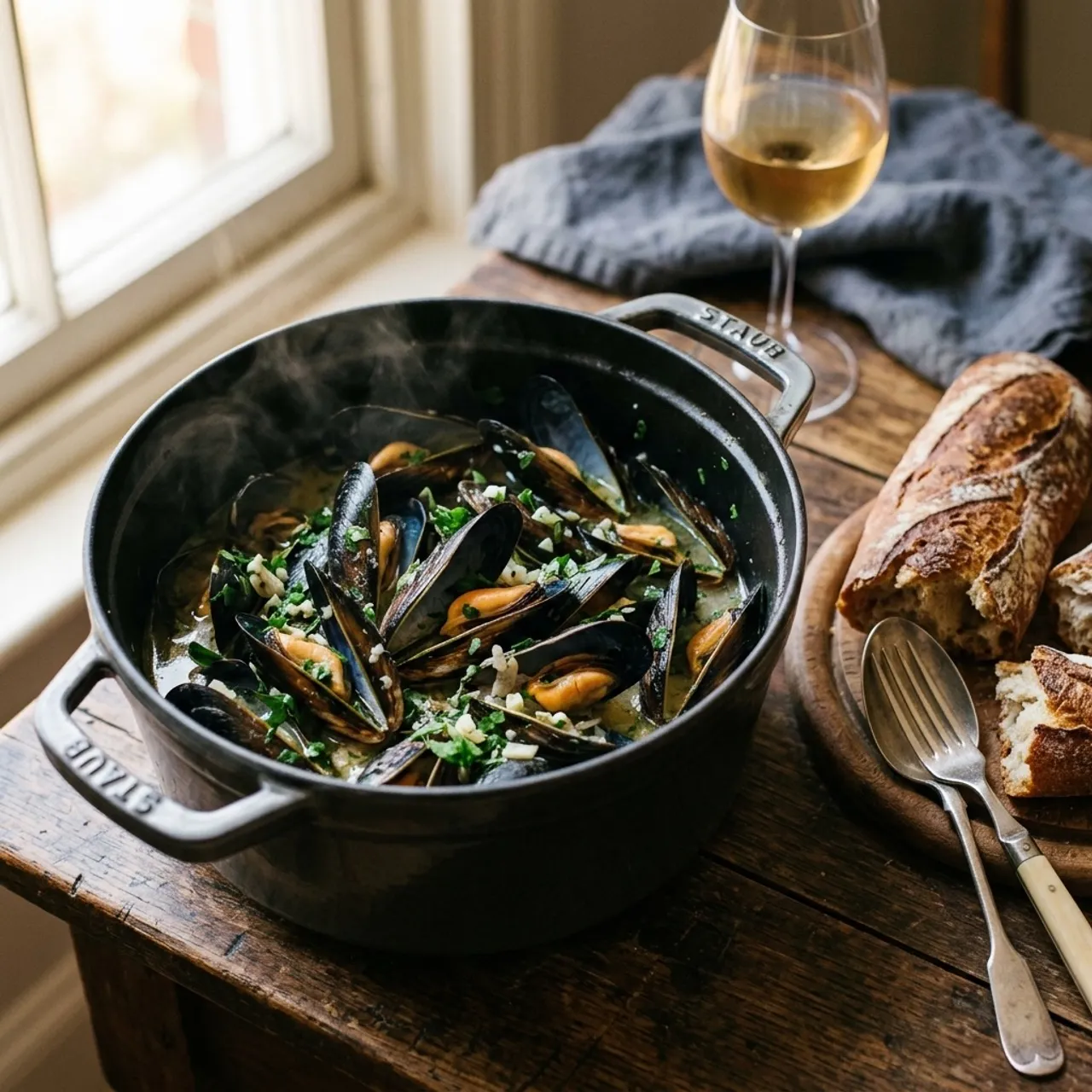
 French Images are for illustrative purposes only, may be inaccurate, and do not guarantee the presence or absence of specific ingredients.
 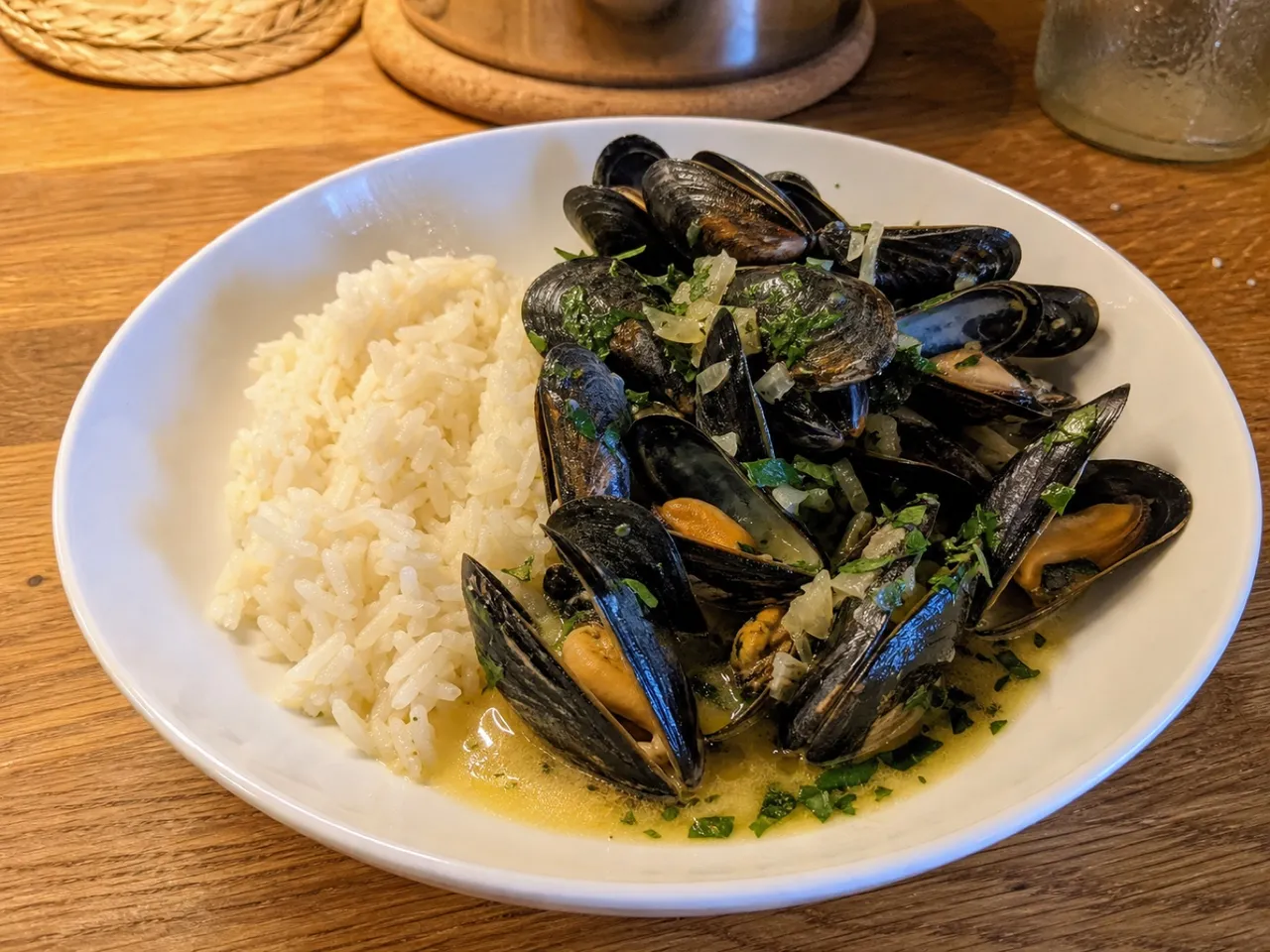 Serving Images are for illustrative purposes only, may be inaccurate, and do not guarantee the presence or absence of specific ingredients.
 Moules Marinières
Plump mussels steamed open in white wine with shallots, garlic, and parsley, served with plenty of bread for the briny, fragrant broth.
Contains common allergens
In the app, Listahan checks these against your household automatically.
Good to know
- One-pot
- Ready in under 30 minutes
Matched from this dish's own ingredients and timing. Browse more: one-pot dinners30-minute meals
Instructions
6 steps- 1
Inspect the mussels; discard any with broken shells or those that do not close when tapped.
- 2
In a large, wide pot or Dutch oven, melt the butter over medium heat. Sauté the minced shallots until soft and translucent (about 5 minutes). Add the garlic and cook for 1 minute more.
- 3
Pour in the white wine and bring to a rapid boil. Let it reduce slightly for 2 minutes to cook off the harsh alcohol edge.
- 4
Add the cleaned mussels to the pot and cover tightly with a lid. Cook over medium-high heat for 5-7 minutes, shaking the pot vigorously once or twice.
- 5
The mussels are done when they have all popped open. (Discard any that remain tightly shut).
- 6
Remove from heat, stir in the chopped fresh parsley, and serve immediately in large bowls with the aromatic broth and plenty of crusty baguette for dipping.
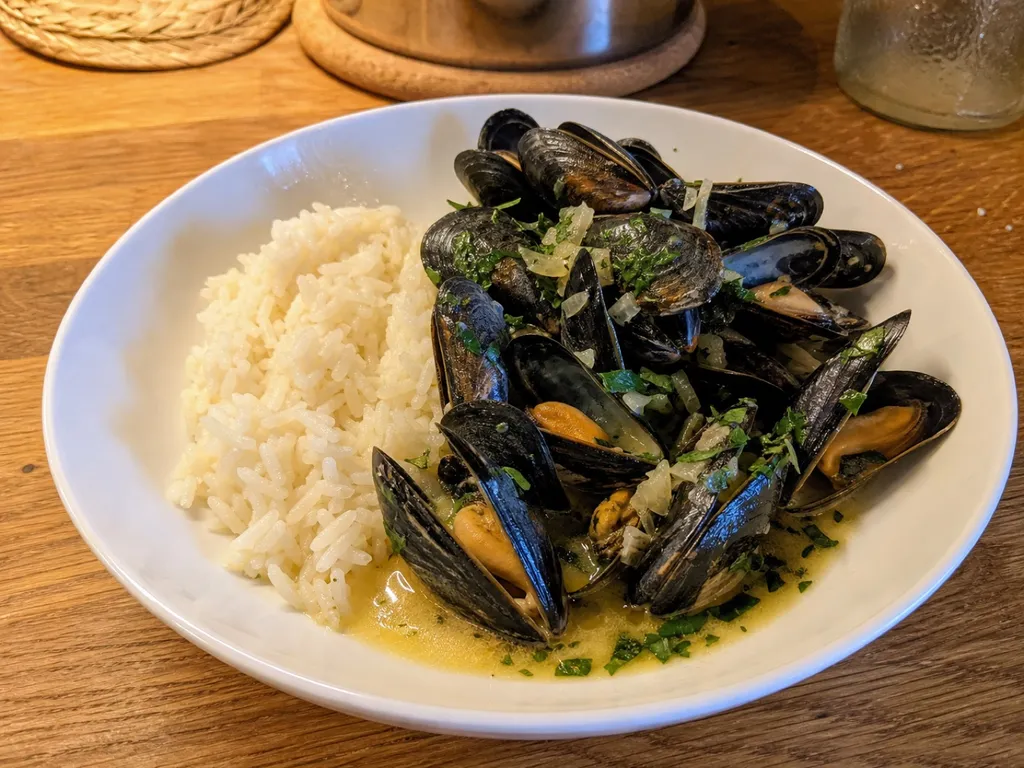 Images are for illustrative purposes only, may be inaccurate, and do not guarantee the presence or absence of specific ingredients.
 Listahan Family Score™
63/100
Works for many families
Score reflects how well this recipe fits a typical busy household. In the app, your Family Score is personalized to your household's allergens, kids, and pantry.
Nutrition
per serving470
Calories
42 g
Protein
20 g
Carbs
19 g
Fat
Estimated per serving. Actual values depend on the brands and portions you use.
Listahan cooking guide
Chef notes & practical guide
Technique notes, ingredient swaps, serve-alongside ideas, storage guidance, and equipment for this recipe.
Cultural context
Moules marinieres, meaning mussels in the sailor's style, is a Norman and Breton fisherman's dish that became one of the great simple preparations of the French bistro canon. The technique is essentially steam-in-their-own-liquid: mussels open in a fragrant bath of white wine, shallots, and herbs, releasing their briny juices into the broth to create a sauce greater than any of its parts. The dish spread far beyond France and is now a staple in Belgian and Dutch coastal cuisine as well, often served with frites to soak up the broth.
Listahan note
This version keeps the broth spare and bright so the mussel liquor stays front and center; cream is omitted in favor of a finish of cold butter that enriches without muddying the sea flavor.
Technique cues
- Use the highest heat your pan can deliver and cook in a pot large enough that mussels are no more than two layers deep; crowding slows the boil and leads to uneven opening.
- Start checking at 3 minutes — mussels are done the moment they open, and even a minute of extra cooking turns the meat rubbery and shrunken.
- Discard any mussel that did not open after cooking rather than forcing it open; while most are safe, a persistently closed shell sometimes signals a dead mussel that could have off flavors.
Kitchen flow
- Parallel prep
- While you mince shallots and measure wine, bring the pot to temperature so the moment shallots soften you can add mussels without delay.
- Make-ahead
- Mussels do not reheat well; prep all aromatics up to a day ahead and store refrigerated, but cook the mussels only at serving time.
- Leftover move
- Pick cooked leftover mussel meat from the shells, combine with the strained broth, and use as a base for a quick seafood pasta or chowder.
- Cleanup rhythm
- Line a bowl with the mussel shells as you eat for easy disposal; rinse the pot immediately while broth residue is still liquid.
Ingredient brief
Role, handling, and swap guidance for each key ingredient.
fresh mussels
main protein
Purpose: Mussels provide both the protein and, through their released liquor, the dominant flavor of the dish.
Handling: Scrub under cold water and pull off any beards just before cooking; cleaning too far ahead causes them to die.
Adaptation: Clams can substitute but will take a few more minutes to open.
dry white wine
steaming liquid and sauce base
Purpose: Wine's acidity brightens the briny mussel liquor and gives the broth enough body to serve as a dipping sauce.
Handling: Use a wine you would drink; avoid cooking wine labeled with added salt.
Adaptation: Hard cider is the Norman variation and works beautifully here.
shallots
aromatic base
Purpose: Shallots cook more quickly than onions and provide a mellow sweetness that does not overpower the mussels.
Handling: Mince finely so they soften fully in the brief cooking time before the mussels are added.
Adaptation: One small onion or a few spring onion whites can substitute.
unsalted butter
finish and richness
Purpose: A knob of cold butter stirred in off the heat emulsifies the broth into a glossy, rounded sauce.
Handling: Keep it cold from the fridge so it melts slowly into the broth rather than breaking.
Adaptation: Vegan butter or a drizzle of good olive oil for a dairy-free version.
fresh flat-leaf parsley
freshness and color
Purpose: Parsley added at the very end provides a grassy counterpoint to the brine and prevents the dish from tasting flat.
Handling: Chop roughly just before serving so the color stays vivid green.
Adaptation: Tarragon gives a more anise-forward version common in some French regions.
Technique notes
- Taste the broth before adding any seasoning — mussel liquor is often salty enough that no additional salt is needed at all.
- Serve in a wide, shallow bowl so the mussels are easy to reach and the broth stays visible; a deep soup bowl traps heat but makes extracting the mussels awkward.
- If you want to thicken the broth without cream, swirl in the cold butter vigorously just below a simmer while moving the pan in a circular motion — this mounts the sauce into a light emulsion.
Ingredient swaps
- Dairy-free direction
- Omit the butter finish and drizzle with a fruity olive oil instead; the broth remains light and very much in the spirit of the original.
- Alcohol-free direction
- Replace white wine with low-sodium vegetable broth plus a tablespoon of white wine vinegar for acidity.
- Creamy variation
- Stir in 1/4 cup heavy cream after the mussels open for moules a la creme, a richer Norman version.
Serve alongside
- Pommes frites for dipping in the broth
- Crusty baguette sliced thickly
- Simple butter lettuce salad with lemon dressing
- Muscadet sur lie or Picpoul de Pinet
- Cold Belgian witbier or Saison
Serving suggestions only — check pairings for your household's allergens.
Storage & reheating
- Cooked mussels should be eaten immediately and do not reheat safely; plan on finishing the pot at the table.
- Live raw mussels keep refrigerated in an open bowl covered with a damp cloth for up to 2 days before cooking.
Equipment
- Large heavy pot (at least 6 quarts) with a tight-fitting lid
- Wide shallow serving bowls that show off the broth
- Fine-mesh strainer for removing grit from the broth if desired
- Slotted spoon for transferring mussels without excess liquid
Make this household-aware
Listahan Pro checks this recipe against your household's allergens, finds pantry-aware swaps, builds the shopping list, and helps you plan the week around it.
Plan it in Listahan
Add Moules Marinières to your week, check it against your household's allergens, and build the shopping list automatically.
More French recipes
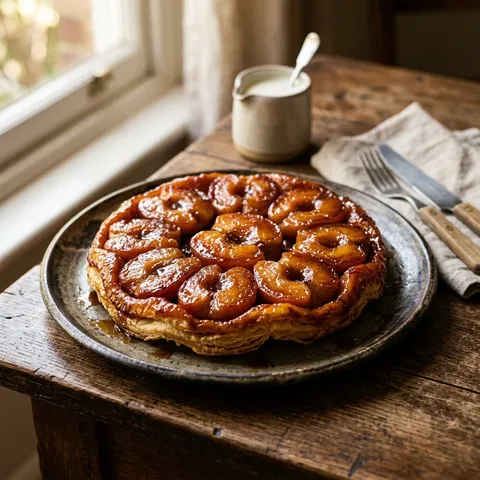 French Lens Verified Images are for illustrative purposes only, may be inaccurate, and do not guarantee the presence or absence of specific ingredients.
 Tarte Tatin
Apples cooked in caramel until jammy and burnished, then flipped onto buttery pastry — a rustic upside-down tart from the Loire Valley.
 French Lens Verified Images are for illustrative purposes only, may be inaccurate, and do not guarantee the presence or absence of specific ingredients.
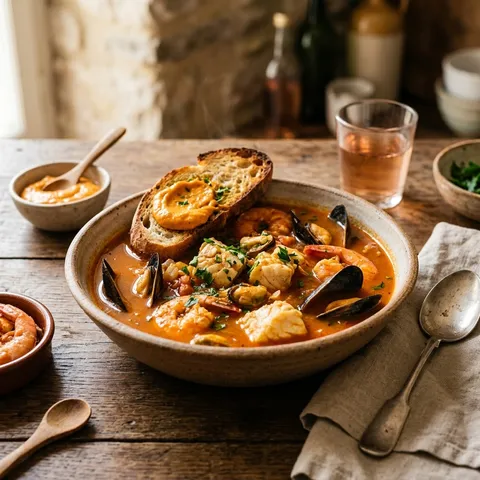
 Bouillabaisse
Marseille's legendary saffron-scented fisherman's stew, brimming with fresh seafood and served with garlicky rouille on toasted baguette.
 French Lens Verified Images are for illustrative purposes only, may be inaccurate, and do not guarantee the presence or absence of specific ingredients.
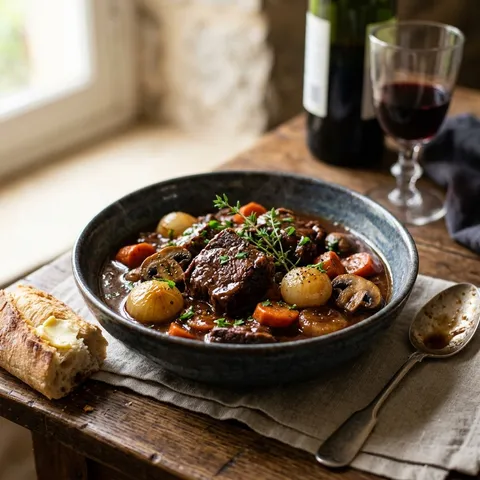
 Bœuf Bourguignon
Burgundy's legendary beef stew — rich, wine-dark, and fall-apart tender after hours of slow braising with carrots, mushrooms, and thyme.