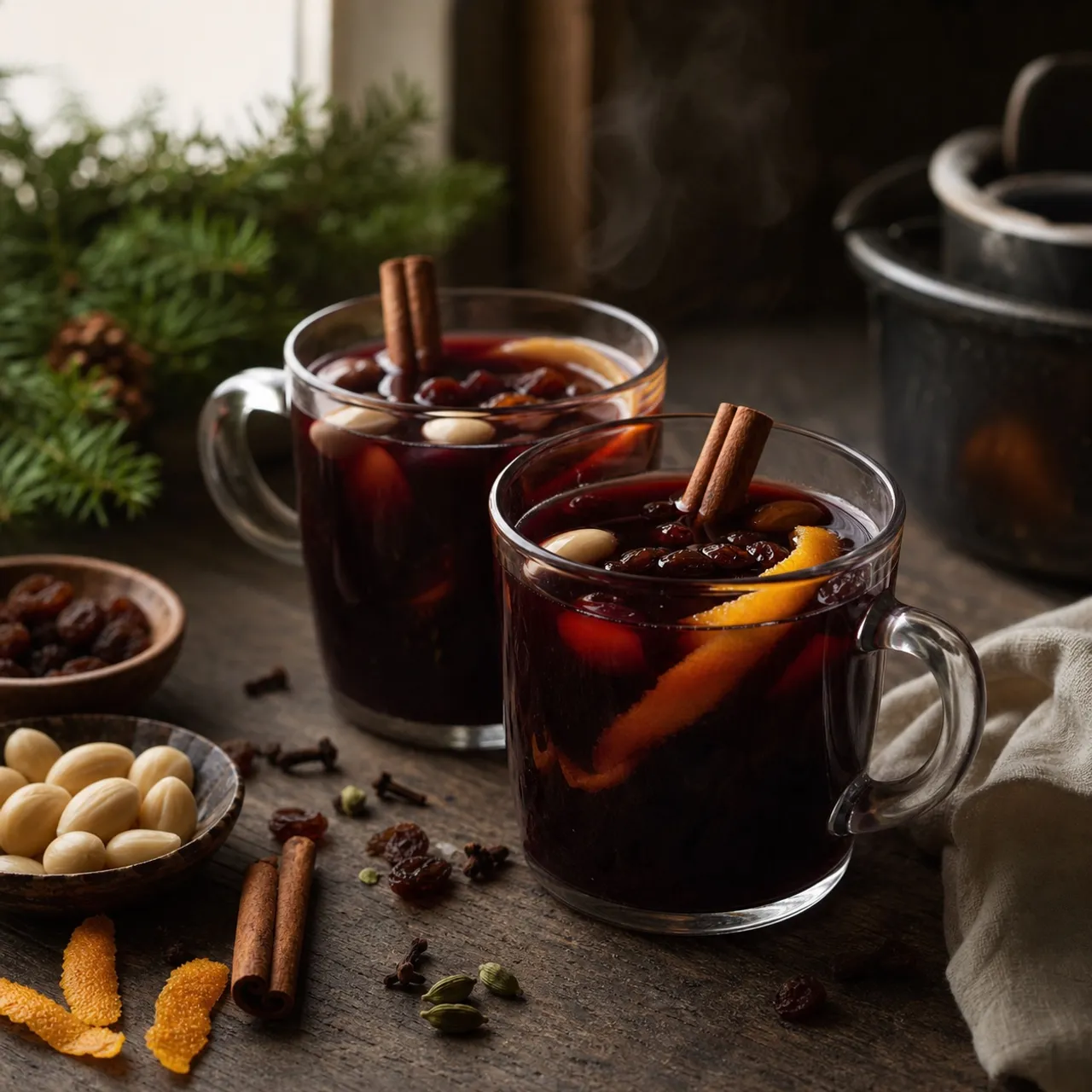
 Nordic Images are for illustrative purposes only, may be inaccurate, and do not guarantee the presence or absence of specific ingredients.
 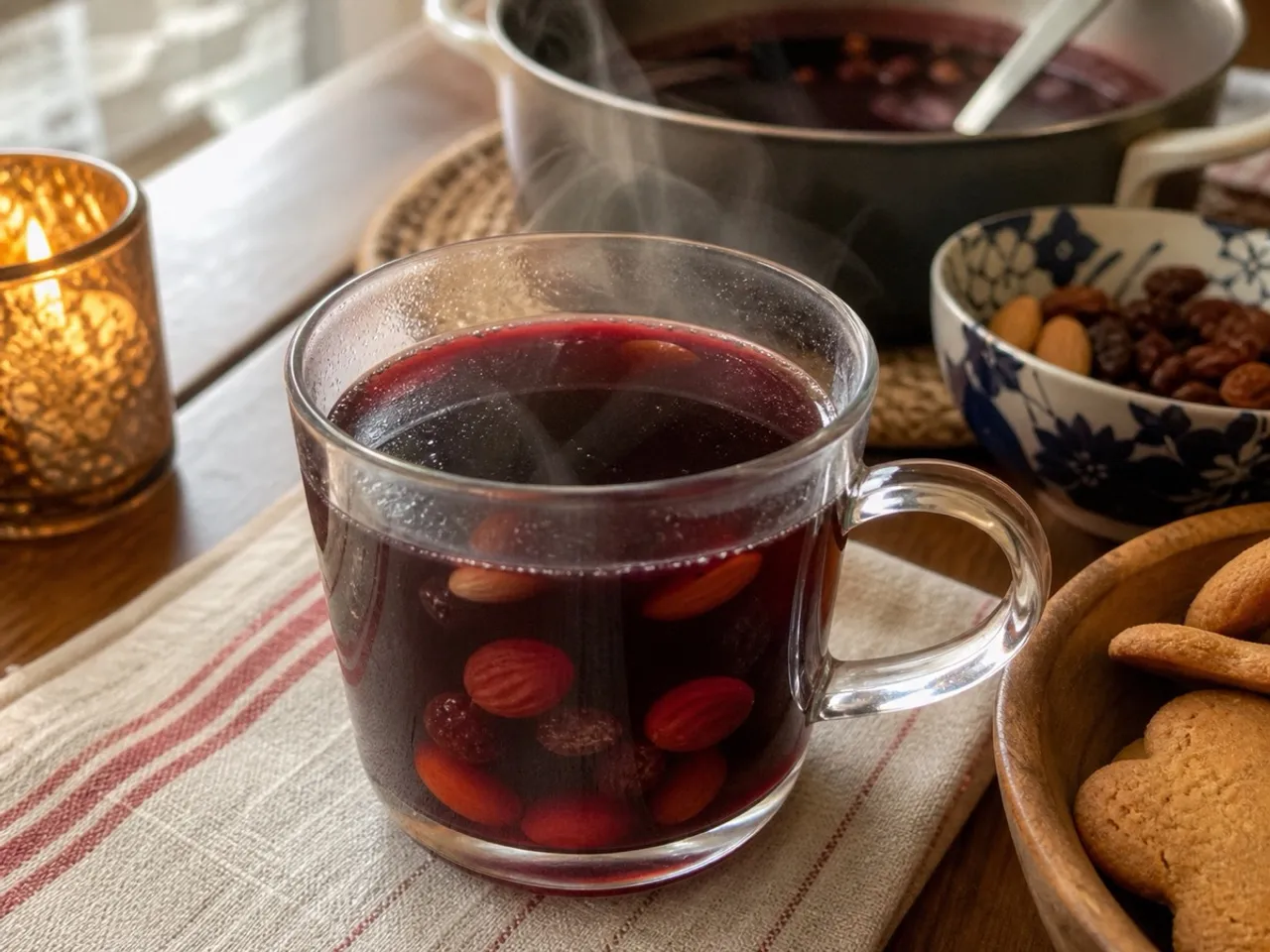 Serving Images are for illustrative purposes only, may be inaccurate, and do not guarantee the presence or absence of specific ingredients.
 Glögg
A warmly spiced Scandinavian mulled wine served at Christmas, fragrant with cinnamon, cardamom, and orange and finished with raisins and almonds.
Contains common allergens
In the app, Listahan checks these against your household automatically.
Good to know
- One-pot
Matched from this dish's own ingredients and timing. Browse more: one-pot dinners
Instructions
5 steps- 1
Pour the red wine into a large non-reactive saucepan and add the sugar, crushed cardamom pods, cinnamon sticks, cloves, and orange peel, then warm over medium-low heat, stirring until the sugar fully dissolves.
- 2
Bring the mixture just to a bare simmer, watching closely so it never boils, since boiling will cook off the alcohol and flatten the flavor; small bubbles around the edge are the cue to lower the heat.
- 3
Hold at that gentle steam for 20 to 25 minutes to let the spices infuse, then stir in the port or aquavit and heat for 2 more minutes until warmed through.
- 4
Strain out the whole spices and orange peel through a fine-mesh sieve, then divide a few raisins and almonds into each heatproof glass or mug.
- 5
Ladle the hot glögg over the raisins and almonds and serve immediately with small spoons so guests can eat the plumped fruit and nuts at the end.
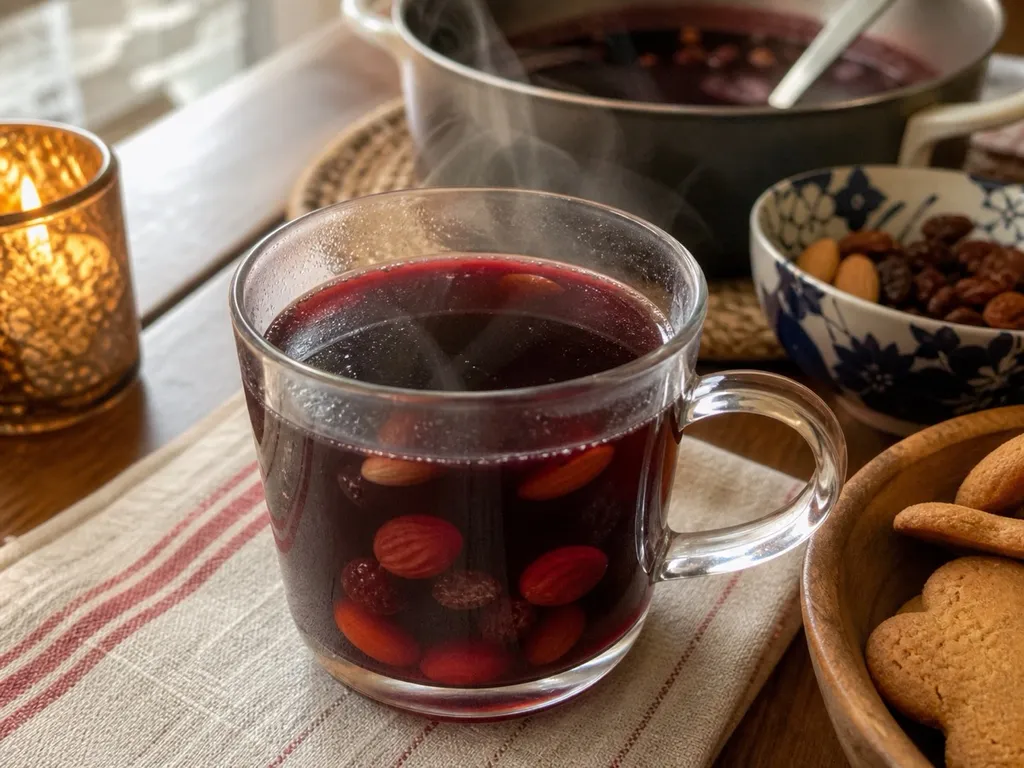 Images are for illustrative purposes only, may be inaccurate, and do not guarantee the presence or absence of specific ingredients.
 Listahan Family Score™
65/100
Works for many families
Score reflects how well this recipe fits a typical busy household. In the app, your Family Score is personalized to your household's allergens, kids, and pantry.
Nutrition
per serving320
Calories
3 g
Protein
83 g
Carbs
0 g
Fat
Estimated per serving. Actual values depend on the brands and portions you use.
Listahan cooking guide
Chef notes & practical guide
Technique notes, ingredient swaps, serve-alongside ideas, storage guidance, and equipment for this recipe.
Cultural context
Glögg is Sweden's answer to mulled wine, with roots in medieval Germanic spiced wine traditions that Scandinavian traders adapted over centuries. By the 19th century it had become the centerpiece of Swedish Advent gatherings, served from a pot on the stove as guests arrived from the cold. The ritual of ladling it into small cups with raisins and almonds sunk at the bottom is still observed in Swedish homes every December.
Listahan note
This version steeps whole spices low and slow to extract warmth without bitterness, and uses ruby port to deepen the body without overpowering the wine.
Technique cues
- Never let glögg boil after the wine is added — a hard boil drives off the alcohol and turns the spice aromatics sharp and medicinal; keep the pot at a bare simmer (around 160°F) for a smooth, fragrant result.
- Crushing the cardamom pods — just enough to crack them open — releases the seeds' volatile oils without dumping raw seed bitterness into the liquid; the same logic applies to lightly bruising the cinnamon sticks rather than snapping them.
- Sugar should be dissolved off-heat or very early in the process so it integrates fully; adding it to a near-simmering pot risks scorching on the bottom before it dissolves, which gives a faint burnt note to the finished drink.
Kitchen flow
- Parallel prep
- While the spices steep in the wine, set out cups, measure raisins and almonds into a small bowl, and cut any bread or cookie accompaniments — the drink needs no active attention once the heat is set low.
- Make-ahead
- Steep the full batch, cool, and refrigerate up to 3 days; gently reheat to 160°F before serving. The flavor actually deepens overnight as the spices continue to infuse.
- Leftover move
- Leftover glögg reduces beautifully into a syrup — simmer uncovered until thickened, then drizzle over vanilla ice cream or stir into oatmeal.
- Cleanup rhythm
- Strain the spices and peels through a fine-mesh sieve immediately after steeping so they do not continue to bitter the liquid; rinse the pot while still warm to prevent red wine staining.
Ingredient brief
Role, handling, and swap guidance for each key ingredient.
1 (750 ml) bottle dry red wine
base liquid and body
Purpose: Dry red wine provides the tannin structure and fruit that glögg is built on; overly sweet wine makes the finished drink cloying once the sugar is added.
Handling: No prep needed; use a medium-bodied red such as a Côtes du Rhône or Merlot rather than a tannic Cabernet.
Adaptation: A dry rosé produces a lighter, more approachable glögg suitable for guests who prefer less tannin.
1/2 cup ruby port or aquavit
fortifier and flavor anchor
Purpose: Port adds sweetness and body that fills out thin red wine; aquavit shifts the profile toward a more traditional Scandinavian caraway-and-dill note.
Handling: Add toward the end of steeping so the alcohol does not cook off.
Adaptation: Brandy or bourbon works as a neutral fortifier that adds warmth without competing with the spices.
8 whole cardamom pods, lightly crushed
primary spice and floral note
Purpose: Cardamom is the defining Nordic spice in glögg, providing a citrusy warmth that distinguishes it from German Glühwein.
Handling: Press each pod with the flat of a knife until it just cracks open, then add pods and seeds to the pot together.
Adaptation: If cardamom pods are unavailable, use 1/4 tsp ground cardamom added in the last 5 minutes to avoid over-extraction.
4 strips orange peel
brightness and aroma
Purpose: Orange peel contributes bitter oils that cut through the richness of the wine and port, lifting the whole drink.
Handling: Use a vegetable peeler to take wide strips of zest with minimal white pith, which is unpleasantly bitter.
Adaptation: Tangerine or clementine peel is sweeter and slightly more floral, a good option in winter when those citrus are abundant.
1/4 cup raisins and 1/4 cup blanched whole almonds, for serving
traditional garnish and textural finish
Purpose: Raisins soak up glögg and become plump little flavor bombs; the almond provides a subtle crunch that contrasts the warm liquid.
Handling: Place a small spoonful in the bottom of each cup before ladling the glögg over.
Adaptation: Dried cranberries replace raisins for a tart-sweet North American twist; pepitas substitute for almonds if nut allergies are a concern.
Technique notes
- The classic Swedish serving ritual places 5-6 raisins and 3-4 almonds in each cup first, so guests fish them out with a small spoon as they drink — do not skip this step, as it is the social centerpiece of the tradition.
- For a non-alcoholic version, replace the wine and port entirely with 3 cups unsweetened pomegranate juice plus 1 cup tart cherry juice; steep the same spices and the result is genuinely festive.
- If the glögg tastes flat, a pinch of fine salt and a few extra drops of orange juice revives it — the salt enhances the fruit and spice perception without making the drink taste salty.
Ingredient swaps
- Alcohol-free direction
- Replace wine and port with unsweetened pomegranate juice (3 cups) and tart cherry juice (1 cup); reduce sugar to 3 tbsp as fruit juices are sweeter.
- Lower sugar
- Cut sugar to 2 tbsp and add 2 tsp honey at the end — honey integrates smoothly and adds a floral note that complements cardamom.
- Nut-free direction
- Omit almonds from the serving garnish entirely or replace with a few dried blueberries or dried cranberries for color and chew.
Serve alongside
- pepparkakor (Swedish ginger thins)
- sliced sharp aged cheese on dark rye crackers
- saffron buns (lussekatter)
- salted mixed nuts with rosemary
- sparkling water with a slice of orange as a palate cleanser between cups
- hot black coffee for guests who prefer to alternate
Serving suggestions only — check pairings for your household's allergens.
Storage & reheating
- Refrigerate strained glögg in a sealed container for up to 3 days; the spice flavor will intensify.
- Reheat gently over medium-low heat to 160°F — do not boil.
- Freeze in ice cube trays for up to 2 months; thaw and reheat in a small saucepan.
Equipment
- medium heavy-bottomed saucepan (at least 3-quart)
- fine-mesh strainer
- ladle
- small heatproof serving cups or mugs
Make this household-aware
Listahan Pro checks this recipe against your household's allergens, finds pantry-aware swaps, builds the shopping list, and helps you plan the week around it.
Plan it in Listahan
Add Glögg to your week, check it against your household's allergens, and build the shopping list automatically.
More Nordic recipes
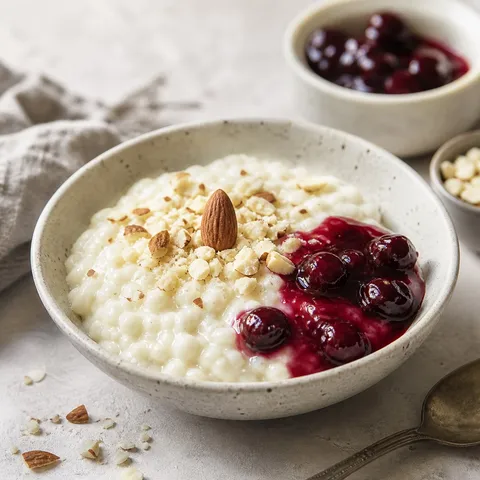 Nordic Lens Verified Images are for illustrative purposes only, may be inaccurate, and do not guarantee the presence or absence of specific ingredients.
 Risalamande
A creamy Danish cold rice pudding folded with whipped cream and chopped almonds, served with a glossy warm cherry sauce on Christmas Eve.
 Nordic Lens Verified Images are for illustrative purposes only, may be inaccurate, and do not guarantee the presence or absence of specific ingredients.
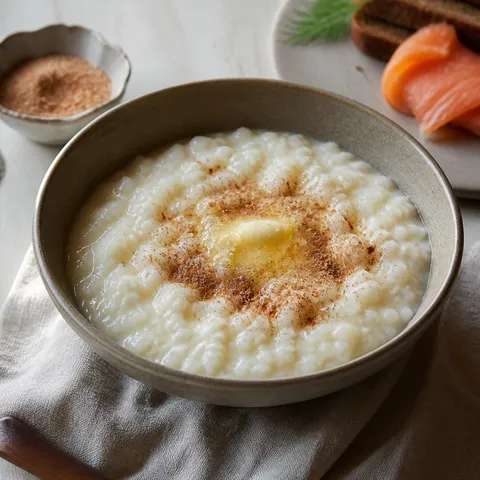
 Risgrynsgröt
Creamy Nordic rice porridge, slow-cooked until thick and comforting, scented with cinnamon and served with a pat of melting butter — Christmas morning in a bowl.
 Nordic Lens Verified Images are for illustrative purposes only, may be inaccurate, and do not guarantee the presence or absence of specific ingredients.
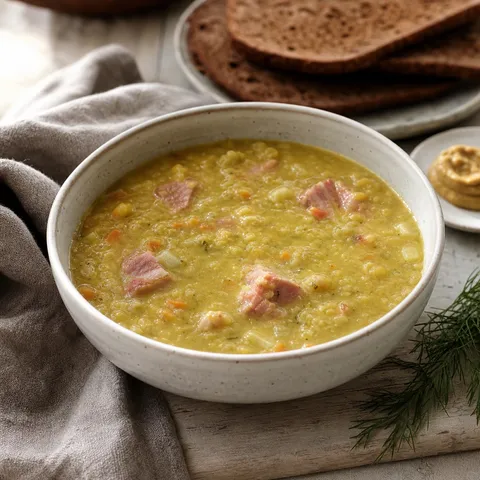
 Hernekeitto
Finland's beloved Thursday pea soup — yellow split peas simmered with smoky ham until thick and hearty, traditionally served with a shot of Finnish mustard and pancakes.