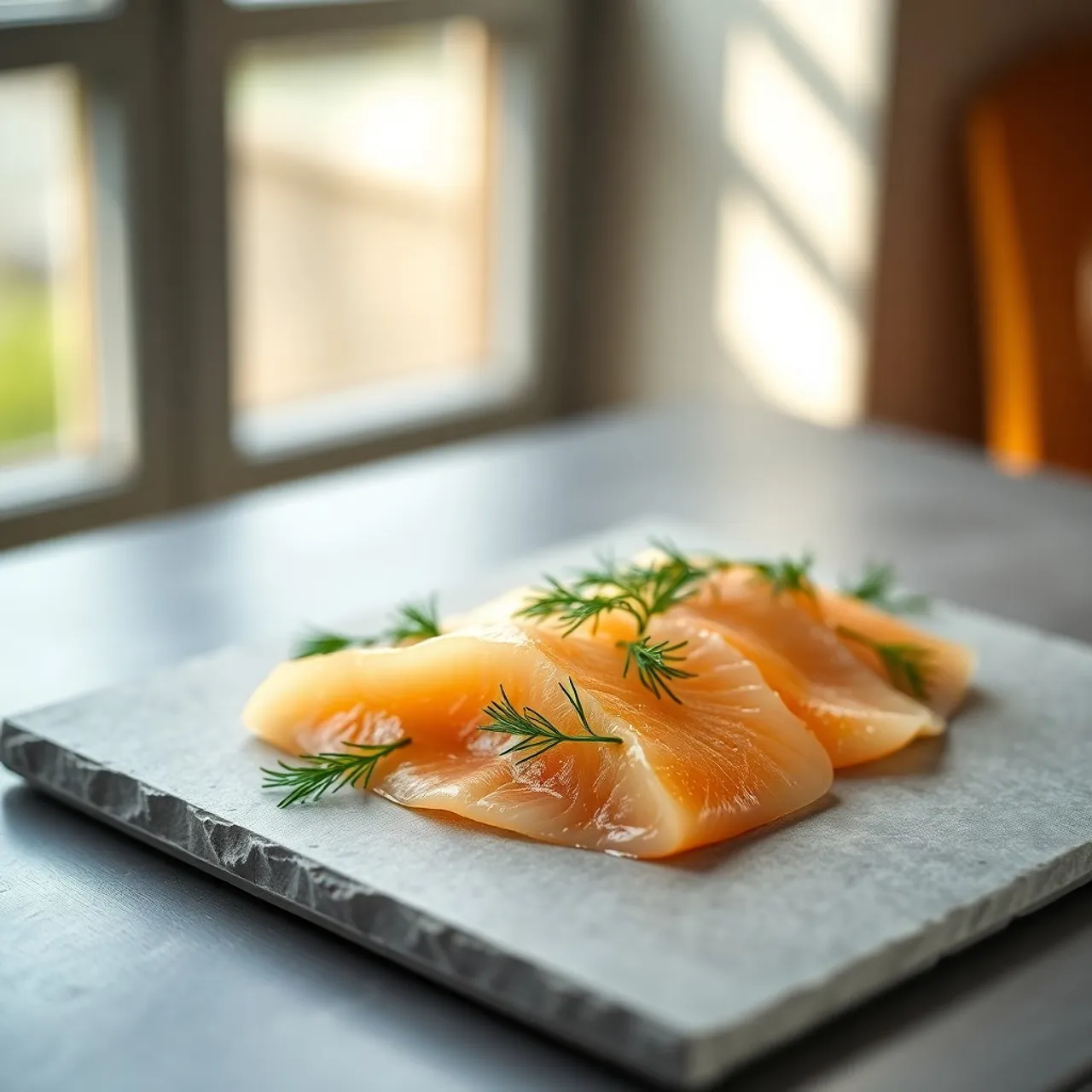
 Nordic Images are for illustrative purposes only, may be inaccurate, and do not guarantee the presence or absence of specific ingredients.
 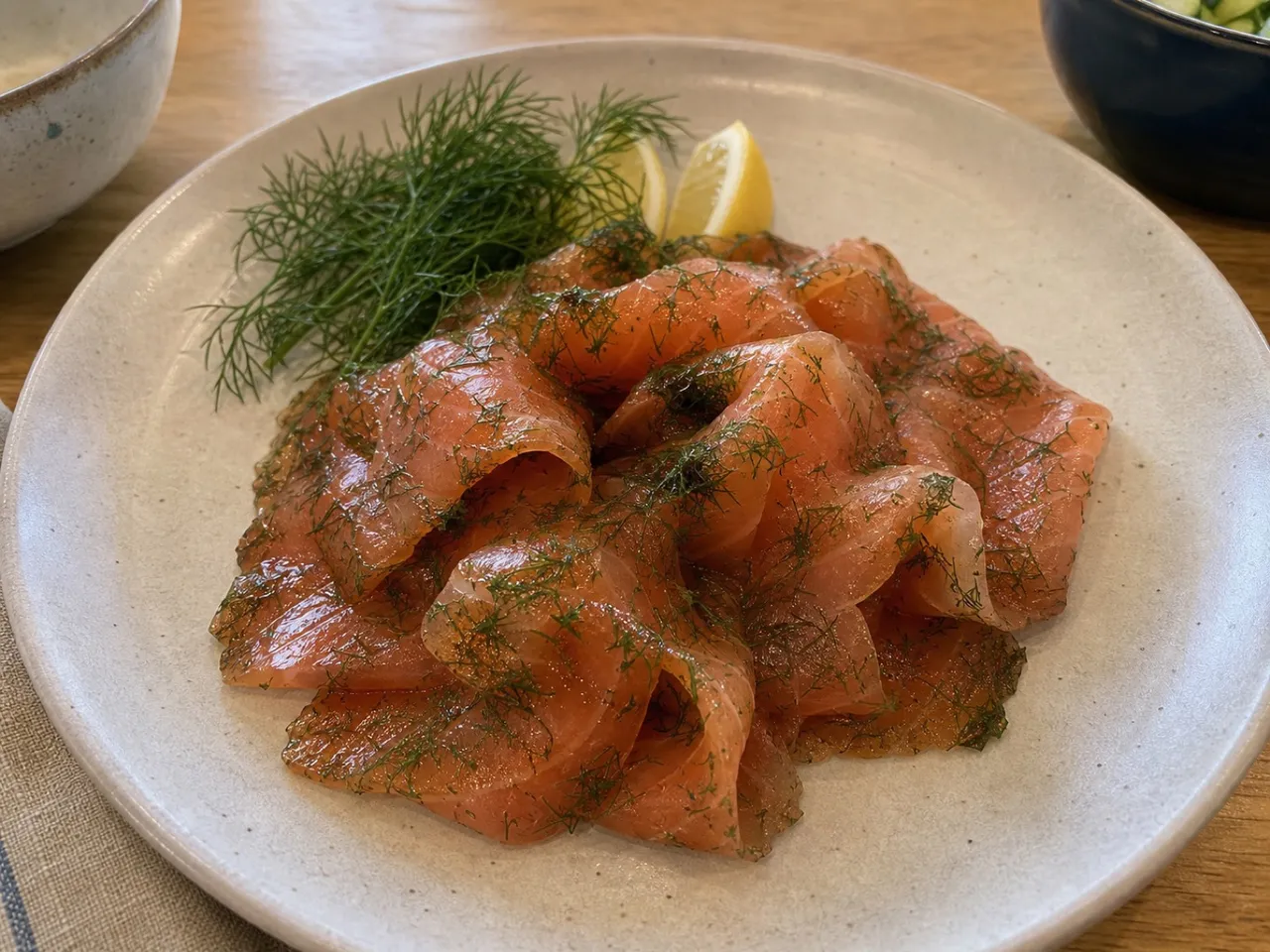 Serving Images are for illustrative purposes only, may be inaccurate, and do not guarantee the presence or absence of specific ingredients.
 Gravlax
Silky cured salmon kissed with dill, salt, and sugar — Scandinavia's elegant answer to smoked fish, served thin-sliced with mustard sauce.
Contains common allergens
In the app, Listahan checks these against your household automatically.
Instructions
6 steps- 1
Inspect the salmon for any remaining pin bones and remove them with tweezers. Pat the fillet completely dry with paper towels.
- 2
In a small bowl, whisk together the coarse sea salt, granulated sugar, and crushed white peppercorns until evenly combined.
- 3
Lay out a large piece of plastic wrap on a baking sheet. Place the salmon skin-side down. Rub the salt mixture thoroughly over the flesh side, then press the chopped dill onto the seasoned surface.
- 4
Tightly wrap the salmon in multiple layers of plastic wrap to prevent leakage. Place a second baking sheet on top and weigh it down with heavy cans.
- 5
Refrigerate for 48 hours. Turn the wrapped salmon over every 12 hours to ensure even curing.
- 6
Unwrap the salmon, scrape off the dill and spices, and gently pat dry. Slice very thinly on a bias to serve.
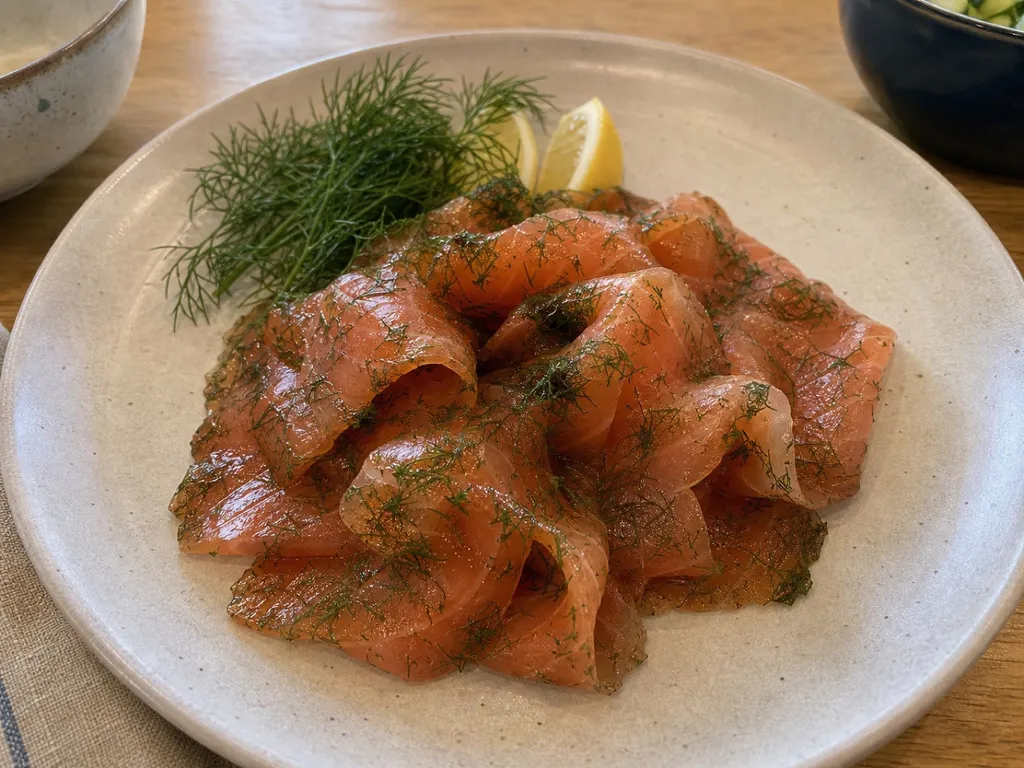 Images are for illustrative purposes only, may be inaccurate, and do not guarantee the presence or absence of specific ingredients.
 Listahan Family Score™
64/100
Works for many families
Score reflects how well this recipe fits a typical busy household. In the app, your Family Score is personalized to your household's allergens, kids, and pantry.
Nutrition
per serving415
Calories
33 g
Protein
17 g
Carbs
22 g
Fat
Estimated per serving. Actual values depend on the brands and portions you use.
Listahan cooking guide
Chef notes & practical guide
Technique notes, ingredient swaps, serve-alongside ideas, storage guidance, and equipment for this recipe.
Cultural context
Gravlax is a Scandinavian method of curing salmon that predates refrigeration by centuries, developed by fishermen who buried salted fish in the ground to ferment slightly during transport. The name literally means 'buried salmon' in Swedish and Norwegian. Today the fermentation step is dropped and the cure relies purely on salt, sugar, and dill, but the technique remains unchanged across Sweden, Norway, and Denmark.
Listahan note
This version uses a 50/50 salt-to-sugar ratio by weight and a generous dill pack to produce salmon that is silky in the center without tipping into mushiness over a 48-hour cure.
Technique cues
- The salt draws moisture out of the fish through osmosis, concentrating flavor and firming the texture simultaneously — a coarser grind of sea salt works better than fine table salt because it draws moisture more gradually and does not over-cure the outer layer before the center is reached.
- Weighting the salmon during curing is not optional: even pressure across the fillet compacts the flesh so the finished slices hold together cleanly instead of falling apart in flakes when you run a knife along the skin.
- Slice against the grain at a very low angle (almost parallel to the cutting board) to produce the translucent, wide ribbons characteristic of properly presented gravlax — a vertical cut severs the muscle fibers and makes the texture seem tougher than it is.
Kitchen flow
- Parallel prep
- Mix the cure while the salmon is still cold from the fridge; have plastic wrap and a baking dish ready before you open the fish.
- Make-ahead
- Gravlax is entirely make-ahead — it requires 48 hours of curing in the refrigerator and actually improves if sliced an hour before serving so the flavors bloom at room temperature.
- Leftover move
- Leftover gravlax makes an excellent breakfast on rye toast with cream cheese and capers, or fold thin slices into scrambled eggs just before plating.
- Cleanup rhythm
- The active work is under 10 minutes; wrap the salmon tightly and refrigerate, then rinse the baking dish and board immediately before the salt crust dries.
Ingredient brief
Role, handling, and swap guidance for each key ingredient.
1 kg (2.2 lbs) fresh salmon fillet, skin-on, pin bones removed
primary protein
Purpose: The skin acts as a structural backing that holds the fillet together during curing and slicing; center-cut fillets with even thickness cure most uniformly.
Handling: Run your fingertips along the flesh side and use needle-nose pliers to remove any remaining pin bones before applying the cure.
Adaptation: Arctic char is the closest substitute — it has a similar fat content and cures in roughly the same time.
85g (1/3 cup) coarse sea salt
curing agent
Purpose: Salt dehydrates the surface, inhibits bacterial growth, and firms the protein structure so the finished fish can be sliced paper-thin.
Handling: Measure by weight rather than volume — coarse salt is much less dense than fine salt, and volume measurements will under-cure the fish.
Adaptation: Kosher salt works equally well; avoid iodized table salt, which imparts a metallic taste.
100g (1/2 cup) granulated white sugar
cure balance and flavor
Purpose: Sugar draws moisture and counterbalances the salt's sharpness, producing a slightly sweet, rounded cure that lets the salmon's natural richness come through.
Handling: Mix salt and sugar together thoroughly before applying so the cure is evenly distributed across the fillet.
Adaptation: Light brown sugar adds a faint molasses note that works well if you want a slightly deeper flavor.
1 large bunch of fresh dill, roughly chopped
aromatic crust
Purpose: Dill's anise-adjacent compounds infuse the outer layer of the salmon during curing, providing the herbal character that distinguishes gravlax from plain salt-cured salmon.
Handling: Use stems and fronds alike — the stems have concentrated flavor and soften against the fish over 48 hours.
Adaptation: A small amount of fresh tarragon can supplement or partially replace dill if your bunch is thin.
1 tbsp white peppercorns, crushed
subtle heat
Purpose: Crushed (not ground) peppercorns provide occasional pops of mild heat without making the overall cure sharp or pungent.
Handling: Crush with the bottom of a heavy pan or a mortar — aim for cracked pieces, not fine powder.
Adaptation: Pink peppercorns are a milder, visually striking alternative that is traditional in some Scandinavian preparations.
Technique notes
- Flip the salmon packet once at the 24-hour mark so both sides of the fillet spend equal time submerged in the brine that pools at the bottom of the dish.
- After curing, scrape off the dill and cure gently with the back of a knife rather than rinsing under water — rinsing washes away surface flavor and softens the outer texture.
- A very sharp, thin-bladed slicing knife (or a flexible boning knife) is essential; a dull blade drags and tears the delicate cured flesh rather than gliding through it.
Ingredient swaps
- Pescatarian-friendly serving
- Serve on rice crackers or cucumber rounds instead of traditional bread to keep it naturally gluten-free and lighter.
- Gluten-free direction
- The gravlax itself is gluten-free; pair with certified gluten-free crispbread or blinis made from buckwheat flour.
- Lower-sodium direction
- Reduce the cure by 20% and extend the curing time by 12 hours — the salmon will be slightly less firm but still fully cured.
Serve alongside
- Swedish crispbread with cultured butter and capers
- simple cucumber salad with rice vinegar and fresh dill
- soft-boiled eggs with mustard dill sauce
- pickled red onions on rye toast points
- dry aquavit served ice-cold
- crisp Chablis or unoaked Chardonnay
- sparkling water with lemon
Serving suggestions only — check pairings for your household's allergens.
Storage & reheating
- Once cured, wrap tightly in plastic and refrigerate for up to 5 days; the flavor continues to develop for the first 2 days after curing is complete.
- Slice only what you need and keep the rest in one piece — pre-sliced gravlax dries out faster.
- Gravlax does not freeze well once cured; the thawing process breaks down the texture significantly.
Equipment
- large baking dish or rimmed sheet pan
- plastic wrap
- heavy weight (a second dish filled with canned goods)
- thin-bladed slicing knife
Make this household-aware
Listahan Pro checks this recipe against your household's allergens, finds pantry-aware swaps, builds the shopping list, and helps you plan the week around it.
Plan it in Listahan
Add Gravlax to your week, check it against your household's allergens, and build the shopping list automatically.
More Nordic recipes
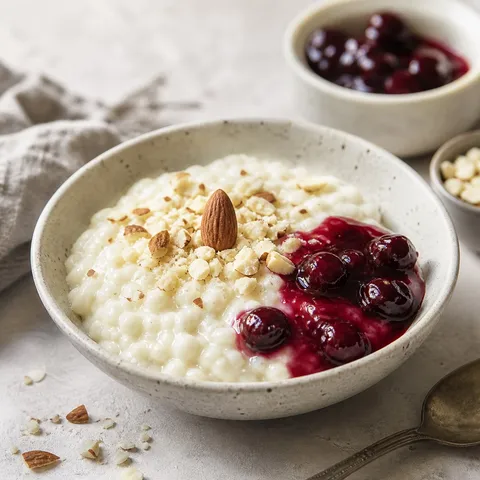 Nordic Lens Verified Images are for illustrative purposes only, may be inaccurate, and do not guarantee the presence or absence of specific ingredients.
 Risalamande
A creamy Danish cold rice pudding folded with whipped cream and chopped almonds, served with a glossy warm cherry sauce on Christmas Eve.
 Nordic Lens Verified Images are for illustrative purposes only, may be inaccurate, and do not guarantee the presence or absence of specific ingredients.
 Risgrynsgröt
Creamy Nordic rice porridge, slow-cooked until thick and comforting, scented with cinnamon and served with a pat of melting butter — Christmas morning in a bowl.
 Nordic Lens Verified Images are for illustrative purposes only, may be inaccurate, and do not guarantee the presence or absence of specific ingredients.
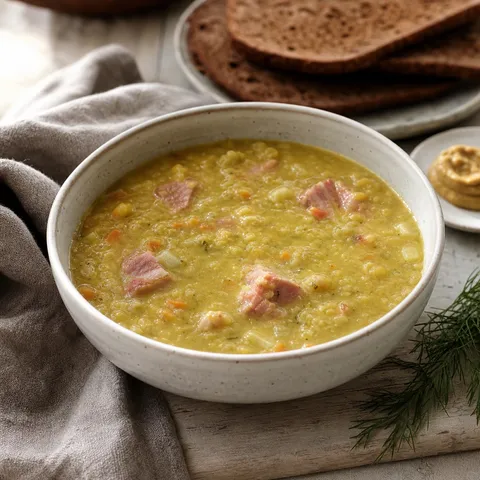
 Hernekeitto
Finland's beloved Thursday pea soup — yellow split peas simmered with smoky ham until thick and hearty, traditionally served with a shot of Finnish mustard and pancakes.