 Nordic Images are for illustrative purposes only, may be inaccurate, and do not guarantee the presence or absence of specific ingredients.
  Serving Images are for illustrative purposes only, may be inaccurate, and do not guarantee the presence or absence of specific ingredients.
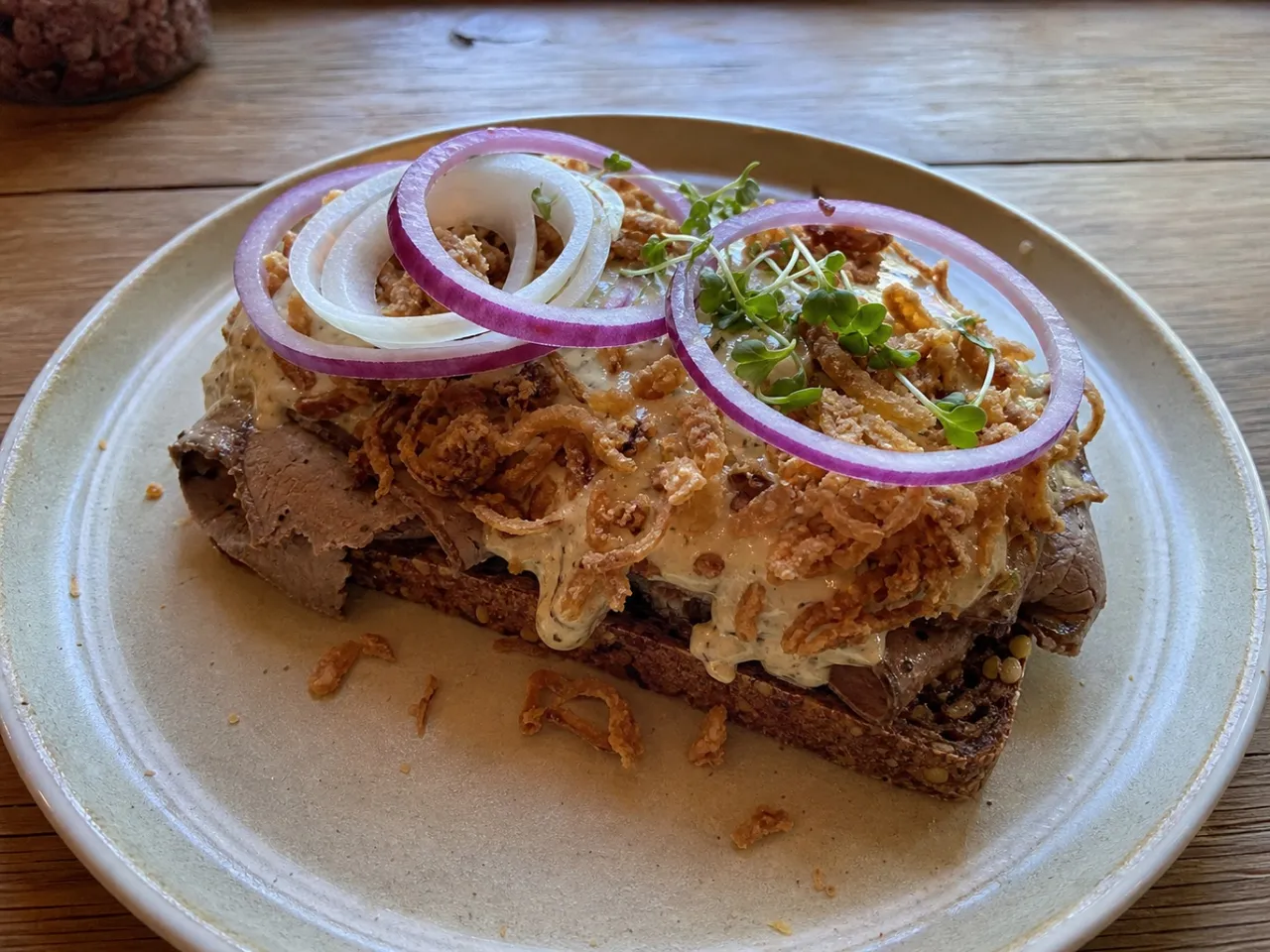
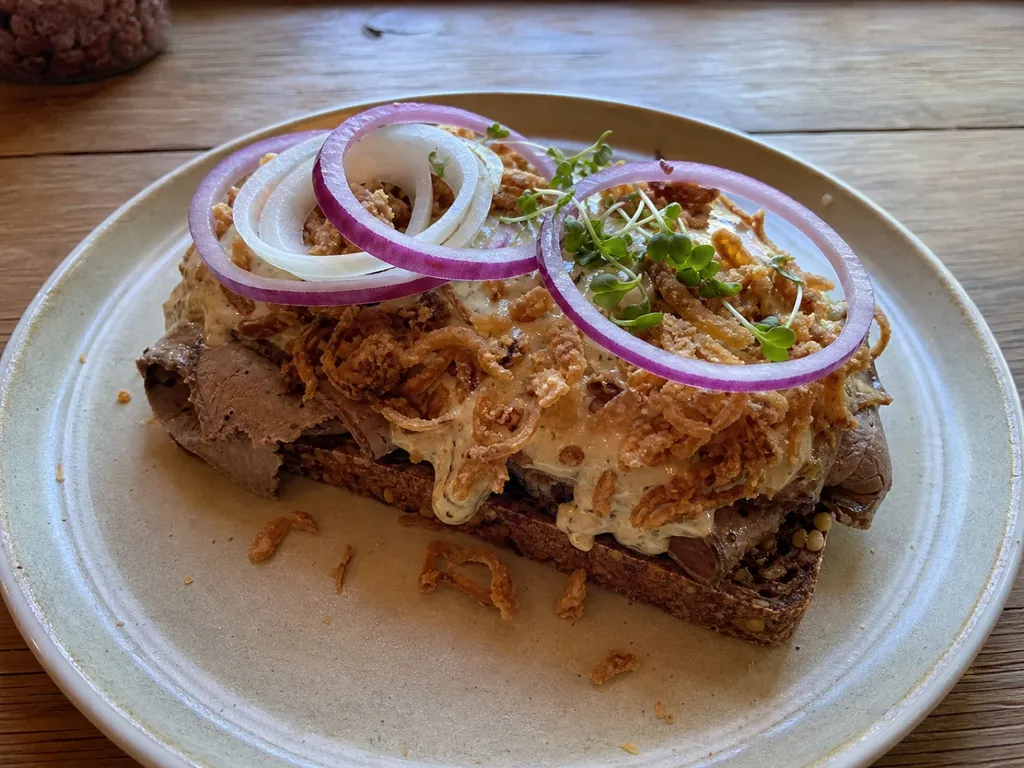
 Smørrebrød
Denmark's open-faced rye bread tradition — piled high with pickled herring, smoked salmon, or roast beef and crowned with bright, beautiful toppings.
Contains common allergens
In the app, Listahan checks these against your household automatically.
Good to know
- Ready in under 30 minutes
Matched from this dish's own ingredients and timing. Browse more: 30-minute meals
Instructions
6 steps- 1
Slice the rye bread thickly (about 1/2 inch thick). The bread should be dense, seeded, and slightly sour.
- 2
Spread a generous, even layer of softened cultured butter completely to the edges of each slice (this prevents the bread from getting soggy).
- 3
Gently fold the roast beef slices and arrange them decoratively on top of the buttered bread. Give them height rather than laying them flat.
- 4
Dollop a tablespoon of remoulade in the center of the roast beef on each sandwich.
- 5
Sprinkle a generous handful of crispy fried onions over the remoulade.
- 6
Garnish with a sprig of fresh dill or chervil, and serve immediately with a knife and fork.
 Images are for illustrative purposes only, may be inaccurate, and do not guarantee the presence or absence of specific ingredients.
 Listahan Family Score™
67/100
Works for many families
Score reflects how well this recipe fits a typical busy household. In the app, your Family Score is personalized to your household's allergens, kids, and pantry.
Nutrition
per serving1235
Calories
63 g
Protein
62 g
Carbs
80 g
Fat
Estimated per serving. Actual values depend on the brands and portions you use.
Listahan cooking guide
Chef notes & practical guide
Technique notes, ingredient swaps, serve-alongside ideas, storage guidance, and equipment for this recipe.
Cultural context
Smørrebrød — literally 'butter bread' in Danish — has been the daily lunch of Danish workers and professionals since the 19th century, when it evolved from a simple open-faced sandwich into an elaborate architectural form with strict aesthetic rules. Copenhagen's smørrebrød restaurants (smørrrebræds places) codify the order of assembly, the direction of toppings, and the garnishes with near-ceremonial precision. The roast beef variant topped with remoulade and crispy onions is one of the most beloved combinations in the Danish repertoire.
Listahan note
This version focuses on the roast beef topping and relies on a properly buttered rye base — the butter layer is not decoration but a moisture barrier that keeps the dense bread from going soggy under the toppings.
Technique cues
- The bread is load-bearing: Danish rugbrød is a dense, slightly sour rye loaf that can support heavy, moist toppings without collapsing — standard sandwich bread or soft rye will buckle and make the whole assembly messy to eat.
- The butter must be spread generously to the very edges of each slice, covering every millimeter — in the Danish tradition this is not optional richness but a structural element that prevents the bread from absorbing moisture from the toppings.
- Smørrebrød is eaten with a knife and fork, never picked up, which frees you to pile toppings generously — the architecture collapses the moment you try to lift it.
Kitchen flow
- Parallel prep
- Slice the beef and prepare garnishes while the butter softens at room temperature; assemble the open-faced sandwiches in the last 5 minutes before eating.
- Make-ahead
- Buttered bread can be prepared up to 2 hours ahead and covered with plastic wrap; add all toppings immediately before serving to preserve crunch.
- Leftover move
- Leftover components (roast beef, remoulade, rye bread) keep separately in the refrigerator; assemble fresh individual portions as needed rather than storing assembled sandwiches.
- Cleanup rhythm
- Smørrebrød involves no cooking, so cleanup is minimal — just boards and knives; prepare everything on one large cutting board to minimize surfaces.
Ingredient brief
Role, handling, and swap guidance for each key ingredient.
4 thick slices of dense Danish rye bread (Rugbrød)
structural base
Purpose: The dense crumb and sour flavor of rugbrød provide the textural and flavor foundation that lighter breads cannot — the slight sourness cuts the richness of the butter and meat.
Handling: Slice cold from the refrigerator (rye bread is much easier to cut cleanly when cold) and let it come to room temperature for 10 minutes before buttering.
Adaptation: A dense German pumpernickel is the closest substitute available in North American grocery stores.
4 tbsp high-quality cultured butter, softened
moisture barrier and flavor
Purpose: Cultured butter has a tangier, more complex flavor than sweet cream butter and complements the sour notes of the rye without adding sweetness.
Handling: Soften at room temperature for 30 minutes so it spreads without tearing the bread; cold butter rips the surface of dense rye.
Adaptation: Standard unsalted butter works, or add a tiny pinch of salt to sweet cream butter to approximate the cultured flavor.
200g (7 oz) roast beef, thinly sliced
primary topping
Purpose: Thinly sliced roast beef layers flat across the bread to form a base for the subsequent toppings; thick-cut slices bunch up and make the assembly unstable.
Handling: Slice against the grain as thinly as possible, or ask a deli counter to slice it on a machine for even results.
Adaptation: Leftover roast pork or smoked turkey works in this format; the remoulade and onions pair equally well with both.
4 tbsp remoulade (Danish condiment)
sauce and binding element
Purpose: Danish remoulade — a mayonnaise base with pickled vegetables, mustard, and turmeric — adds acidity and color that lifts the richness of the beef and butter.
Handling: Spoon remoulade over the beef just before serving; spreading it too far in advance causes the bread to soften.
Adaptation: A homemade version of tartar sauce with a teaspoon of yellow mustard and finely diced cornichons approximates the flavor profile.
1/2 cup crispy fried onions
textural contrast and garnish
Purpose: Fried onions provide the critical crunch that the otherwise soft assembly lacks, and their sweetness contrasts the sour rye and tangy remoulade.
Handling: Add fried onions at the very last moment before serving — they soften within minutes when in contact with the remoulade.
Adaptation: Thinly sliced raw red onion rings are the fresher alternative if you want sharpness instead of sweetness.
Technique notes
- Layer the roast beef loosely in ruffled folds rather than flat-stacked — the open structure of the ruffles allows the remoulade to settle into the layers and creates a more visually appealing presentation.
- Traditional Danish smørrebrød presentations often include a single, carefully placed sprig of fresh dill or parsley as the final garnish — this is not frivolous; the fresh herb lifts the aroma when you lean in to eat.
- Serve the individual open-faced sandwiches on a wooden board or slate and eat them in a specific order if serving multiple varieties — traditionally mild flavors first, stronger flavors last.
Ingredient swaps
- Gluten-free direction
- Substitute a dense seed-and-nut loaf made from certified gluten-free flax and sunflower seeds — the texture is different but the structural requirement is the same.
- Dairy-free option
- Use a high-quality vegan butter spread; choose one with a cultured or tangy flavor profile rather than a plain coconut-oil base.
- Vegetarian direction
- Replace the roast beef with thick slices of roasted beet or avocado; the remoulade and crispy onions pair well with both.
Serve alongside
- simple cucumber salad with white vinegar and dill
- cold potato salad with chives and sour cream
- smoked salmon with capers on a separate slice
- cold Danish pilsner
- aquavit served neat
- sparkling water with cucumber
Serving suggestions only — check pairings for your household's allergens.
Storage & reheating
- Store components separately: rye bread wrapped at room temperature for up to 3 days, roast beef refrigerated for up to 3 days.
- Do not store assembled smørrebrød — the remoulade softens the bread and the onions lose their crunch within an hour.
- Rugbrød freezes well for up to 1 month; slice before freezing and thaw individual slices at room temperature.
Equipment
- large cutting board
- sharp slicing knife or deli slicer
- butter knife or small offset spatula
- serving board or plate
Make this household-aware
Listahan Pro checks this recipe against your household's allergens, finds pantry-aware swaps, builds the shopping list, and helps you plan the week around it.
Plan it in Listahan
Add Smørrebrød to your week, check it against your household's allergens, and build the shopping list automatically.
More Nordic recipes
 Nordic Lens Verified Images are for illustrative purposes only, may be inaccurate, and do not guarantee the presence or absence of specific ingredients.
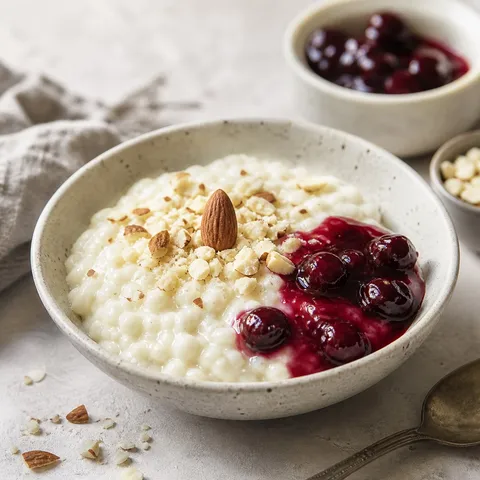
 Risalamande
A creamy Danish cold rice pudding folded with whipped cream and chopped almonds, served with a glossy warm cherry sauce on Christmas Eve.
 Nordic Lens Verified Images are for illustrative purposes only, may be inaccurate, and do not guarantee the presence or absence of specific ingredients.
 Risgrynsgröt
Creamy Nordic rice porridge, slow-cooked until thick and comforting, scented with cinnamon and served with a pat of melting butter — Christmas morning in a bowl.
 Nordic Lens Verified Images are for illustrative purposes only, may be inaccurate, and do not guarantee the presence or absence of specific ingredients.
 Hernekeitto
Finland's beloved Thursday pea soup — yellow split peas simmered with smoky ham until thick and hearty, traditionally served with a shot of Finnish mustard and pancakes.