 Nordic Images are for illustrative purposes only, may be inaccurate, and do not guarantee the presence or absence of specific ingredients.
  Serving Images are for illustrative purposes only, may be inaccurate, and do not guarantee the presence or absence of specific ingredients.
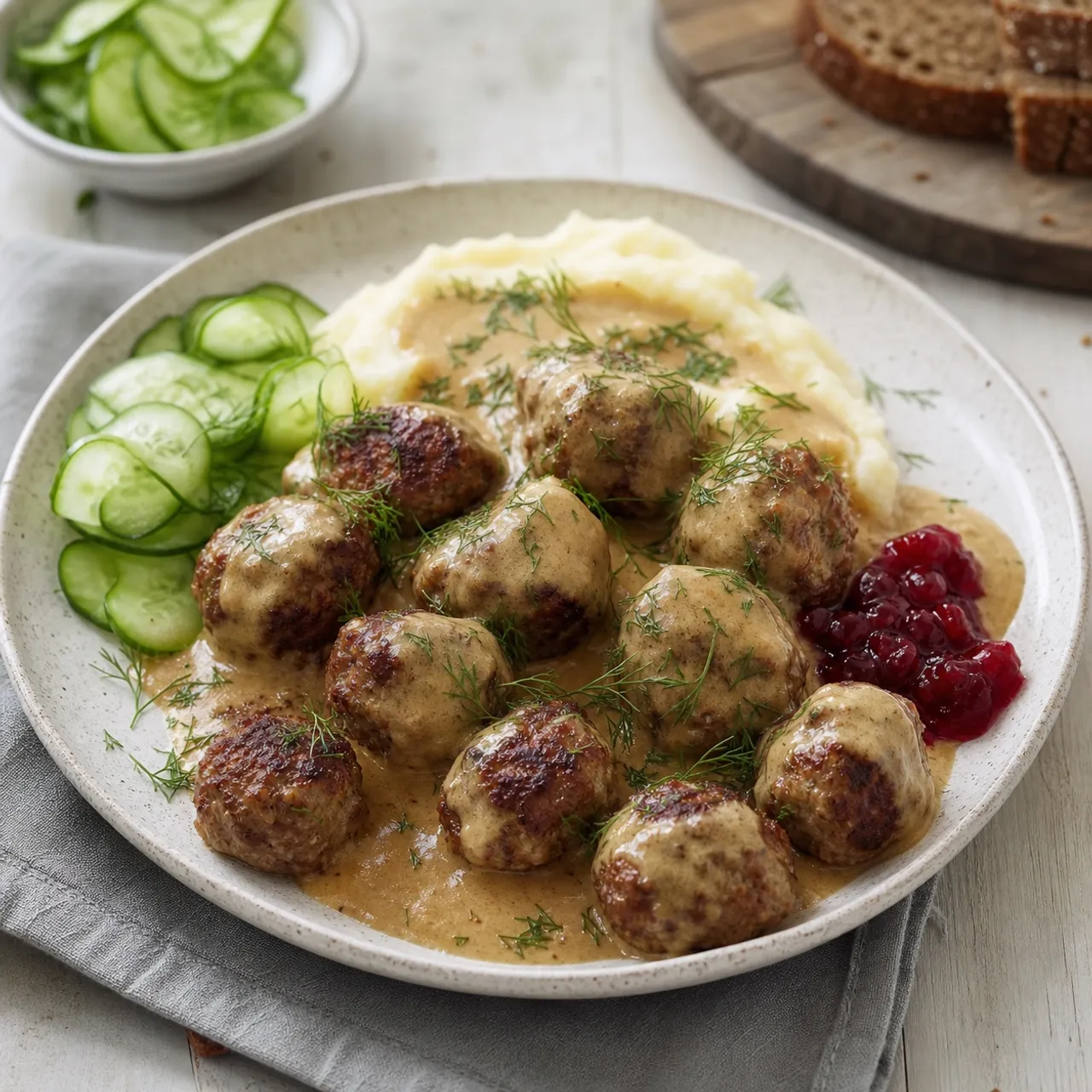
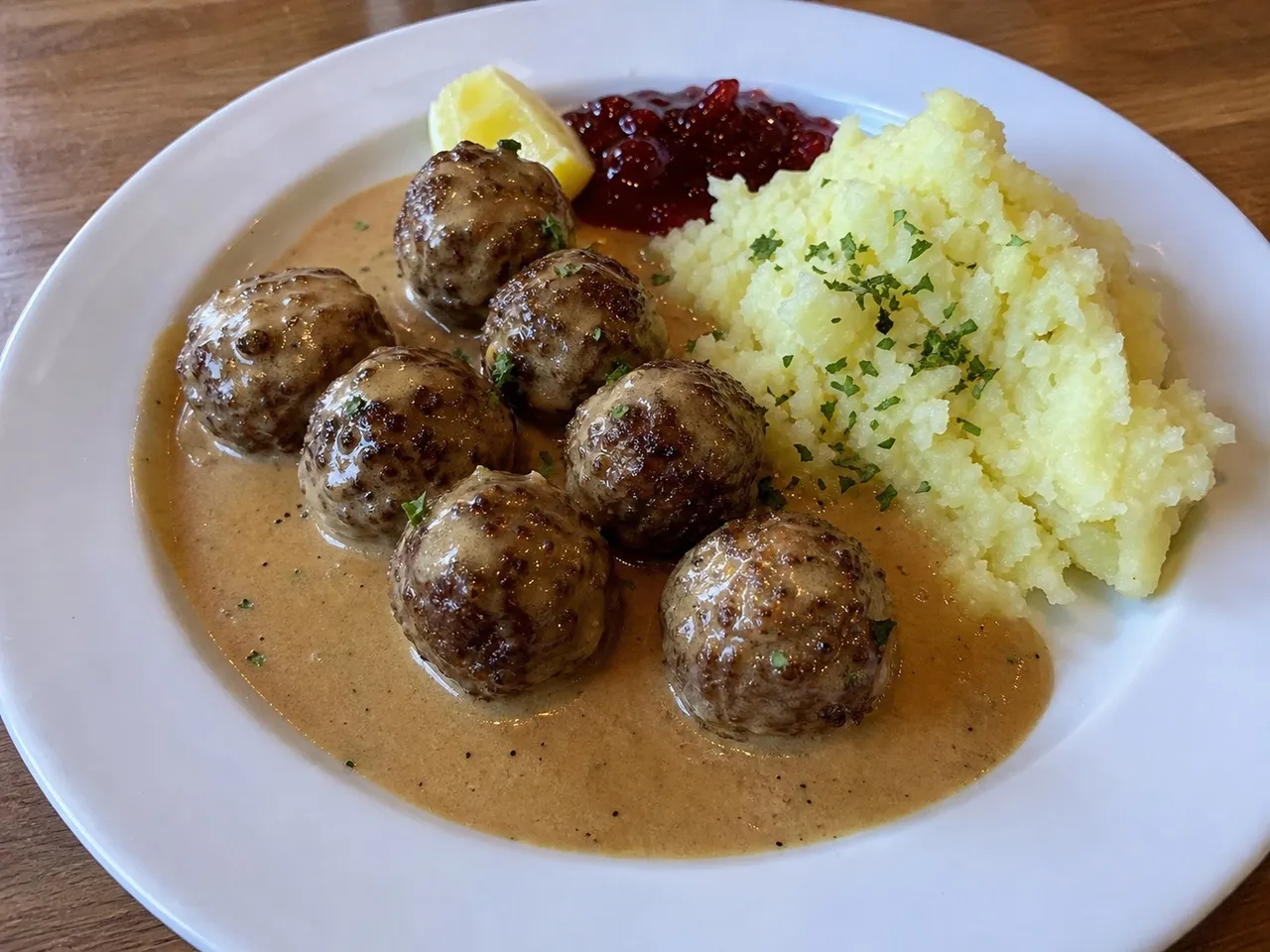
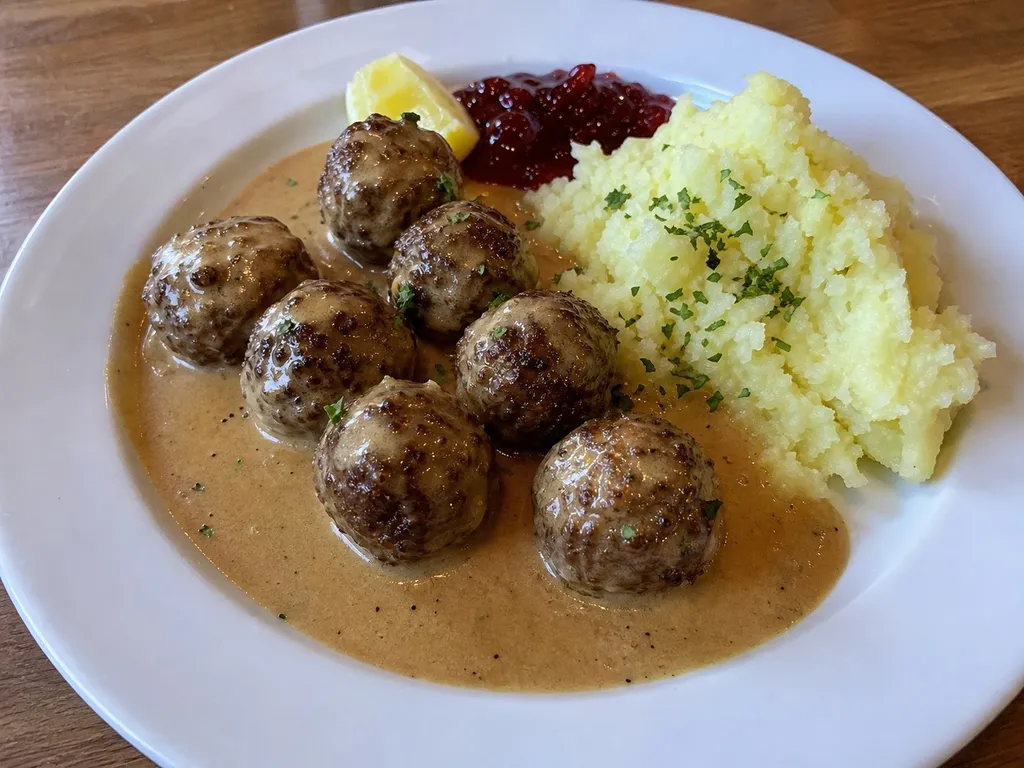
 Swedish Meatballs (Köttbullar)
Tender spiced pork-and-beef meatballs smothered in velvety cream gravy — Sweden's ultimate comfort dish, perfect over buttered egg noodles or mashed potatoes.
Contains common allergens
In the app, Listahan checks these against your household automatically.
Instructions
6 steps- 1
In a large mixing bowl, combine the breadcrumbs and heavy cream. Let sit for 5-10 minutes until the crumbs soften and absorb the liquid.
- 2
Add the finely minced onion, ground beef, ground pork, allspice, nutmeg, salt, and pepper to the bowl. Use your hands to mix gently but thoroughly.
- 3
Moisten your hands with cold water and roll the mixture into 1-inch meatballs (about 1.5 tbsp each), placing them on a lined baking sheet.
- 4
Heat a large skillet over medium-high heat and melt the butter. Working in batches to avoid crowding, fry the meatballs.
- 5
Roll the pan frequently to ensure the meatballs brown evenly on all sides, about 8-10 minutes per batch. They should be deeply browned and cooked to an internal temperature of 160°F (71°C).
- 6
Transfer the cooked meatballs to a warm plate and use the pan drippings to prepare a traditional creamy brown gravy.
 Images are for illustrative purposes only, may be inaccurate, and do not guarantee the presence or absence of specific ingredients.
 Listahan Family Score™
75/100
Good fit for most families
Score reflects how well this recipe fits a typical busy household. In the app, your Family Score is personalized to your household's allergens, kids, and pantry.
Nutrition
per serving555
Calories
46 g
Protein
9 g
Carbs
36 g
Fat
Estimated per serving. Actual values depend on the brands and portions you use.
Listahan cooking guide
Chef notes & practical guide
Technique notes, ingredient swaps, serve-alongside ideas, storage guidance, and equipment for this recipe.
Cultural context
Köttbullar have been a fixture of Swedish home cooking since at least the 18th century, though the recipe entered popular consciousness largely through the smorgasbord tradition and, later, IKEA's global cafeterias. Unlike the Italian-American meatball, which is built for tomato sauce, the Swedish version is sized small, seasoned with warm spices like allspice and nutmeg, and served with a cream-based pan gravy and lingonberry jam — a sweet-tart counterpoint that is not optional decoration. The pork-and-beef blend is standard across Sweden, though all-beef versions exist.
Listahan note
This version soaks the breadcrumbs in heavy cream before mixing to guarantee a tender, springy interior even when the meatballs are browned hard in butter for a proper crust.
Technique cues
- Soaking the breadcrumbs in cream (a panade) coats the gluten strands and inhibits them from tightening during cooking — this is what separates a tender Swedish meatball from a dense one, and skipping the soak is the most common mistake home cooks make.
- Frying in butter over medium-high heat rather than baking is the authentic method and produces a brown, slightly crispy exterior that holds the cream gravy rather than absorbing it — shake the pan continuously in the last minute of cooking to roll the meatballs and brown them evenly on all sides.
- The allspice-to-nutmeg ratio matters: allspice is the dominant flavor signature; nutmeg is background warmth — reversing the quantities produces a meatball that tastes more Germanic than Swedish.
Kitchen flow
- Parallel prep
- While the breadcrumbs soak in cream, mince the onion and measure out the spices so everything is ready to mix at once.
- Make-ahead
- Roll the meatballs up to 24 hours ahead and refrigerate on a parchment-lined tray; brown them directly from cold — they hold their shape better than room-temperature balls.
- Leftover move
- Leftover meatballs reheat beautifully in the cream gravy over low heat; serve in a sandwich on white bread with lingonberry jam for a classic Swedish lunch.
- Cleanup rhythm
- Deglaze the meatball pan immediately with a splash of broth before making the gravy — the fond lifts easily when the pan is still hot and becomes the base of the sauce.
Ingredient brief
Role, handling, and swap guidance for each key ingredient.
500g (1 lb) ground beef
primary protein base
Purpose: Beef provides the savory depth and structural backbone of the meatball; a medium-fat grind (80/20) keeps the finished ball moist through the browning process.
Handling: Keep the beef cold until mixing — warm fat smears rather than distributes, which can make the texture greasy.
Adaptation: All-beef using 80/20 works if pork is unavailable, though the texture will be slightly firmer.
500g (1 lb) ground pork
fat and tenderness
Purpose: Pork fat melts at a lower temperature than beef fat, keeping the interior juicy and adding a subtle sweetness that balances the allspice.
Handling: Mix pork and beef together with your hands until just combined — overworking develops toughness.
Adaptation: Ground veal is the traditional alternative in older Swedish recipes and produces a more delicate, lighter meatball.
1/2 cup plain breadcrumbs
binder and texture
Purpose: Breadcrumbs, once hydrated in cream, create a soft matrix that prevents the proteins from contracting into a dense ball during cooking.
Handling: Combine breadcrumbs and cream 5 minutes before mixing so the crumbs fully absorb the liquid and form a cohesive paste.
Adaptation: Crushed crackers or panko soaked in cream both work; day-old white bread torn fine and soaked gives the softest result.
1/4 tsp ground allspice
signature warm spice
Purpose: Allspice is the flavor that defines köttbullar as Swedish rather than generic — its clove-cinnamon-pepper character is unmistakable and should be detectable in the finished meatball.
Handling: Add allspice with the other spices before folding in the meat so it disperses evenly through the mix.
Adaptation: A tiny pinch of ground cloves can substitute in a pinch, but the flavor profile will shift noticeably.
2 tbsp unsalted butter (for frying)
frying medium and flavor
Purpose: Butter's milk solids brown and add a nutty, roasted backdrop to the meatball exterior that neutral oil cannot replicate.
Handling: Use a wide, heavy-bottomed skillet and let the butter foam and subside before adding meatballs — this signals the correct temperature to avoid steaming rather than browning.
Adaptation: A 50/50 mix of butter and neutral oil raises the smoke point slightly if your burners run hot.
Technique notes
- Wet your hands with cold water between rolling each meatball to prevent sticking and to produce a smoother surface that browns more evenly.
- Do not crowd the pan — meatballs need at least half an inch of space between them; work in batches of 12-15 and keep finished batches in a low oven (200°F) while you brown the rest.
- When building the cream gravy in the same pan, whisk in the flour off the heat first, then return to medium and add the broth gradually — adding cold liquid to a hot roux all at once causes lumps that are difficult to smooth out.
Ingredient swaps
- Dairy-free option
- Use full-fat oat milk or unsweetened soy creamer for the panade and the gravy — the result is slightly less rich but holds together well.
- Gluten-free direction
- Substitute certified gluten-free rolled oats, blended to a coarse flour, for the breadcrumbs; the texture stays tender and the oat flavor is subtle.
- Leaner option
- A blend of lean ground turkey and ground pork (50/50) reduces saturated fat while keeping the moisture the pork provides; add an extra tablespoon of cream to the panade.
Serve alongside
- creamy mashed potatoes with butter and white pepper
- lingonberry jam (served alongside, not stirred in)
- quick-pickled cucumber slices with dill and sugar
- steamed buttered egg noodles
- cold Swedish lager or pilsner
- lingonberry juice or sparkling berry drink
- light Pinot Noir
Serving suggestions only — check pairings for your household's allergens.
Storage & reheating
- Store cooled meatballs and gravy separately in the refrigerator for up to 4 days; the gravy thickens when cold and may need a splash of broth when reheating.
- Reheat over low heat in the gravy, stirring gently, or in a 325°F oven covered with foil for 15 minutes.
- Freeze browned but un-sauced meatballs in a single layer, then transfer to a bag; freeze for up to 2 months and add directly to fresh gravy without thawing.
Equipment
- large heavy-bottomed skillet (12-inch)
- mixing bowl
- small cookie scoop or tablespoon measure for even sizing
- whisk for the gravy
Make this household-aware
Listahan Pro checks this recipe against your household's allergens, finds pantry-aware swaps, builds the shopping list, and helps you plan the week around it.
Plan it in Listahan
Add Swedish Meatballs (Köttbullar) to your week, check it against your household's allergens, and build the shopping list automatically.
More Nordic recipes
 Nordic Lens Verified Images are for illustrative purposes only, may be inaccurate, and do not guarantee the presence or absence of specific ingredients.
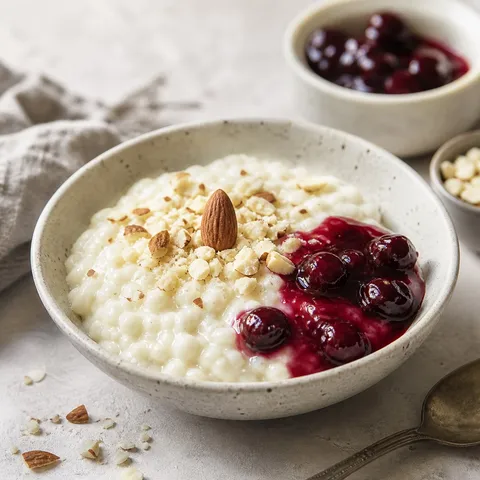
 Risalamande
A creamy Danish cold rice pudding folded with whipped cream and chopped almonds, served with a glossy warm cherry sauce on Christmas Eve.
 Nordic Lens Verified Images are for illustrative purposes only, may be inaccurate, and do not guarantee the presence or absence of specific ingredients.
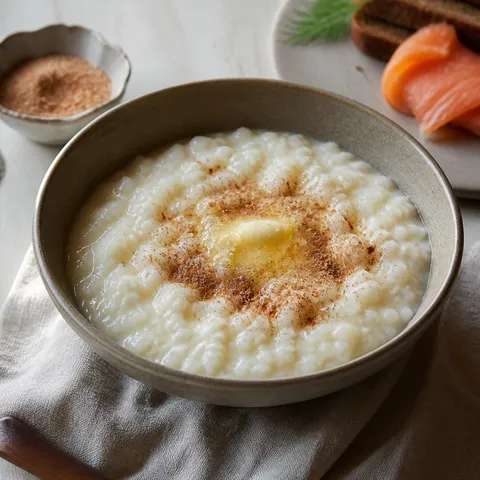
 Risgrynsgröt
Creamy Nordic rice porridge, slow-cooked until thick and comforting, scented with cinnamon and served with a pat of melting butter — Christmas morning in a bowl.
 Nordic Lens Verified Images are for illustrative purposes only, may be inaccurate, and do not guarantee the presence or absence of specific ingredients.
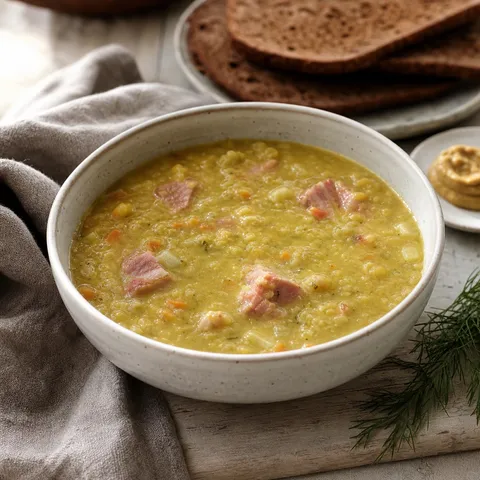
 Hernekeitto
Finland's beloved Thursday pea soup — yellow split peas simmered with smoky ham until thick and hearty, traditionally served with a shot of Finnish mustard and pancakes.