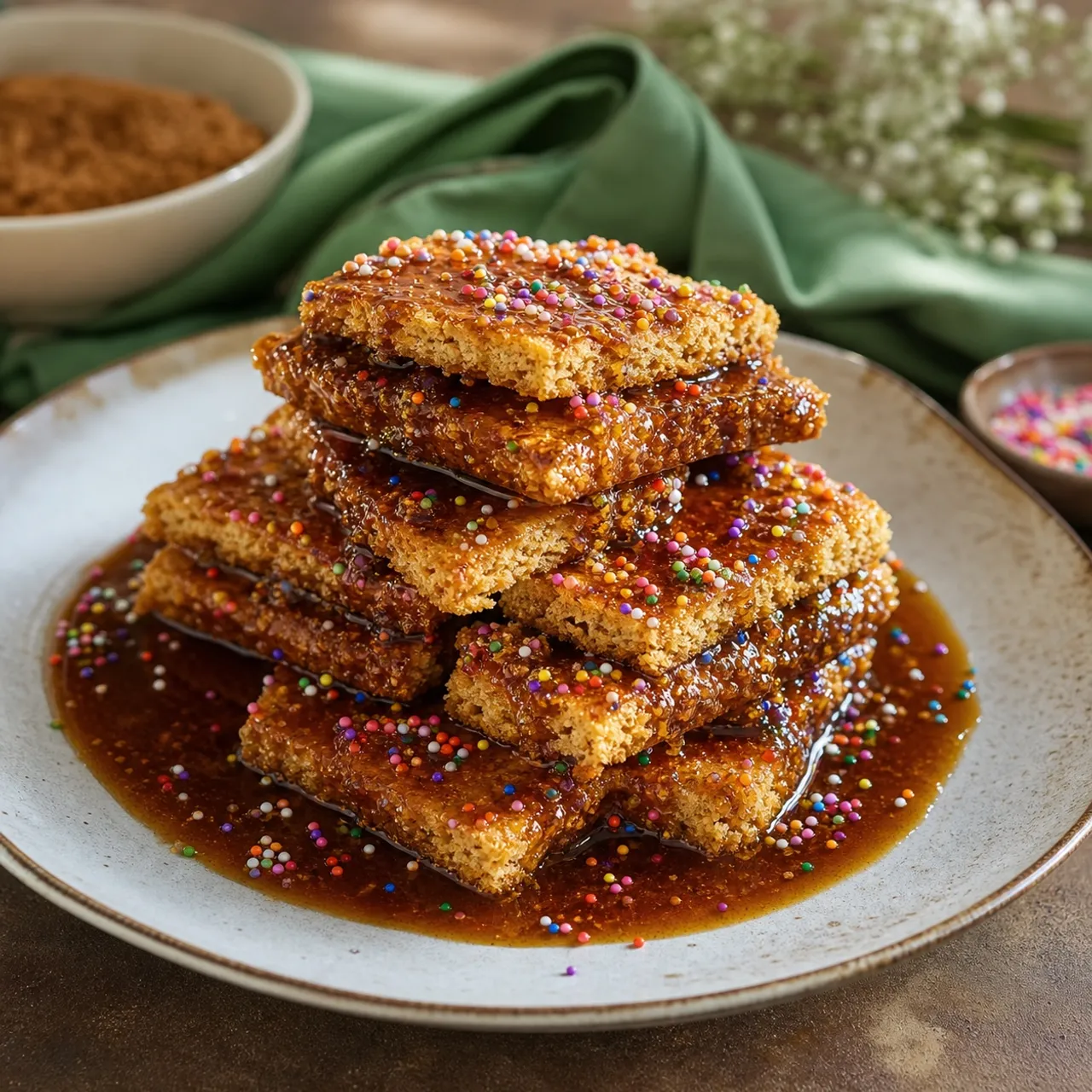
 Peruvian Images are for illustrative purposes only, may be inaccurate, and do not guarantee the presence or absence of specific ingredients.
 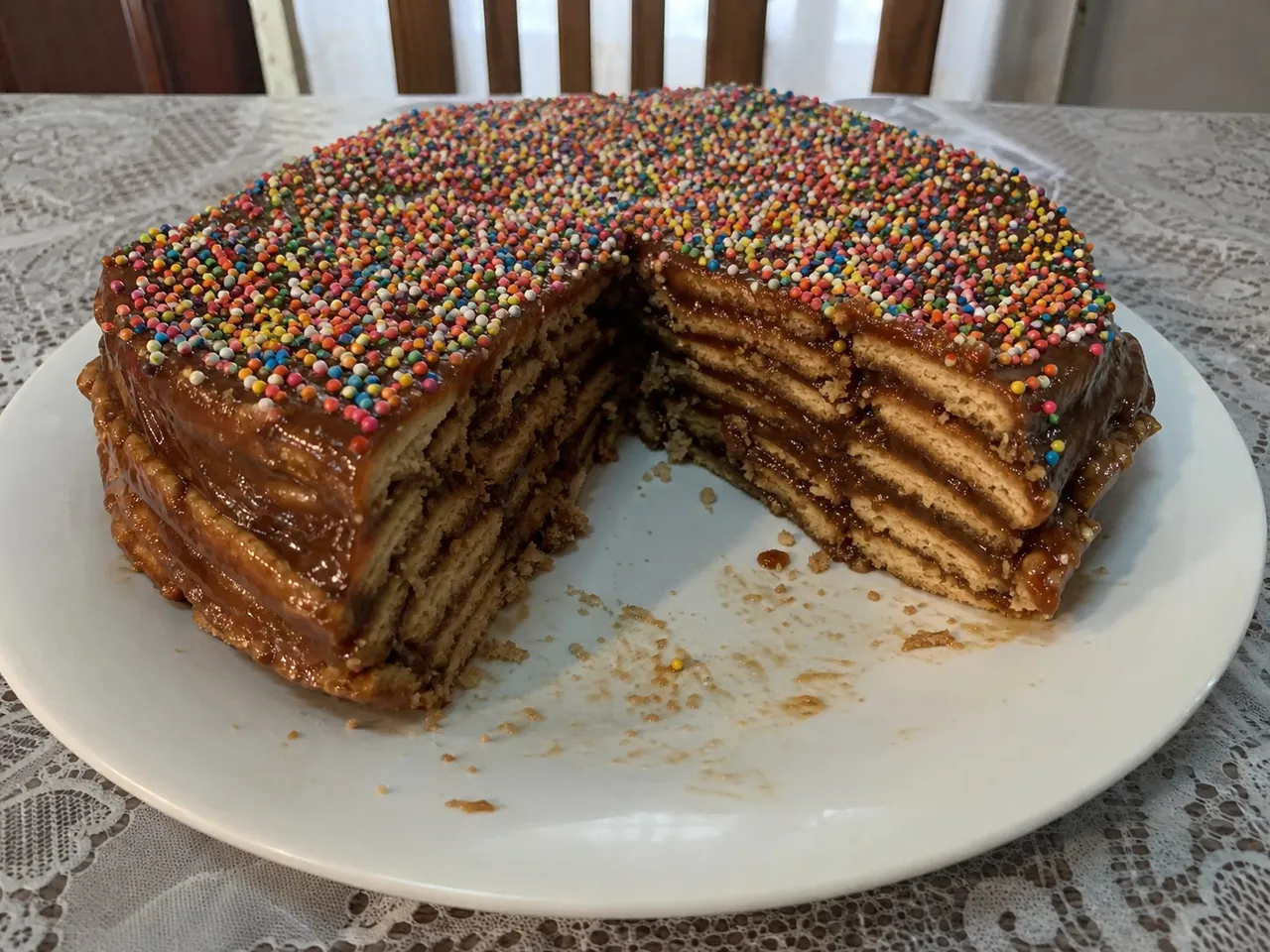 Serving Images are for illustrative purposes only, may be inaccurate, and do not guarantee the presence or absence of specific ingredients.
 Turrón de Doña Pepa (Peruvian Anise Nougat Cake)
Stacked layers of crisp anise-scented shortbread bathed in fig and chancaca syrup, festooned with colorful candy sprinkles, a traditional October dessert.
Contains common allergens
In the app, Listahan checks these against your household automatically.
Good to know
- Crispy
Matched from this dish's own ingredients and timing. Browse more: crispy recipes
Instructions
7 steps- 1
Combine the flour, baking powder, anise seeds, shortening, and butter, cutting them together until crumbly.
- 2
Mix in the egg yolks and orange juice to form a firm dough; knead briefly and divide into 6-8 portions.
- 3
Roll each portion into a thin rectangle, prick with a fork, sprinkle with sesame seeds, and bake at 350°F (175°C) for 10-12 minutes until golden; cool completely.
- 4
Simmer the chancaca, water, cinnamon stick, cloves, dried figs, and dried pineapple for 30 minutes until syrupy, then stir in lemon juice and strain.
- 5
Stack the baked layers on a serving platter, brushing each layer generously with the warm syrup as you go.
- 6
Pour any remaining syrup over the top and let it soak in for at least 30 minutes.
- 7
Decorate the top generously with rainbow candy sprinkles before slicing and serving.
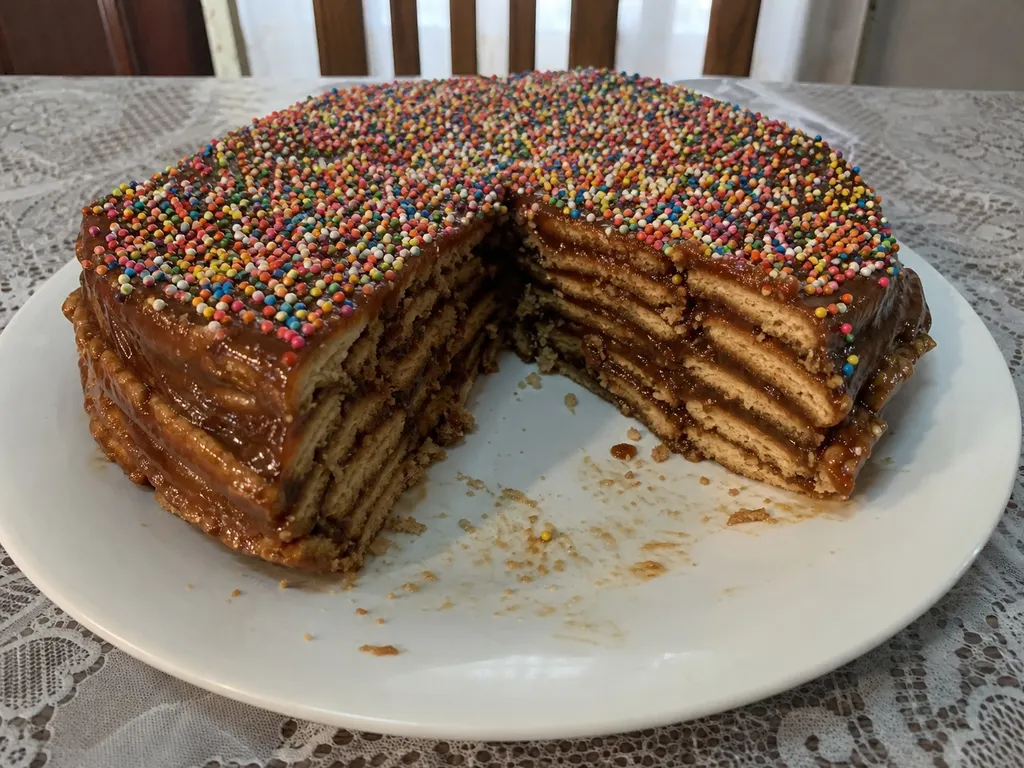 Images are for illustrative purposes only, may be inaccurate, and do not guarantee the presence or absence of specific ingredients.
 Listahan Family Score™
55/100
Works for many families
Score reflects how well this recipe fits a typical busy household. In the app, your Family Score is personalized to your household's allergens, kids, and pantry.
Nutrition
per serving1355
Calories
18 g
Protein
208 g
Carbs
52 g
Fat
Estimated per serving. Actual values depend on the brands and portions you use.
Listahan cooking guide
Chef notes & practical guide
Technique notes, ingredient swaps, serve-alongside ideas, storage guidance, and equipment for this recipe.
Cultural context
Named for Josefa Marmanillo, an enslaved cook in colonial Lima said to have created it after a miraculous cure, turron de dona Pepa remains tied to October's Senor de los Milagros processions more than to any everyday dessert occasion, and is still sold from street carts across Lima during that month.
Listahan note
This version builds the classic layered anise-scented biscuit, stacks and soaks it in a spiced chancaca syrup, and finishes with the traditional rainbow candy sprinkles rather than nuts, matching how it's sold from Lima's October street carts.
Technique cues
- The dough layers are meant to be thin and cracker-like, not cake-like; rolling them too thick keeps them from fully absorbing the syrup and the finished turron turns dense instead of moist throughout.
- Chancaca's molasses depth can't be fully replicated by white or even brown sugar alone; simmering it with whole spices rather than ground ones keeps the syrup clear instead of murky.
- Brushing warm syrup onto warm-from-the-oven layers, rather than waiting for both to cool, lets the biscuit actually absorb the syrup instead of the syrup just pooling on top and running off.
Kitchen flow
- Parallel prep
- Simmer the syrup while the biscuit layers bake, so both finish around the same time and the syrup is still warm for soaking.
- Make-ahead
- Turron actually improves after resting a day, since the syrup keeps soaking deeper into the layers; a good one to build the afternoon before serving.
- Leftover move
- Leftover slices keep their soaked texture well; store tightly wrapped rather than open, since exposed cut edges dry out fastest.
- Cleanup rhythm
- Strain the syrup pot and soak it in hot water right away, since cooled sugar syrup hardens onto the pan.
Ingredient brief
Role, handling, and swap guidance for each key ingredient.
all-purpose flour
structural base for the biscuit layers
Purpose: It needs enough gluten to hold together as thin sheets that survive stacking and soaking without falling apart.
Handling: Cut the shortening and butter in cold so the layers stay short and crumbly rather than tough.
Adaptation: Swap a 1:1 gluten-free flour blend, though the layers may be more fragile to handle.
anise seeds
signature aromatic
Purpose: Anise is the flavor that makes turron instantly recognizable, giving the biscuit a warm, licorice-like background note.
Handling: Mix whole into the dry ingredients rather than grinding, so the flavor releases slowly during baking instead of turning bitter.
Adaptation: Swap fennel seeds for a milder, sweeter anise-adjacent flavor.
chancaca (unrefined cane sugar)
syrup base
Purpose: Unrefined cane sugar carries deep molasses and mineral notes that plain sugar syrup lacks, giving turron its dark, glossy soak.
Handling: Simmer slowly with the whole spices so it dissolves fully before straining out solids.
Adaptation: Swap dark brown sugar plus a spoon of molasses if chancaca isn't available, flavor stays close though slightly less complex.
dried figs
syrup fruit
Purpose: Figs simmered into the syrup add natural sweetness and a chewy texture that balances the crisp biscuit layers.
Handling: Simmer whole then strain out before using the syrup to soak the layers, keeping only the flavor.
Adaptation: Swap dried apricots for a tangier fruit note.
sesame seeds
layer garnish and crunch
Purpose: A light scatter over the raw dough before baking gives a toasty, nutty contrast to the sweet syrup once assembled.
Handling: Sprinkle on right before baking so they toast in place rather than burning separately.
Adaptation: Swap poppy seeds for anyone managing a sesame allergy, noting this changes the allergen profile.
Technique notes
- Work with one baked layer at a time when brushing syrup; stacking too far ahead lets the bottom layers oversoak and go soggy before the top layers even get their share.
- Weight the stack lightly (a cutting board with a can on top) for the last 30 minutes of soaking so the syrup distributes evenly instead of pooling at the base.
- Decorate with the grageas (candy sprinkles) only once the syrup has stopped visibly glistening, or they bleed color and lose their crunch.
Ingredient swaps
- Sesame-free direction
- Omit the sesame seeds from the dough and skip the sprinkle step entirely; the biscuit layers still bake up fine without them.
- Lower-sugar direction
- Reduce the syrup's chancaca by a quarter and lean on the dried fruit for extra sweetness instead.
- Make-ahead shortcut
- Bake the plain biscuit layers up to 3 days ahead and store airtight, then just make the syrup and assemble on serving day.
Serve alongside
- picarones
- mazamorra morada
- fresh chirimoya
- Peruvian coffee
- hot chocolate
- chicha morada
Serving suggestions only — check pairings for your household's allergens.
Storage & reheating
- Keeps well covered at room temperature for 2-3 days since the syrup acts as a preservative, or refrigerated up to 5 days.
- No need to reheat, serve at room temperature.
- Freezing isn't recommended, it breaks down the soaked texture.
Equipment
- rolling pin
- baking sheets
- a small saucepan for the syrup
- a fine strainer
Make this household-aware
Listahan Pro checks this recipe against your household's allergens, finds pantry-aware swaps, builds the shopping list, and helps you plan the week around it.
Plan it in Listahan
Add Turrón de Doña Pepa (Peruvian Anise Nougat Cake) to your week, check it against your household's allergens, and build the shopping list automatically.
More Peruvian recipes
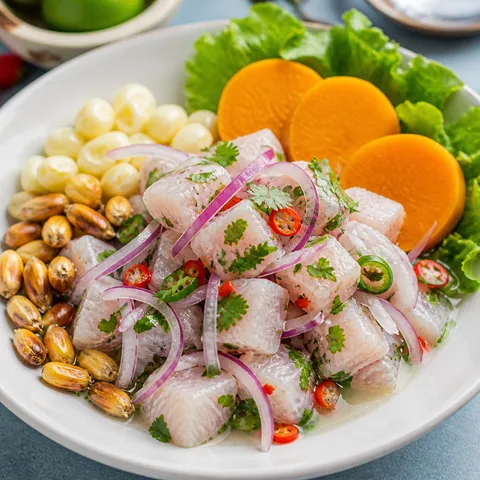 Peruvian Lens Verified Images are for illustrative purposes only, may be inaccurate, and do not guarantee the presence or absence of specific ingredients.
 Ceviche de Pescado
The iconic dish of Peru—exquisitely fresh, raw white fish "cooked" purely by the acidity of freshly squeezed lime juice, infused with chili heat and red onion bite.
 Peruvian Lens Verified Images are for illustrative purposes only, may be inaccurate, and do not guarantee the presence or absence of specific ingredients.
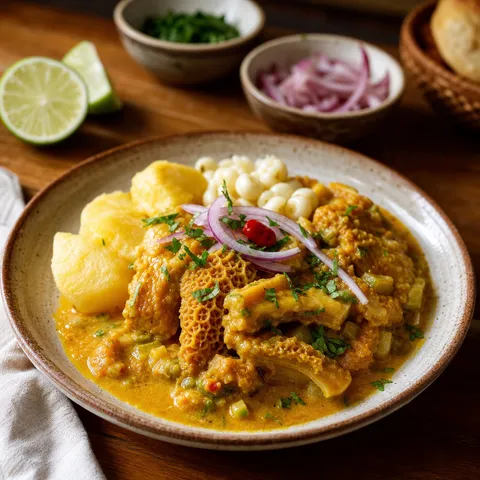
 Cau Cau (Peruvian Tripe Stew)
A hearty yellow stew of tender beef tripe and potatoes simmered in aji amarillo and mint, spooned over rice for a classic home-style meal.
 Peruvian Lens Verified Images are for illustrative purposes only, may be inaccurate, and do not guarantee the presence or absence of specific ingredients.
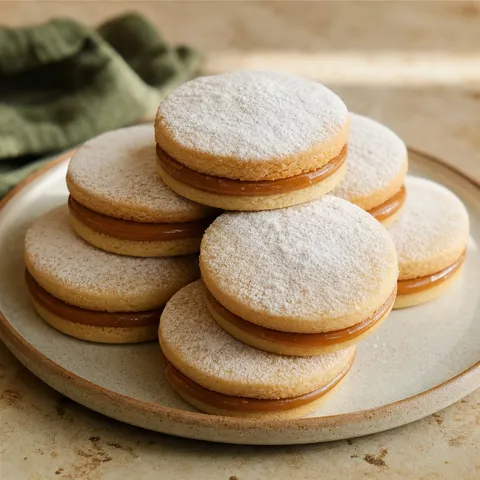
 Alfajores (Peruvian Dulce de Leche Sandwich Cookies)
Delicate, crumbly shortbread cookies sandwiched with rich dulce de leche and dusted with powdered sugar, a favorite Peruvian teatime treat.