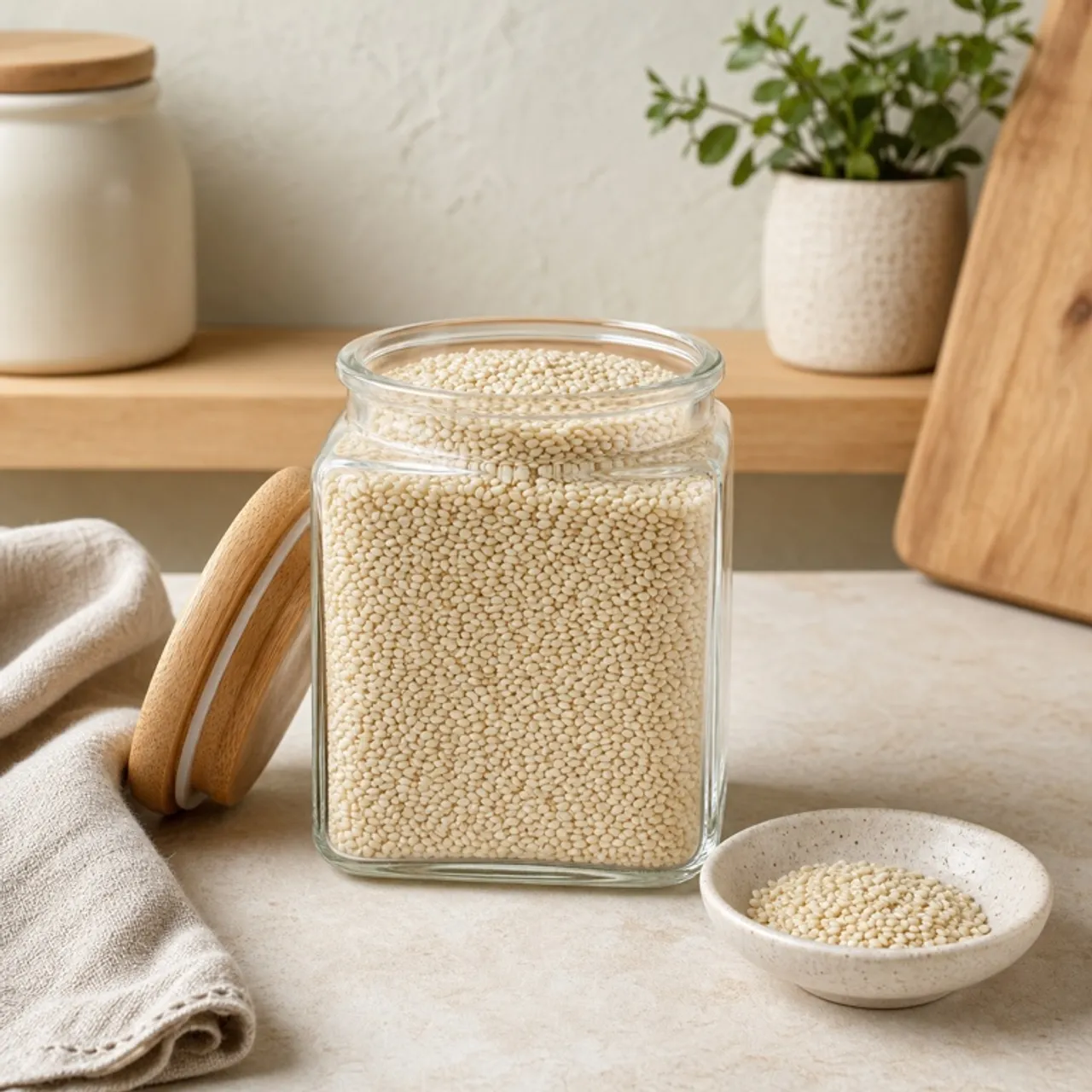
 Food Lens Images are for illustrative purposes only, may be inaccurate, and do not guarantee the presence or absence of specific ingredients.
 Food Lens · Recipe ingredients
Sesame Seeds
Raw: delicately nutty, slightly sweet, with a faint earthiness. Toasted: rich, warm nuttiness with more pronounced depth.
Lens VerifiedSesame seeds are tiny, flat oilseeds with a mild, slightly sweet flavor in their raw state, used across baking, cooking, and condiment-making in cuisines spanning Asia, the Middle East, and Africa. They are the base for tahini and sesame oil, and a finishing garnish when toasted.
Where it comes from
Sesame's domestication from wild African ancestors to a cultivated crop happened in South Asia and East Africa thousands of years ago. Trade routes carried sesame oil and seeds from India and Persia to China, the Mediterranean, and eventually the Americas. In North America, sesame seeds became a pantry staple through immigrant communities and the growing popularity of Middle Eastern and Asian cuisines, and are now found in every mainstream grocery store.
Varieties — White (hulled) seeds are the most widely available in NA and used for breads, coatings, and tahini. Black sesame seeds are unhulled, with a stronger, slightly more bitter flavor prized in East Asian sweets and garnishes. Brown (natural/unhulled) seeds fall in between.
In Middle Eastern cooking, sesame seeds coat ka'ak (sesame rings) and are pressed into pastry. In Chinese cuisine, black sesame is used in tang yuan (glutinous rice balls) with a sweet filling.
In a modern kitchen — Raw sesame seeds have a mild, almost bland flavor — toast them before use whenever they will be a garnish or blended into a sauce, as heat brings out their full nutty character.
Buying it
White sesame seeds are available in the baking or spice aisle of most grocery stores. For black sesame seeds, check Asian or Korean grocery stores. Larger bags at Asian markets offer better value. Store in a cool, dark place or refrigerate to prevent the oils from turning rancid.
Storing it
Store in a sealed container in a cool, dark spot — their natural oils can turn rancid with heat and light exposure. A stale or bitter smell means it's time to replace them.
Keeps about 1 year in the pantry.
Out of sesame seeds? Good swaps
- Poppy seeds — Similar size and appearance in baked goods; milder flavor, 1:1 ratio.
- Hemp seeds — Nutty and mild; works as a garnish substitute in equal quantity.
- Tahini (for ground/paste applications) — Pre-made sesame paste; adjust liquid in recipe accordingly.
General cooking guidance — always check the labels on the products you use. Listahan’s allergen checks run automatically when you plan a recipe in the app. Not medical advice.
Recipes that use sesame seeds
- Japchae (Stir-Fried Glass Noodles)
- Jade Tree Salad Dressing
- Soba Noodle Salad
- Palitaw
- Maple Salmon
- Korean Galbi (Grilled Short Ribs)
- Turrón de Doña Pepa (Peruvian Anise Nougat Cake)
- Korean Beef Bulgogi
- Chè Trôi Nước (Sticky Rice Balls in Ginger Syrup)
- Sesame Chicken
- Chebakia
- Sesame Chicken with Honey Dip
Common questions about sesame seeds
Is sesame seeds vegan?
Sesame Seeds is generally plant-based and suitable for a vegan diet, but brands differ — confirm on the label.
What can I use instead of sesame seeds?
Good swaps include Poppy seeds, Hemp seeds, Tahini (for ground/paste applications). Each behaves a little differently — see the swaps above for notes, and always check labels for allergens.
How do I store sesame seeds?
Store in a sealed container in a cool, dark spot — their natural oils can turn rancid with heat and light exposure. A stale or bitter smell means it's time to replace them. It keeps about 1 year in the pantry.
More recipe ingredients
See all


Make sesame seeds about your kitchen — with Listahan Pro
Everything above is free, forever. Pro adds the Household Lens — the same food, seen for your family:
-
Checked for each member
Flags sesame seeds per person against your household's allergies and school rules — not just a generic "contains" tag.
-
Pantry-aware
Knows whether you already have it, what is running low, and the best swap from what is in your kitchen tonight.
-
What it costs near you
A real price from the Presyo community index, so you can plan the budget — not guess.
-
Your household memory
Who likes it, plus your own private notes — brand, where you keep it, who skips it.
Allergen safety is always free — Pro adds the automation, never the safety.
Cook with sesame seeds — safely
Plan a recipe in Listahan and the household allergen check runs automatically — every plan, every swap, every lunchbox. Safety is never paywalled.