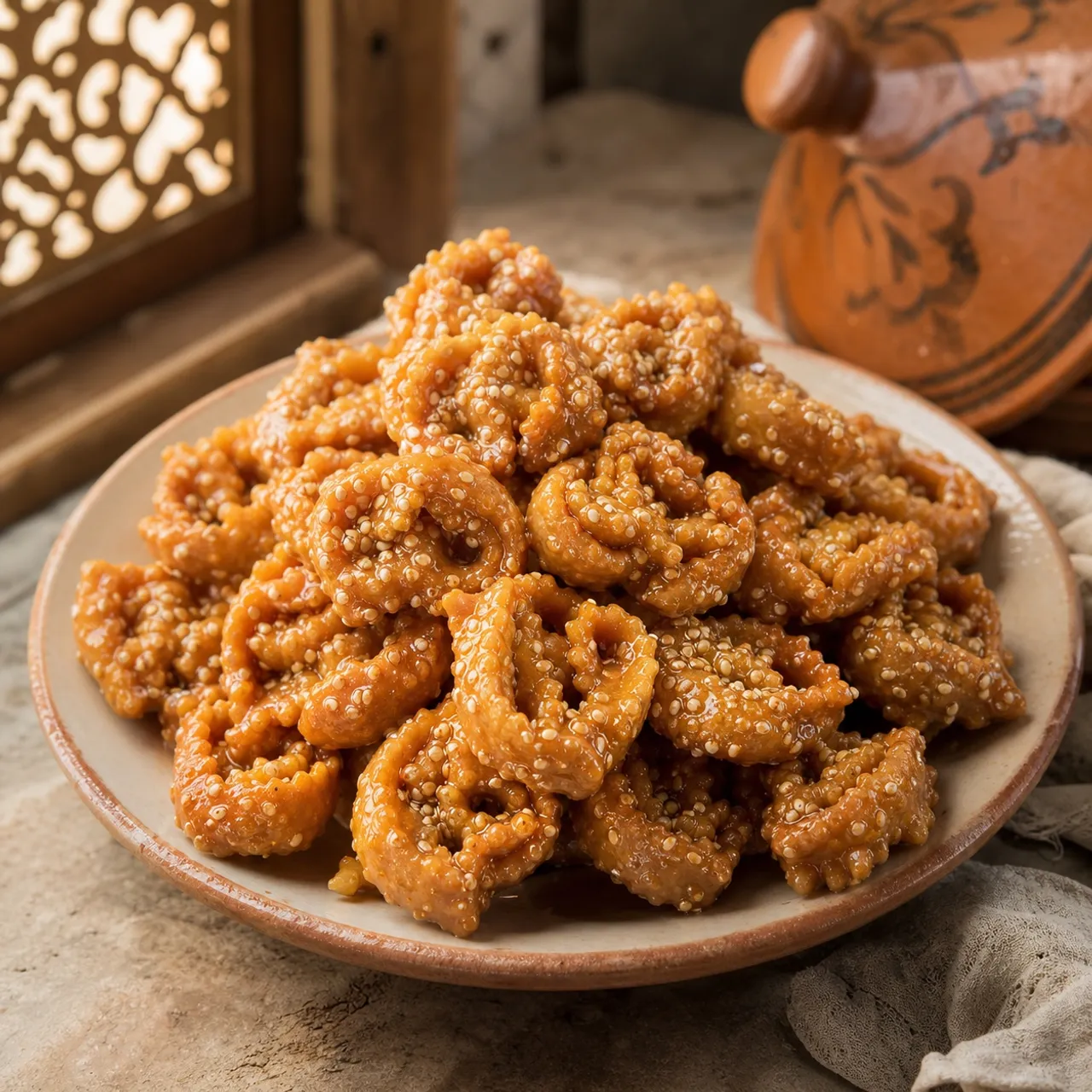
 North African Images are for illustrative purposes only, may be inaccurate, and do not guarantee the presence or absence of specific ingredients.
 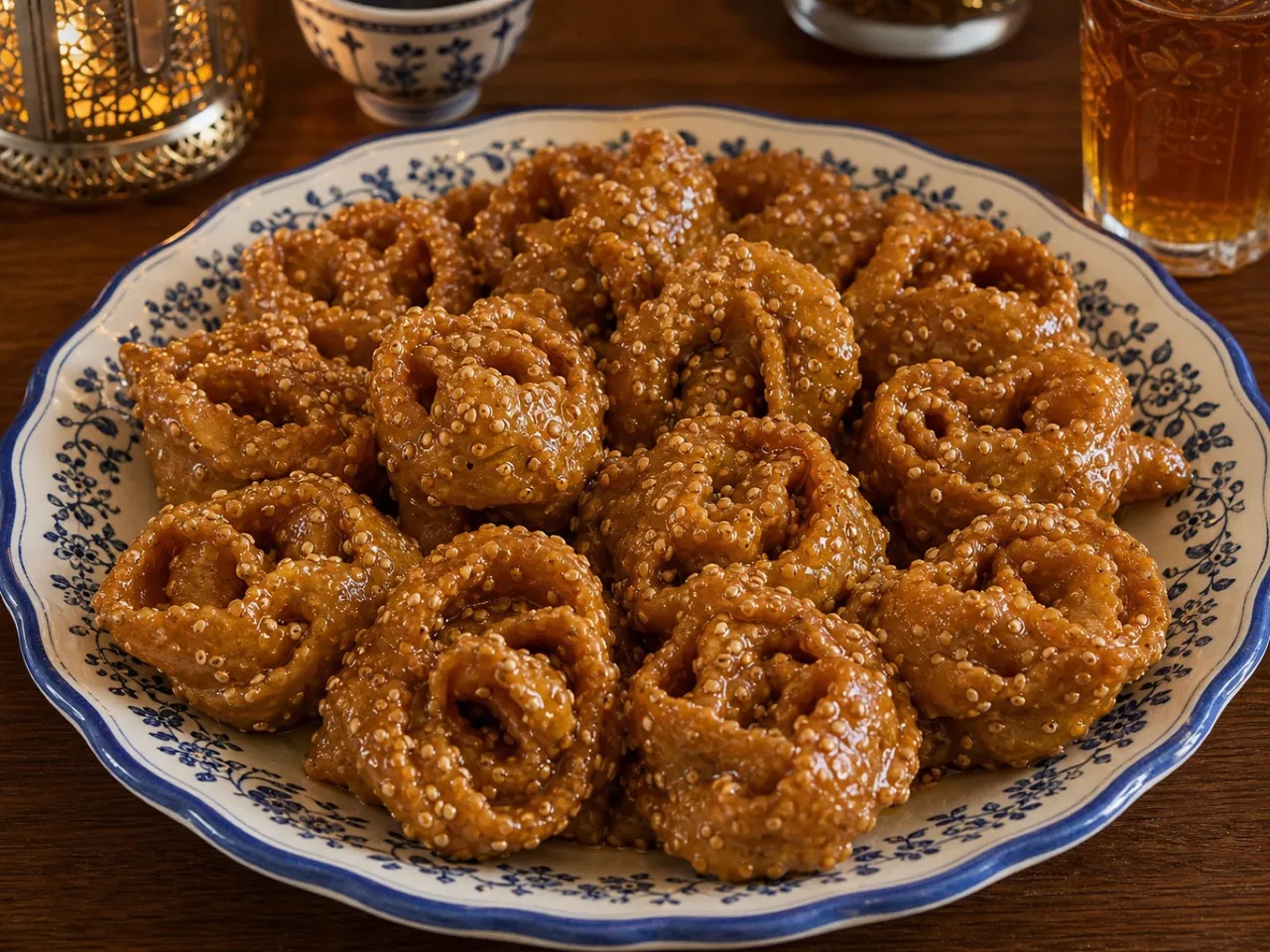 Serving Images are for illustrative purposes only, may be inaccurate, and do not guarantee the presence or absence of specific ingredients.
 Chebakia
Sesame-studded pastry coils fried until golden then drenched in warm honey and orange-blossom water — Morocco's iconic Ramadan sweet that fills the house with fragrance.
Contains common allergens
In the app, Listahan checks these against your household automatically.
Good to know
- Crispy
Matched from this dish's own ingredients and timing. Browse more: crispy recipes
Instructions
8 steps- 1
Pulse the toasted sesame seeds in a food processor until finely ground, then combine with the flour, anise, and cinnamon in a large bowl.
- 2
Work in the melted butter, egg, vinegar, and saffron water, then knead in warm water gradually until you have a firm, smooth dough.
- 3
Rest the dough covered for 30 minutes, then roll it out thin and cut into rectangles with slits down the center.
- 4
Weave each rectangle through its own slits and gently pull the corners to form the traditional flower-like coil shape.
- 5
Warm the honey in a wide pot with the orange blossom water and keep it at a bare simmer.
- 6
Heat oil to 325F and fry the shaped cookies in batches until deep golden and crisp all the way through, about 4 minutes.
- 7
Drain briefly, then drop the hot cookies straight into the warm honey and let them soak for a minute or two so they absorb it fully.
- 8
Lift out with a slotted spoon, drain on a rack, and sprinkle with sesame seeds while still sticky.
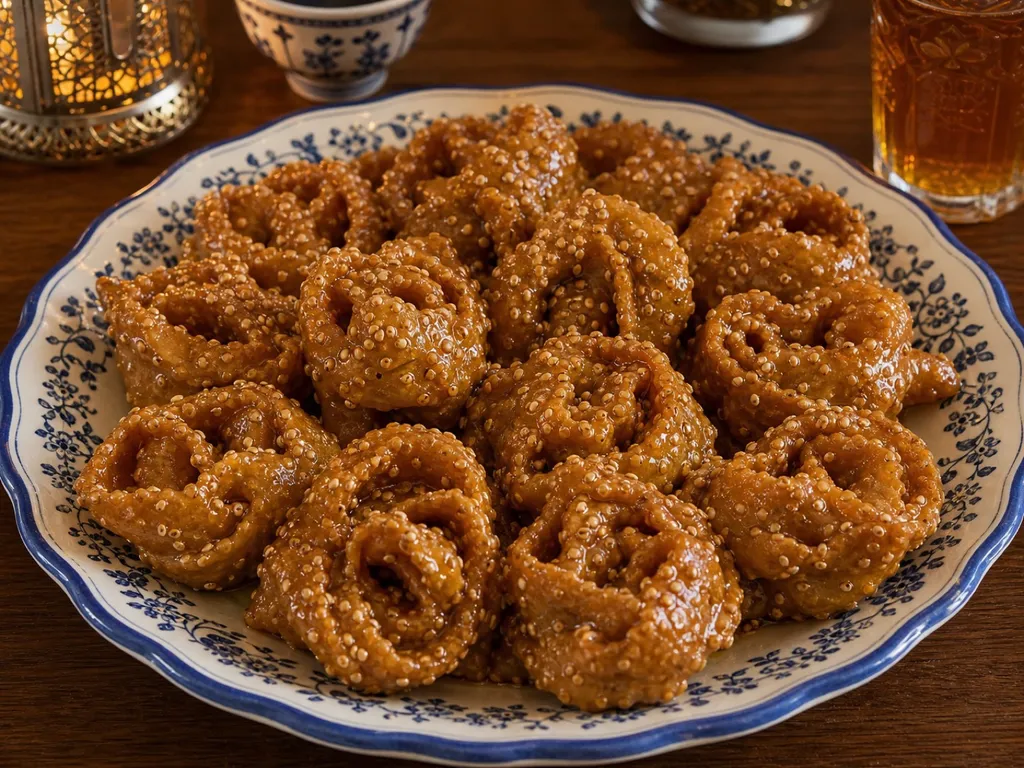 Images are for illustrative purposes only, may be inaccurate, and do not guarantee the presence or absence of specific ingredients.
 Listahan Family Score™
59/100
Works for many families
Score reflects how well this recipe fits a typical busy household. In the app, your Family Score is personalized to your household's allergens, kids, and pantry.
Nutrition
per serving485
Calories
7 g
Protein
117 g
Carbs
1 g
Fat
Estimated per serving. Actual values depend on the brands and portions you use.
Listahan cooking guide
Chef notes & practical guide
Technique notes, ingredient swaps, serve-alongside ideas, storage guidance, and equipment for this recipe.
Cultural context
Chebakia is a Moroccan fried pastry dipped in honey and coated with sesame seeds, made throughout Ramadan when the combination of honey and sesame is believed to provide sustained energy during the fast. The intricate flower or rose shape of chebakia — created by cutting strips of dough and weaving them around the fingers before frying — is a skill passed from mother to daughter, and a household's ability to produce well-formed chebakia has traditionally been a measure of culinary competence. Spiced with cinnamon, anise, sesame, and orange blossom water, the pastry represents the layered, aromatic style of Moroccan baking at its most elaborate.
Listahan note
This version focuses on the essential technique of shaping and frying the pastry correctly before the honey dip — the honey coating is applied hot from the fryer so it adheres and creates the characteristic sticky, seed-encrusted shell.
Technique cues
- The dough for chebakia is enriched with toasted sesame paste (tahini), ground anise, and orange blossom water, which means the flavors are built into the pastry itself — the honey dip adds sweetness and the adhesive layer for the sesame seed coating, but the complexity comes from the dough.
- Fry chebakia in batches at 350F and dip them immediately into warm honey (not boiling, not room temperature) — honey that is too cool will not flow into the crevices of the shape, and too-hot honey will slide off before the sesame can adhere.
- The shaping technique — weaving strips of dough into a rose — requires practice, and imperfect shapes taste identical to perfect ones; focus on getting the dough thickness right (about 2mm) so the interior cooks through before the exterior over-browns.
Kitchen flow
- Parallel prep
- Set up the frying station and the honey dipping pan simultaneously — the workflow requires moving directly from fryer to honey to sesame seeds without pausing.
- Make-ahead
- Chebakia keeps exceptionally well — store in an airtight container at room temperature up to 3 weeks; the honey and sesame coating preserves the pastry.
- Leftover move
- There are rarely leftovers, but cold chebakia eaten alongside Moroccan mint tea the next day is considered by many cooks to be better than fresh.
- Cleanup rhythm
- Deal with the honey pan while it is still warm and the honey is fluid — hot water dissolves it instantly; cold, set honey requires significant soaking.
Ingredient brief
Role, handling, and swap guidance for each key ingredient.
Flour
dough structure
Purpose: All-purpose or semolina flour forms the base of the enriched, spiced pastry dough; semolina adds a slightly coarser texture and golden color.
Handling: Measure by spooning into the cup and leveling, not scooping, to avoid a dense dough that is difficult to roll thin.
Adaptation: A blend of 2 parts all-purpose to 1 part fine semolina is the traditional Moroccan ratio; all-purpose alone produces a softer, less characteristic result.
Honey
coating and sweetness
Purpose: Warm honey serves as both the primary sweetener and the adhesive that causes sesame seeds to cling to the fried pastry, creating the dish's characteristic crunchy, sticky exterior.
Handling: Warm honey in a wide shallow pan to about 140F (just pourable) and keep it over the lowest heat while dipping so it stays fluid throughout.
Adaptation: Light agave syrup can substitute for a vegan version; it is thinner than honey so drain each piece longer before the sesame coating.
Sesame seeds
Crunchy coating and flavor
Purpose: The generous sesame coating applied while the honey is still warm adds a nutty crunch that contrasts with the chewy pastry interior and is visually the most recognizable characteristic of chebakia.
Handling: Toast sesame seeds in a dry pan until lightly golden before rolling the warm honey-coated pastries; toasting deepens the nuttiness significantly.
Adaptation: Black sesame seeds can replace some or all of the white sesame for visual contrast; finely chopped pistachios are used in some North African households for a more luxurious version.
Technique notes
- The dough should be pliable enough to weave without cracking but firm enough to hold the folded shape — add water a teaspoon at a time if it cracks when you bend it, and dust with flour if it sticks to your hands.
- Work in small batches during frying and maintain oil temperature strictly — chebakia dropped into under-temperature oil absorbs fat and becomes greasy rather than crisp, which means the honey coating will not adhere properly.
- Dip each piece of freshly fried chebakia in honey for a full 30 seconds, turning it to coat all surfaces and allow the honey to flow into the lattice pattern before rolling in sesame seeds.
Ingredient swaps
- Vegan direction
- Replace honey with light agave syrup and use a flax egg in the dough if eggs are called for; the agave produces a slightly less rich but still sticky coating.
- Gluten-free direction
- A 1:1 gluten-free baking flour blend works for the dough but produces a more fragile pastry that is harder to shape into the traditional rose form — simple rectangles are more practical.
- Orange blossom substitute
- If orange blossom water is unavailable, substitute a 1/2 teaspoon of finely grated orange zest mixed with 1 teaspoon of rose water for a different but comparably floral aroma.
Serve alongside
- Moroccan mint tea for the traditional Ramadan pairing
- harira soup as the classic iftar companion
- dates and figs for a Ramadan spread
- fresh orange slices with cinnamon
- Moroccan mint tea, very sweet
- warm almond milk with a pinch of cinnamon
- fresh-squeezed orange juice
Serving suggestions only — check pairings for your household's allergens.
Storage & reheating
- Store at room temperature in an airtight tin or container up to 3 weeks — the honey acts as a preservative and the pastry actually improves after 2-3 days.
- Do not refrigerate — cold causes the honey coating to crystallize and the pastry to toughen.
- Do not freeze — the honey coating and sesame crust cannot survive the freeze-thaw cycle.
Equipment
- rolling pin for thin, even dough sheets
- sharp pastry wheel or knife for cutting strips
- deep heavy-bottomed pan for frying
- wide shallow pan for honey dipping
Make this household-aware
Listahan Pro checks this recipe against your household's allergens, finds pantry-aware swaps, builds the shopping list, and helps you plan the week around it.
Plan it in Listahan
Add Chebakia to your week, check it against your household's allergens, and build the shopping list automatically.
More North African recipes
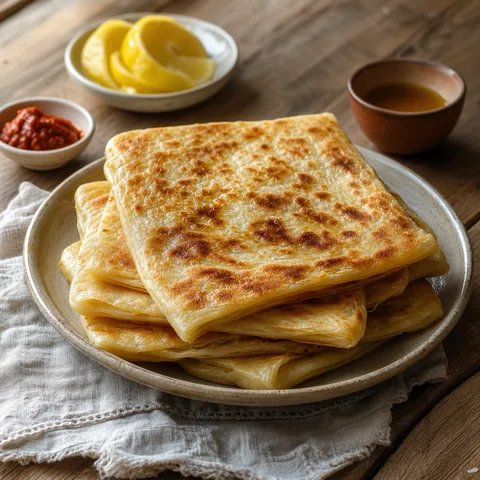 North African Lens Verified Images are for illustrative purposes only, may be inaccurate, and do not guarantee the presence or absence of specific ingredients.
 Msemmen
Layered and folded semolina flatbread cooked on a griddle until the outside crisps and the inside stays wonderfully chewy — perfect with honey or harissa.
 North African Lens Verified Images are for illustrative purposes only, may be inaccurate, and do not guarantee the presence or absence of specific ingredients.
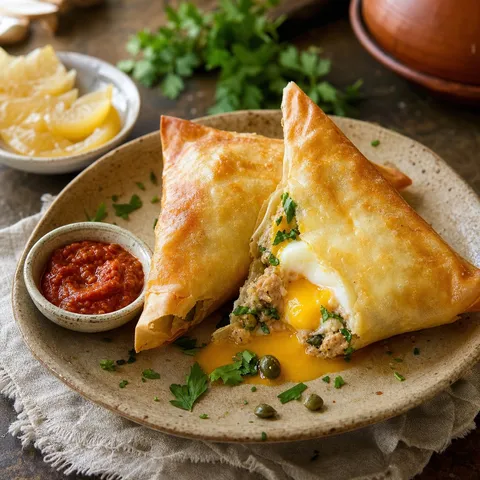
 Brik
Crispy paper-thin pastry folded around a whole egg, tuna, and parsley then flash-fried until golden — Tunisia's beloved street snack, eaten fast before the yolk escapes.
 North African Lens Verified Images are for illustrative purposes only, may be inaccurate, and do not guarantee the presence or absence of specific ingredients.
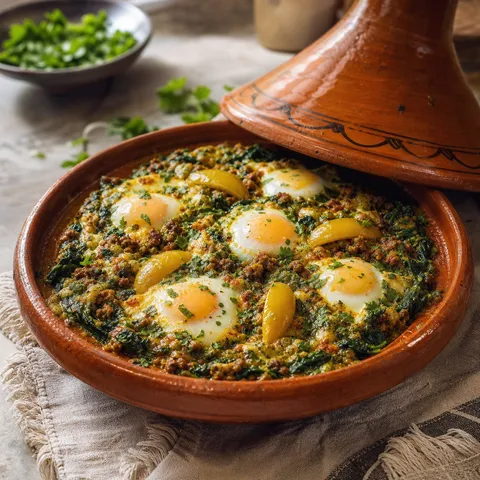
 Tajine El Bey
Tunisia's grand layered bake of spiced lamb, eggs, and cheese baked in a deep crust — a celebration dish with silky, complex layers in every slice.