 Food Lens Images are for illustrative purposes only, may be inaccurate, and do not guarantee the presence or absence of specific ingredients.
 Food Lens · Recipe ingredients
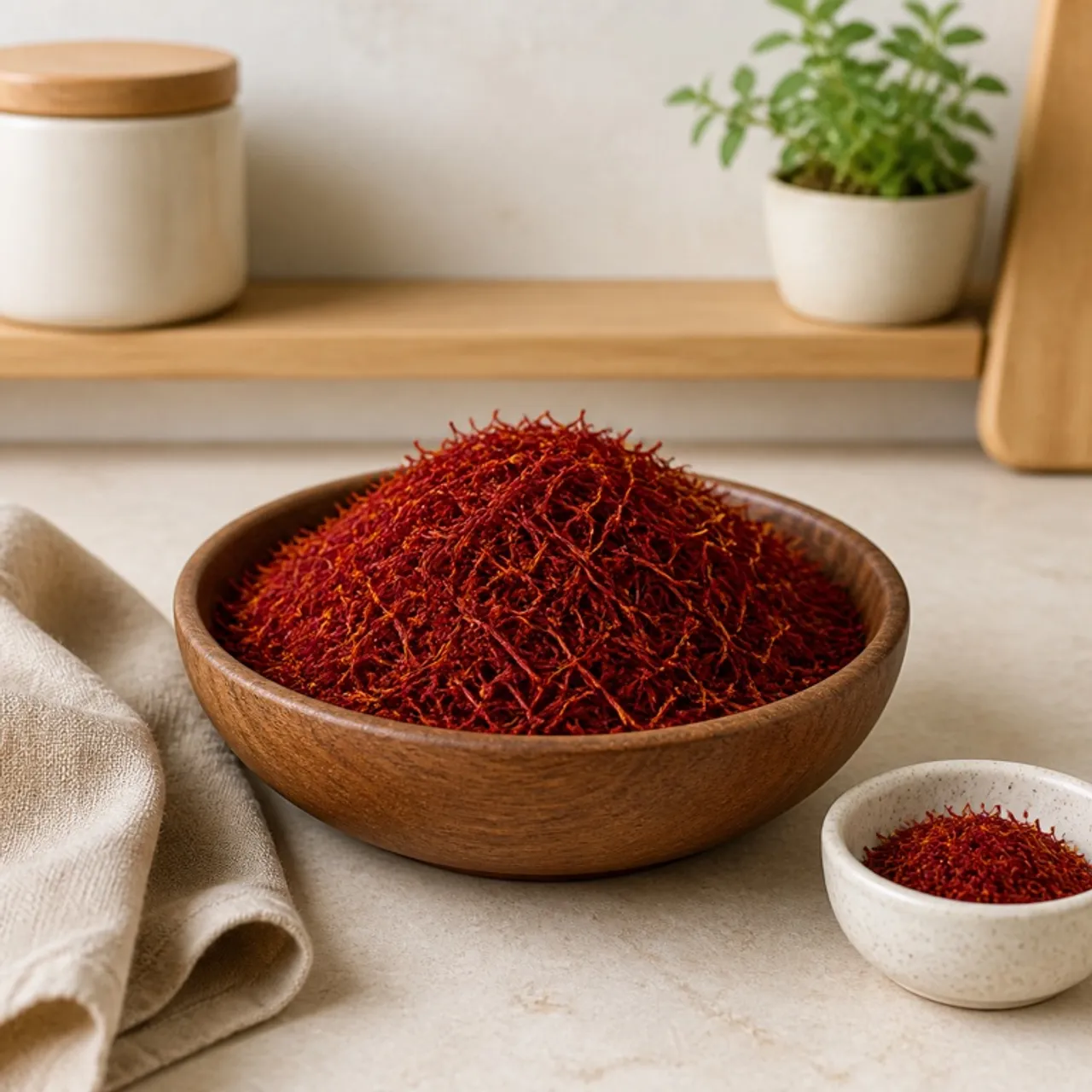
Saffron Threads
Floral, honeyed, and slightly metallic with a warm, earthy bitterness; the aroma is uniquely its own — often described as hay-like with a luminous sweetness; the color is golden, bold, and beautiful.
Lens VerifiedSaffron threads are the dried stigmas of the Crocus sativus flower, hand-harvested in tiny quantities per bloom, making saffron the world's most expensive spice by weight. They impart a vivid golden-orange color, a distinctive floral-honeyed aroma, and a complex, slightly bitter earthiness to Persian rice, paella, bouillabaisse, and Indian biryani.
Where it comes from
Saffron cultivation traces to Bronze Age Persia and the eastern Mediterranean, with evidence of use in ancient Minoan art and Egyptian medicinal texts. The Crocus sativus flower blooms for only a few weeks each autumn, and each flower produces just three stigmas — all harvested by hand at dawn. This labor-intensive process explains saffron's legendary cost. Iranian saffron became available in specialty grocery stores and Middle Eastern markets in North America, and today small quantities are sold in gourmet food sections of mainstream supermarkets.
Varieties — Iranian saffron (Kashmiri grade: Super Negin, Negin, Sargol, Pushal) is the international standard. Spanish La Mancha saffron is prized for its balance of color and flavor. Kashmir saffron from India is rare and intensely flavored. Powdered saffron exists but is more easily adulterated — whole threads are more reliably authentic.
Persian tahdig — the crispy, golden rice crust — is often crowned with a saffron-butter mixture for festive presentations. Saffron is so central to Persian culinary identity that it appears in poetry, weddings, and everyday celebrations.
In a modern kitchen — Always bloom saffron before using: crush a small pinch of threads between your fingers and steep in 2–3 tablespoons of warm (not boiling) water or milk for at least 10–15 minutes. This activates and releases the full color and flavor compounds. Boiling water can destroy delicate aromatic notes.
Buying it
Buy whole threads, not powder — threads are more reliably pure. Look for deep red-orange color with slightly lighter orange tips (the yellow styles should be minimal). Persian (Iranian) or Spanish saffron from reputable sources is your best bet. Small tins or sealed envelopes at Middle Eastern, South Asian, or specialty grocery stores. Store in an airtight container away from light and heat.
Storing it
Keep threads in an airtight container away from light and heat — sunlight fades their color and dulls their aroma fast. A dark cupboard works better than a spot near the stove.
Keeps about 1 year in the pantry.
Out of saffron threads? Good swaps
- Turmeric (for color only) — Provides golden hue without saffron's distinctive flavor; use 1/4 tsp per large pinch of saffron called for.
- Annatto (achiote) seeds or powder — Earthy color substitute used in Latin American and Filipino cooking; different flavor.
General cooking guidance — always check the labels on the products you use. Listahan’s allergen checks run automatically when you plan a recipe in the app. Not medical advice.
Recipes that use saffron threads
Common questions about saffron threads
Is saffron threads vegan?
Saffron Threads is generally plant-based and suitable for a vegan diet, but brands differ — confirm on the label.
What can I use instead of saffron threads?
Good swaps include Turmeric (for color only), Annatto (achiote) seeds or powder. Each behaves a little differently — see the swaps above for notes, and always check labels for allergens.
How do I store saffron threads?
Keep threads in an airtight container away from light and heat — sunlight fades their color and dulls their aroma fast. A dark cupboard works better than a spot near the stove. It keeps about 1 year in the pantry.
More recipe ingredients
See all


Make saffron threads about your kitchen — with Listahan Pro
Everything above is free, forever. Pro adds the Household Lens — the same food, seen for your family:
-
Checked for each member
Flags saffron threads per person against your household's allergies and school rules — not just a generic "contains" tag.
-
Pantry-aware
Knows whether you already have it, what is running low, and the best swap from what is in your kitchen tonight.
-
What it costs near you
A real price from the Presyo community index, so you can plan the budget — not guess.
-
Your household memory
Who likes it, plus your own private notes — brand, where you keep it, who skips it.
Allergen safety is always free — Pro adds the automation, never the safety.
Cook with saffron threads — safely
Plan a recipe in Listahan and the household allergen check runs automatically — every plan, every swap, every lunchbox. Safety is never paywalled.