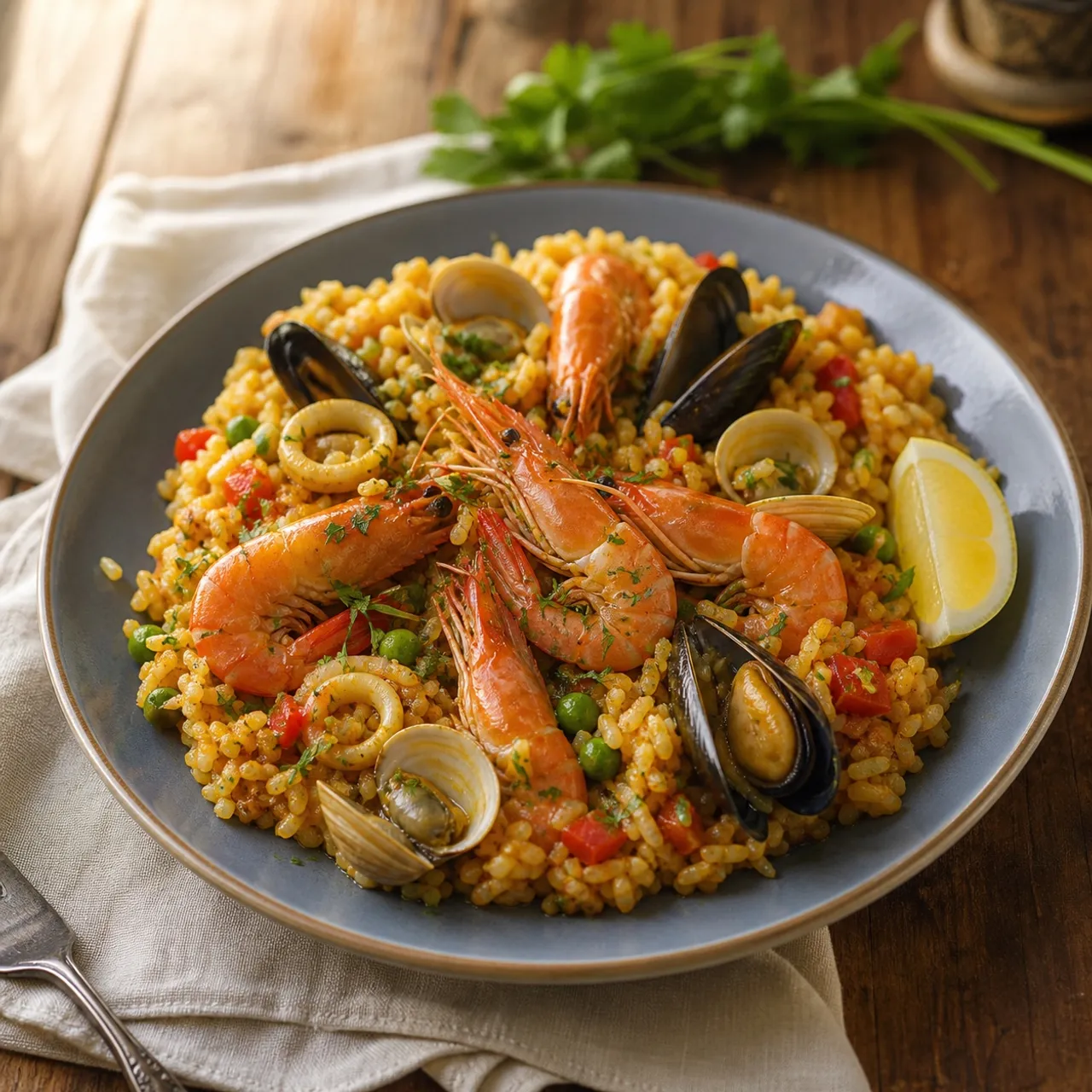
 Seafood Images are for illustrative purposes only, may be inaccurate, and do not guarantee the presence or absence of specific ingredients.
 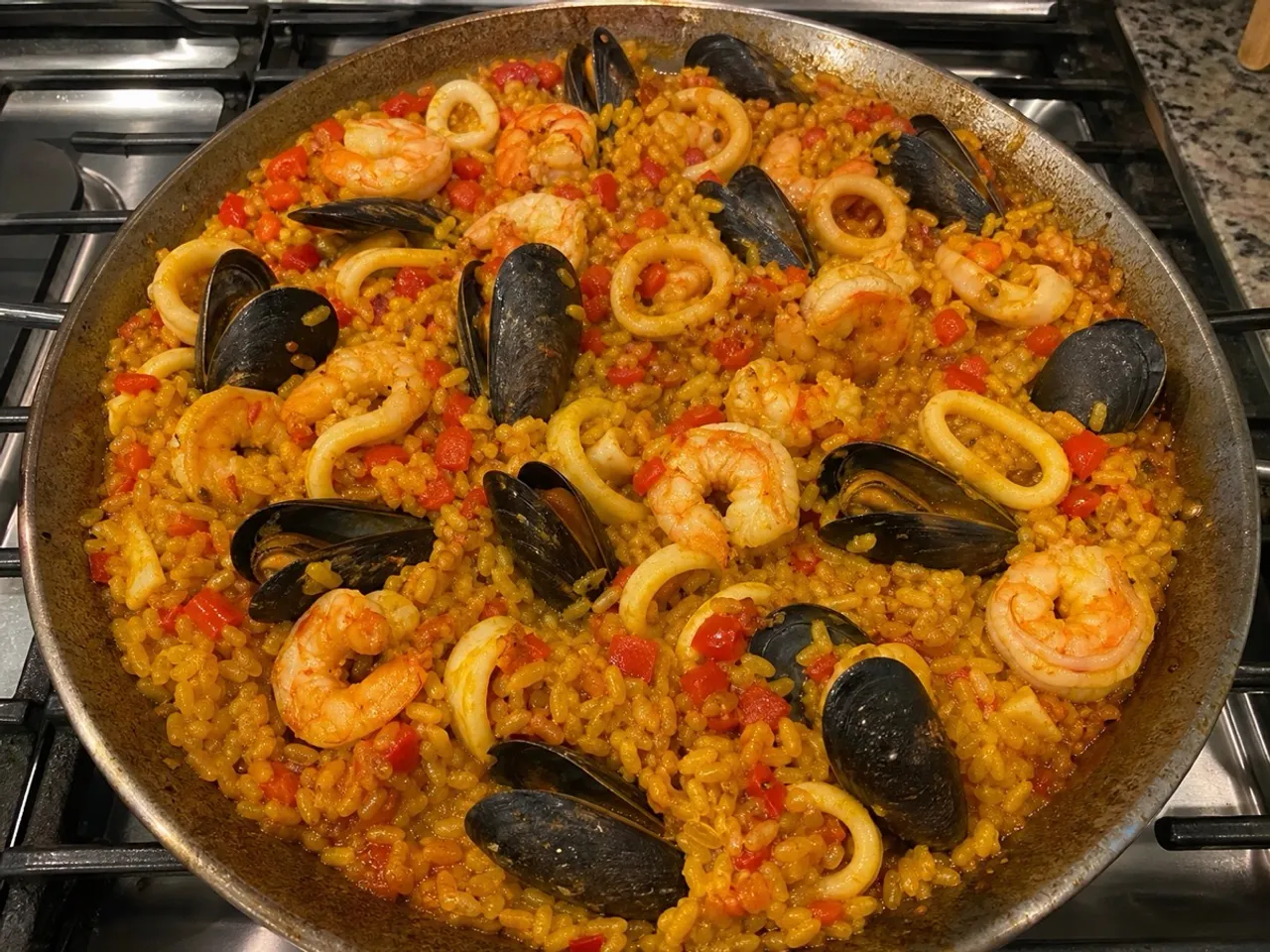 Serving Images are for illustrative purposes only, may be inaccurate, and do not guarantee the presence or absence of specific ingredients.
 Seafood Paella
A vibrant Spanish rice dish loaded with shrimp, mussels, and calamari, colored and perfumed with saffron.
Contains common allergens
In the app, Listahan checks these against your household automatically.
Instructions
8 steps- 1
Heat olive oil in a large paella pan or wide skillet over medium heat and cook onion and bell pepper until softened, about 6 minutes.
- 2
Add garlic and cook 1 minute until fragrant.
- 3
Stir in rice, smoked paprika, and saffron, coating the rice in oil for 1-2 minutes.
- 4
Add diced tomatoes and warmed stock, season with salt and pepper, and bring to a simmer.
- 5
Cook undisturbed over medium-low heat for 15 minutes.
- 6
Nestle mussels, shrimp, and calamari into the rice, cover loosely, and cook 10 minutes more until seafood is cooked and rice is tender.
- 7
Scatter peas over the top in the last 3 minutes of cooking.
- 8
Discard any unopened mussels, garnish with parsley and lemon wedges, and serve directly from the pan.
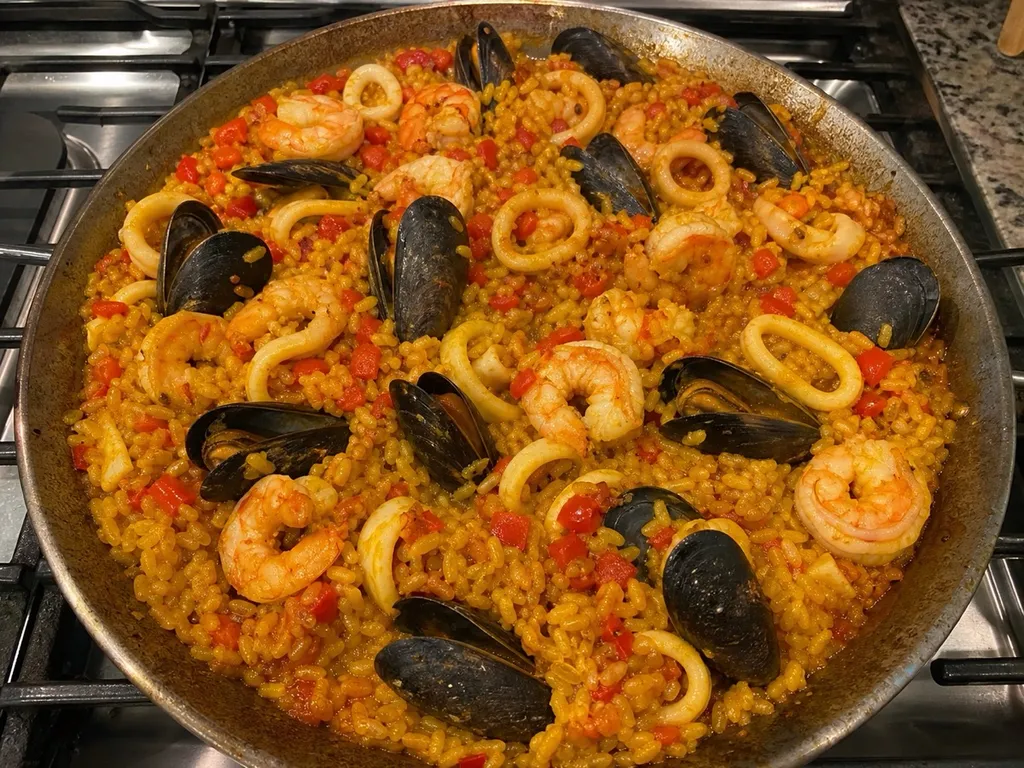 Images are for illustrative purposes only, may be inaccurate, and do not guarantee the presence or absence of specific ingredients.
 Listahan Family Score™
60/100
Works for many families
Score reflects how well this recipe fits a typical busy household. In the app, your Family Score is personalized to your household's allergens, kids, and pantry.
Nutrition
per serving725
Calories
59 g
Protein
61 g
Carbs
27 g
Fat
Estimated per serving. Actual values depend on the brands and portions you use.
Listahan cooking guide
Chef notes & practical guide
Technique notes, ingredient swaps, serve-alongside ideas, storage guidance, and equipment for this recipe.
Cultural context
Paella originated in the Valencia region of Spain, traditionally cooked over an open fire in a wide, shallow pan that gives the dish its name. The seafood version, common along the Spanish coast, layers shrimp, mussels, and squid into the saffron-scented rice.
Listahan note
This version leaves the rice undisturbed once it starts cooking, resisting the urge to stir, which is what allows the prized crispy bottom layer, called socarrat, to form.
Technique cues
- Do not stir the rice once the stock is added and it comes to a simmer; paella is built on letting the rice cook undisturbed, unlike risotto.
- Warm the stock before adding it so the cooking does not stall and the rice cooks evenly from the start.
- Listen and smell near the end of cooking for a faint toasted, nutty aroma from the bottom of the pan — that is the socarrat forming, not burning.
Kitchen flow
- Parallel prep
- Prep and clean all the seafood while the rice base cooks its first 15 minutes undisturbed.
- Make-ahead
- The rice base can be started ahead up to the point of adding seafood, then finished just before serving.
- Leftover move
- Reheat leftover paella in a skillet rather than the microwave to try to recrisp the bottom layer.
- Cleanup rhythm
- One wide pan handles the entire dish — soak it right after serving since the socarrat can stick stubbornly.
Ingredient brief
Role, handling, and swap guidance for each key ingredient.
Short-grain paella or Arborio rice
Base
Purpose: Its starchy grains absorb the saffron-infused stock while staying separate rather than turning creamy like risotto.
Handling: Toast briefly in the oil with the spices before adding liquid to coat every grain.
Adaptation: Bomba rice, if available, is the traditional Spanish choice and absorbs even more liquid without going mushy.
Saffron threads
Signature flavor and color
Purpose: It gives paella its distinctive golden color and subtle, earthy aroma that no other spice replicates.
Handling: Steep briefly in a little warm stock before adding, which helps release its flavor and color evenly.
Adaptation: A pinch of turmeric gives color but not the same flavor — use it only as a last resort.
Mussels, shrimp, and calamari
Seafood mix
Purpose: Together they represent the range of textures classic to a coastal Spanish paella.
Handling: Nestle them into the rice partway through cooking rather than at the very start, so they do not overcook.
Adaptation: Clams or scallops can be added or substituted based on what is freshest.
Smoked paprika
Depth
Purpose: Adds a subtle smokiness that rounds out the saffron's more delicate flavor.
Handling: Add it with the rice so it toasts slightly in the oil before the liquid goes in.
Adaptation: Regular paprika works without the smokiness if that is what is on hand.
Technique notes
- Use a wide, shallow pan rather than a deep pot; paella depends on a thin layer of rice for even cooking and a crisp bottom.
- Resist the temptation to cover the pan tightly — a loose cover or none at all lets excess moisture evaporate properly.
- Let the finished paella rest for a few minutes off the heat before serving so the flavors settle and the rice finishes absorbing any remaining liquid.
Ingredient swaps
- Shellfish-free direction
- This dish depends on mussels, shrimp, and calamari and cannot be made shellfish-free; a chicken and chorizo paella is a well-established alternative built the same way.
- Gluten-free direction
- This recipe is naturally gluten-free as written, provided the stock used has no wheat additives.
- Dairy-free direction
- Wherever dairy shows up here, a neutral dairy-free butter or oil and a full-fat plant milk (oat or coconut work best for body) is the straightforward stand-in. This one leans on the short-grain paella or Arborio rice.
Serve alongside
- Crusty bread
- Simple green salad
- Lemon wedges
- Spanish Albariño
- Sangria
- Sparkling water with lemon
Serving suggestions only — check pairings for your household's allergens.
Storage & reheating
- Refrigerate leftover paella in a sealed container for up to 2 days.
- Reheat in a skillet with a splash of stock to loosen the rice and try to recrisp the bottom; microwaving softens the texture.
- Freezing is possible but the seafood texture suffers noticeably on thawing.
Equipment
- Wide, shallow paella pan or large skillet
- Ladle
- Wooden spoon
Make this household-aware
Listahan Pro checks this recipe against your household's allergens, finds pantry-aware swaps, builds the shopping list, and helps you plan the week around it.
Plan it in Listahan
Add Seafood Paella to your week, check it against your household's allergens, and build the shopping list automatically.
More Seafood recipes
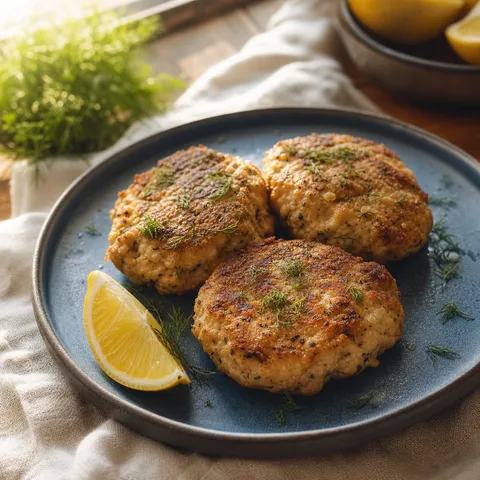 Seafood Lens Verified Images are for illustrative purposes only, may be inaccurate, and do not guarantee the presence or absence of specific ingredients.
 Pan-Fried Gefilte Fish
Traditional Ashkenazi poached fish patties made from ground whitefish, served chilled with horseradish — a seder-table classic.
 Seafood Lens Verified Images are for illustrative purposes only, may be inaccurate, and do not guarantee the presence or absence of specific ingredients.
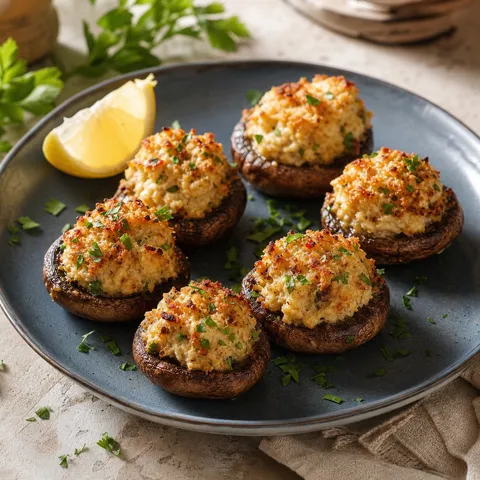
 Crab-Stuffed Mushrooms
Large mushroom caps filled with a creamy, cheesy crabmeat stuffing and baked until golden and bubbling.
 Seafood Lens Verified Images are for illustrative purposes only, may be inaccurate, and do not guarantee the presence or absence of specific ingredients.
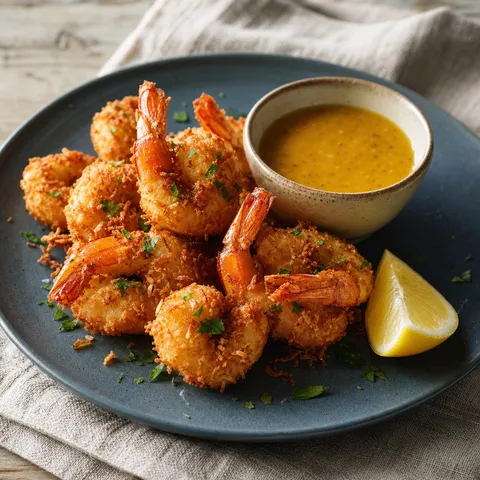
 Coconut Shrimp With Orange Mustard Sauce
Crispy beer-battered shrimp coated in coconut and fried golden, served with a sweet-and-tangy orange Dijon dipping sauce.