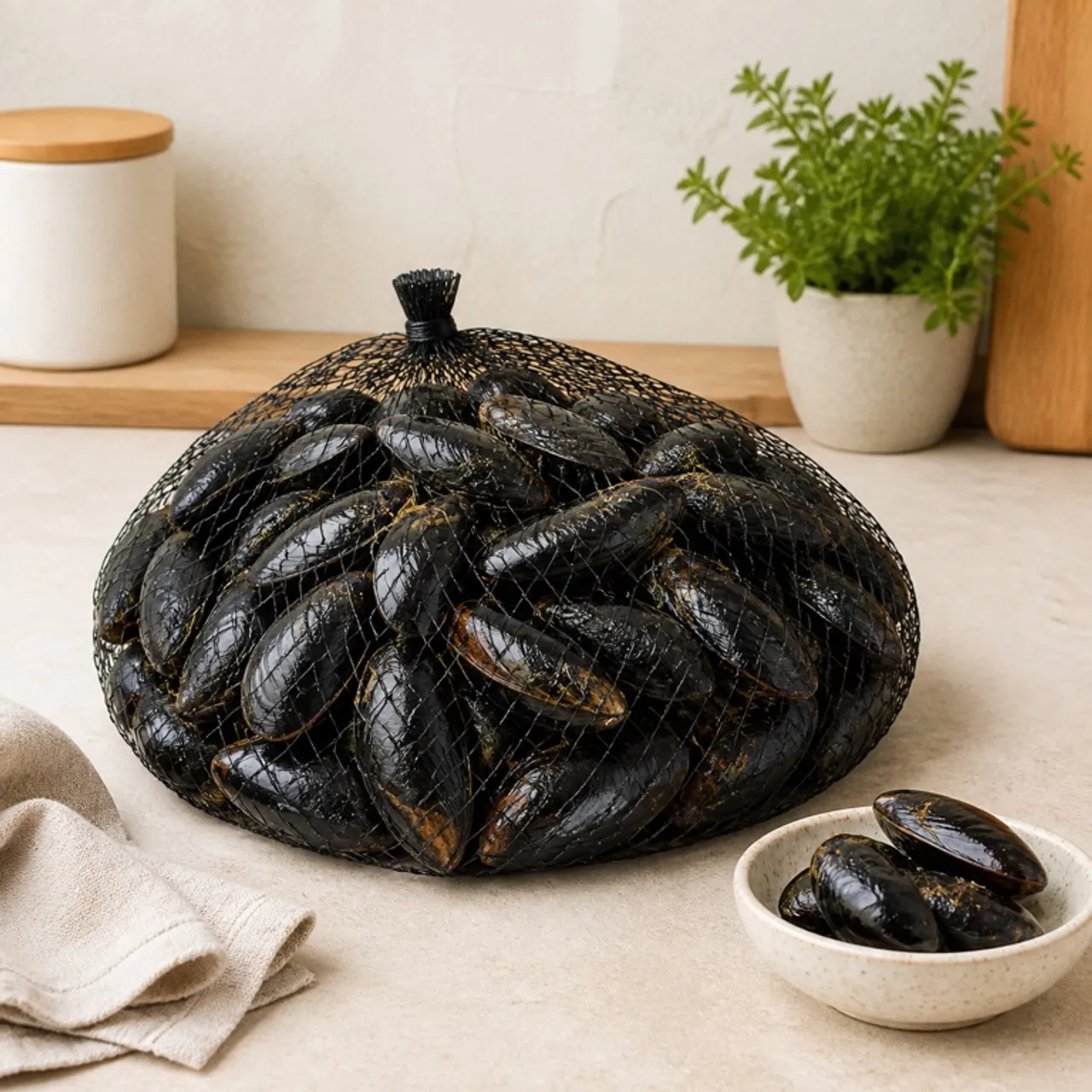
 Food Lens Images are for illustrative purposes only, may be inaccurate, and do not guarantee the presence or absence of specific ingredients.
 Food Lens · Protein
Mussels
Intensely briny and oceanic with a sweet, mineral undertone. The flesh is tender and yielding with a slight chew. Cooked in wine, they absorb the aromatics while releasing an extraordinarily flavorful liquor. Green-lipped mussels are meatier and slightly sweeter than blue mussels.
Lens VerifiedMussels are bivalve mollusks with smooth, blue-black or green-lipped shells and tender, briny orange-gold flesh prized for their intense sea flavor and speed of cooking. They are among the most sustainable and affordable seafood options available, filter-feeding naturally and requiring no feed input in aquaculture. A pot of mussels steamed open in white wine and herbs transforms in minutes into one of the most satisfying dishes in French, Belgian, and Spanish coastal cooking.
Where it comes from
Mussels have been eaten by coastal peoples worldwide since prehistoric times, with organized mussel farming first recorded in 13th-century France, making them one of the earliest cultivated seafoods in history.
Varieties — Blue mussels (Mytilus edulis) are the most common in the North Atlantic and North Pacific. Green-lipped mussels (Perna canaliculus) from New Zealand are larger with a distinctive green shell edge and a meatier texture. Mediterranean mussels (Mytilus galloprovincialis) are slightly plumper and sweeter.
Moules-frites — mussels and french fries — is the beloved national dish of Belgium, eaten in enormous quantities, especially in September when the season opens. In Spain, mejillones al vapor or en escabeche are ubiquitous tapas. Thai green curry with mussels is a popular Southeast Asian preparation.
In a modern kitchen — Mussels are increasingly valued for their environmental profile — they are one of the lowest-carbon animal proteins available, requiring no freshwater, no feed, and actually improving water quality through filter-feeding. Rope-grown and bouchot mussels are considered best practice.
Buying it
Buy mussels with tightly closed shells, or shells that close quickly when tapped — any that remain open and don't respond should be discarded. They should smell clean and briny like the ocean, never sulfurous or fishy. Avoid cracked shells. Buy and use within 1–2 days of purchase.
Storing it
Store live mussels in a bowl covered with a damp cloth in the coldest part of the fridge — never sealed in plastic or submerged in water. Cook within a day or two, and discard any that stay open and won't close when tapped.
Keeps about 2 days in the fridge.
Out of mussels? Good swaps
General cooking guidance — always check the labels on the products you use. Listahan’s allergen checks run automatically when you plan a recipe in the app. Not medical advice.
Recipes that use mussels
Common questions about mussels
What can I use instead of mussels?
Good swaps include , , . Each behaves a little differently — see the swaps above for notes, and always check labels for allergens.
How do I store mussels?
Store live mussels in a bowl covered with a damp cloth in the coldest part of the fridge — never sealed in plastic or submerged in water. Cook within a day or two, and discard any that stay open and won't close when tapped. It keeps about 2 days in the fridge.
More protein
See all


Make mussels about your kitchen — with Listahan Pro
Everything above is free, forever. Pro adds the Household Lens — the same food, seen for your family:
-
Checked for each member
Flags mussels per person against your household's allergies and school rules — not just a generic "contains" tag.
-
Pantry-aware
Knows whether you already have it, what is running low, and the best swap from what is in your kitchen tonight.
-
What it costs near you
A real price from the Presyo community index, so you can plan the budget — not guess.
-
Your household memory
Who likes it, plus your own private notes — brand, where you keep it, who skips it.
Allergen safety is always free — Pro adds the automation, never the safety.
Cook with mussels — safely
Plan a recipe in Listahan and the household allergen check runs automatically — every plan, every swap, every lunchbox. Safety is never paywalled.