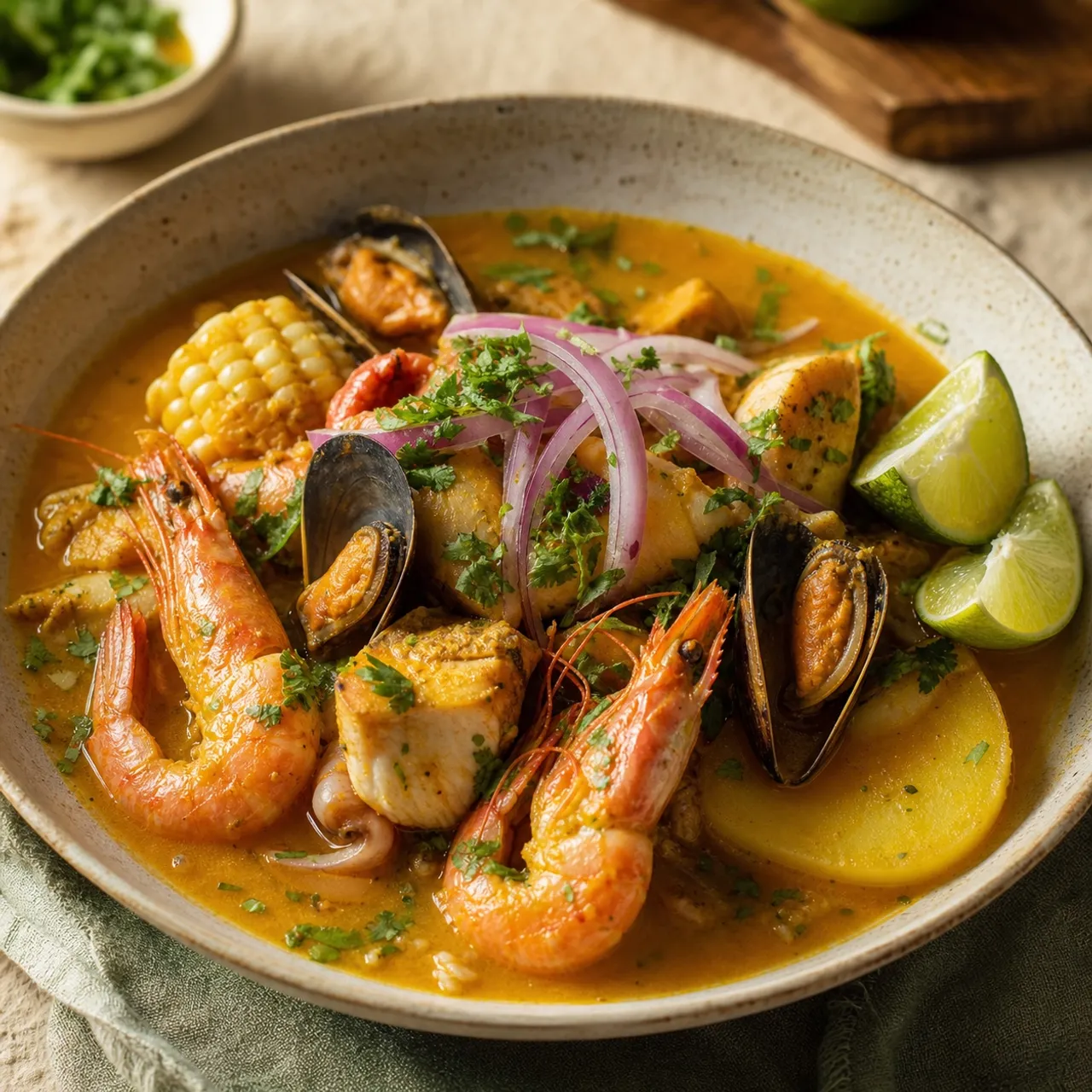
 Peruvian Images are for illustrative purposes only, may be inaccurate, and do not guarantee the presence or absence of specific ingredients.
 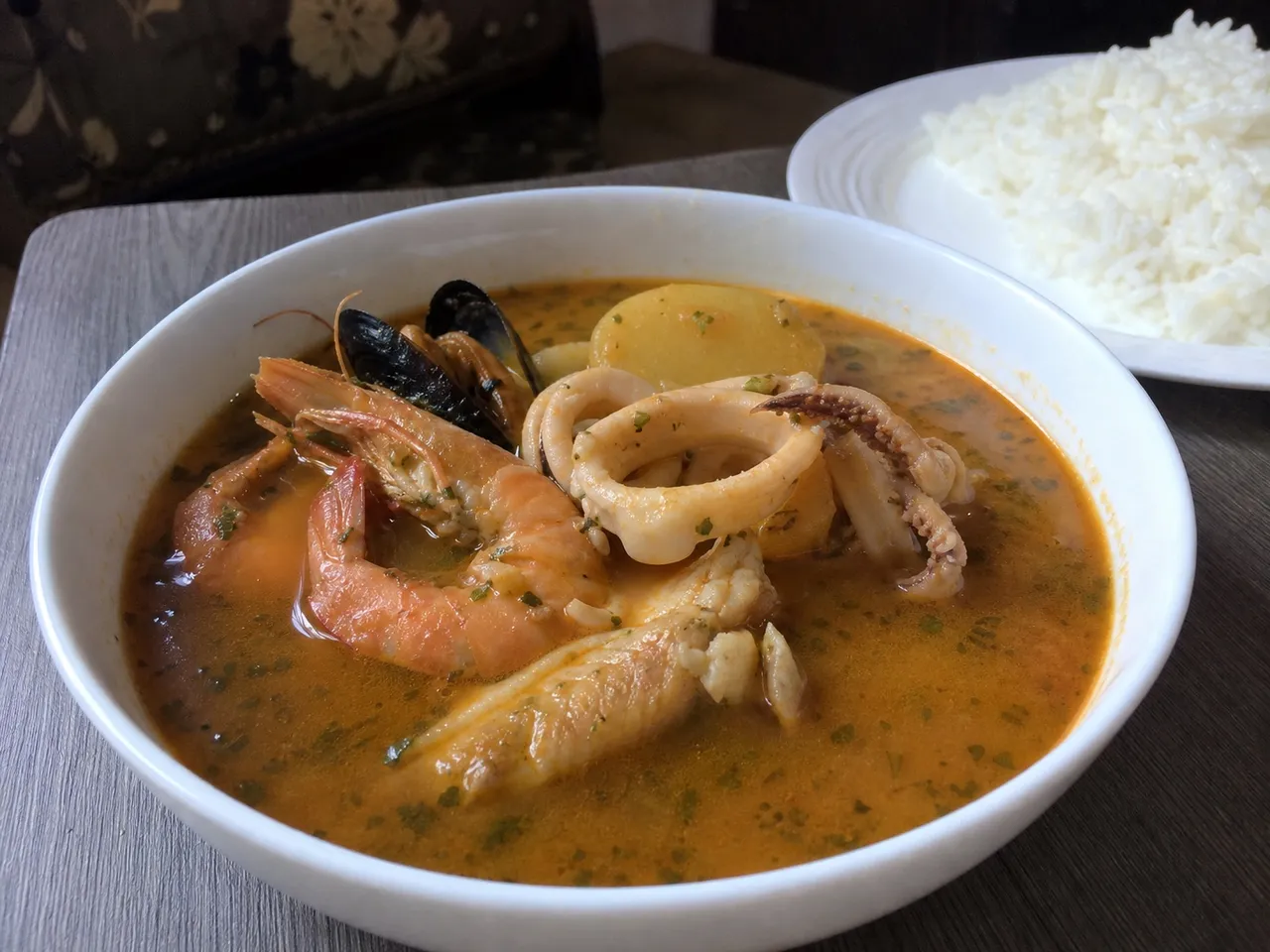 Serving Images are for illustrative purposes only, may be inaccurate, and do not guarantee the presence or absence of specific ingredients.
 Parihuela (Peruvian Seafood Stew)
A robust, spicy seafood stew brimming with fish, shrimp, squid, and clams in a rich tomato and aji panca broth, often finished with a splash of cilantro.
Contains common allergens
In the app, Listahan checks these against your household automatically.
Good to know
- One-pot
Matched from this dish's own ingredients and timing. Browse more: one-pot dinners
Instructions
6 steps- 1
Heat oil in a large pot and sauté the onion and garlic until translucent.
- 2
Stir in the aji panca paste, aji amarillo paste, and diced tomatoes, and cook for 5 minutes until fragrant.
- 3
Pour in the white wine and let it reduce slightly, then add the fish stock and bring to a simmer.
- 4
Add the fish chunks and clams first, simmering for 5 minutes, then add the shrimp and squid and cook for another 5 minutes until all seafood is just cooked through.
- 5
Season with salt, pepper, and lime juice.
- 6
Ladle into bowls and garnish with fresh cilantro before serving.
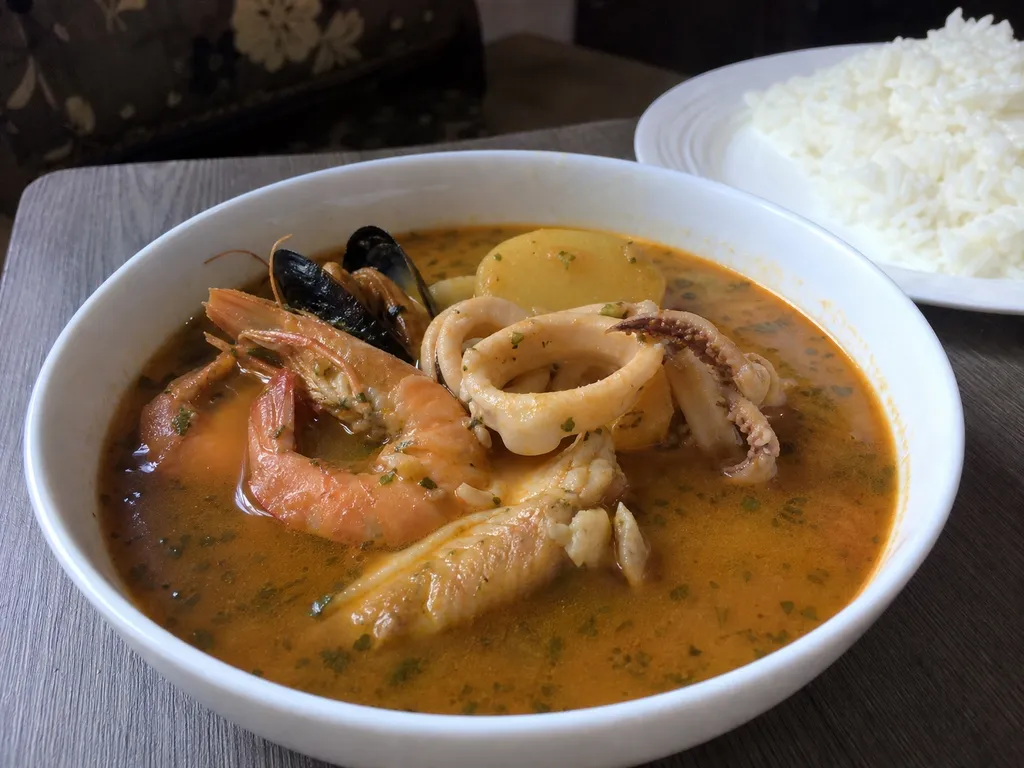 Images are for illustrative purposes only, may be inaccurate, and do not guarantee the presence or absence of specific ingredients.
 Listahan Family Score™
56/100
Works for many families
Score reflects how well this recipe fits a typical busy household. In the app, your Family Score is personalized to your household's allergens, kids, and pantry.
Nutrition
per serving485
Calories
59 g
Protein
16 g
Carbs
19 g
Fat
Estimated per serving. Actual values depend on the brands and portions you use.
Listahan cooking guide
Chef notes & practical guide
Technique notes, ingredient swaps, serve-alongside ideas, storage guidance, and equipment for this recipe.
Cultural context
Parihuela hails from Peru's northern coast, where fishermen traditionally made it with whatever mixed catch came in that day, earning it the nickname levanta muertos, or raiser of the dead, for its reputation as a hangover cure. Sometimes called Peru's answer to bouillabaisse, it is built on a deeply colored sofrito of aji panca and aji amarillo rather than a light broth. The dish reflects the everyday resourcefulness of coastal cooking, turning odds and ends of seafood into a hearty, restorative stew.
Listahan note
This version layers the seafood by cooking time, fish and clams first, then quick-cooking shrimp and squid, so nothing turns rubbery by the time it hits the table.
Technique cues
- Building the sofrito of onion, garlic, and both aji pastes before adding any liquid develops the deep reddish base that defines a real parihuela versus a thin seafood soup.
- Reducing the white wine briefly before adding stock cooks off the raw alcohol taste and concentrates flavor into the broth.
- Squid turns tough within seconds of overcooking, so it goes in only during the last few minutes alongside the shrimp, never at the start with the fish.
Kitchen flow
- Parallel prep
- Prep and portion all the seafood while the sofrito and broth base simmer.
- Make-ahead
- The broth base through adding the stock can be made a few hours ahead and reheated before adding seafood.
- Leftover move
- Reheat broth and seafood together gently, just to warm through, not a rolling boil, to avoid overcooking the seafood further.
- Cleanup rhythm
- One large pot handles the whole dish; clean it right after simmering to avoid a lingering seafood smell.
Ingredient brief
Role, handling, and swap guidance for each key ingredient.
aji panca paste
stew's backbone
Purpose: its mild, smoky-sweet flavor and deep red color are what give parihuela its signature look and depth
Handling: fry it in the oil with the sofrito to bloom its flavor before adding liquid
Adaptation: ancho chile paste with a touch of tomato paste approximates the color.
aji amarillo paste
top note
Purpose: it adds fruity heat on top of the panca's smokiness, rounding out the chile profile
Handling: whisk it before measuring since it separates in the jar
Adaptation: a fresh minced yellow chile if paste is not available.
mixed seafood (fish, shrimp, squid, clams)
the dish itself
Purpose: parihuela is defined by using a variety of seafood together, mirroring what a fisherman would bring home
Handling: cut the fish into large chunks so it doesn't disintegrate in the simmering broth
Adaptation: use whatever combination of firm white fish and shellfish is freshest and most accessible; mussels can stand in for clams.
fish stock
broth base
Purpose: a real fish stock gives the parihuela its oceanic depth in a way water or chicken stock cannot
Handling: use a stock made from fish bones or heads if possible
Adaptation: bottled clam juice diluted with water works in a pinch.
white wine
acidity and lift
Purpose: it brightens the rich, chile-forward broth and helps deglaze the sofrito
Handling: add after the sofrito is fragrant, before pouring in the stock
Adaptation: a splash of extra lime juice added at the end gives acidity without alcohol.
Technique notes
- Scrub the clams well and discard any that don't close when tapped before adding them to the pot.
- Taste the broth before adding the seafood; it should already taste well-seasoned and slightly spicy, since the seafood itself won't add much salt.
- Serve parihuela immediately after the seafood finishes cooking; letting it sit in the hot broth will overcook the delicate shrimp and squid.
Ingredient swaps
- Shellfish-free direction
- Use only firm white fish and skip the shrimp, squid, and clams for a pescatarian-but-shellfish-free version, adding a bit more fish to keep the portion size generous.
- Alcohol-free option
- Omit the white wine and replace with a splash of extra fish stock plus a squeeze of lime juice.
- Milder heat
- Reduce the aji amarillo paste by half and rely mostly on the aji panca for color and mild warmth.
Serve alongside
- white rice
- crusty bread for dipping
- salsa criolla
- boiled yuca
- a chilled Peruvian Sauvignon Blanc
- cold beer
- limeade
Serving suggestions only — check pairings for your household's allergens.
Storage & reheating
- Refrigerate up to 1 day; seafood stews don't hold well much longer.
- Reheat gently over low heat just until warmed through.
- Freezing is not recommended since the seafood texture suffers on thawing.
Equipment
- large stockpot
- chef's knife
- ladle
- fine-mesh strainer
Make this household-aware
Listahan Pro checks this recipe against your household's allergens, finds pantry-aware swaps, builds the shopping list, and helps you plan the week around it.
Plan it in Listahan
Add Parihuela (Peruvian Seafood Stew) to your week, check it against your household's allergens, and build the shopping list automatically.
More Peruvian recipes
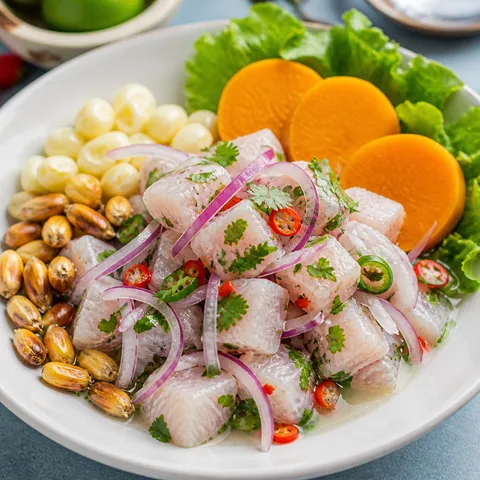 Peruvian Lens Verified Images are for illustrative purposes only, may be inaccurate, and do not guarantee the presence or absence of specific ingredients.
 Ceviche de Pescado
The iconic dish of Peru—exquisitely fresh, raw white fish "cooked" purely by the acidity of freshly squeezed lime juice, infused with chili heat and red onion bite.
 Peruvian Lens Verified Images are for illustrative purposes only, may be inaccurate, and do not guarantee the presence or absence of specific ingredients.
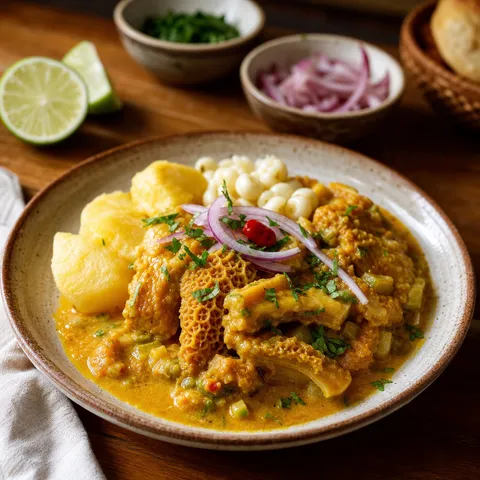
 Cau Cau (Peruvian Tripe Stew)
A hearty yellow stew of tender beef tripe and potatoes simmered in aji amarillo and mint, spooned over rice for a classic home-style meal.
 Peruvian Lens Verified Images are for illustrative purposes only, may be inaccurate, and do not guarantee the presence or absence of specific ingredients.
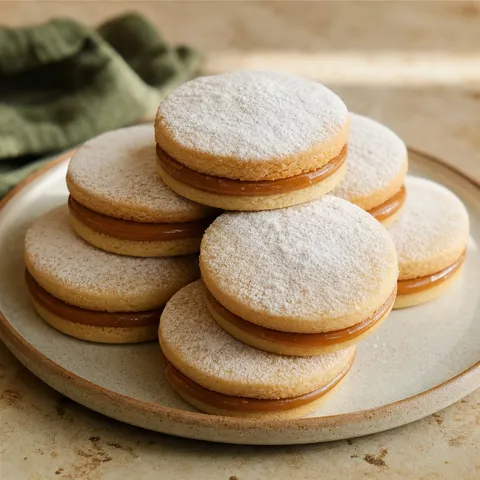
 Alfajores (Peruvian Dulce de Leche Sandwich Cookies)
Delicate, crumbly shortbread cookies sandwiched with rich dulce de leche and dusted with powdered sugar, a favorite Peruvian teatime treat.