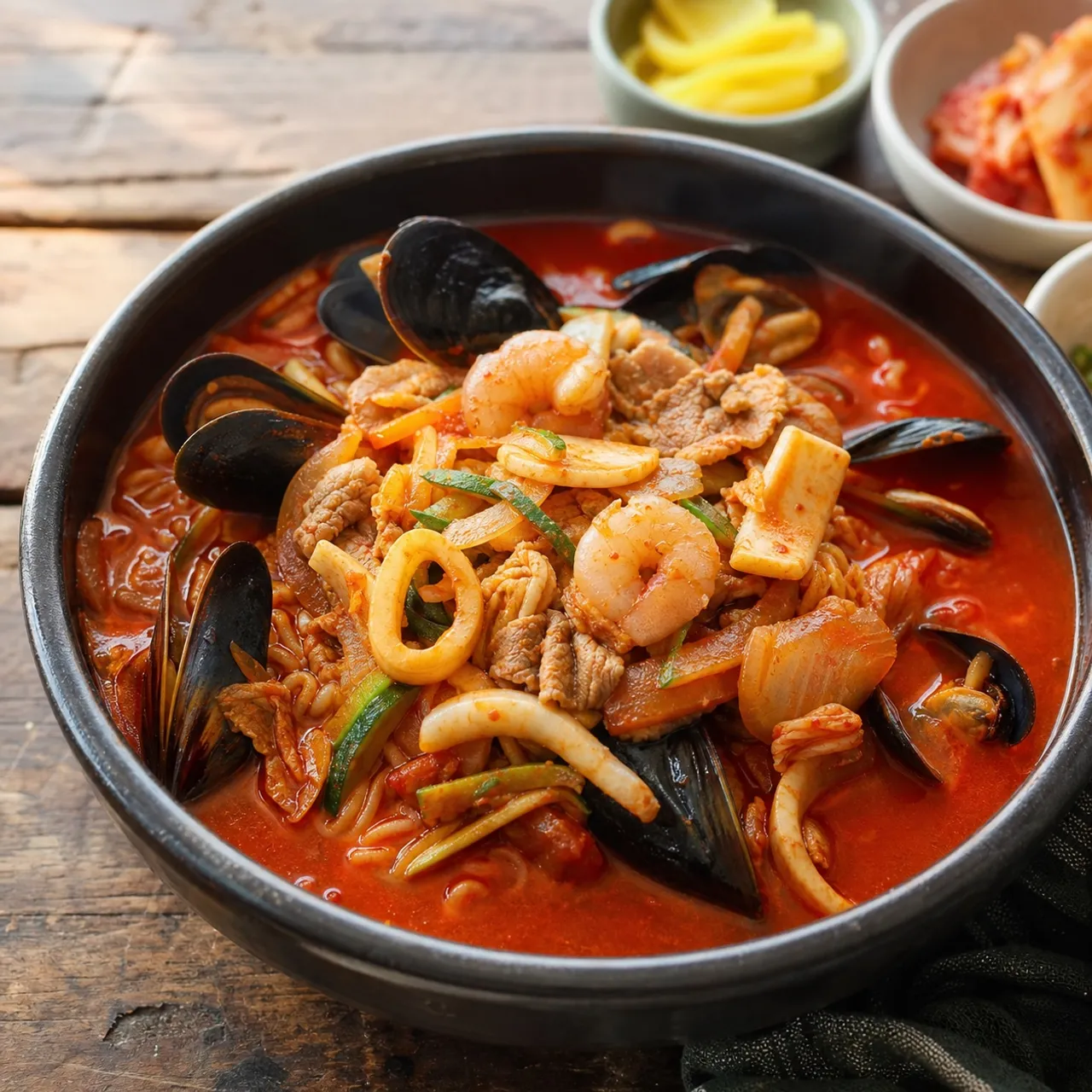
 Korean Images are for illustrative purposes only, may be inaccurate, and do not guarantee the presence or absence of specific ingredients.
 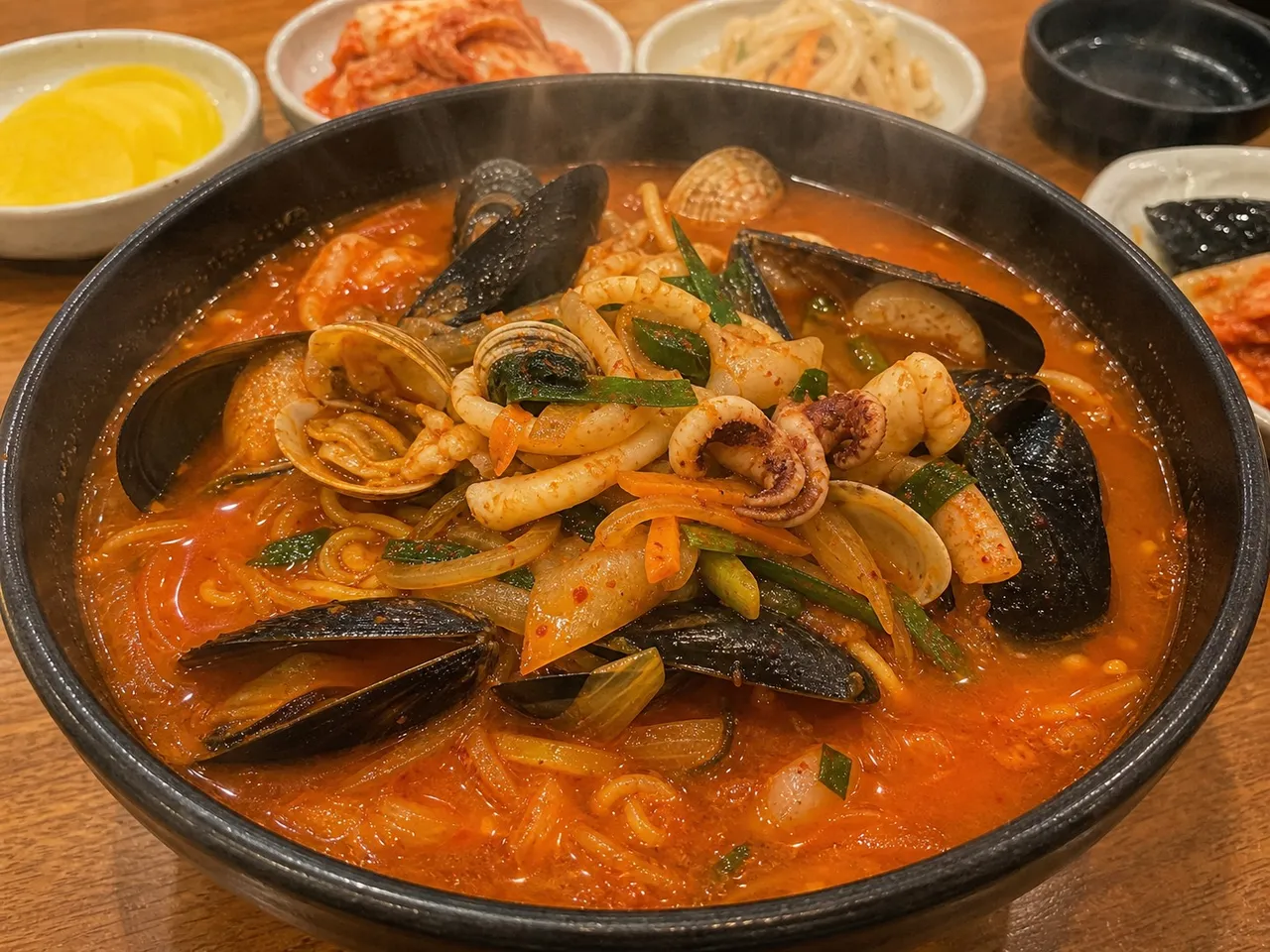 Serving Images are for illustrative purposes only, may be inaccurate, and do not guarantee the presence or absence of specific ingredients.
 Jjamppong (Spicy Seafood Noodle Soup)
A Korean-Chinese spicy noodle soup flavored with seafood, pork, and gochugaru.
Contains common allergens
In the app, Listahan checks these against your household automatically.
Good to know
- Ready in under 30 minutes
Matched from this dish's own ingredients and timing. Browse more: 30-minute meals
Instructions
6 steps- 1
In a large wok or deep pot, heat 2 tbsp of oil over high heat. Add the sliced pork, minced garlic, and onion, stir-frying until the pork is no longer pink.
- 2
Add the napa cabbage and zucchini, tossing quickly.
- 3
Lower the heat slightly and stir in the gochugaru and soy sauce, constantly stirring for 1 minute to toast the chili flakes without burning them (this creates the signature smoky flavor).
- 4
Pour in the chicken broth and bring the soup to a rolling boil. Let it simmer for 5 minutes.
- 5
Add the mixed seafood (shrimp, squid, mussels). Boil vigorously for 3-4 minutes until the shrimp turn pink and all the mussels open (discard any that remain closed).
- 6
Meanwhile, boil the fresh noodles in a separate pot, drain, and place in large serving bowls. Ladle the boiling, spicy seafood soup directly over the noodles.
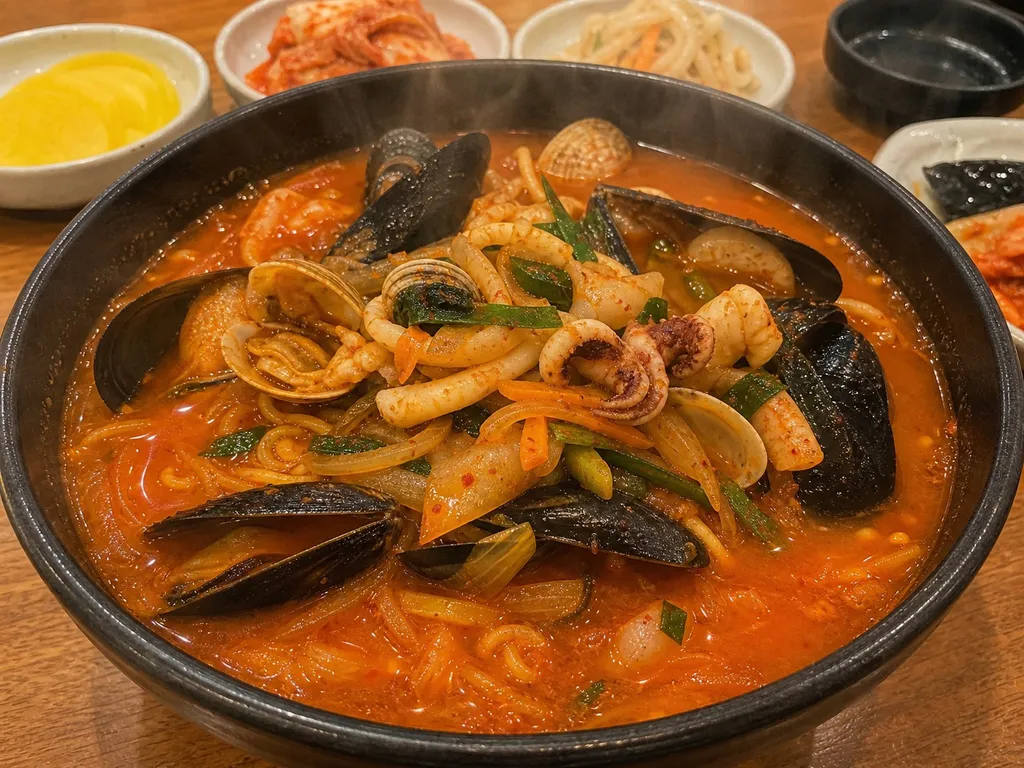 Images are for illustrative purposes only, may be inaccurate, and do not guarantee the presence or absence of specific ingredients.
 Listahan Family Score™
56/100
Works for many families
Score reflects how well this recipe fits a typical busy household. In the app, your Family Score is personalized to your household's allergens, kids, and pantry.
Nutrition
per serving325
Calories
48 g
Protein
15 g
Carbs
10 g
Fat
Estimated per serving. Actual values depend on the brands and portions you use.
Listahan cooking guide
Chef notes & practical guide
Technique notes, ingredient swaps, serve-alongside ideas, storage guidance, and equipment for this recipe.
Cultural context
Jjamppong is part of Korea's Chinese-Korean restaurant tradition, developed by Chinese immigrant cooks and adapted to Korean tastes with a fiery red broth built on gochugaru. It is the spicy counterpart to the black-bean noodle dish jjajangmyeon, and most Korean-Chinese spots will ask which of the two you want.
Listahan note
This version toasts the gochugaru in oil with the pork before the broth goes in, which is the step that gives jjamppong its smoky depth instead of just raw chili heat.
Technique cues
- Stir-frying the chili flakes for a full minute over reduced heat blooms their color and smoke; let them scorch and the whole pot turns bitter.
- The seafood goes in last and boils only 3 to 4 minutes so the shrimp and squid stay tender rather than rubbery.
- Boiling the noodles in a separate pot keeps their starch out of the soup so the broth stays clear-textured and spicy rather than gluey.
Kitchen flow
- Parallel prep
- Slice all the vegetables and pork and clean the seafood before you heat the wok, since the stir-fry moves fast.
- Make-ahead
- The toasted-chili pork-and-vegetable base can be built a few hours ahead and finished with broth and seafood at serving time.
- Leftover move
- Store the soup and noodles separately; leftover spicy broth makes a quick base for a seafood-and-rice porridge.
- Cleanup rhythm
- Wipe the chili-stained wok while still warm so the gochugaru oil does not set into the pan.
Ingredient brief
Role, handling, and swap guidance for each key ingredient.
mixed seafood
Main protein
Purpose: Shrimp, squid, and mussels each release brine into the broth and give the soup its layered seafood character.
Handling: Scrub the mussels and add all the seafood at once near the end so nothing overcooks.
Adaptation: Frozen seafood mix works; thaw and drain it first so it does not water down the broth.
gochugaru
Heat and color
Purpose: Korean chili flakes provide the soup's red color and its smoky, fruity heat once toasted.
Handling: Add it to the hot oil over lowered heat and stir constantly for a minute to bloom without burning.
Adaptation: A blend of mild paprika and cayenne approximates the color and heat but lacks the fruity edge.
pork shoulder
Savory base
Purpose: Thin pork stir-fried at the start lays down a meaty foundation under the seafood.
Handling: Slice it thin and cook until no longer pink before the vegetables go in.
Adaptation: Thin-sliced chicken thigh works, though it gives a lighter background flavor.
napa cabbage
Vegetable body
Purpose: It wilts into the broth and adds gentle sweetness that balances the chili.
Handling: Slice and add early with the zucchini so it softens before the liquid goes in.
Adaptation: Green cabbage is firmer but works; slice it a bit thinner so it cooks through in time.
fresh wheat noodles
Starch
Purpose: Chewy fresh noodles are the foundation the spicy soup is ladled over.
Handling: Boil separately, drain, and bed them in the bowl just before serving.
Adaptation: Dried udon or thick wheat noodles work; cook to the package time and drain well.
Technique notes
- Keep the heat high under the wok for the initial sear so the pork and onion caramelize instead of stewing.
- Lower the heat specifically for the gochugaru step, then bring it back up once the broth is in, so the chili blooms without scorching.
- Ladle the boiling soup directly over freshly drained noodles so they heat through without continuing to cook in the bowl.
Ingredient swaps
- Shellfish-free direction
- Swap the shrimp and mussels for extra squid and firm white fish; you keep the seafood character without the shellfish allergens.
- Gluten-free direction
- Use rice noodles and tamari in place of the wheat noodles and soy sauce; the broth thins slightly so add the noodles right before serving.
- Lower-sodium direction
- Cut the soy sauce to half and lean on the natural brine of the mussels and shrimp for savor.
Serve alongside
- Danmuji (yellow pickled radish)
- Baechu kimchi
- Steamed dumplings (gun-mandu)
- Tangsuyuk (sweet and sour pork)
- Cold light lager
- Soju, neat
- Chilled barley tea
Serving suggestions only — check pairings for your household's allergens.
Storage & reheating
- Refrigerate broth and noodles separately for up to 2 days; seafood is best eaten the day it is made.
- Reheat the broth to a hard boil on the stovetop, then pour over freshly warmed noodles.
- Freezing is not recommended because the seafood turns rubbery and the noodles break down on thawing.
Equipment
- Large wok or deep pot
- Separate pot for noodles
- Ladle
- Spider or strainer for draining noodles
Make this household-aware
Listahan Pro checks this recipe against your household's allergens, finds pantry-aware swaps, builds the shopping list, and helps you plan the week around it.
Plan it in Listahan
Add Jjamppong (Spicy Seafood Noodle Soup) to your week, check it against your household's allergens, and build the shopping list automatically.
More Korean recipes
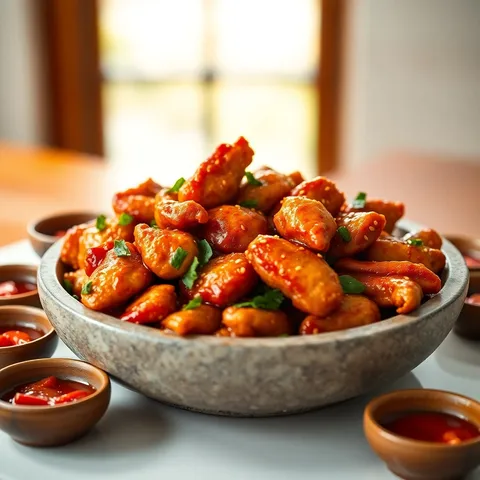 Korean Lens Verified Images are for illustrative purposes only, may be inaccurate, and do not guarantee the presence or absence of specific ingredients.
 Dakgalbi (Spicy Stir-fried Chicken)
Diced chicken marinated in a gochujang-based sauce, stir-fried with sweet potatoes, cabbage, perilla leaves, and tteok.
 Korean Lens Verified Images are for illustrative purposes only, may be inaccurate, and do not guarantee the presence or absence of specific ingredients.
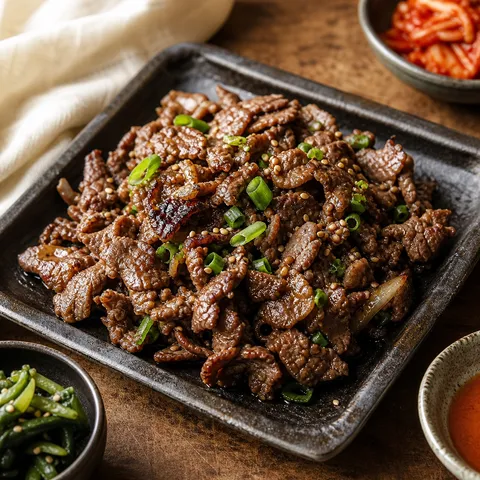
 Bulgogi (Marinated Beef BBQ)
Thinly sliced, marinated beef ribeye or sirloin grilled or stir-fried. Sweet, savory, and tender.
 Korean Lens Verified Images are for illustrative purposes only, may be inaccurate, and do not guarantee the presence or absence of specific ingredients.
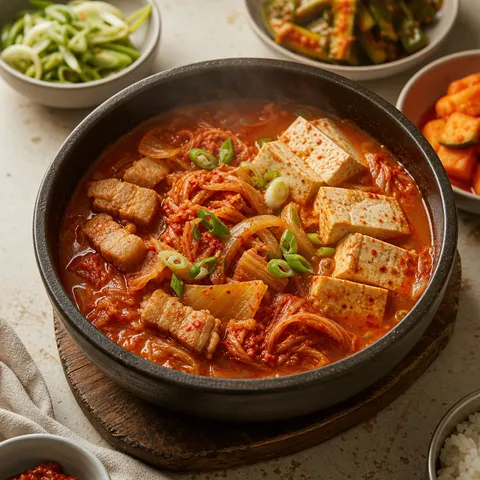
 Kimchi Jjigae (Kimchi Stew)
A classic, comforting stew made with aged kimchi, pork or seafood, scallions, onions, and diced tofu.