 Food Lens Images are for illustrative purposes only, may be inaccurate, and do not guarantee the presence or absence of specific ingredients.
 Food Lens · Recipe ingredients
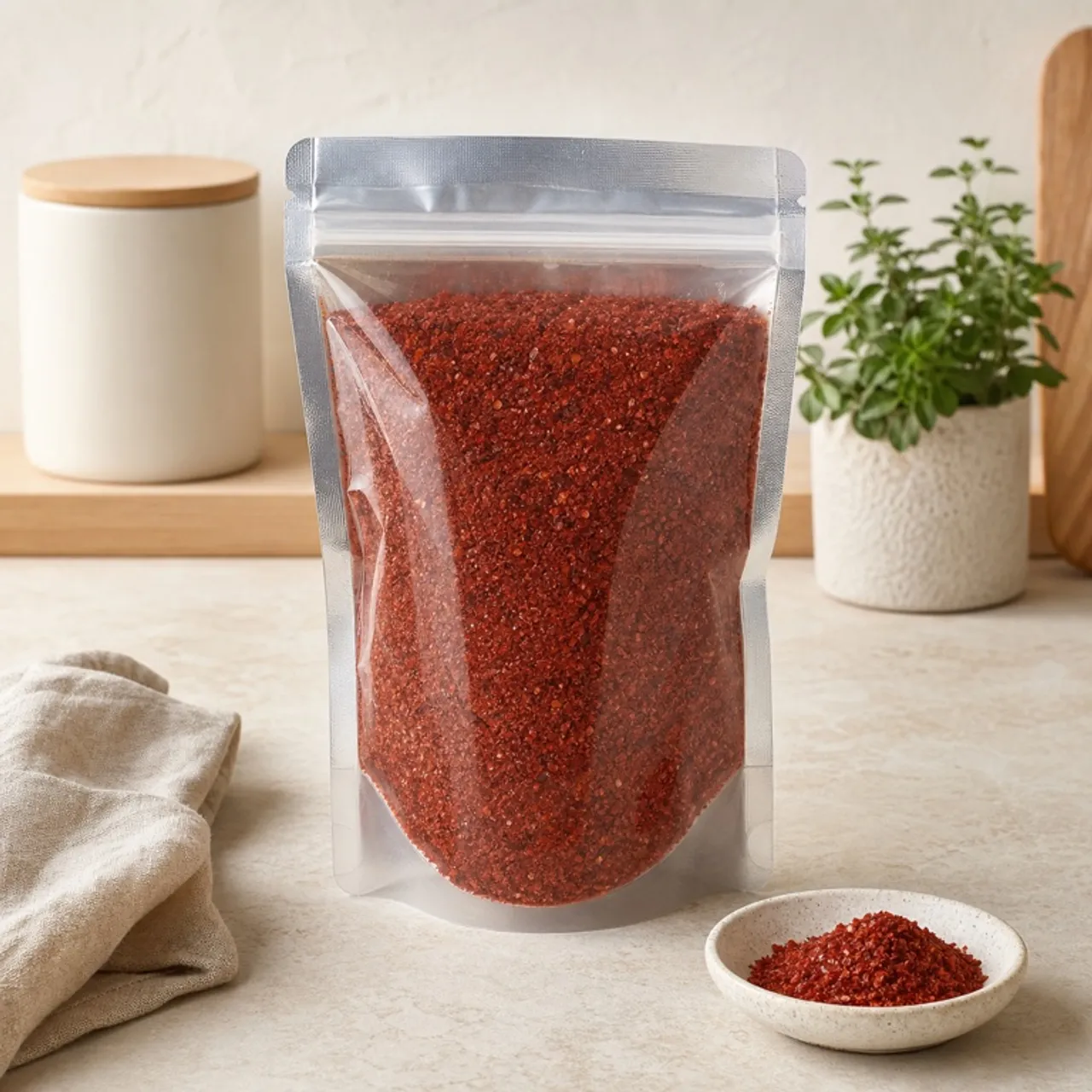
Gochugaru
Fruity, mildly smoky heat with a clean chili sweetness and brilliant red color that stains beautifully.
Lens VerifiedGochugaru is a Korean dried chili powder or flake made from sun-dried, deseeded red chili peppers, with a fruity warmth and vibrant brick-red color that is entirely distinct from generic chili flakes. It is the irreplaceable soul ingredient in kimchi, tteokbokki, and countless Korean stews and marinades.
Where it comes from
Gochugaru's story is a remarkable culinary transformation: chili peppers arrived in Korea less than 500 years ago as a foreign curiosity, yet within generations they had become so woven into Korean food culture that today it is impossible to imagine the cuisine without them. Korean immigrants and the global Korean food wave have made gochugaru increasingly available in mainstream supermarkets across North America.
Varieties — Gochugaru is sold in two main forms: coarse flakes (used for kimchi and most Korean dishes) and fine powder (used in sauces and marinades). The heat level ranges from mild to medium — it is significantly less fiery than cayenne or generic crushed red chili flakes.
Kimchi, the fermented vegetable dish central to Korean culture and cuisine, depends entirely on gochugaru for its color and characteristic warm heat — no other chili can replicate it. In Korean homes, purchasing the right gochugaru is considered as important as choosing the right soy sauce.
In a modern kitchen — Generic crushed red chili flakes are not a suitable substitute — they are sharper, less fruity, and will produce a noticeably different flavor. If you cook Korean food even occasionally, keep a bag of gochugaru in the freezer for freshness.
Buying it
Look for a vivid, bright red color — dull or brownish gochugaru is old or poorly stored. It should smell fruity and lightly sweet, not musty. Korean grocery stores carry the best selection; large bags freeze well and retain color and aroma for up to a year.
Storing it
Store in an airtight container away from light and heat to protect its color and fruity heat — direct sun fades it toward a dull brown over time.
Keeps about 1 year in the pantry.
Out of gochugaru? Good swaps
- Gochujang (thinned) — Not a dry substitute, but in sauces use 1 tbsp gochujang thinned with water or vinegar to replace 1–2 tsp gochugaru in a pinch.
- Ancho chili powder — Use 1:1 — fruity and mild like gochugaru, though darker and with a richer dried-fruit note; works well in braises.
- Kashmiri chili powder — Use 1:1 — provides a similar vivid red color and mild heat; flavor differs but appearance is close.
General cooking guidance — always check the labels on the products you use. Listahan’s allergen checks run automatically when you plan a recipe in the app. Not medical advice.
Recipes that use gochugaru
- Dakgalbi (Spicy Stir-fried Chicken)
- Kimchi Jjigae (Kimchi Stew)
- Jeyuk Bokkeum (Spicy Pork Bulgogi)
- Tteokbokki (Spicy Rice Cakes)
- Sundubu Jjigae (Soft Tofu Stew)
- Dak-bokkeum-tang (Spicy Braised Chicken)
- Jjamppong (Spicy Seafood Noodle Soup)
- Biang Biang Noodles
- Nakji Bokkeum (Spicy Stir-fried Octopus)
- Yukgaejang (Spicy Beef Soup)
- Gamjatang (Pork Bone Stew)
- Baechu Kimchi (Napa Cabbage Kimchi)
Common questions about gochugaru
Is gochugaru vegan?
Gochugaru is generally plant-based and suitable for a vegan diet, but brands differ — confirm on the label.
What can I use instead of gochugaru?
Good swaps include Gochujang (thinned), Ancho chili powder, Kashmiri chili powder. Each behaves a little differently — see the swaps above for notes, and always check labels for allergens.
How do I store gochugaru?
Store in an airtight container away from light and heat to protect its color and fruity heat — direct sun fades it toward a dull brown over time. It keeps about 1 year in the pantry.
More recipe ingredients
See all


Make gochugaru about your kitchen — with Listahan Pro
Everything above is free, forever. Pro adds the Household Lens — the same food, seen for your family:
-
Checked for each member
Flags gochugaru per person against your household's allergies and school rules — not just a generic "contains" tag.
-
Pantry-aware
Knows whether you already have it, what is running low, and the best swap from what is in your kitchen tonight.
-
What it costs near you
A real price from the Presyo community index, so you can plan the budget — not guess.
-
Your household memory
Who likes it, plus your own private notes — brand, where you keep it, who skips it.
Allergen safety is always free — Pro adds the automation, never the safety.
Cook with gochugaru — safely
Plan a recipe in Listahan and the household allergen check runs automatically — every plan, every swap, every lunchbox. Safety is never paywalled.