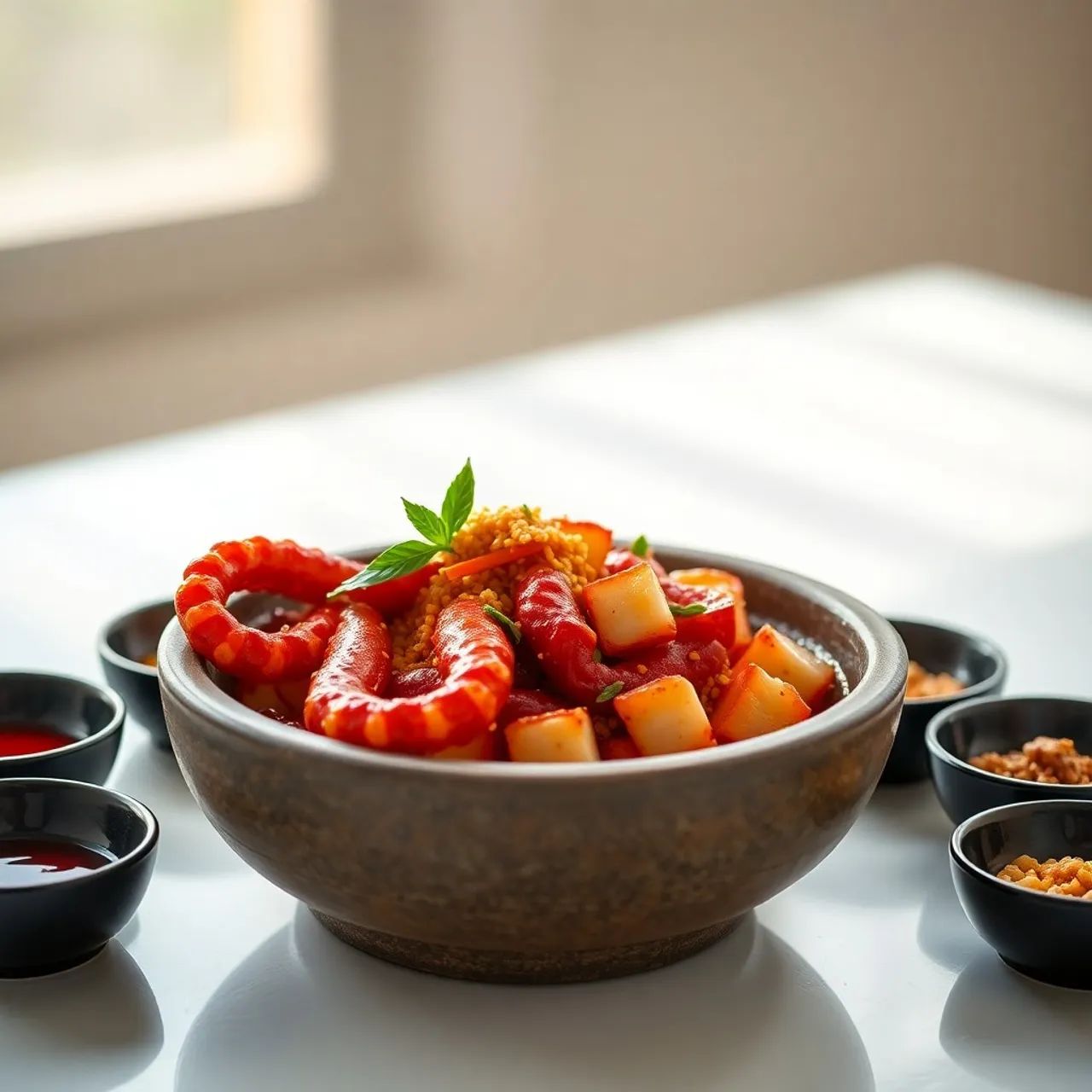
 Korean Images are for illustrative purposes only, may be inaccurate, and do not guarantee the presence or absence of specific ingredients.
 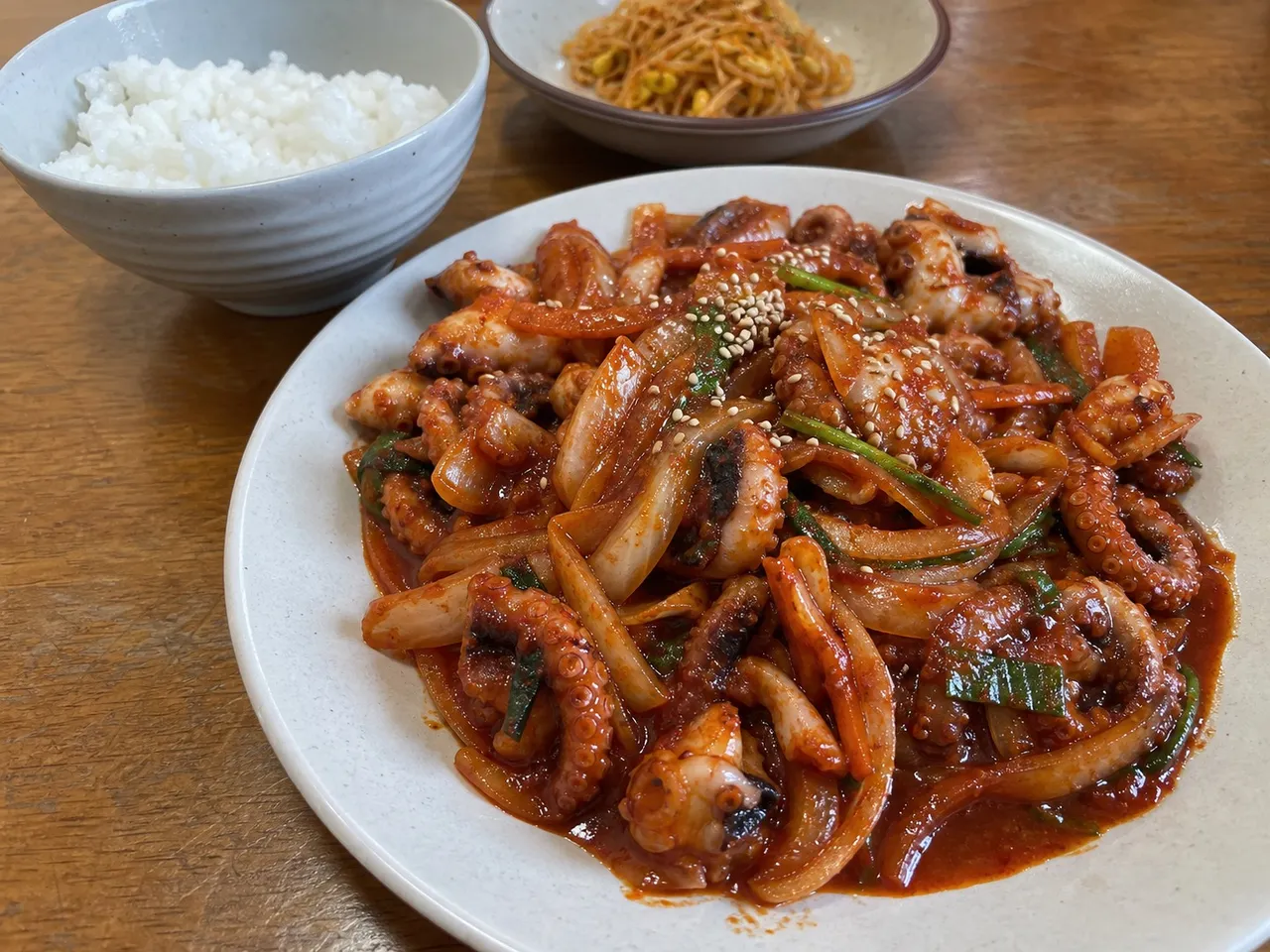 Serving Images are for illustrative purposes only, may be inaccurate, and do not guarantee the presence or absence of specific ingredients.
 Nakji Bokkeum (Spicy Stir-fried Octopus)
A spicy dish of chopped octopus stir-fried with vegetables and heavily seasoned with gochujang and gochugaru.
Contains common allergens
In the app, Listahan checks these against your household automatically.
Good to know
- Ready in under 30 minutes
Matched from this dish's own ingredients and timing. Browse more: 30-minute meals
Instructions
6 steps- 1
Place the octopus in a bowl with coarse sea salt. Vigorously massage and rub the octopus for 2-3 minutes to remove the slimy coating and tenderize the meat. Rinse thoroughly under cold running water.
- 2
Blanch the cleaned octopus in boiling water for exactly 30 seconds. Remove, drain, and cut into 2-inch bite-sized pieces.
- 3
Prepare the spicy sauce by combining the gochugaru, gochujang, soy sauce, sugar, and minced garlic.
- 4
Heat a wok or large skillet over very high heat with 2 tbsp of oil. Toss in the onion, cabbage, and carrot, stir-frying rapidly for 2 minutes until slightly softened.
- 5
Add the blanched octopus and the spicy sauce to the wok. Toss everything vigorously for only 1-2 minutes. Overcooking will make the octopus rubbery.
- 6
Turn off the heat, drizzle with sesame oil, toss in the chopped scallions, and serve immediately with steamed rice and blanched bean sprouts.
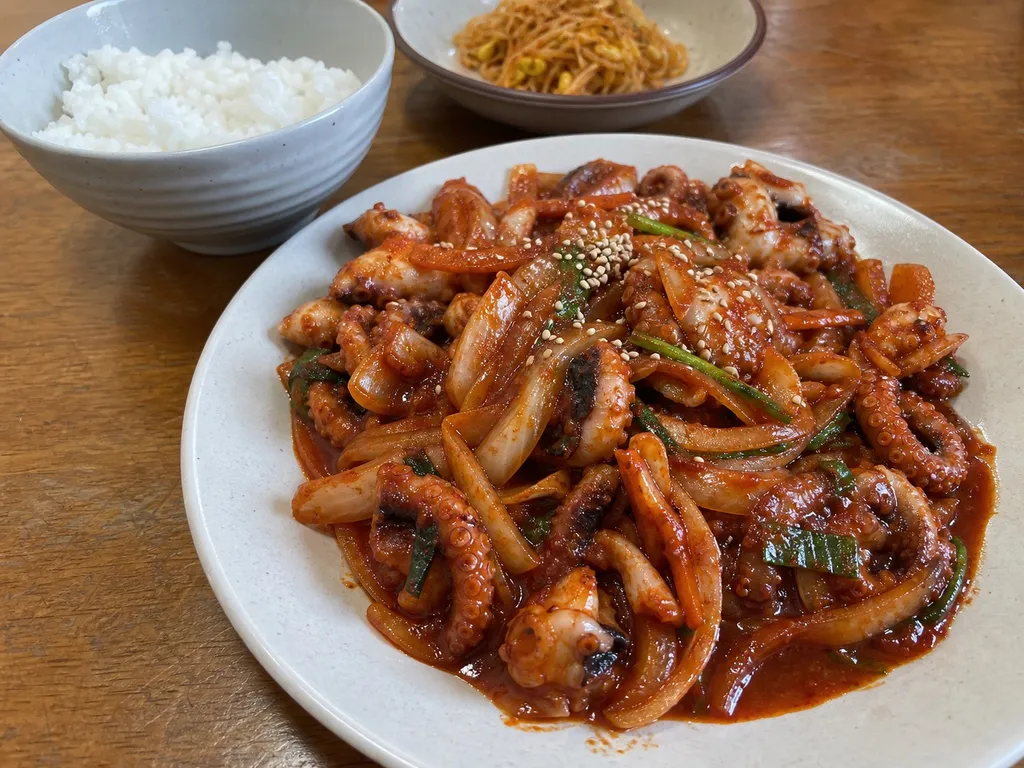 Images are for illustrative purposes only, may be inaccurate, and do not guarantee the presence or absence of specific ingredients.
 Listahan Family Score™
59/100
Works for many families
Score reflects how well this recipe fits a typical busy household. In the app, your Family Score is personalized to your household's allergens, kids, and pantry.
Nutrition
per serving255
Calories
29 g
Protein
17 g
Carbs
8 g
Fat
Estimated per serving. Actual values depend on the brands and portions you use.
Listahan cooking guide
Chef notes & practical guide
Technique notes, ingredient swaps, serve-alongside ideas, storage guidance, and equipment for this recipe.
Cultural context
Nakji bokkeum is a fiery stir-fry built around nakji, the small webfoot octopus prized in Korean coastal cooking for its tenderness. It is famous as a bracingly spicy dish, often eaten to clear the head, and is a staple of pojangmacha street tents and casual seafood restaurants.
Listahan note
This version salt-massages and blanches the octopus for just 30 seconds before the stir-fry, which is the technique that keeps it tender because the final toss in the wok lasts only a minute or two.
Technique cues
- Rubbing the raw octopus hard with coarse salt strips the slimy surface coating and tenderizes the flesh before any heat touches it.
- A 30-second blanch firms the octopus and shortens its time in the wok, which is critical since octopus turns rubbery the moment it overcooks.
- Stir-frying over very high heat for only one to two minutes once the sauce goes in keeps the octopus snappy rather than tough.
Kitchen flow
- Parallel prep
- Mix the sauce and cut all the vegetables while a pot of blanching water comes to a boil.
- Make-ahead
- Clean and blanch the octopus and mix the sauce ahead; the final stir-fry takes only a few minutes.
- Leftover move
- Fry leftover octopus and sauce with day-old rice and a fried egg for a quick spicy fried rice.
- Cleanup rhythm
- Wipe the chili-coated wok while warm and rinse the salt bowl right after massaging the octopus.
Ingredient brief
Role, handling, and swap guidance for each key ingredient.
small octopus (nakji)
Main protein
Purpose: Its tender, quick-cooking flesh is the entire point of the dish and dictates the lightning-fast cooking.
Handling: Salt-massage to clean, blanch 30 seconds, then cut into bite-size pieces.
Adaptation: Squid works and cooks just as fast, though it lacks the octopus's distinctive bite.
gochujang
Spicy base
Purpose: Combined with gochugaru it gives the sauce its thick, glossy, deeply red heat that clings to the octopus.
Handling: Whisk it into the sauce ahead so it coats evenly in the brief final toss.
Adaptation: Extra gochugaru plus a little tomato paste mimics the body if gochujang is unavailable.
gochugaru
Heat and color
Purpose: It layers bright, fruity chili heat on top of the deeper gochujang.
Handling: Mix into the sauce rather than the wok so it does not scorch on the high heat.
Adaptation: Korean coarse chili flakes are essential; a paprika-cayenne blend is a distant substitute.
sesame oil
Finishing aroma
Purpose: Drizzled off the heat it adds a toasted, nutty perfume that rounds out the spice.
Handling: Add only at the very end after the heat is off so its aroma does not cook away.
Adaptation: Toasted perilla oil gives a different but equally fragrant Korean finish.
onion
Aromatic vegetable
Purpose: It sweetens and softens in the wok to balance the intense chili sauce.
Handling: Slice and stir-fry briefly before the octopus so it keeps a little crunch.
Adaptation: Shallots work but are sweeter; use a bit more onion volume if substituting.
Technique notes
- Time the blanch precisely to 30 seconds; even a minute begins to toughen the octopus before it ever hits the wok.
- Get the wok screaming hot before the octopus and sauce go in so the dish cooks in one fast toss rather than stewing.
- Drizzle the sesame oil only after the heat is off so its aroma stays bright on the plate.
Ingredient swaps
- Gluten-free direction
- Swap the soy sauce for tamari and confirm the gochujang is gluten-free; the sauce is otherwise unchanged.
- Lower-sodium direction
- Cut the soy sauce in half and rinse the octopus well after the salt massage to remove residual salt.
- Sesame-free direction
- Finish with perilla oil instead of sesame oil and skip any sesame-seed garnish; the dish keeps a nutty aroma.
Serve alongside
- Steamed short-grain rice
- Blanched soybean sprouts (kongnamul)
- Gyeran jjim (steamed egg) to cool the heat
- Baechu kimchi
- Soju, neat
- Cold light lager
- Chilled barley tea to temper the spice
Serving suggestions only — check pairings for your household's allergens.
Storage & reheating
- Refrigerate for up to 2 days, though octopus is best eaten the day it is made.
- Reheat quickly in a hot pan just to warm through; long reheating toughens the octopus.
- Freezing is not recommended because the octopus becomes rubbery once thawed and reheated.
Equipment
- Carbon-steel wok or wide skillet
- Mixing bowl for the salt massage
- Pot for the quick blanch
- Tongs for fast tossing
Make this household-aware
Listahan Pro checks this recipe against your household's allergens, finds pantry-aware swaps, builds the shopping list, and helps you plan the week around it.
Plan it in Listahan
Add Nakji Bokkeum (Spicy Stir-fried Octopus) to your week, check it against your household's allergens, and build the shopping list automatically.
More Korean recipes
 Korean Lens Verified Images are for illustrative purposes only, may be inaccurate, and do not guarantee the presence or absence of specific ingredients.
 Dakgalbi (Spicy Stir-fried Chicken)
Diced chicken marinated in a gochujang-based sauce, stir-fried with sweet potatoes, cabbage, perilla leaves, and tteok.
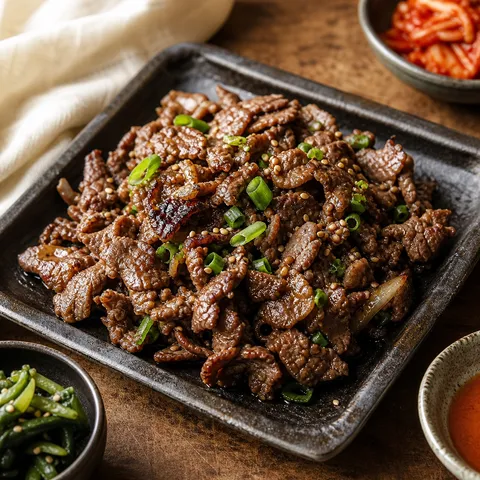 Korean Lens Verified Images are for illustrative purposes only, may be inaccurate, and do not guarantee the presence or absence of specific ingredients.
 Bulgogi (Marinated Beef BBQ)
Thinly sliced, marinated beef ribeye or sirloin grilled or stir-fried. Sweet, savory, and tender.
 Korean Lens Verified Images are for illustrative purposes only, may be inaccurate, and do not guarantee the presence or absence of specific ingredients.
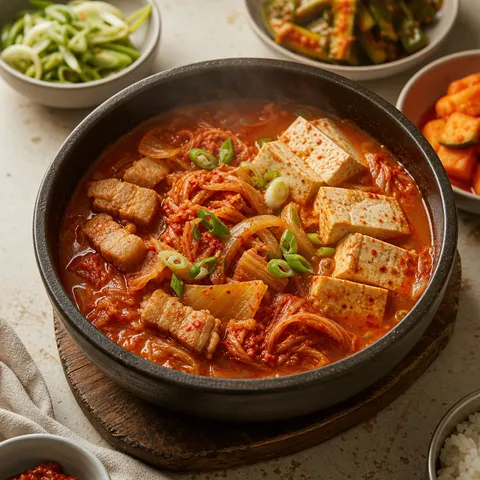
 Kimchi Jjigae (Kimchi Stew)
A classic, comforting stew made with aged kimchi, pork or seafood, scallions, onions, and diced tofu.