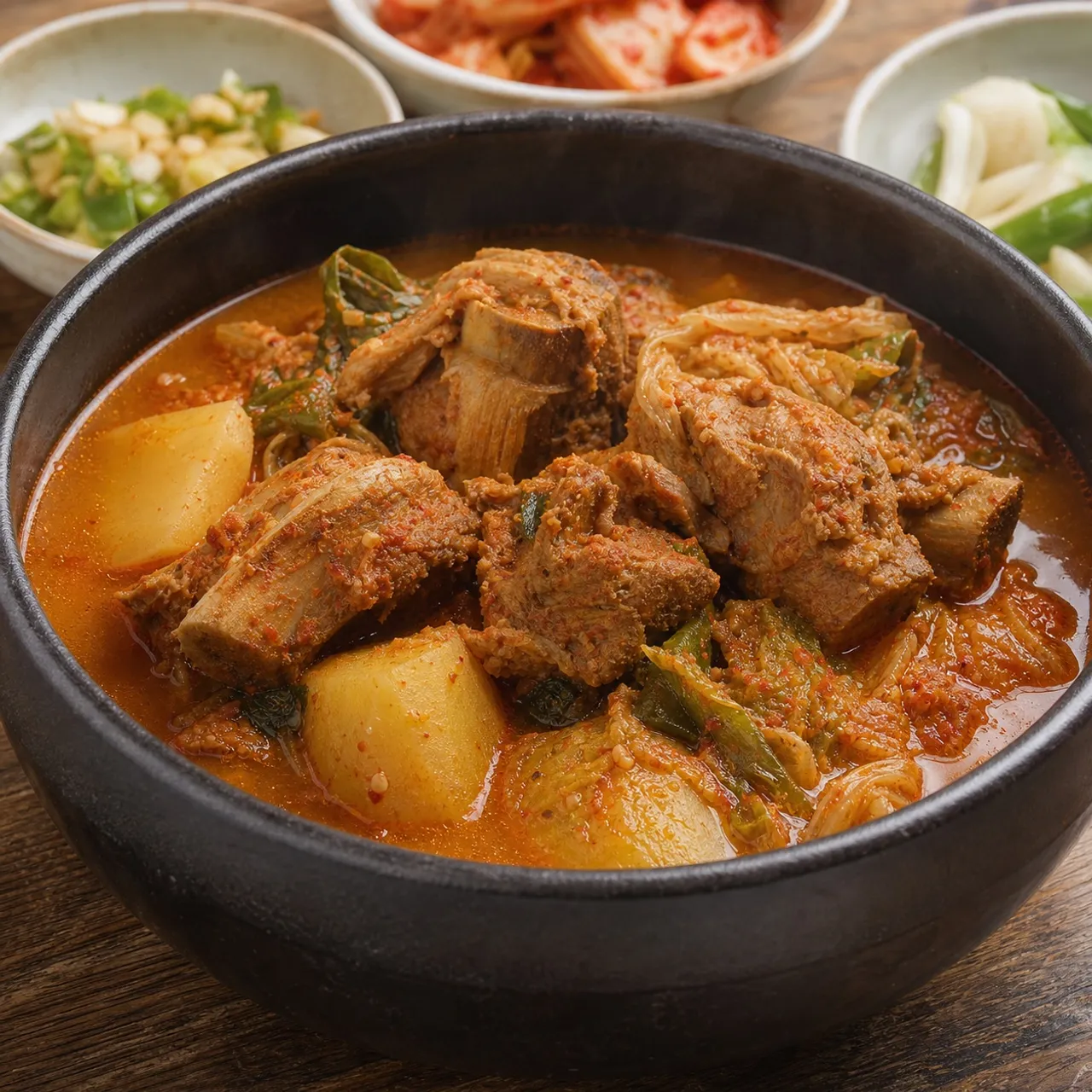
 Korean Images are for illustrative purposes only, may be inaccurate, and do not guarantee the presence or absence of specific ingredients.
 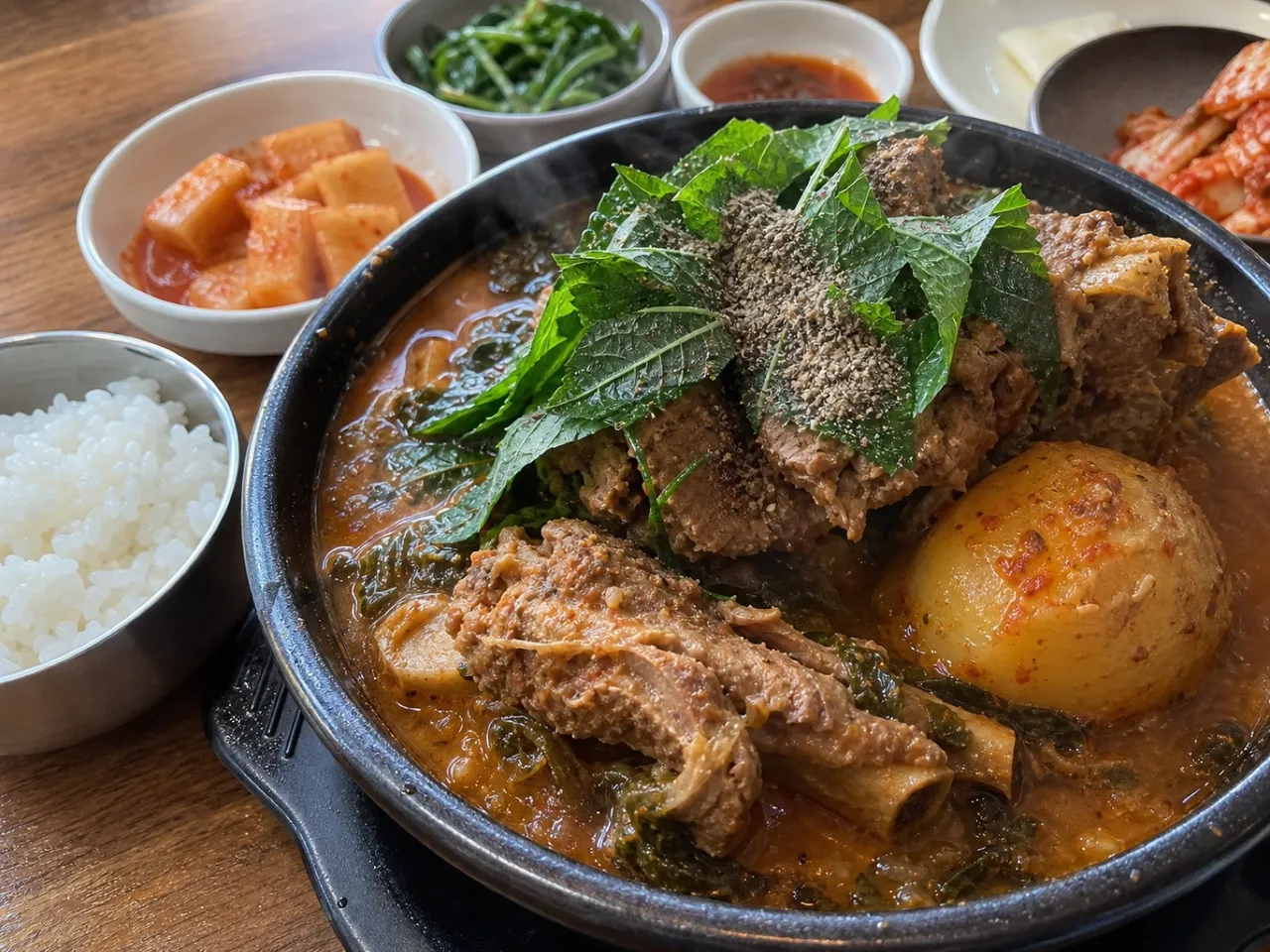 Serving Images are for illustrative purposes only, may be inaccurate, and do not guarantee the presence or absence of specific ingredients.
 Gamjatang (Pork Bone Stew)
A spicy Korean soup made from the spine or rib bones of a pig, potatoes, and vegetables.
Contains common allergens
In the app, Listahan checks these against your household automatically.
Good to know
- One-pot
Matched from this dish's own ingredients and timing. Browse more: one-pot dinners
Instructions
6 steps- 1
Soak the pork bones in cold water for 1 hour. Drain, then boil the bones for 10 minutes in fresh water. Discard this murky water and rinse the bones thoroughly under cold water.
- 2
Return the clean bones to a large heavy pot. Cover with 10 cups of water, add the sliced ginger and 1 tbsp of doenjang. Boil over medium-low heat, covered, for 1.5 to 2 hours until the meat is incredibly tender.
- 3
Mix a seasoning paste using the remaining 2 tbsp doenjang, gochugaru, minced garlic, and a splash of water.
- 4
Tear the blanched napa cabbage lengthwise and toss it in the seasoning paste.
- 5
Add the seasoned cabbage, halved potatoes, and the rest of the paste to the simmering bone broth. Cook for another 30 minutes until the potatoes are easily pierced with a fork.
- 6
Right before serving, stir in the perilla seed powder and top with fresh perilla leaves. Serve bubbling hot.
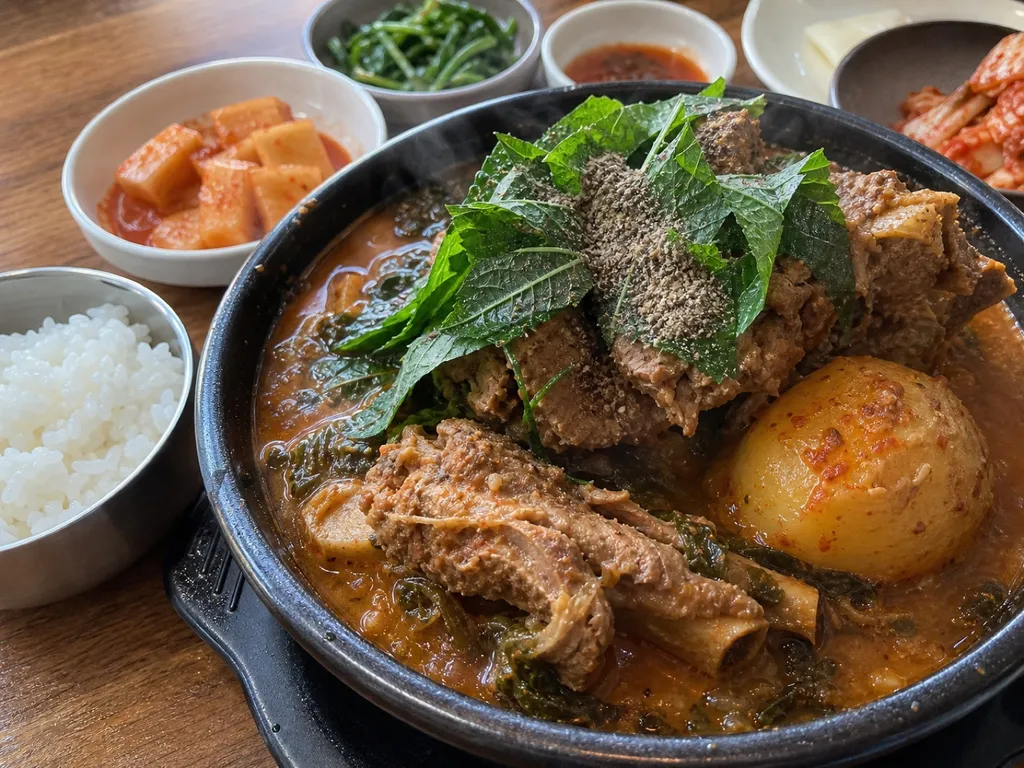 Images are for illustrative purposes only, may be inaccurate, and do not guarantee the presence or absence of specific ingredients.
 Listahan Family Score™
68/100
Works for many families
Score reflects how well this recipe fits a typical busy household. In the app, your Family Score is personalized to your household's allergens, kids, and pantry.
Nutrition
per serving535
Calories
53 g
Protein
15 g
Carbs
28 g
Fat
Estimated per serving. Actual values depend on the brands and portions you use.
Listahan cooking guide
Chef notes & practical guide
Technique notes, ingredient swaps, serve-alongside ideas, storage guidance, and equipment for this recipe.
Cultural context
Gamjatang is a hearty stew built on meaty pork neck and spine bones, long a working-class favorite served late into the night at 24-hour spots across Korea. Despite gamja meaning potato, many believe the name actually refers to an old word for a cut of pork spine, with the potatoes a later addition.
Listahan note
This version blanches and rinses the bones before the real simmer, a step this recipe insists on because it is what removes the murky scum and gives the finished broth a clean, deep flavor.
Technique cues
- Boiling the bones for ten minutes and discarding that first murky water draws out the blood and impurities that would otherwise cloud and taint the stew.
- Perilla seed powder stirred in only at the very end thickens the broth and adds a nutty richness; cooked too long it turns gritty and dull.
- A long covered simmer of an hour and a half or more is what makes the meat fall off the bone and the broth turn rich.
Kitchen flow
- Parallel prep
- Mix the seasoning paste and blanch the cabbage during the long bone simmer so the second stage is quick.
- Make-ahead
- Simmer the bones a day ahead and refrigerate; the chilled broth lets you lift off the hardened fat before finishing.
- Leftover move
- Add cooked rice and a beaten egg to leftover broth for a next-day bone-broth rice bowl.
- Cleanup rhythm
- Strain the discarded blanching water down the drain hot, and soak the heavy pot right away so collagen does not set on it.
Ingredient brief
Role, handling, and swap guidance for each key ingredient.
pork neck/spine bones
Main protein and broth base
Purpose: The meaty bones give both the pull-apart pork and the collagen-rich body of the stew.
Handling: Soak in cold water an hour, then blanch and rinse to clear the blood before the long simmer.
Adaptation: Pork ribs work for a similar flavor but yield less of the gelatinous body the spine gives.
perilla seed powder
Thickener and nutty finish
Purpose: It is the signature ingredient, thickening the broth and lending the dish its earthy, nutty character.
Handling: Stir in only right before serving so it stays smooth rather than gritty.
Adaptation: Ground toasted sesame seeds give a related nuttiness but lack the same body.
doenjang
Savory base
Purpose: This fermented soybean paste deepens the broth and tames any porky odor.
Handling: Add one spoonful to the simmering bones and reserve the rest for the seasoning paste.
Adaptation: Japanese miso works but is sweeter and milder; use a touch more.
perilla leaves
Fresh herb finish
Purpose: Their minty, anise-like aroma cuts the richness of the pork right at the end.
Handling: Chop roughly and add fresh just before serving so they stay fragrant.
Adaptation: There is no exact match; a little fresh shiso or a mix of basil and mint approximates the aroma.
napa cabbage
Vegetable body
Purpose: Blanched and seasoned, it soaks up the spicy broth and adds gentle bulk.
Handling: Blanch, then tear lengthwise and toss in the seasoning paste before it joins the pot.
Adaptation: Pre-blanched ugeoji (dried cabbage) is the traditional alternative and even more authentic.
Technique notes
- Never skip the first blanch-and-rinse; that single step is the difference between a clean broth and a muddy, off-tasting one.
- Add the potatoes only for the final thirty minutes so they cook through without falling apart into the broth.
- Toast the perilla seed powder lightly if it tastes flat, then stir it in off the boil to keep the finish silky.
Ingredient swaps
- Lower-sodium direction
- Reduce the doenjang by a third and add it gradually, tasting as the broth reduces and concentrates.
- Soy-free direction
- Replace the doenjang with a chickpea miso to keep the fermented depth without soy; the color lightens slightly.
- Weeknight shortcut
- Use a pressure cooker to cut the bone simmer to about 45 minutes, then finish the vegetables on the stovetop.
Serve alongside
- Steamed short-grain rice
- Kkakdugi (cubed radish kimchi)
- Buchu geotjeori (chive salad)
- Bokkeum bap made from the leftover broth
- Soju, neat
- Makgeolli (rice wine)
- Cold barley tea
Serving suggestions only — check pairings for your household's allergens.
Storage & reheating
- Refrigerate for up to 4 days; the flavor improves overnight as the broth settles.
- Reheat gently on the stovetop, stirring in a little fresh perilla seed powder to refresh the body.
- Freeze the strained broth and meat for up to 2 months and thaw overnight in the fridge; add fresh perilla leaves after reheating.
Equipment
- Large heavy stockpot
- Fine skimmer
- Slotted spoon for the bones
- Tongs for tearing the meat
Make this household-aware
Listahan Pro checks this recipe against your household's allergens, finds pantry-aware swaps, builds the shopping list, and helps you plan the week around it.
Plan it in Listahan
Add Gamjatang (Pork Bone Stew) to your week, check it against your household's allergens, and build the shopping list automatically.
More Korean recipes
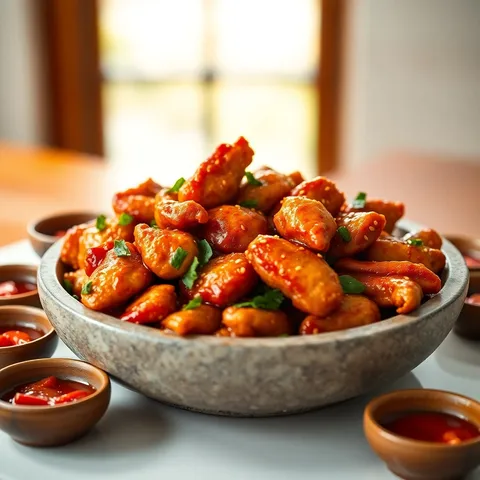 Korean Lens Verified Images are for illustrative purposes only, may be inaccurate, and do not guarantee the presence or absence of specific ingredients.
 Dakgalbi (Spicy Stir-fried Chicken)
Diced chicken marinated in a gochujang-based sauce, stir-fried with sweet potatoes, cabbage, perilla leaves, and tteok.
 Korean Lens Verified Images are for illustrative purposes only, may be inaccurate, and do not guarantee the presence or absence of specific ingredients.
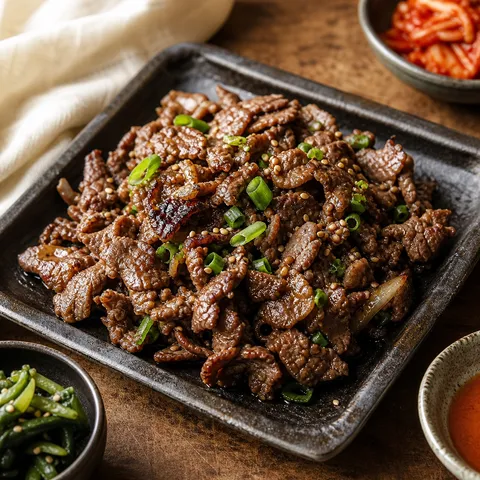
 Bulgogi (Marinated Beef BBQ)
Thinly sliced, marinated beef ribeye or sirloin grilled or stir-fried. Sweet, savory, and tender.
 Korean Lens Verified Images are for illustrative purposes only, may be inaccurate, and do not guarantee the presence or absence of specific ingredients.
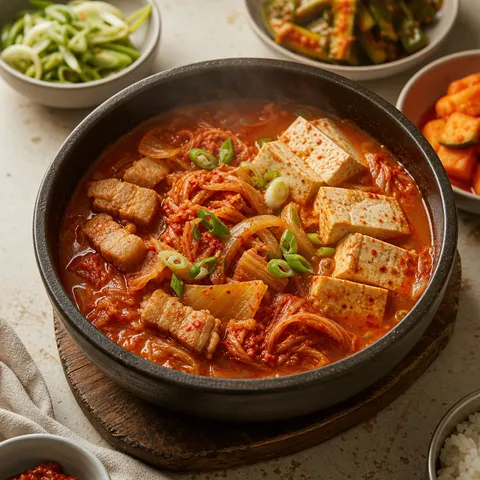
 Kimchi Jjigae (Kimchi Stew)
A classic, comforting stew made with aged kimchi, pork or seafood, scallions, onions, and diced tofu.